
Greenhead Fly Season at the Jersey Shore: When They’re Worst, and How to Plan Around Them
Greenhead Fly Season at the Jersey Shore: When They're Worst, and How to Plan Around Them The fast answer: Greenhead flies — the big,…
Learn how to care for routine sand fly bites, when persistent lesions or travel history raise concern for leishmaniasis, and when to seek medical care.
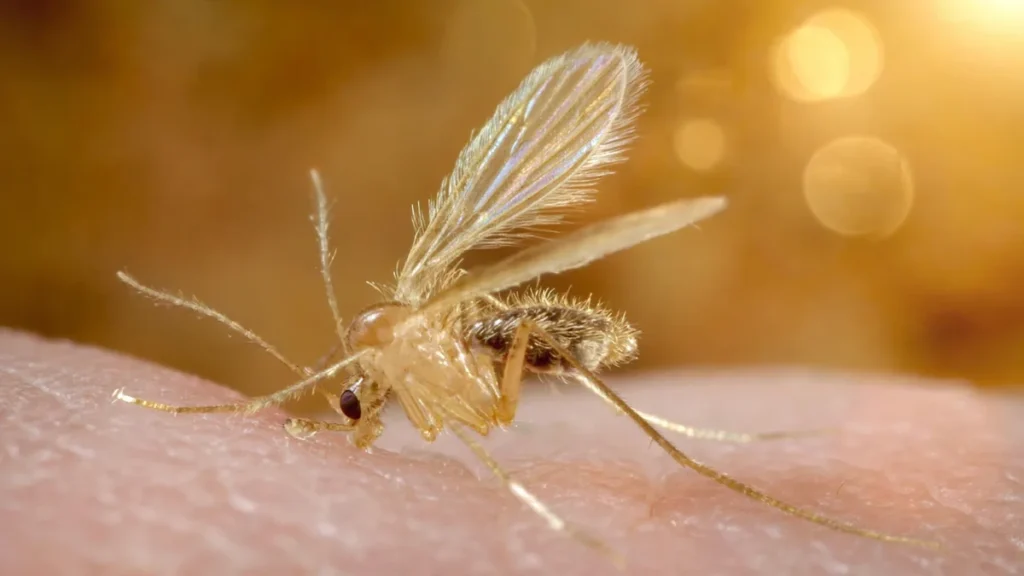
Short answer: Most uncomplicated sand fly bites can be managed with gentle washing, a cool compress, itch control, and avoiding scratching. The reason sand fly bites deserve a different follow-up plan from ordinary nuisance bites is travel and disease context: phlebotomine sand flies can transmit Leishmania parasites in parts of the world. A bite that becomes a persistent, enlarging, crusted, or ulcer-like skin lesion after relevant travel should not be treated as a routine itchy bite indefinitely.
Important distinction: “Sand fly” is used loosely for several tiny biting insects. In travel medicine, phlebotomine sand flies are important because they can transmit leishmaniasis. A short-lived itchy welt is very different from a lesion that persists for weeks and progressively changes.
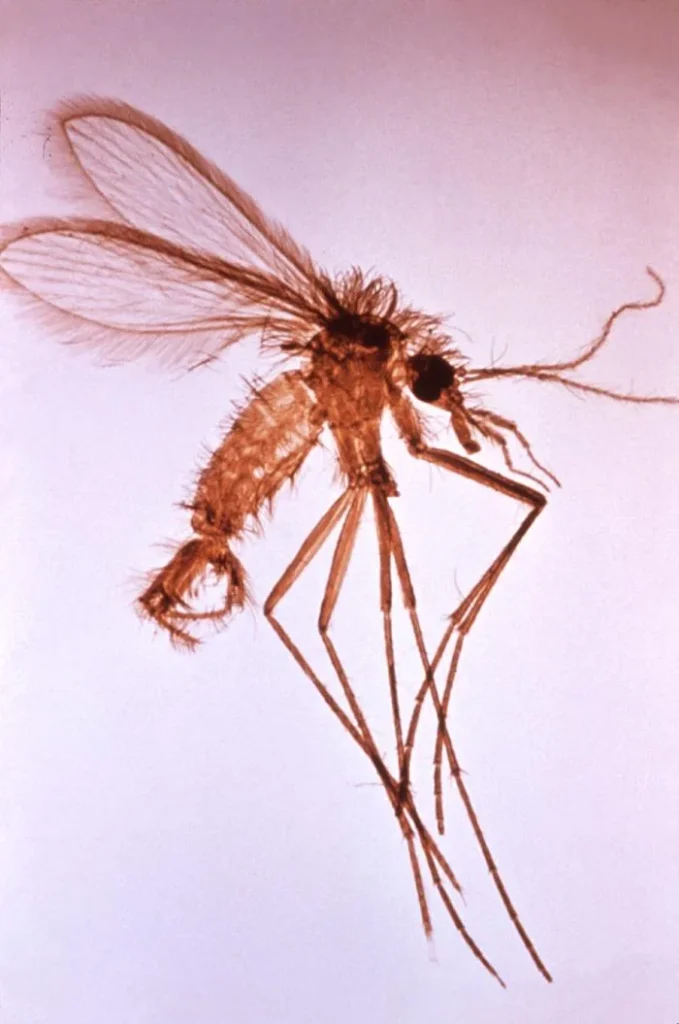
For a simple local bite reaction, the goals are comfort and skin protection. For a persistent lesion after exposure in an area where leishmaniasis occurs, the priority is medical evaluation and an accurate travel history.
That distinction is more useful than trying to diagnose the insect from one skin photo. Small biting flies, mosquitoes, fleas, biting midges, and other arthropods can produce similar early red papules.
Do not apply bleach, gasoline, concentrated essential oils, acids, or other caustic substances. They can produce chemical irritation that complicates the original bite.
A simple bite may produce a small red bump, local swelling, burning, or itching. Multiple bites are possible because sand flies are small and may feed repeatedly when conditions are favorable.
For a routine reaction, the overall trend should be toward improvement. The area may remain itchy for several days, but it should not continue evolving into a chronic ulcer or progressively enlarging lesion.
In everyday conversation, people may call several unrelated insects “sand flies,” “sand gnats,” or “no-see-ums.” In the United States, biting midges are frequently called no-see-ums, especially in coastal areas. Those insects are not the same as the phlebotomine sand flies discussed in leishmaniasis guidance.
If a bite happened at a U.S. beach and produced several itchy welts that faded, ordinary biting midges may be a more plausible explanation. If a chronic skin lesion developed after travel in an endemic region, phlebotomine sand fly exposure becomes more clinically relevant.
Leishmaniasis is caused by Leishmania parasites transmitted by infected phlebotomine sand flies. CDC describes several forms of the disease. Cutaneous leishmaniasis primarily affects the skin, while visceral leishmaniasis affects internal organs and is much more serious.
Most people with a routine itchy bite do not have leishmaniasis. The concern rises when the travel history and the evolution of the lesion fit the disease pattern.
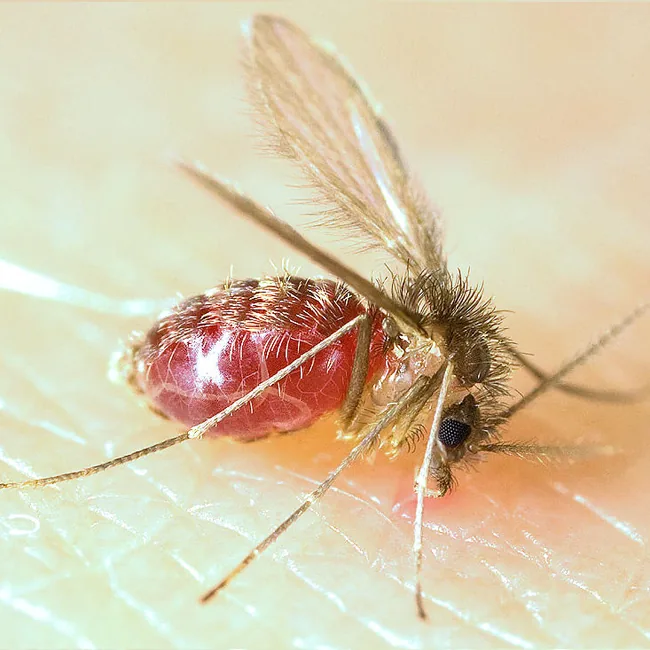
CDC notes that cutaneous leishmaniasis can cause one or more skin sores. Lesions may change over time and can become ulcerated. They are not reliably diagnosed from appearance alone because many infections, inflammatory conditions, and skin cancers can produce chronic sores.
If a lesion persists, enlarges, crusts, ulcerates, or fails to heal after travel in an area with leishmaniasis, tell the clinician specifically about possible sand fly exposure. Diagnosis may require laboratory testing.
A clinician may not think immediately of a vector-borne disease unless the travel history is clear.
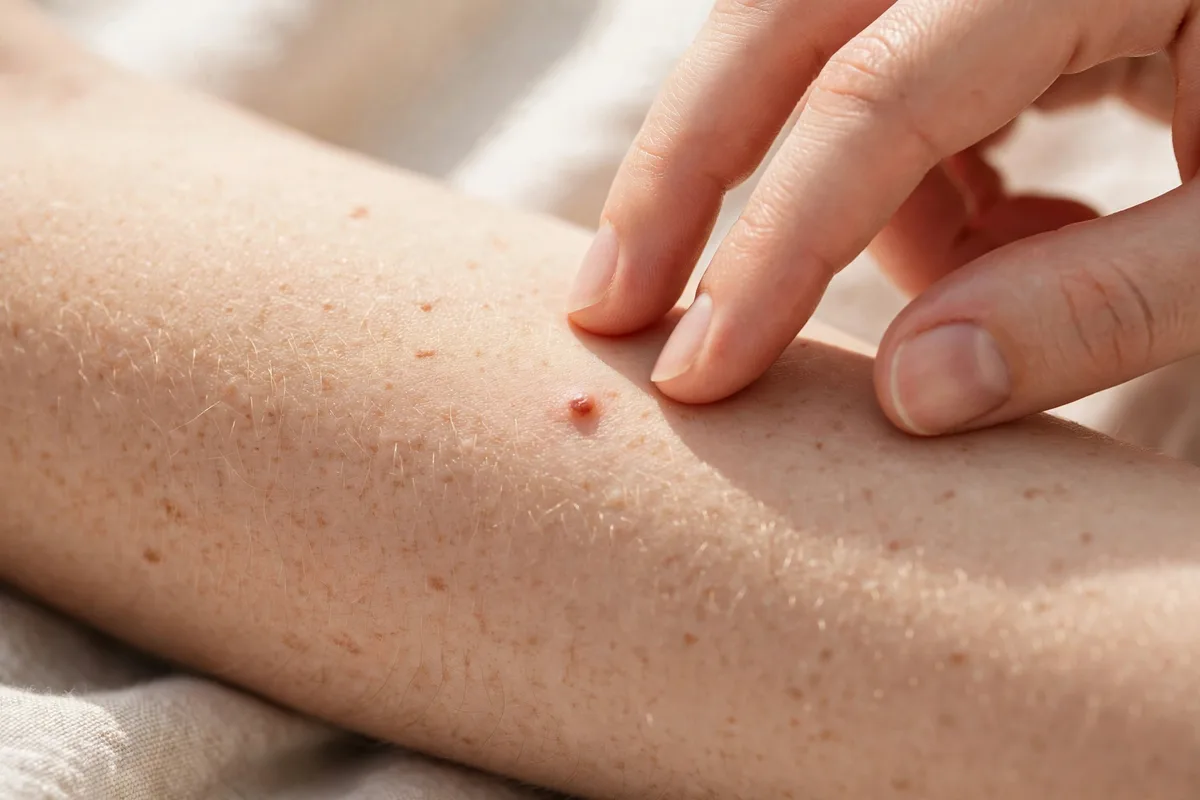
Cool compresses are a simple first step. For some people, labeled over-the-counter anti-itch products or antihistamines may help. The right option depends on age, pregnancy, allergies, other medications, and health history.
StingHelp does not provide individualized medication dosing. For young children, pregnancy, chronic illness, or uncertain drug interactions, ask a pharmacist or healthcare professional.
Scratching can break the skin and create a second problem: bacterial infection. A simple itchy bite may become tender, crusted, or draining if it is repeatedly scratched.
Keep fingernails short, wash the skin gently, and cover heavily scratched areas with clean breathable clothing if needed.
These features deserve medical evaluation. They do not prove leishmaniasis; bacterial infection and other causes need to be considered.
A skin lesion that remains open for weeks, enlarges, repeatedly crusts, develops a raised border, or fails to heal is no longer a typical short-lived bite reaction. Medical evaluation is appropriate even if travel was not involved.
After international travel, mention the exposure proactively. A chronic lesion can have many causes, and the correct diagnosis may depend on microscopy, culture, molecular testing, biopsy, or other clinician-directed evaluation.
Visceral leishmaniasis affects internal organs rather than being limited to one bite site. Symptoms can include prolonged fever, weight loss, enlargement of the spleen or liver, and abnormal blood counts. It requires medical diagnosis and treatment.
A person with prolonged systemic illness after relevant travel should not rely on home treatment for an assumed insect bite.
For U.S. readers, most everyday small-fly bites are nuisance exposures. Leishmaniasis risk is more strongly associated with specific geographic and travel contexts. CDC travel guidance is useful for determining where transmission occurs.
Locally acquired cutaneous leishmaniasis has also been documented in parts of the United States, including Texas, so clinicians may consider it even without international travel when the geography and lesion are compatible. That remains a clinical diagnosis, not something to infer from a photo.
No-see-ums are biting midges and are notorious around U.S. coastal and marsh environments. They often cause many small itchy bites on exposed skin. Phlebotomine sand flies are a different group and are the vectors relevant to leishmaniasis.
If several itchy bumps appeared after a Florida marsh evening and faded normally, biting midges are a more typical explanation. If a chronic ulcer developed after a rural trip in an endemic region, the clinical question is different.

Mosquitoes are larger and usually easier to see. Their bites often form transient itchy welts. Sand flies are much smaller. Early bite reactions can overlap, so geography and travel context are more useful than trying to identify the vector from the skin reaction.
Flea bites are often concentrated around the lower legs and ankles and may be linked to pets, animal bedding, carpets, or indoor infestations. Sand fly exposure is typically environmental. Persistent lesions after travel require a broader differential than fleas alone.
No. A fresh itchy bite is not automatically a bacterial infection. Unnecessary antibiotics can cause side effects and do not treat leishmaniasis.
If bacterial infection is suspected, a clinician can determine whether antibiotic treatment is appropriate. If leishmaniasis is suspected, the diagnostic and treatment approach is entirely different.
No. Leishmaniasis treatment depends on the species, disease form, lesion characteristics, geography, immune status, and risk of mucosal or visceral disease. Therapy can involve medications with important toxicities and monitoring requirements.
Do not self-treat a chronic lesion with medication obtained for another person or another parasitic infection.
Call emergency services for breathing difficulty, tongue or throat swelling, fainting, collapse, or other signs of a severe allergic reaction after any bite.
Seek prompt medical evaluation for high fever, rapidly worsening illness, significant spreading infection, severe weakness, or systemic symptoms after relevant travel.
There is no single measure that eliminates sand fly risk. CDC travel advice emphasizes reducing insect bites.
Many phlebotomine sand flies are most active from dusk through dawn. Travelers who spend evenings outdoors, sleep without effective screening, or work overnight in endemic areas may have greater exposure.
Protective clothing, repellent, and appropriate bed-net strategies are therefore especially important during those hours.

Take a photo every few days in similar lighting rather than dozens of photos in one day. Include a ruler nearby for scale. Note pain, itch, drainage, crusting, ulceration, and whether the lesion is getting larger or smaller.
Bring the timeline to the clinician. The rate and direction of change can be more useful than one close-up image.
Routine local care is reasonable if there are no concerning symptoms.
Consider biting midges/no-see-ums, especially in a U.S. marsh or beach setting.
Seek medical evaluation and provide the full travel history, including possible sand fly exposure.
Seek medical care rather than continuing home bite treatment.
Many people never notice the exact moment a sand fly bites. For a clinician evaluating possible cutaneous leishmaniasis, the later evolution of the lesion can be more informative: when it first appeared, whether it enlarged, whether the center ulcerated, whether new lesions appeared, and how many weeks it has persisted.
This is why a travel diary and serial photos can be valuable. A single close-up taken on day one may look like an ordinary arthropod bite. A sequence showing progressive change over several weeks tells a very different story.
Some people pick at crusts or repeatedly clean a nonhealing sore with peroxide, alcohol, or abrasive products because they assume something must be removed from inside it. That can damage tissue and obscure the lesion’s natural appearance. Keep the area reasonably clean, avoid traumatic home procedures, and seek professional evaluation for a persistent or ulcerating sore.
No. Transmission requires a bite from an infected vector in a setting where the parasite circulates.
No. Chronic skin lesions have many possible causes, and confirmation may require laboratory testing.
If it is persisting, enlarging, ulcerating, repeatedly crusting, or failing to heal over weeks, seek medical evaluation.
Not necessarily. The common names are used inconsistently. U.S. “no-see-ums” usually refer to biting midges, while travel-medicine sand flies are often phlebotomine sand flies.
Routine antibiotics do not treat the Leishmania parasite. Treatment requires diagnosis and clinician-directed therapy.
| Situation | Safer next step | Avoid |
|---|---|---|
| Mild itch or localized redness | Wash gently, use a cool compress, protect the skin, and follow label directions for any over-the-counter product. | Scratching, squeezing, cutting, or applying caustic home remedies. |
| Possible ongoing exposure | Leave the exposure area, change and wash clothing, and use an EPA-registered repellent as directed for future exposure. | Applying pesticides or repellents in ways not allowed by the product label. |
| Increasing warmth, pain, pus, or spreading redness | Contact a healthcare professional because secondary infection or another condition may need assessment. | Assuming every worsening lesion is a normal bite reaction. |
| Breathing trouble, throat or tongue swelling, fainting, or severe systemic symptoms | Call 911 or local emergency services immediately and follow a prescribed epinephrine plan if applicable, consistent with MedlinePlus emergency guidance. | Waiting for an oral antihistamine to replace emergency care. |
Educational information only. StingHelp does not diagnose leishmaniasis or identify an insect from a skin photo. Persistent ulcers, systemic illness, travel-associated symptoms, or severe reactions require professional medical evaluation.
Dr. Jones oversees StingHelp’s clinical verification process. Every guide is systematically evaluated against active Centers for Disease Control and Prevention (CDC), Environmental Protection Agency (EPA), and American Academy of Allergy, Asthma & Immunology (AAAAI) medical consensus standards to ensure symptom distinctions and care recommendations are clinically sound.
Explore physician-reviewed first-aid procedures, identification clues, and symptom comparisons for other common outdoor bites and stings.
Greenhead Fly Season at the Jersey Shore: When They're Worst, and How to Plan Around Them The fast answer: Greenhead flies — the big,…
Red Rings on Your Dog's Belly? It's Probably Black Fly Bites — Not Ringworm, Not Lyme The fast answer: Every spring and early summer,…
Horse Fly Bite Swelling: How Long It Lasts, Day by Day (and When It's Infected) The fast answer: A horse fly bite swells far…