
What Does a Bee Stinger Look Like? A Visual Guide to the Barb
Dr. Sarah Jones, MD is still reviewing this article, and her sign-off is awaited before publication. A honey bee stinger is tiny — only…
Dr. Sarah Jones, MD is still reviewing this article, and her sign-off is awaited before publication. Almost every page that ranks for this question answers a different one: what the…
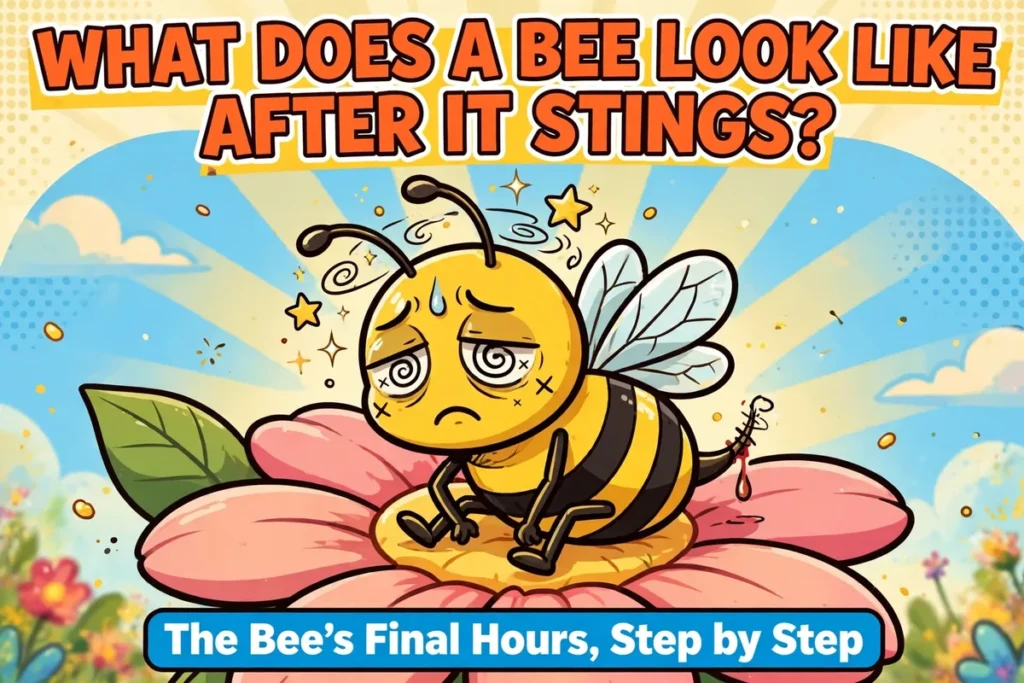
Dr. Sarah Jones, MD is still reviewing this article, and her sign-off is awaited before publication.
Almost every page that ranks for this question answers a different one: what the sting looks like on your skin. This page answers the question as asked — what happens to the bee.
Here is the short version. A honey bee that has just stung does not drop dead on the spot. She flies away — wobbly and weakened — with the rear of her abdomen torn where the sting apparatus ripped out. Over the following minutes she slows down, lands, grooms herself feebly, and moves less and less. Within minutes to a few hours, she dies. The sting she left behind, meanwhile, is still pumping venom into the skin without her.
No stopwatch study times a stung bee’s final hour, so this timeline is built from what is established about the injury itself: the sting apparatus tears out part of the bee’s abdomen, and reference accounts put her death at minutes to hours after the sting. Read the stages as a sequence, not as exact clock times.
| Time after the sting | What the bee looks like and does |
|---|---|
| The first seconds | The barbed sting anchors in the skin; as the bee pulls away, the sting, venom sac, and attached muscles and nerves tear out of her abdomen. She breaks free and takes off. |
| The first minute | She flies — but unsteadily. Flight is weaker and less directed than a healthy bee’s; she typically does not go far. The detached sting left in the skin keeps pumping venom on its own for several minutes. |
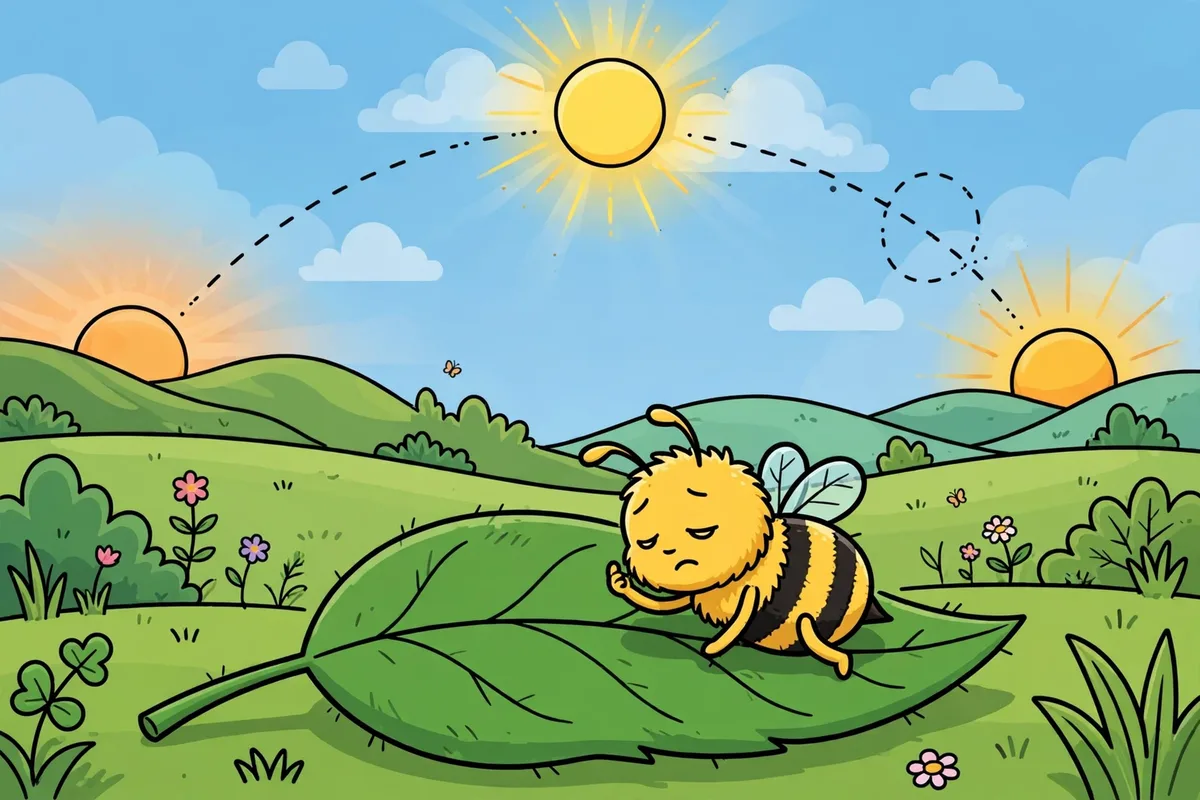
| The first minutes after landing | She settles on a surface nearby — a leaf, the ground, a wall. Movement slows. She may groom herself weakly or curl slightly. The tip of her abdomen shows the visible injury where the apparatus tore away. |
| The following hour(s) | Activity fades: shorter, weaker movements, then stillness broken by occasional leg or antenna movement. She cannot feed, fly properly, or return to any normal behaviour. |
| Minutes to hours after the sting | She dies. University of Minnesota Extension’s summary is the blunt one: the stinger is torn out of the abdomen, and “as a result, the bee soon dies.” |
Two honest qualifications belong with this table. First, the timing genuinely varies — “minutes to hours” is the range the sources support, and any page giving you an exact minute count is inventing it. Second, this fate belongs to the honey bee worker specifically. It is not what happens to every bee, as the next sections explain.
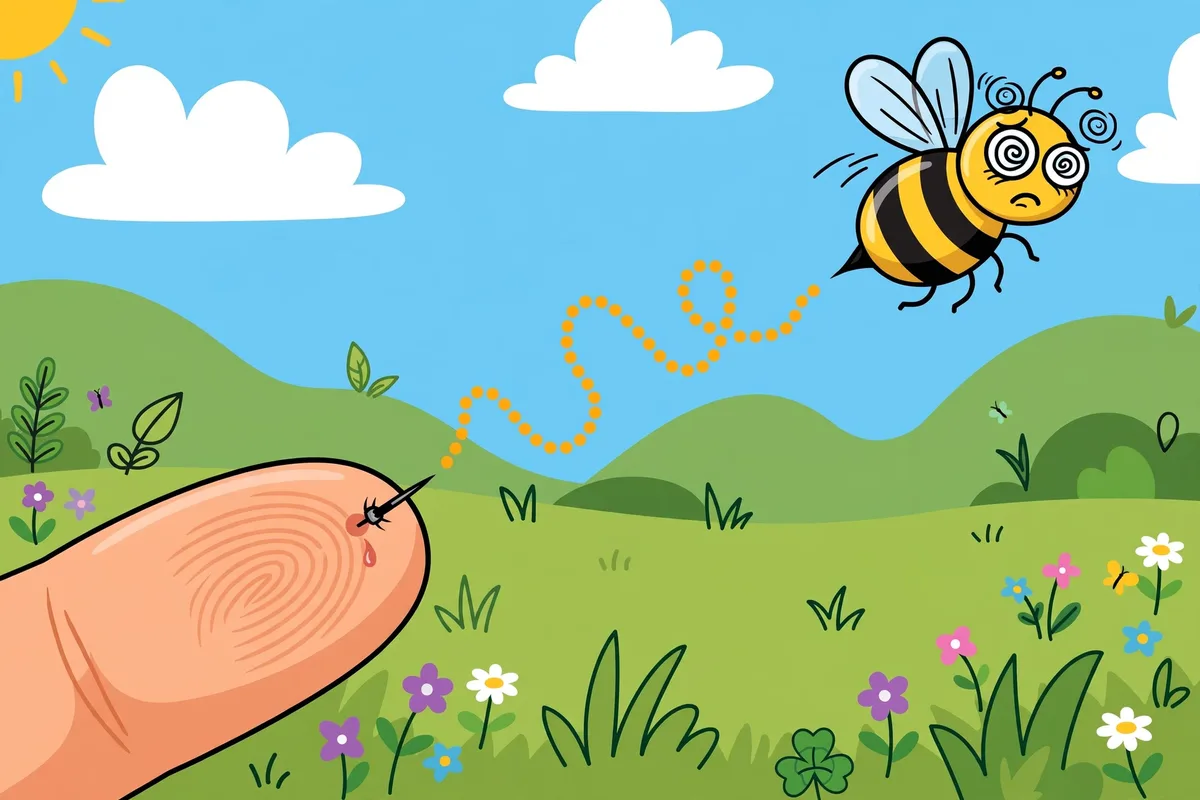
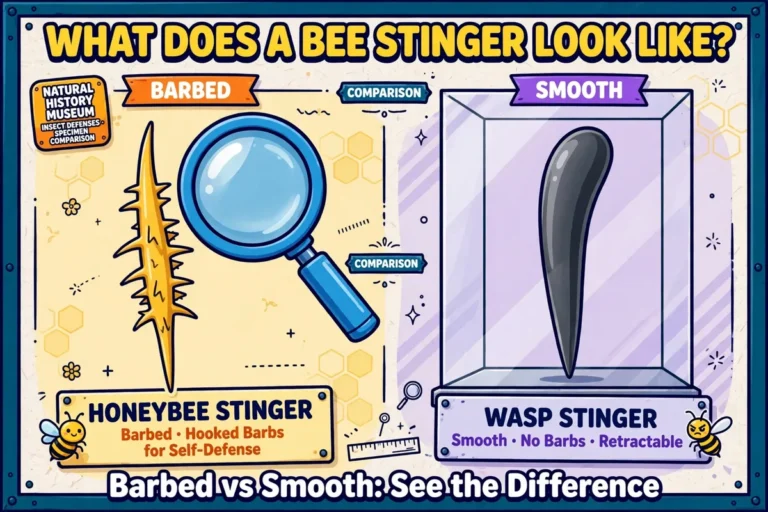
The honey bee’s sting is barbed. Its two lancets carry backward-facing barbs that anchor the sting in elastic skin — human skin, or another mammal’s. When the bee tries to fly off, the anchor holds and the apparatus tears out of her body, taking the venom sac and part of her abdominal contents with it. That is a fatal wound: the bee has, in effect, left part of her digestive and nervous equipment behind in your skin.
This is also why the sting is sometimes called a colony defence of last resort. A worker who stings a mammal does not survive it, so honey bees are reluctant stingers away from the hive — most stings happen when a bee is stepped on, trapped against skin, or defending the colony entrance.
Notice the detail hidden in that mechanism: the barbs anchor in elastic skin. A honey bee that stings another insect — whose shell is hard and thin — can often withdraw her sting and survive. It is stinging mammals that costs her life.
Search results blur all bees into one story. They shouldn’t:
University of Minnesota Extension draws the same line: yellowjackets, paper wasps, and bumble bees can sting more than once because they pull their stinger out without injuring themselves; the honey bee is the one whose stinger stays hooked in the skin.
While the bee is living out her last minutes, her sting is still at work in your skin — the detached venom sac keeps contracting and pumping venom for several minutes. That is why the first thing to do after a honey bee sting is not to watch the bee; it is to get the stinger out. Scrape it out with a credit card edge or a fingernail — do not squeeze it with tweezers, which can push more venom in — then wash with soap and water and apply ice, 10 minutes on and 10 minutes off. Our step-by-step guide covers how to remove a bee stinger, and if you want to know exactly what the speck in your skin is, see what a bee stinger looks like.
Typical local reactions — burning, itching, redness, tenderness, and swelling that can last up to a week — come from the venom already delivered, and they happen whether or not you ever find the bee.
Medical disclaimer: This article is general information about bee biology and basic sting care, not medical advice. Call 911 immediately if a sting is followed by trouble breathing, swelling of the face or mouth, tightness in the throat, difficulty swallowing, weakness, or dizziness — these can be signs of a severe allergic reaction (anaphylaxis). Seek medical care promptly for signs of infection or whenever you are unsure about a reaction.
| Honey bee worker | Honey bee queen | Bumble bee | |
|---|---|---|---|
| Sting type | Strongly barbed | Smoother, curved | Comparatively smooth |
| Sting left in skin? | Yes — tears out of her | No | No |
| What she looks like afterwards | Weak, wobbly flight; lands nearby; slows and dies within minutes to hours | Unharmed; carries on | Unharmed; flies off normally |
| Can she sting again? | No | Yes | Yes |
The worker is the only one who pays for a sting with her life, and she is also the bee you will almost always meet — queens rarely leave the hive except to mate or swarm, and it is workers who forage, and occasionally sting, in gardens.
From the colony’s perspective, a stung worker is one forager who does not come home — and a healthy colony loses foragers every day to weather, predators, and simple old age. Honey bee colonies are perennial: University of Minnesota Extension notes that, unlike wasp colonies, honey bee colonies survive more than one year, with workers and the queen clustering together through the winter. The workforce is continuously replaced as the queen lays, so a single defensive sting, while fatal to the individual bee, does not dent the colony.
That arithmetic is precisely why the barbed sting evolved the way it did. The worker’s sacrifice is not pointless from the colony’s point of view: the sting stays in the intruder, keeps delivering venom on its own, and delivers a stronger deterrent than a retractable sting could — at the cost of one replaceable worker rather than the colony’s safety. It is a system built for defending a permanent home against large animals, which is exactly the situation where you are most likely to be stung: near a hive, or when a bee is trapped and panicking against skin.
It is worth pausing on the contrast, because it explains so much confused search behaviour. When a wasp or yellowjacket stings you, the insect’s experience is a non-event: her smooth sting slides in, delivers venom, and slides back out, and she flies off completely intact — able to sting again within seconds, and looking exactly as she did before. Nothing about her behaviour changes, because nothing about her body has. The honey bee is the lone exception among the common stinging insects: for her, the same act is a fatal injury with a visible aftermath. If the insect that stung you flew off strongly and kept coming, it was not a honey bee. If it veered away weakly and there is a black speck with a sac still working in your skin, it was — and that speck, not the departing bee, is where your attention belongs.
It is a kind question, and the honest answer is no. Once the apparatus has torn out, the injury is internal and fatal; there is no first aid a person can offer a bee, and handling her risks a second sting from a nestmate rather than helping the first. The genuinely useful things you can do are preventive: watch for bees before sitting or stepping barefoot in clover and grass, keep sweet drinks covered outdoors, and stay calm and still if a bee lands on you — most bees that are not trapped or threatened simply leave. A bee that has not stung is a pollinator with a whole season of work ahead of her.
Does a bee die instantly after it stings? No. She flies away from the sting, weakened, and dies minutes to hours later. The “dies instantly” version is a myth; the “dies soon” version is the documented one.
What does a bee look like right after it stings? Unsteady in flight, then slow on her feet. She lands nearby, moves and grooms weakly, and gradually becomes still. The tip of her abdomen carries the visible tear where the sting apparatus ripped out.
Why does the bee die but the sting keeps working? Because the sting is no longer part of the bee. The venom sac and its muscles tore out with the sting and keep contracting on their own for several minutes, pumping venom into the skin. That is exactly why removing the stinger quickly matters.
Do all bees die after stinging? No — only honey bee workers stinging elastic (mammal) skin. Bumble bees and honey bee queens have smoother stings they can withdraw, and they survive. Male bees cannot sting at all.
What does a bee look like after it stings a dog or another animal? The same sequence: the barbed sting anchors in the animal’s skin, the apparatus tears out, and the bee weakens and dies within minutes to hours. The animal’s sting care is a veterinary question — if a pet is stung in the mouth or shows swelling of the face or trouble breathing, contact a veterinarian promptly.
If I find a slow, dying bee, was it necessarily a sting? Not necessarily. Bees also slow down from cold, age, exhaustion, and pesticide exposure, and a cold or tired bee resting on the ground may simply be conserving energy. The post-sting bee is specifically one seen in the moments right after a sting occurred nearby — and if there is a stinger in someone’s skin with a venom sac attached, you already have your answer. If you are unsure whether a stinger is still in the skin, use our checker: how to tell if a bee stinger is still in your skin.
Dr. Jones oversees StingHelp’s clinical verification process. Every guide is systematically evaluated against active Centers for Disease Control and Prevention (CDC), Environmental Protection Agency (EPA), and American Academy of Allergy, Asthma & Immunology (AAAAI) medical consensus standards to ensure symptom distinctions and care recommendations are clinically sound.
Explore physician-reviewed first-aid procedures, identification clues, and symptom comparisons for other common outdoor bites and stings.
Dr. Sarah Jones, MD is still reviewing this article, and her sign-off is awaited before publication. A honey bee stinger is tiny — only…
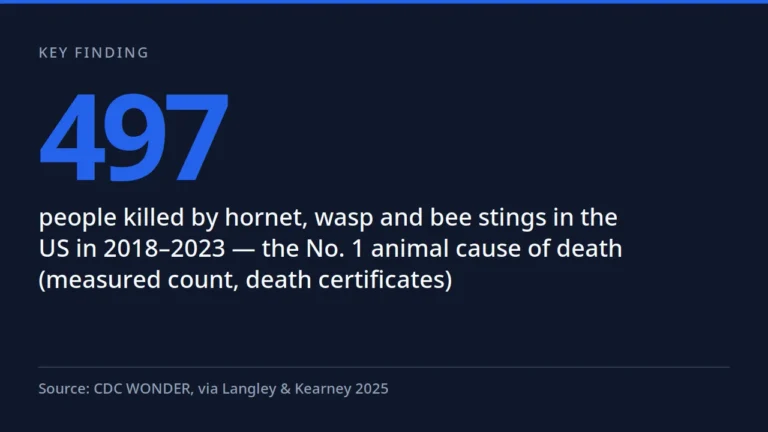
The joined US sting burden: 72 deaths a year on death certificates, an estimated 221,718 ER visits a year in hospital samples, 9,041 admissions across 2010–2014, and 2,648 poison-center cases in 2024 — every figure with its system, period and label.

What a bee or wasp sting visit actually bills at urgent care and in the emergency room, by severity, from itemised case bills and national cost data.