
Where Do Wasps Hide in Your House? A Room-by-Room Guide
Dr. Sarah Jones, MD is still reviewing this article, and her sign-off is awaited before publication. A wasp in the house is almost never…
Dr. Sarah Jones, MD is still reviewing this article, and her sign-off is awaited before publication. Yes. Every male wasp leaves the nest — and unlike the workers, who fly…
Dr. Sarah Jones, MD is still reviewing this article, and her sign-off is awaited before publication.
Yes. Every male wasp leaves the nest — and unlike the workers, who fly out and come back all season, a male’s departure is a one-way trip. Males are produced only at the end of the colony’s life, in late summer and fall. They leave on mating flights, spend their remaining days feeding on nectar and looking for a queen, and then die as the weather cools. Not one of them survives the winter, and none of them ever rejoins a colony.
This surprises people because for most of the year, a wasp nest contains no males at all. From spring through midsummer, every wasp you see is female: the queen who founded the nest, and her daughters, the workers. Males are a final, short-lived generation with a single job. This page walks through the male wasp’s whole life — when he appears, why he leaves, what he does outside, and when he dies — for yellowjackets, paper wasps, and hornets.
No single page we found lays the male’s season out end to end. Here it is, joined from extension-service life-cycle accounts:
| Stage | Yellowjacket males | Paper wasp males | Hornet males (incl. bald-faced hornet) |
|---|---|---|---|
| When they are produced | Late summer | Late summer to early fall | Late summer |
| When they leave the nest | Late summer–fall, on mating flights | Early fall, shortly after emerging | Late summer–fall, on mating flights |
| What they do outside | Feed on nectar and sweets; mate with new queens | Feed on nectar; mate; loaf near flowers and nest sites | Feed on nectar and sap; mate with new queens |
| Do they return? | No — the trip is one-way | No | No |
| When they die | As the weather cools; gone by the first hard freezes | As the weather cools in fall | By the first hard freezes |
| Who survives winter instead | The newly mated queens only | The newly mated queens only | The newly mated queens only |
The pattern is the same across all three groups, because all of them run annual colonies. University of Minnesota Extension describes the shared rhythm: by late summer, new queens and males are produced; the colonies begin to decline as the queen stops laying eggs; after mating, the queens fly off to find places to spend the winter; and the nest stays active only until freezing temperatures — usually in the mid-to-upper 20s °F — kill the old queen and the workers. The males die in the same end-of-season collapse.
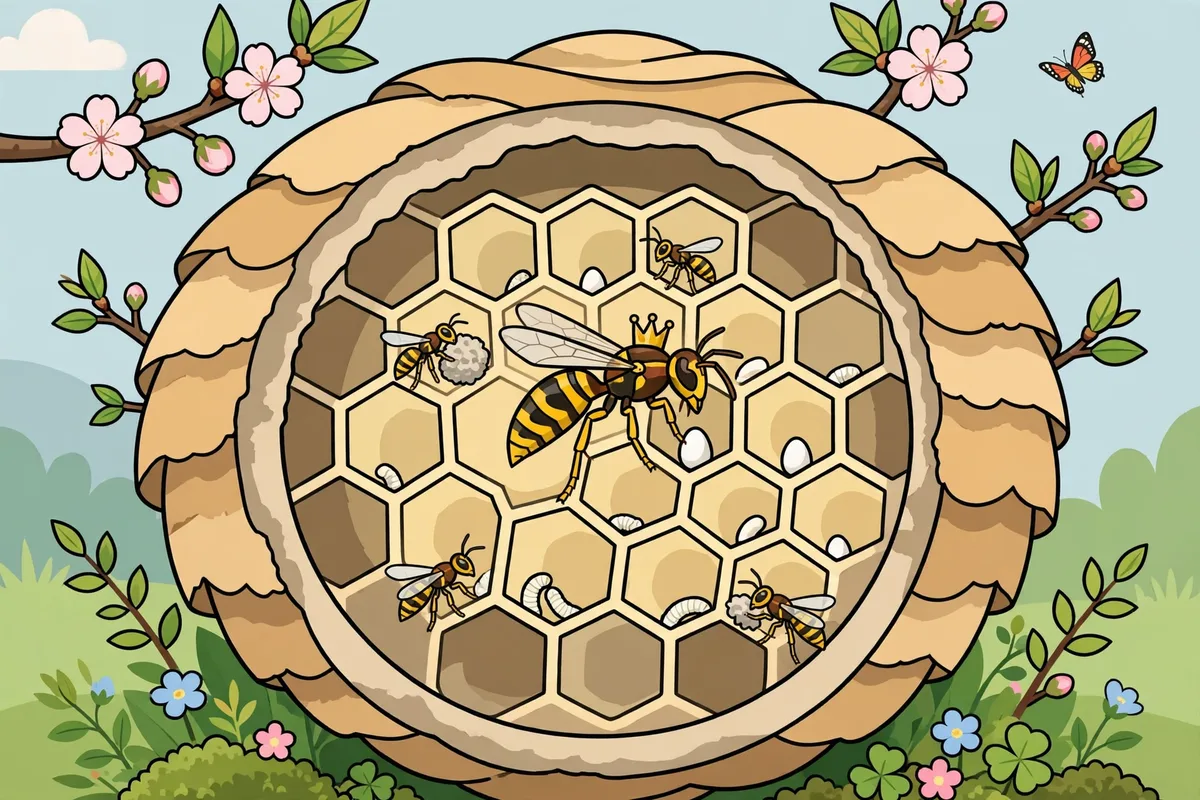
A social wasp colony spends spring and summer building a workforce, not a family. The founding queen lays eggs that become workers — sterile females who forage, build, feed the larvae, and defend the nest. Producing males early would waste the colony’s resources, because a male does none of that work. He does not hunt, does not build, does not feed larvae, and cannot even defend the nest.
Only when the colony is large and the season is nearly over does it switch to producing reproductives: new queens and the males who will mate with queens from other colonies. That timing is why you never see male wasps in spring. If a wasp is out in April, it is a queen founding a nest or one of her first workers — never a male.
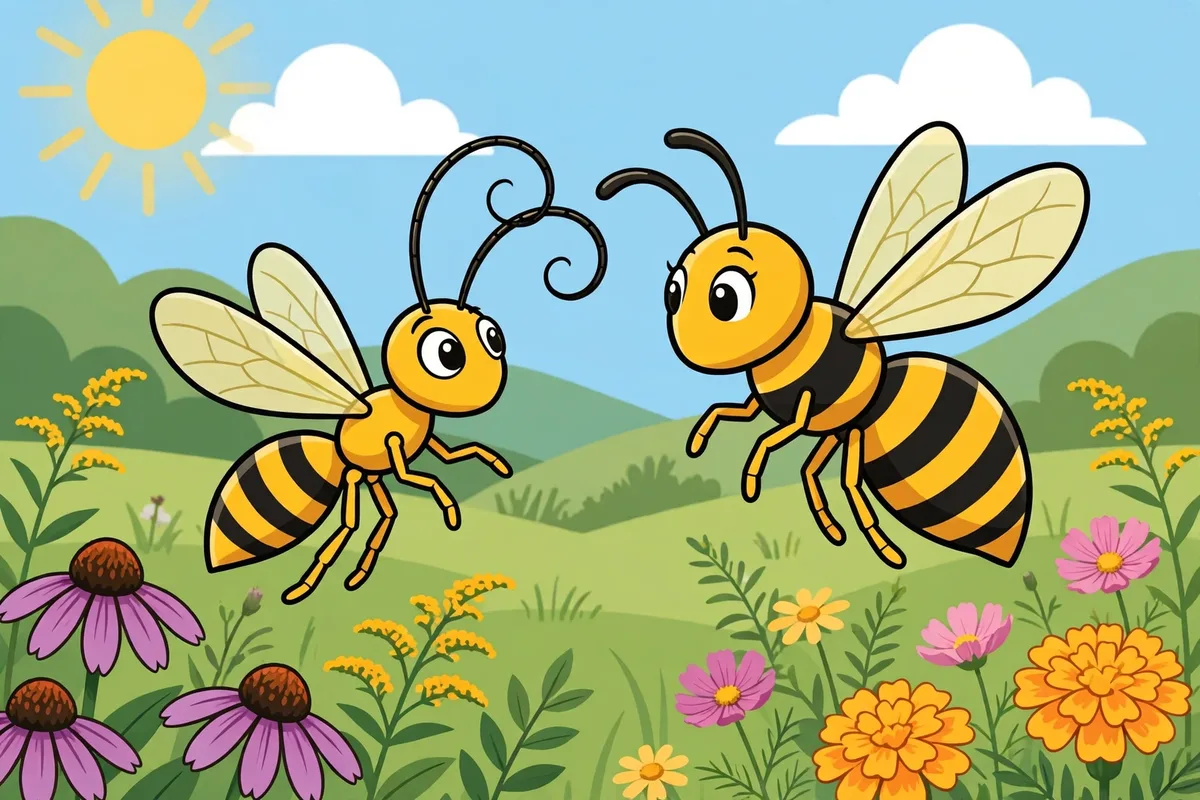
Once a male leaves, his life is simple and short. He feeds himself — adult wasps run on sugar, so males visit flowers for nectar and show up around ripe fruit and sweet drinks, the same fuel University of Minnesota Extension lists for adults generally. His real purpose is the mating flight: males gather where new queens emerge, mate, and the cycle’s genetic work is done.
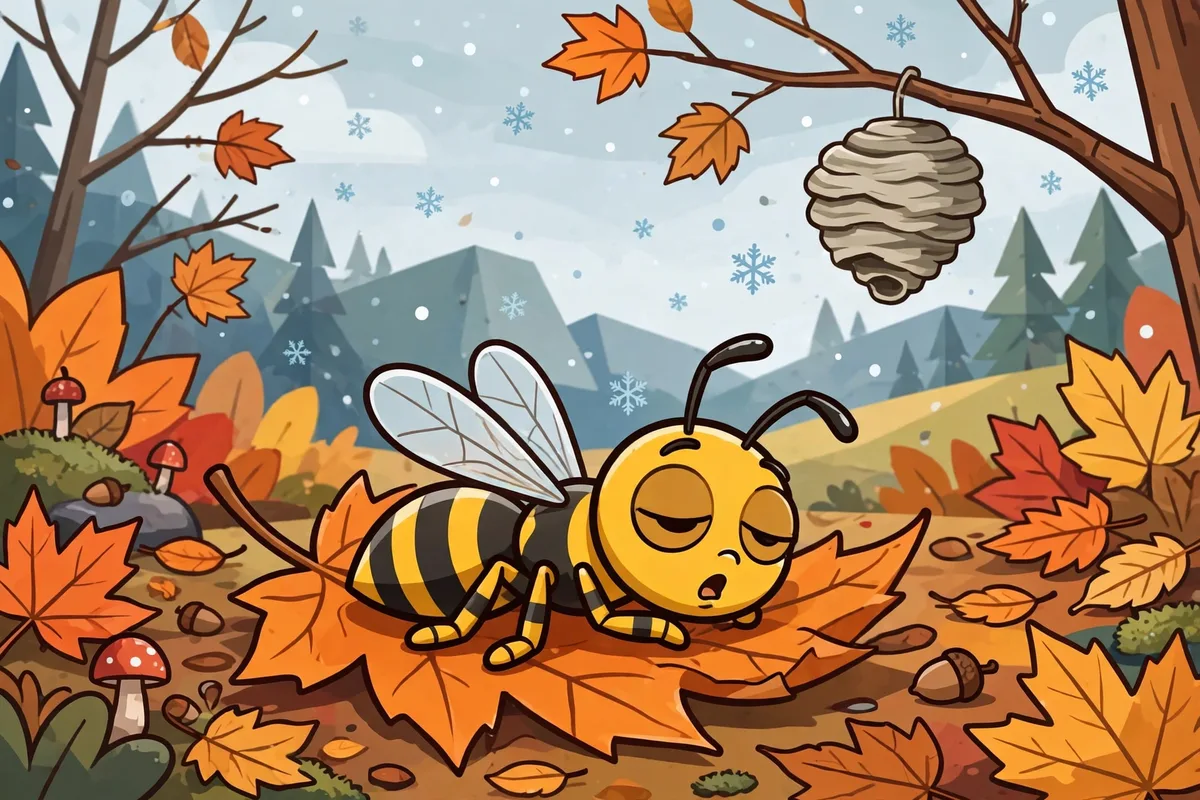
After mating, there is nothing left for him. He does not return to his birth nest, does not join another one, and does not found anything. NC State Extension’s account of paper wasps puts it plainly: the queens leave the nest, mate, and overwinter, while the workers and the males die as the weather cools. A male’s adult life is measured in weeks, and it ends with the first hard freezes at the latest.
This is also why fall wasps around your picnic seem so aimless. Some of them are males: no nest to defend, no larvae to feed, just a hungry wasp working the last flowers and your soda can before the season ends.
Spring. A single queen emerges from winter shelter and founds the nest alone. There are no males, and there will not be for months. Every wasp on the wing is the queen, then her first daughters.
Early to mid-summer. The colony is a workforce. Workers forage, build, and raise more workers. The queen’s only job now is laying eggs. Still no males — producing them now would drain the colony for nothing.
Late summer. The switch flips. The colony raises its reproductives: new queens and males in larger, specially built cells. The males emerge, feed, and begin leaving on mating flights. This is when people suddenly start noticing wasps behaving oddly around flowers, fences, and sunny walls — many of them are males with nowhere to be.
Fall. Mating peaks. Queens mate, leave, and hunt for winter shelter under bark, in stumps, or inside buildings. Males, workers, and the old queen decline together and die as the weather cools; the first hard freezes finish whatever is left.
Winter. No males exist. No workers exist. The species survives the season entirely as mated queens in dormancy — which is why the male wasp, for all his importance in a few short weeks, is the most seasonal insect in the colony’s year.
Homeowners often report wasps in September and October that seem drunk, lazy, or lost — crawling on windows, loafing on fences, blundering into drinks. A good share of them are males at the end of their one-way trip. A worker out of the nest is commuting; a male out of the nest is simply out, with no route home, no larvae waiting, and nothing to do but feed and look for a queen until the cold takes him. Add the workers of a colony that is itself breaking down for the season, and fall’s wasp behaviour makes complete sense: it is an entire society in its final weeks, and the males are the most visibly purposeless members of it.
You cannot reliably sex a wasp at a glance from across the yard, but at close range — a photograph, or a wasp on a window — the signs are consistent:
If you are trying to tell the insects themselves apart rather than the sexes, our yellowjacket vs honeybee guide covers the look-alikes people confuse most often.
No. A male may drift around his home area for a few days — males are often seen loafing near the nest they came from, or around flowers and leaky tree sap nearby — but he does not rejoin the colony’s work, is not provisioned by it, and does not overwinter with it. When the end comes, it comes for the whole male generation at once: males, workers, and the old queen all die as temperatures fall, and the empty nest is abandoned. The only wasps alive in winter are the new queens, each alone (yellowjackets) or in small groups (paper wasps), sheltering under bark, in stumps, or inside buildings until spring.
That is also why an old nest never needs “the wasps removed” in winter — there is nothing alive in it, and colonies do not reuse the previous year’s nest. You can read more in our explainer on whether wasps reuse nests and on how long a wasp nest stays active.
A male wasp cannot sting you — that much is anatomically guaranteed. The catch is that you usually cannot tell a male from a worker until you are far too close, and workers absolutely can sting, repeatedly, especially in late summer and fall when colonies are at their largest and most defensive. Treat every wasp as a female. Give nests a wide berth, keep sweet drinks covered outdoors in the fall, and never swat at a wasp near its nest.
Medical disclaimer: This article is general information about wasp biology, not medical advice. Wasp stings are delivered by females, and most cause only local pain, redness, and swelling. Call 911 immediately if a sting is followed by trouble breathing, swelling of the face or mouth, tightness in the throat, difficulty swallowing, weakness, or dizziness — these can be signs of a severe allergic reaction (anaphylaxis). When in doubt, seek medical care.
And a related myth worth retiring: a wasp does not leave its stinger behind the way a honey bee does. See do wasp stings leave a stinger for what actually happens.
Do male wasps leave the nest? Yes. Males are produced in late summer and fall, leave on mating flights, and never return. They live out their remaining days feeding on nectar and die as the weather cools.
Why are there no male wasps in spring? Because colonies produce workers first. From spring through midsummer every wasp in and around the nest is female — the queen and her worker daughters. Males are only raised at the end of the season, alongside the new queens.
How long do male wasps live? Weeks, not months. A male emerges in late summer or fall, mates, and dies as temperatures drop; freezing weather in the mid-to-upper 20s °F ends the season for males, workers, and the old queen alike. Only newly mated queens live through winter.
Can a male wasp sting? No. The stinger is a modified egg-laying organ that only females possess. Males sometimes curl their abdomen in a bluffing motion, but they have no stinger and no venom. Never rely on this at close range, though — males and workers look very similar.
Do male wasps die after mating? Not instantly, the way the season is sometimes dramatized — but soon. After mating, a male continues feeding on nectar for days to a few weeks and then dies as the weather cools. The mated queens he leaves behind are the ones who carry the species through winter.
Do male wasps come into houses in the fall? They blunder in, like any wasp, through open doors and windows — but they are not the wasps deliberately sheltering in your house. The wasps that choose your attic, chimney, and wall voids for the winter are the newly mated queens. A male found indoors in fall is a short-lived visitor near the end of his few weeks; a large, slow wasp still indoors in winter or early spring is a queen, and she is the one worth escorting outside, because she is next year’s colony founder.
Where do male wasps go at night? They shelter where they can — on vegetation, under leaves and eaves, around the nest area — rather than sleeping inside a colony that provisions them. Once they leave, they are on their own around the clock.
Dr. Jones oversees StingHelp’s clinical verification process. Every guide is systematically evaluated against active Centers for Disease Control and Prevention (CDC), Environmental Protection Agency (EPA), and American Academy of Allergy, Asthma & Immunology (AAAAI) medical consensus standards to ensure symptom distinctions and care recommendations are clinically sound.
Explore physician-reviewed first-aid procedures, identification clues, and symptom comparisons for other common outdoor bites and stings.
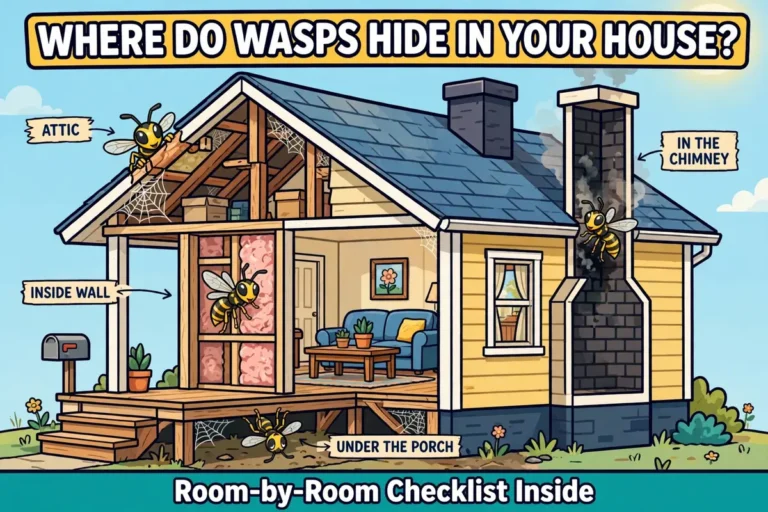
Dr. Sarah Jones, MD is still reviewing this article, and her sign-off is awaited before publication. A wasp in the house is almost never…
Dr. Sarah Jones, MD is still reviewing this article, and her sign-off is awaited before publication. Search "how long does a wasp live without…
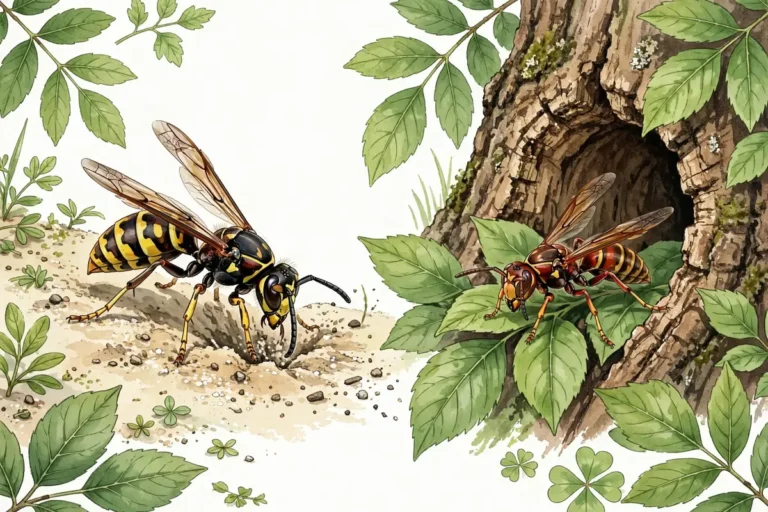
A wasp the size of your thumb lands on the patio furniture, and the yard goes quiet. Cicada killer or European hornet? The direct…