
Where Do Wasps Hide in Your House? A Room-by-Room Guide
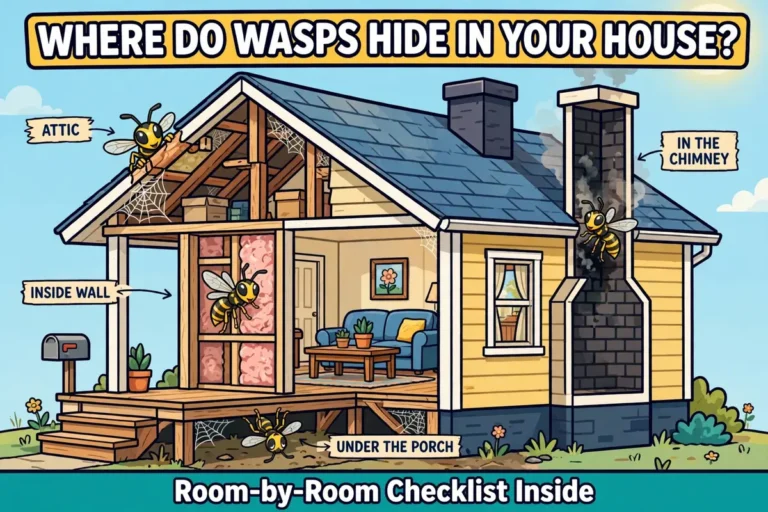
Dr. Sarah Jones, MD is still reviewing this article, and her sign-off is awaited before publication. A wasp in the house is almost never…
Dr. Sarah Jones, MD is still reviewing this article, and her sign-off is awaited before publication. Search "how long does a wasp live without food" and you will get answers…
Dr. Sarah Jones, MD is still reviewing this article, and her sign-off is awaited before publication.
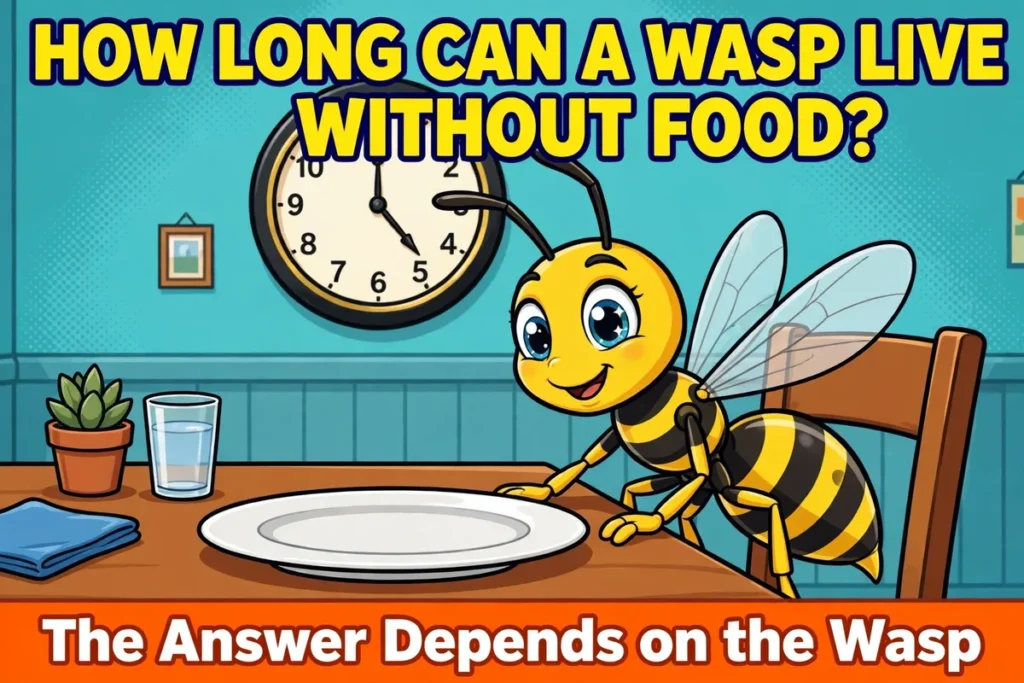
Search “how long does a wasp live without food” and you will get answers that flatly contradict each other: 24 to 48 hours, three to ten days, even “up to three weeks.” They cannot all be describing the same wasp — and that is exactly the problem. Each of those numbers describes a different wasp, in a different situation, and most pages never tell you which one they mean.
Here is the short version. An active worker wasp with access to water typically lasts about 2 to 3 days without food. A wasp trapped inside your house usually dies within about 48 hours, and almost never beyond 3 days. And a newly mated queen settling in for winter can go months without eating a single thing. All three answers are real. The rest of this page shows you which number applies to which wasp, and why the temperature around the wasp changes the answer more than anything else.
Starvation time only makes sense against total lifespan, and that too depends on the role. A yellowjacket worker’s whole adult life is short — reported at roughly two to three weeks from emergence to death — most of it spent working for the colony. A queen lives about a year: she founds the colony in spring, rules it through summer, and the new queens of the next generation are the ones who then overwinter. Males live the briefest adult life of all, a few weeks at the very end of the season.
Seen against those totals, the starvation figures make more sense. A worker who only lives a few weeks anyway carries almost no reserves — days without food is a large fraction of her entire life. A queen built to survive an entire winter in dormancy is playing a different game altogether. When someone quotes you a survival time, the first question is always: which wasp, in which state?
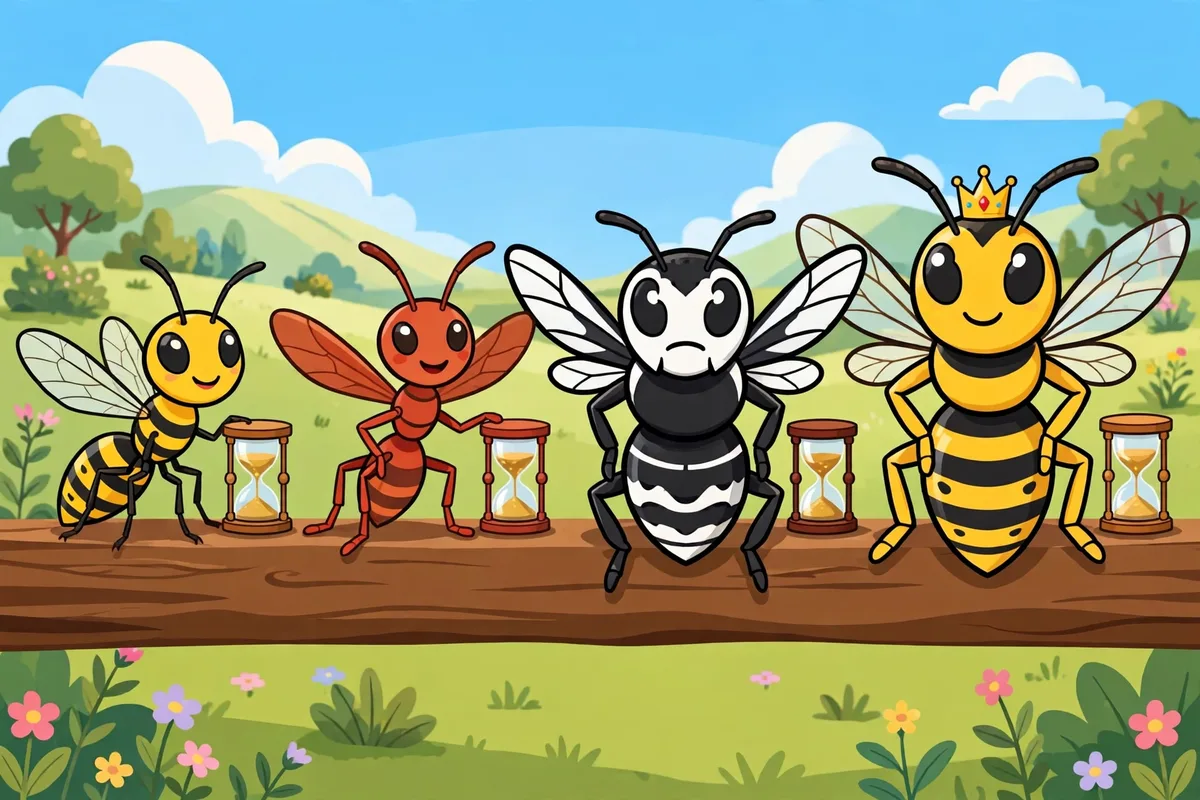
Three variables decide how long a wasp survives without food, and most articles mix them together:
When a page says “a wasp lives 24–48 hours without food,” it is usually describing a trapped or exhausted worker. When a page says “weeks,” it is usually describing a queen in winter dormancy — a completely different physiological state. Neither page is necessarily lying; they are just answering different questions under the same headline.
This table pulls the reported ranges together in one place and labels the state each range actually describes — something no single page we found does.
| Wasp | Queen | Worker (female) | Male |
|---|---|---|---|
| Yellowjacket | Several days when active; months in winter dormancy | About 2–3 days (with water) | A few days; no separate measured studies |
| Paper wasp | Several days when active; months in winter dormancy, often in groups | About 2–3 days (with water) | A few days; dies off as weather cools in fall |
| Hornet (incl. bald-faced hornet) | Several days when active; months in winter dormancy | About 1–3 days (larger body, high energy use) | A few days; gone by the first hard freezes |
A few honest notes on this table:
Temperature is the hidden variable behind most of the contradictory numbers:
| Condition | Effect on survival without food |
|---|---|
| Hot weather, wasp active and flying | Fastest burn. Reserves can be gone in about 1–2 days for a worker. |
| Mild room temperature, wasp mostly resting | Typical range: about 2–3 days for a worker. |
| Cool conditions (a chilly room, a cool attic) | Slower metabolism stretches survival toward 3–4 days. |
| Near or below freezing (mid-to-upper 20s °F) | Workers and the old queen are killed outright — this is what ends colonies in fall. |
| Winter dormancy (queen only) | Metabolism nearly stops. She survives months on stored fat alone. |
This is why a wasp trapped in a cool spare bedroom can still be alive on day three, while one trapped in a hot car is gone within a day. It is also why a whole colony can look unstoppable in September and be completely dead after the first hard freeze: University of Minnesota Extension notes that yellowjacket and paper wasp nests stay active only until freezing temperatures — usually in the mid-to-upper 20s °F — kill the old queen and the workers.
Adult social wasps run on sugar. University of Minnesota Extension describes adults feeding on the juices of ripening and overripe fruit, on honeydew, and on flower nectar, while the insects and spiders they catch are chewed up and fed to the larvae, not eaten by the adults themselves. A flying wasp is a small, warm, constantly moving machine with almost no fuel tank: workers carry minimal body fat, so when the sugar stops, the clock runs out in days.
Water matters almost as much as food. A worker with access to water consistently outlasts one without it, which is why the reported ranges assume water is available unless stated otherwise — and why a wasp trapped somewhere dry fades fastest of all.
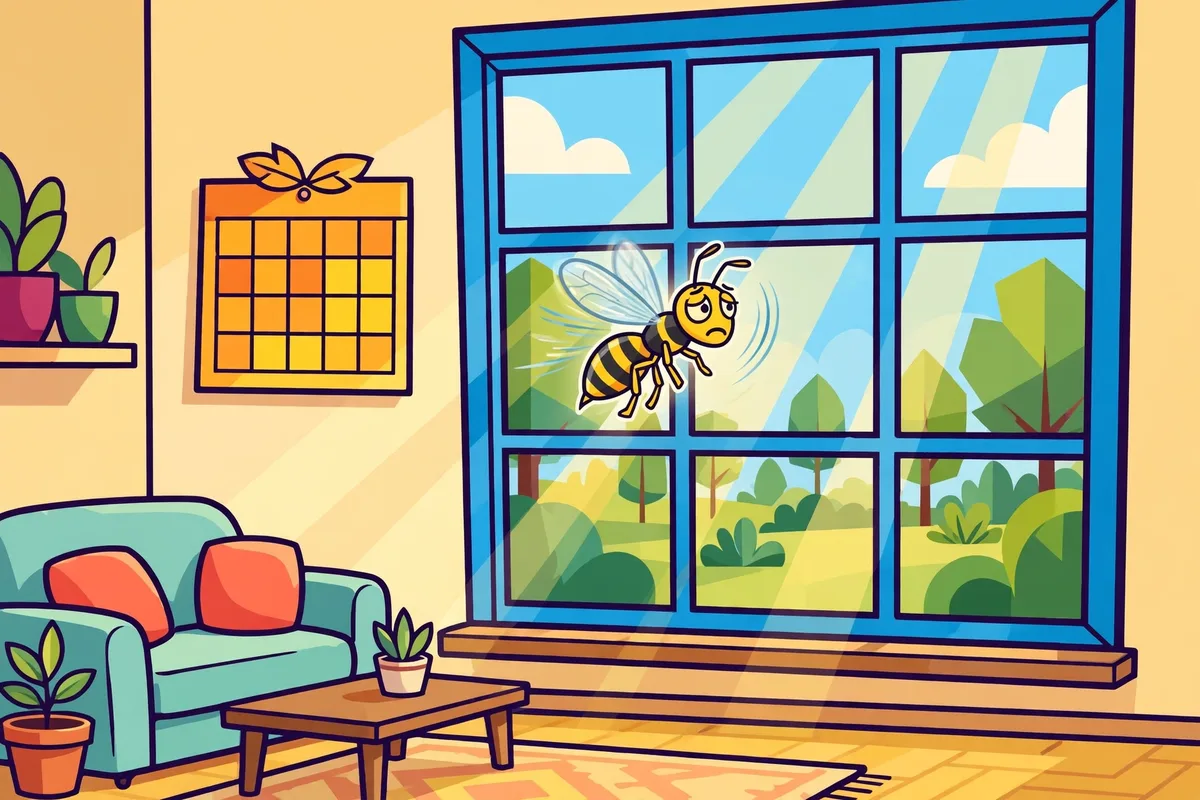
This is the situation behind most searches, so here it is plainly: a yellowjacket or paper wasp trapped indoors, with no food and no way out, typically survives about 48 hours, and up to roughly 3 days in cooler rooms. It will spend much of that time at windows, drawn to the light, and grow visibly slower and weaker.
You usually do not need to do anything dramatic. Keep the room closed off if the wasp is near children or anyone with a sting allergy, and if you can open a window or an outside door safely, most wasps will find their own way out long before starvation is an issue. One exception: if wasps keep appearing indoors day after day, you are probably not dealing with one trapped wasp — you may have a nest in a wall void or attic, or, in winter and early spring, overwintering queens waking up inside the house. Repeated indoor wasps are a reason to look for a nest, not to keep waiting out the clock.
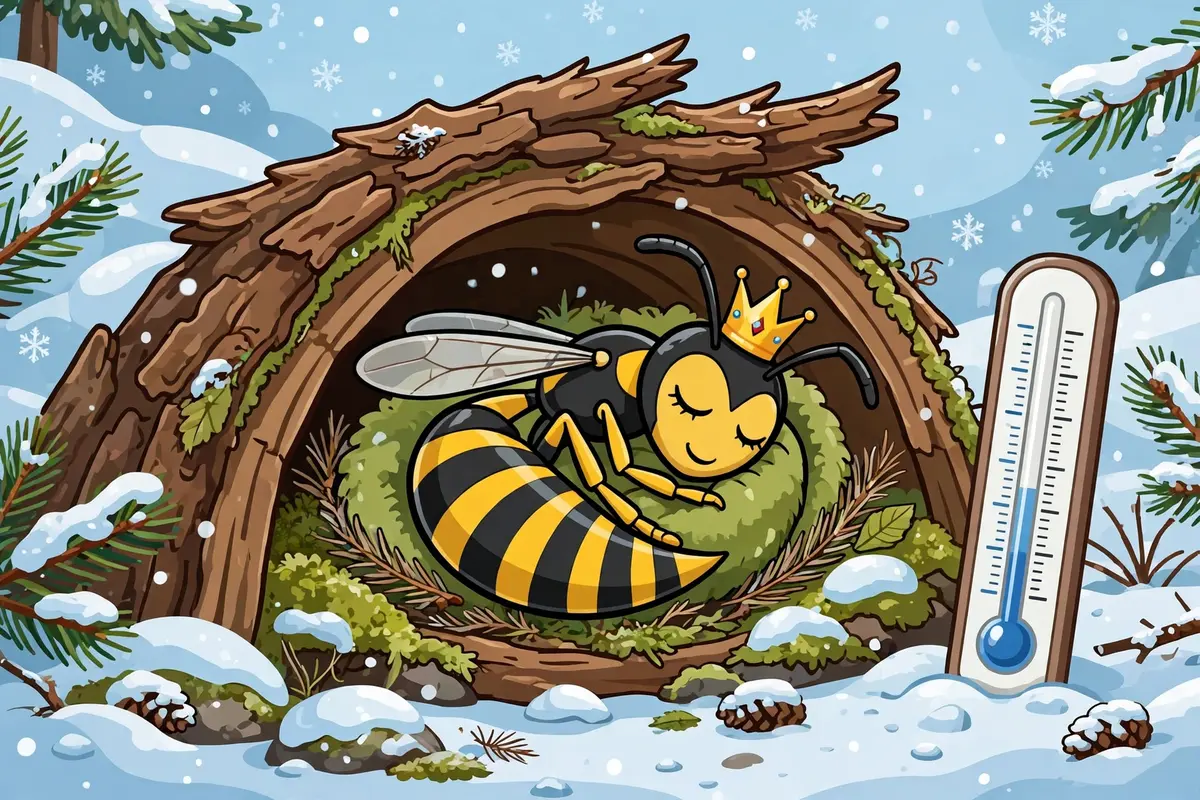
Every fall, the story resets. Colonies produce new queens and males; the queens mate, leave the nest, and search for a protected place to spend the winter. NC State Extension lists the classic hiding spots for paper wasp queens: attics, chimneys, wall voids, under siding, even inside stacked wood. There, the queen enters a dormant state and lives entirely off her body fat — no food, for the whole winter.
So if you find a single, slow, large wasp indoors in January, you are almost certainly looking at a queen who has already gone months without food and is simply waiting for spring. University of Minnesota Extension makes the same point: a wasp found indoors in winter has come from a shelter, not from an active nest.
Everything above concerns the social wasps — yellowjackets, paper wasps, and hornets — that live in colonies. Solitary wasps such as mud daubers live alone, and their clock is a little longer: reported ranges put a solitary wasp at up to about a week without food. That fits their lifestyle — a solitary female works alone, provisions her nest cells one at a time, and is built for longer stretches between meals than a colony worker that is refuelled constantly by the nest’s foraging traffic.
Solitary wasps are also the least likely to bother you. A mud dauber in the house is usually a lost individual looking for a way out, not a sign of an infestation, and it will not defend a nest the way a colony worker does. The same cup-and-card release that works for a stray yellowjacket works even better here.
A starving wasp is not more dangerous than a fed one — if anything, it is slower and less able to fly. The sting risk comes from the calendar, not the hunger: in late summer and fall, yellowjackets become aggressive scavengers around human food and drinks, which is when most stings happen. If you are stung, what matters is the reaction, not the wasp’s diet. Learn to tell a yellowjacket from a honey bee in our yellowjacket vs honeybee guide, and see whether wasp stings leave a stinger (they don’t — but a honey bee’s does).
Medical disclaimer: This article is general information about wasp biology, not medical advice. If you are stung and develop trouble breathing, swelling of the face or mouth, tightness in the throat, difficulty swallowing, weakness, or dizziness, call 911 immediately — these are signs of a severe allergic reaction (anaphylaxis). If you are unsure about any sting reaction, seek medical care or ask a pharmacist or clinician.
How long can a wasp live without food and water? Shorter than without food alone. An active worker with no food and no water is typically gone in about 1–2 days; with water available, the usual reported range stretches to about 2–3 days. The exception is a dormant winter queen, who goes months with neither.
How long does a wasp live without food in a house? Usually about 48 hours, and rarely more than 3 days in a cool room. If wasps keep appearing indoors for longer than that, there is almost certainly a nest or overwintering queens inside the structure rather than a single trapped wasp.
Can a wasp really survive three weeks without food? Not an active one. “Weeks” figures only fit a queen in winter dormancy, who actually goes far longer — months — without eating. Any claim of an active worker surviving weeks without food should be treated as an error.
How long does a wasp colony live without its food source? The colony itself is annual. Nests stay active through the season and are ended by cold: freezing temperatures in the mid-to-upper 20s °F kill the old queen and workers, and the nest is not reused the following year. Read more about how long a wasp nest stays active and whether wasps reuse nests.
Does a wasp die faster without food in summer or winter? Summer, by far — unless it is a queen. Heat and flight burn a worker’s reserves in days. In winter, workers are already dead; only queens remain, dormant and living off fat until spring.
Dr. Jones oversees StingHelp’s clinical verification process. Every guide is systematically evaluated against active Centers for Disease Control and Prevention (CDC), Environmental Protection Agency (EPA), and American Academy of Allergy, Asthma & Immunology (AAAAI) medical consensus standards to ensure symptom distinctions and care recommendations are clinically sound.
Explore physician-reviewed first-aid procedures, identification clues, and symptom comparisons for other common outdoor bites and stings.
Dr. Sarah Jones, MD is still reviewing this article, and her sign-off is awaited before publication. A wasp in the house is almost never…
Dr. Sarah Jones, MD is still reviewing this article, and her sign-off is awaited before publication. Yes. Every male wasp leaves the nest —…
A wasp the size of your thumb lands on the patio furniture, and the yard goes quiet. Cicada killer or European hornet? The direct…