
Yellowjacket Ground Nests & Mowing: Sting Attack Guide
The mower passes over a bare patch of lawn, and suddenly the air fills with angry yellow-and-black insects. Your legs burn with stings before…
A wasp the size of your thumb lands on the patio furniture, and the yard goes quiet. Cicada killer or European hornet? The direct answer to the cicada killer vs…
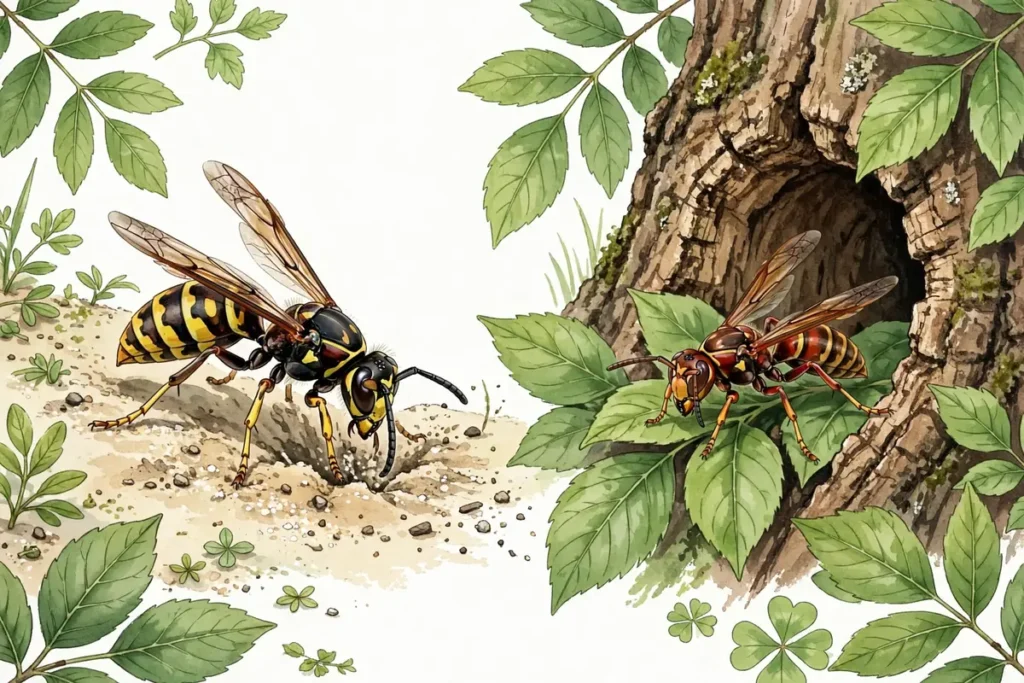
A wasp the size of your thumb lands on the patio furniture, and the yard goes quiet. Cicada killer or European hornet? The direct answer to the cicada killer vs european hornet question: both are among the largest wasps in the eastern United States, but they could hardly be more different in temperament. The cicada killer is a solitary, ground-nesting hunter that almost never stings people. The European hornet is a social, colony-dwelling wasp that will defend its nest with painful stings. Telling them apart at a glance keeps you from panicking over a harmless insect — or blundering into a genuinely defensive colony.
Both peak in late summer, both can top an inch and a half, and both get misidentified as the infamous “murder hornet” every news cycle. This guide covers what each looks like, how each behaves, how their stings compare, and what to do when one shows up in your yard.
The eastern cicada killer (Sphecius speciosus) is a solitary digger wasp and one of the largest wasps in North America. Adults measure roughly 1⅛ to 1⅝ inches long, with a black body marked by yellow-to-white abdominal stripes, a dark red head and thorax, and brownish wings, according to Ohio State University Extension. Females are larger than males. They are active from mid-summer through September, exactly when annual cicadas are singing.
Despite the fearsome name and size, cicada killers pose little threat to people. They are solitary wasps — no colony to defend, the behavior that makes yellowjackets and hornets dangerous. The males are the ones you notice most: they patrol territories and dive-bomb anything that moves through, including people. It looks aggressive, but males have no stinger at all. Females carry the sting but reserve it for cicadas. Ohio State notes they rarely sting humans unless handled, and typically fly away when disturbed. People who have been stung describe it as mild — often compared to a pinprick — and only after being grabbed or stepped on barefoot.
You will find them where the digging is good: sandy soil, lawns, garden beds, and the gaps between patio pavers. Females dig tunnels about half an inch wide and up to a foot deep, leaving a distinctive fan-shaped mound of excavated soil. Each burrow gets stocked with paralyzed cicadas — a female can drag prey twice her weight back to the nest — with a single egg laid on each one. They are considered beneficial insects, and control is rarely needed. Our cicada killer wasp sting guide covers the rare event of a sting in more detail.
The European hornet (Vespa crabro) is the insect that gives the cicada killer its dangerous reputation by association. Introduced to New York in the mid-1800s, it is now well established across the eastern United States. Workers run about an inch long, queens nearly 1½ inches. Virginia Tech’s extension profile notes it resembles the cicada killer but is more robust and hairier on the thorax and abdomen. Its coloration is the giveaway: a reddish-brown head and thorax with a yellow-and-brown striped abdomen — warmer, rustier tones than the cicada killer’s stark black and yellow.
Unlike the solitary cicada killer, the European hornet is a true social wasp. A single queen founds a colony each spring in a protected cavity — a hollow tree, a wall void, a shed partition, an attic. By late summer the nest can hold hundreds of workers, and mature nests may reach 800 to 1,000 individuals. That is when encounters spike. European hornets are defensive, not randomly aggressive: away from the nest they are relatively calm, and Virginia Tech notes they do not appear particularly vicious. But disturb the nest, and multiple workers will defend it with painful stings from a large stinger backed by a large venom sac.
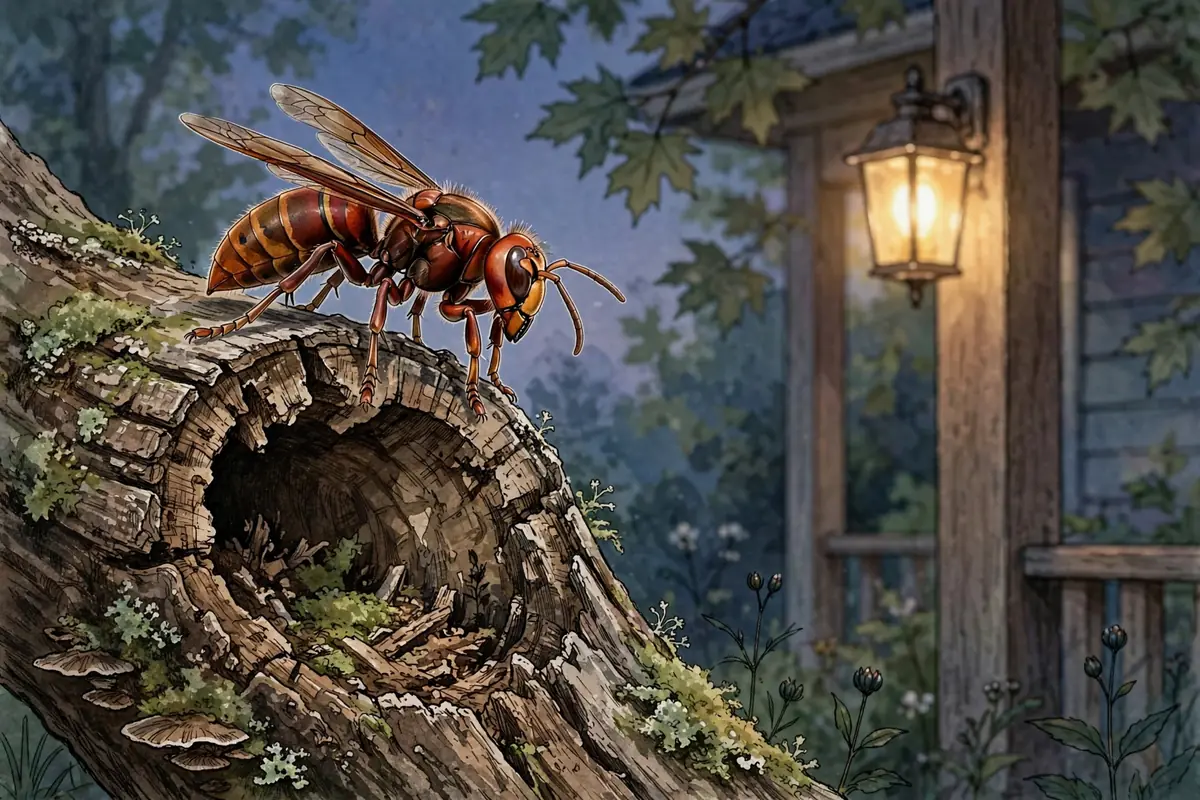
They have one habit no other local wasp shares: they fly at night. European hornets forage after dark and are strongly attracted to porch lights and lit windows, where they crash against the glass with alarming force. A giant wasp battering your window at 10 p.m. in August is almost certainly a European hornet — cicada killers are strictly daytime insects. They also strip bark from trees and shrubs to build nests and feed on sap, leaving girdled twigs that attract flies.
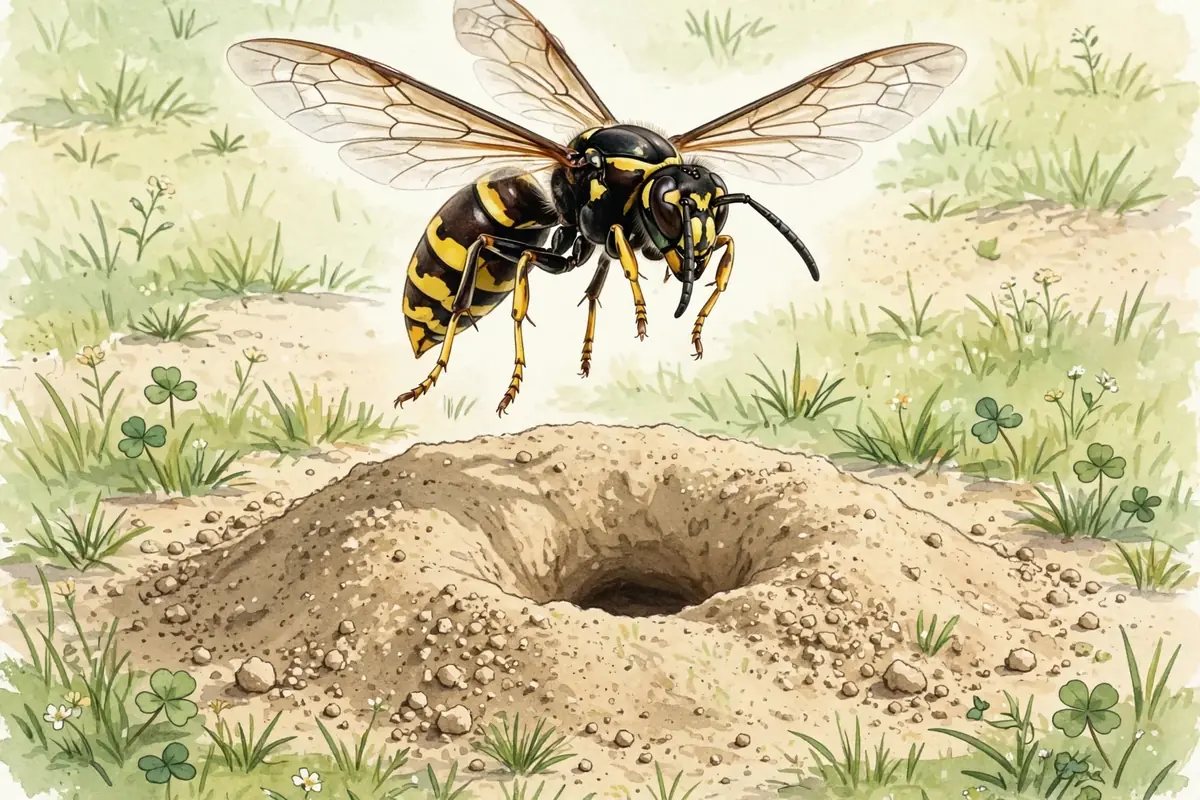
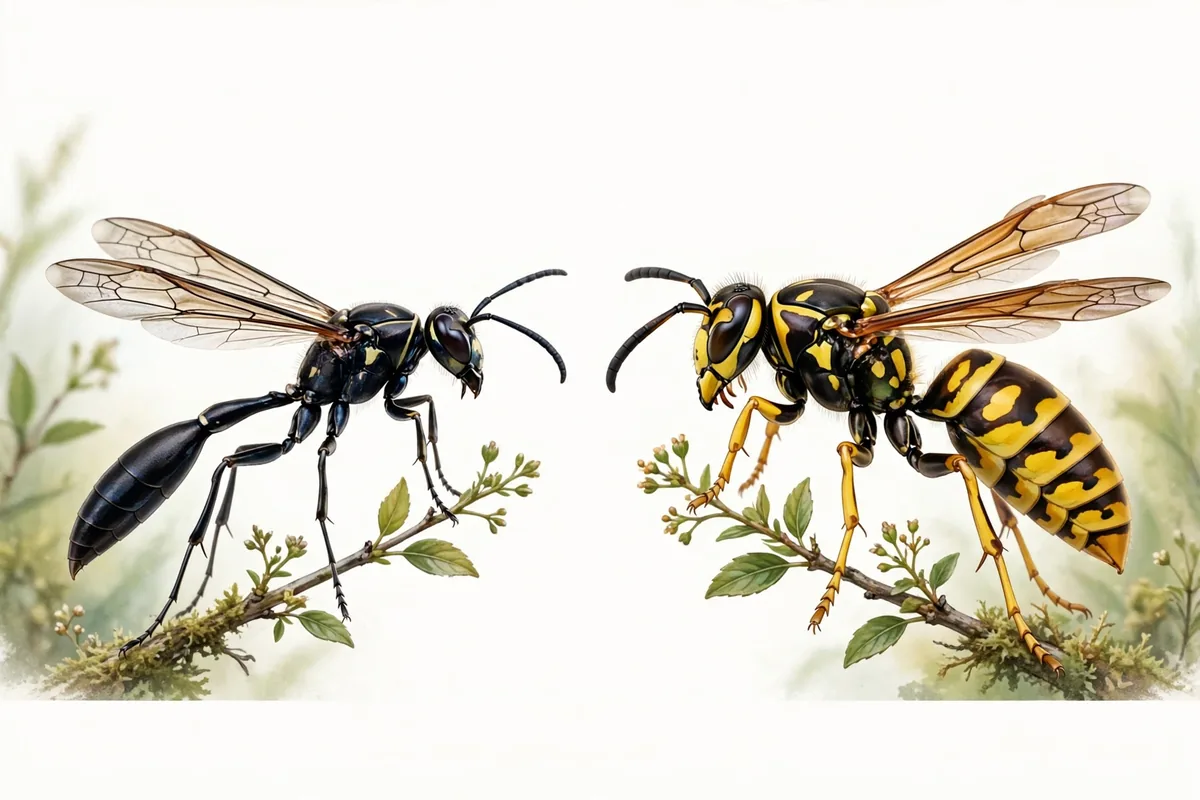
Color. Cicada killers are black with crisp yellow-to-white abdominal bands and a dark reddish head. European hornets are rusty reddish-brown on the head and thorax with yellow-brown banded abdomens. If the insect looks black-and-yellow like a giant yellowjacket, think cicada killer. If it looks reddish-brown all over, think European hornet.
Build. The cicada killer is long and relatively sleek. The European hornet is thicker-bodied and visibly hairier on the thorax — Virginia Tech specifically flags this as a distinguishing feature.
Location and behavior. A giant wasp hovering low over a lawn, investigating sandy patches, and disappearing into a hole in the ground: cicada killer. One coming and going from a hollow tree, wall void, or attic vent with steady back-and-forth flight traffic: European hornet. One circling your porch light at night: European hornet — cicada killers never do this.
Numbers. One or two large wasps working a patch of lawn independently: cicada killers. A stream of large wasps following the same flight path to and from a single point: a hornet colony.
When in doubt, observe from a distance and do not try to catch the insect for a closer look. Photographing from several feet away is enough for most extension entomologists to confirm an ID.
This is the section that matters most, so here it is plainly. A cicada killer sting is a rare event that happens when a female is squeezed, grabbed, or stepped on — and even then, the sting is consistently described as mild. They do not defend anything, they do not swarm, and the dive-bombing males are physically incapable of stinging. You can garden, mow, and picnic around an active nesting area with minimal risk, as long as you do not handle the wasps or walk barefoot through their burrow zone.
A European hornet sting is a different matter. The sting is painful — a large insect with a large stinger and a large venom load — and a disturbed nest can produce multiple stings at once. Multiple stings raise the risk of a serious reaction even without a known allergy, which is why our guide on multiple bee, wasp, and hornet stings treats any multi-sting event as a call-your-doctor situation. People with known bee or wasp allergies face the additional risk of anaphylaxis from a single sting.
For any sting, the standard first response is the same: move away calmly, wash the site with soap and water, and apply a cold compress. Our walkthrough of the first 10 minutes after a sting covers the steps in order. Do not swat at hornets near a nest — rapid movement and vibration read as a threat and recruit defenders.
Every summer, photos of cicada killers and European hornets circulate on neighborhood forums labeled as “murder hornets.” They are not. The insect behind that nickname is the Asian giant hornet (Vespa mandarinia), a different species not established in the eastern United States. Virginia Tech’s hornet profile explicitly warns that internet images of the so-called Japanese hornet get misreported as US sightings when they are really European hornets.
The mix-up drives two bad outcomes. Panicked homeowners spray cicada-killer nesting areas — killing a beneficial, harmless insect for no reason. And genuine European hornet nests get misidentified as something exotic, delaying the correct response: calling a pest professional. If you see a giant wasp in the eastern US, the overwhelmingly likely answer is one of the two insects in this guide.
Cicada killers in the lawn. The best response is usually no response. They are beneficial, their season ends by September, and they rarely sting. If burrows are in a truly unusable spot — a child’s sandbox, a high-traffic play area — watering the area can discourage digging, since females prefer loose, dry, sandy soil. Do not pour gasoline or insecticides into burrows; it is dangerous and unnecessary. A pest professional can advise on targeted options if you must reduce them.
European hornets around the house. Do not approach or disturb a suspected nest. Do not seal the entrance yourself, do not poke it, and do not attempt a nighttime DIY treatment — Virginia Tech notes that even at night, disturbing a European hornet nest can get you stung. Keep children and pets away from the flight path, turn off exterior lights near the nest entrance at night, and call a licensed pest professional for removal.
One hornet indoors. A European hornet that blundered in through a window is disoriented, not attacking. Open a nearby window or door, dim the indoor lights, and give it a clear exit path. Do not swat — a panicked hornet can sting.
Most single stings from either insect can be managed with cold compresses and time. Seek care when any of these apply:
Can cicada killers sting more than once?
Yes — like all wasps, females have smooth stingers they can use repeatedly, unlike honeybees. In practice this rarely matters, because they almost never sting people. The question that should concern you is whether the insect near you is a cicada killer or a nest-defending hornet.
Why are giant wasps dive-bombing me in my yard?
Almost certainly male cicada killers patrolling their territory. The behavior looks threatening, but males have no stinger — it is pure bluff. Walk through calmly and they lose interest. If dive-bombing happens near a hollow tree or wall void and continues into the evening, suspect European hornets and keep your distance.
Are European hornets active at night?
Yes — the only large wasp in the eastern US that regularly is. Workers forage after dark and are strongly attracted to porch lights and lit windows. A giant wasp banging against your window at night in late summer is a European hornet.
Should I destroy a cicada killer nest in my lawn?
Usually not. They are beneficial predators of cicadas, adults die off by September, and they pose minimal sting risk. Watering the area to make the soil less attractive for digging is the gentlest deterrent. Reserve professional treatment for burrows in genuinely unusable spots like sandboxes.
How do I get rid of a European hornet nest?
Do not do it yourself. European hornets defend their nests vigorously, and multiple painful stings are likely if you disturb one. Call a licensed pest professional, keep people and pets away in the meantime, and turn off exterior lights near the nest entrance at night to reduce hornet activity.
Medically reviewed by Dr. Sarah Jones, MD.
This article is for informational purposes only and isn’t medical advice. If you’re worried about a bite or sting, talk to a healthcare professional.
Dr. Jones oversees StingHelp’s clinical verification process. Every guide is systematically evaluated against active Centers for Disease Control and Prevention (CDC), Environmental Protection Agency (EPA), and American Academy of Allergy, Asthma & Immunology (AAAAI) medical consensus standards to ensure symptom distinctions and care recommendations are clinically sound.
Explore physician-reviewed first-aid procedures, identification clues, and symptom comparisons for other common outdoor bites and stings.

The mower passes over a bare patch of lawn, and suddenly the air fills with angry yellow-and-black insects. Your legs burn with stings before…

A wasp nest in a grill is one of the most awkward pest situations a homeowner can face: the usual fix (wasp spray) is…
The Answer Is No, and That Is Only Half the Story Homeowners hang mothballs from eaves, scatter them around patios, and tuck them into…