A Gulf Coast tick bite is a tick bite from a specific species; it cannot be identified reliably from the skin mark alone. Confirming the tick can help assess exposure to Rickettsia parkeri. Remove attached ticks promptly, and seek medical advice for fever, a dark scabbed sore, a new rash, or worsening illness.
A dark spot after a tick bite can make online picture searches especially confusing. Is it simply a small scab from removal, a local skin problem, or an eschar associated with a tickborne infection? A photograph can document the change, but it cannot make that diagnosis. The timing, symptoms, exposure location, and sometimes clinical testing are what make the picture useful.
This guide explains what changes when a Gulf Coast tick is identified and what remains uncertain. It focuses on U.S. exposures and avoids treating a species name as a diagnosis. If you traveled, report the actual location of the bite rather than relying on the place where you live.
1. How is a Gulf Coast tick bite different from an unknown tick bite?
“Tick bite” is a broad description. “Gulf Coast tick bite” identifies a possible species, Amblyomma maculatum. The two phrases overlap: a Gulf Coast tick bite belongs within the wider category. The distinction matters because identifying the tick can focus the medical conversation, while guessing from the skin can create false certainty.
CDC describes Gulf Coast ticks as occurring primarily in the southeastern United States, with focal populations in other regions, and links them to Rickettsia parkeri rickettsiosis, a spotted fever illness. The common name is therefore not a strict boundary: an encounter is not excluded simply because you were away from the coast. See CDC’s tick distribution reference.
| Question | Species unknown | Gulf Coast tick identified |
|---|---|---|
| What can the name tell you? | Only that a tick exposure occurred. | A species-associated infection, R. parkeri rickettsiosis, becomes relevant. |
| Does it prove infection? | No. | No; identification does not prove the tick transmitted a pathogen. |
| Can the bite mark confirm the species? | No reliable visual shortcut. | The mark still cannot replace specimen identification. |
| What should prompt care? | Concerning symptoms and their progression. | The same, with special attention to a new scabbed sore and systemic illness. |
| What happens immediately? | Prompt removal and an exposure record. | The same first steps; do not wait for an identification result. |
The useful outcome of identification is a better-informed assessment, not a promise about what will happen next. A person may have an identified tick and remain well, or develop symptoms that require assessment before identification is available. Keep those possibilities separate.
2. What should you look for in pictures?
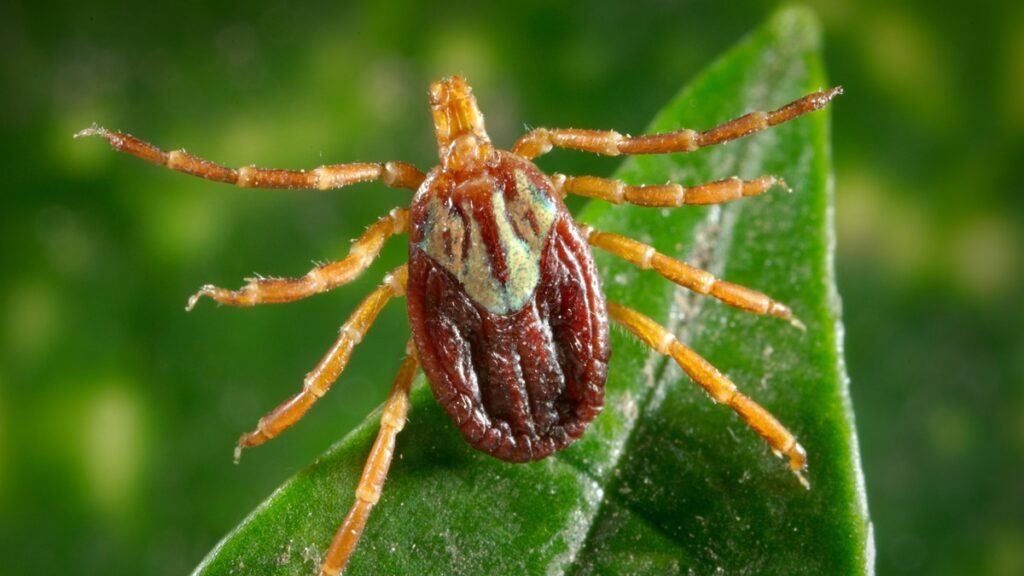
Start with a photograph of the tick if it has been removed safely. Include the whole specimen, a size reference, and a clear view without filters. A tiny, damaged, or swollen tick may be difficult to identify even when a photograph is sharp. Ask a local extension service or public health office about appropriate identification help.
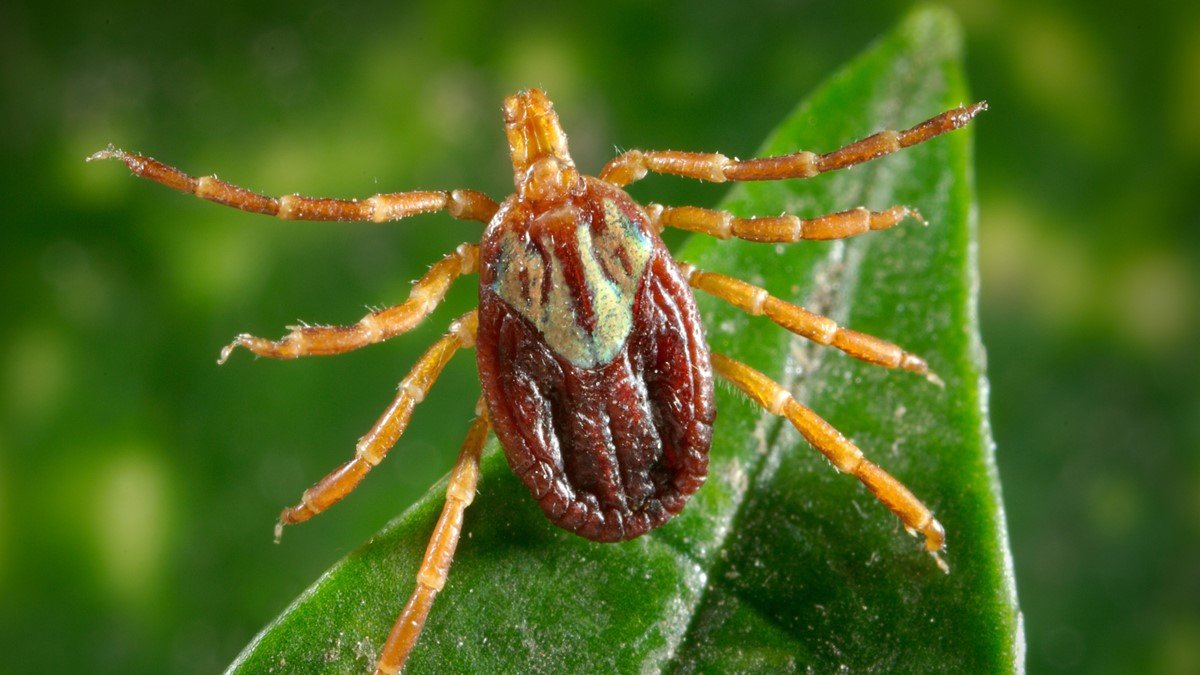
Separate the tick image from the skin image
The specimen photo addresses identity. The skin photo addresses change over time. Take a baseline skin image with surrounding tissue visible and note the time, location on the body, and any symptoms. Later images should use similar lighting and scale. If a dark center develops, photograph it without picking at or removing it.
Reference photographs often show one life stage or feeding state. Comparing an engorged tick with an unfed specimen can be misleading. For another commonly confused species, our American dog tick versus Gulf Coast tick comparison explains why specimen and exposure evidence matter more than the skin spot.
Do not diagnose an eschar from color alone
An eschar is a dark, scabbed area of damaged skin that can occur with certain infections. Not every dark speck after removal is an eschar, and an eschar is not unique to one disease. A scratch, dried blood, or another skin condition can look concerning in a magnified image. Describe what you see and how it changed rather than labeling it yourself.
3. Why does Rickettsia parkeri matter?
CDC describes a typical sequence in R. parkeri rickettsiosis in which an eschar is followed by fever, headache, muscle pain, and a rash. The presence and timing of these features can help a clinician, but not everyone follows an identical pattern. Read CDC’s clinical signs guidance for the evidence behind this association.
This illness is generally described as less severe than Rocky Mountain spotted fever, but that comparison should not become permission to ignore a fever. Early spotted fever illnesses can be difficult to distinguish. A person looking at their own skin cannot reliably decide which infection is present or how the illness will progress.
Do not wait for every listed feature. If you develop fever and feel unwell after exposure, make contact even if the original bite seems minor. If a new dark scabbed sore appears, tell the clinician whether it was present immediately after removal or developed later. Those are different observations, and the distinction may help the evaluation.
Other conditions can also produce sores, rashes, or fever. The role of the exposure history is to keep tickborne illness among the possibilities, not to exclude everything else. Mention other bites, travel, skin injuries, new products, and medicines. A useful clinical conversation includes uncertainty rather than hiding it behind an online diagnosis.
For an exposure that might actually have been a mosquito, see Asian tiger mosquito versus Gulf Coast tick. Seeing a tick attached is more informative than deciding whether an itchy bump looks “more like” one insect than another.
4. What should happen immediately after removal?
If the tick is still attached, remove it promptly with clean fine-tipped tweezers held close to the skin. Pull steadily, avoid squeezing the body, and clean your hands and the site afterward. Do not apply heat or substances intended to make it detach. Follow the CDC removal instructions, including its advice not to dig for mouthparts that cannot be removed easily.
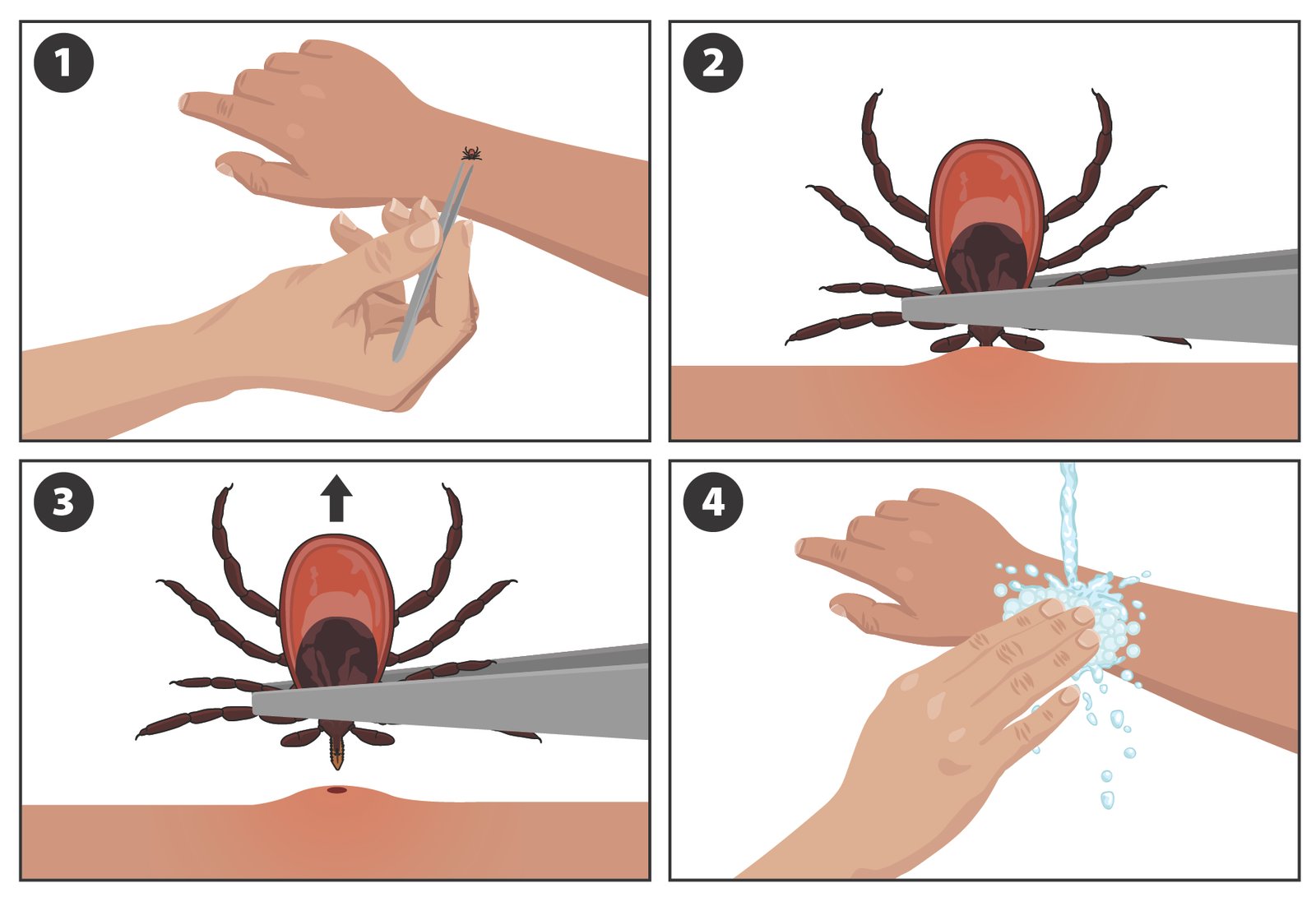
Record the date and probable exposure location, and check for additional ticks. Keep a specimen securely contained if an identification service requests it. Do not delay removal to arrange perfect photographs. If someone else removed it, ask what they directly observed and record which details are uncertain.
Keep the skin clean and avoid repeatedly covering it with unverified remedies. If a sore develops, do not cut it open, scrape away the center, or attempt to collect your own tissue sample. Clinical sampling, when needed, should be arranged by a healthcare professional. Manipulating the area can damage it and make the subsequent appearance harder to interpret.
When using an over-the-counter product for discomfort, follow its label and ask for advice if the patient is a child, pregnant, or has relevant medical conditions. Symptom relief does not establish whether a tickborne infection is absent.
5. How do you decide when to seek care?
Fever, a new rash, a dark scabbed sore, significant headache, or worsening illness after a tick exposure warrants prompt clinical advice. Increasing pain, warmth, drainage, or spreading skin change also needs assessment. Explain the tick exposure at the start of the conversation so it is not lost among a longer description of the skin spot.
| Observation | What to do | Useful detail |
|---|---|---|
| Tick attached; no illness | Remove promptly and document the event. | Location, removal date, and identification confidence. |
| New dark scabbed sore after exposure | Ask for clinical assessment; do not scrape or self-sample. | Whether it appeared immediately or developed later. |
| Fever, rash, or significant headache | Seek prompt medical advice, including same-day evaluation when appropriate. | Symptom onset relative to the exposure. |
| Confusion, collapse, breathing difficulty, or severe deterioration | Call 911 in the United States. | Current emergency symptoms; do not delay to retrieve photographs. |
Our tick bite warning signs guide provides broader context. A checklist cannot assess your vital signs or examine the lesion. If you are unsure how urgently to be seen, explain your current symptoms to a qualified triage service.
Consider two recordkeeping examples. “A small scab was visible as soon as I removed the tick” differs from “a new sore developed several days afterward and I now have fever.” These are illustrative descriptions, not diagnostic rules. In both cases, a clinician considers the full picture; the second description clearly adds systemic illness that should not be managed by picture matching alone.
If an initial assessment is followed by new or worsening symptoms, contact the clinician again and explain what changed. An earlier reassuring conversation was based on the information available then, not a guarantee about every later development.
6. What should you know about testing and antibiotics?
CDC advises clinicians not to delay treatment of a suspected rickettsial illness while awaiting laboratory confirmation. Early antibody tests can be negative, and different spotted fever organisms can produce cross-reacting results. A single result therefore needs clinical interpretation. See CDC’s diagnostic guidance.
If an eschar is present, a clinician may consider an appropriate specimen from the lesion. This is different from mailing the tick to a commercial service. A test performed on a tick does not diagnose infection in your body, and it should not dictate treatment by itself.
Doxycycline is the recommended treatment for suspected rickettsial infections in CDC guidance, including R. parkeri illness. However, treatment of suspected illness is not the same as giving antibiotics to every person after a bite. CDC does not recommend routine antibiotic prophylaxis to prevent rickettsial infection. The clinical care recommendations explain this distinction.
Do not use this information to choose a dose or start leftover medication. Tell the clinician about allergies, pregnancy, current medicines, and previous treatment. Ask what symptoms should lead to reassessment, whether follow-up testing is planned, and how you will receive results. Write those instructions down while they are clear.
If the species was never confirmed, say so. A clinician may need to consider other tickborne diseases or a separate skin condition. Accurate uncertainty helps more than an unsupported claim that one species has already been ruled in.
7. How can you prevent and document future exposures?
Keep prevention specific to the activity. Use suitable EPA-registered repellents according to their labels, wear appropriate clothing, and check after time in grassy or brushy places. CDC provides practical guidance on preventing tick bites. Treating clothing and treating skin are different uses; follow the product instructions rather than assuming they are interchangeable.
Do a return-home check even after a short outing. A brief walk, yard task, or outdoor event can be forgotten when reconstructing an exposure later. You do not need an exhaustive diary of every outdoor minute, but record a known bite as soon as you discover it.
A useful exposure note has four parts: where you were, when the tick was found, what was directly observed, and what symptoms developed afterward. Keep identification results with that note. If you crossed state or national borders, include the locations instead of simply labeling the event “during vacation.”
Our home and yard prevention guide can help with recurring local exposures. A distribution map helps frame questions, but it cannot guarantee the absence of a tick outside a shaded area. Local guidance and the actual specimen are better than assumptions based on a common name.
8. Frequently asked questions
Is a Gulf Coast tick bite a different kind of injury?
It is a bite from one tick species within the larger group of tick bites. Identifying the species helps focus the exposure assessment. It does not create a unique, dependable skin appearance or establish that a pathogen was transmitted.
Does a black scab prove Rickettsia parkeri infection?
No. A dark scab can have several explanations, and an eschar is not exclusive to one infection. Document the timing and seek assessment, especially with fever or other symptoms. Do not scrape the spot to compare its appearance with online pictures.
Can Gulf Coast ticks occur away from the Gulf?
Yes. CDC describes a primarily southeastern distribution with focal populations elsewhere in the United States. Report the real exposure location. The common name should not be used as a rule that automatically excludes a tick encountered inland.
Should I wait for a positive blood test?
No. If a clinician suspects a rickettsial illness, CDC advises against delaying treatment for confirmation. Early testing can be negative. Contact the clinician about your symptoms and let them decide how testing and treatment should proceed together.
Do I need antibiotics if I feel completely well?
Routine antibiotics are not recommended solely to prevent rickettsial infection after a bite. Individual circumstances or an uncertain species can require a different discussion. Ask a clinician rather than using leftover medicine or a commercial tick-test result.
What information should I bring to an appointment?
Bring exposure dates and locations, symptom timing, photographs, any identification result, and a list of medicines or skin products used. Mark unknown details honestly. A clear timeline is more useful than several possible diagnoses copied from search results.
The important distinction is not whether your spot resembles a “regular” tick bite. It is whether a specimen was identified and whether symptoms suggest that medical assessment is needed. Remove ticks promptly, document new changes, and seek care for fever, a developing scabbed sore, rash, or worsening illness. Use photographs as a record, not a diagnosis, and let a clinician interpret testing in the context of the exposure. Preventing another bite and preserving an accurate timeline are both useful actions you can take without guessing the cause of a lesion.
General education only; not an individual diagnosis. Sources checked September 22, 2026. CDC images are available free from CDC and the Public Health Image Library. Their inclusion does not imply endorsement of StingHelp by CDC, HHS, or the U.S. Government.