
Straw Itch Mite vs Chigger Bites: Tell Them Apart
The Short Answer The difference between straw itch mite bites vs chigger bites is mostly a difference of where you were and what you…
October is the peak month for one of the most baffling skin complaints of the year. You rake leaves under the big oak in your yard, or you spend a…
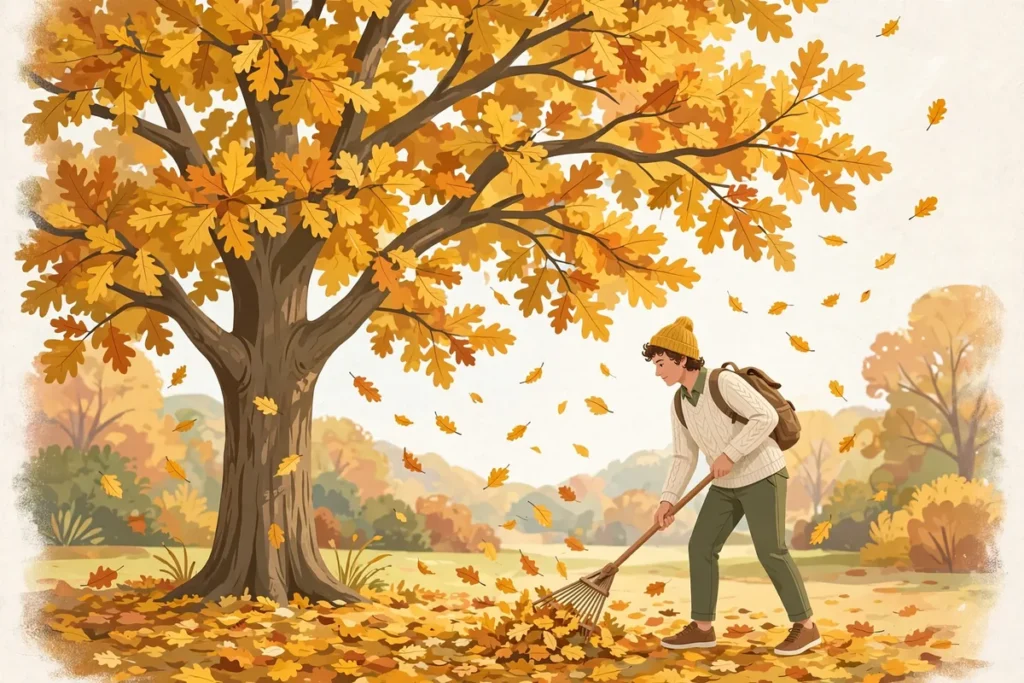
October is the peak month for one of the most baffling skin complaints of the year. You rake leaves under the big oak in your yard, or you spend a Saturday stacking hay bales in the barn, and the next morning you wake up covered in intensely itchy red welts around your neck, shoulders, and upper chest. No mosquito buzzed, no spider was seen, and the bites seem to have appeared out of thin air. The culprit in both scenarios may be an invisible mite from the same genus, and sorting out straw itch mite bites vs oak mite bites is less about the rash itself and more about the story of how you got it.
Here is the direct answer: both are bites from microscopic Pyemotes mites, and the skin reaction is nearly identical. Straw itch mites (Pyemotes tritici) reach you when you handle infested straw, hay, grain, or dried plant material. Oak leaf itch mites (Pyemotes herfsi) drop from oak trees onto people walking, gardening, or raking beneath them. The rash does not reliably tell them apart; your exposure history does. This article covers the biology of both species, the exposure clues that separate them, what the bites look and feel like, home care, when to seek medical attention, and how to prevent the next outbreak.
Straw itch mites and oak leaf itch mites belong to the genus Pyemotes, a group of parasitic mites in the family Pyemotidae. They are close relatives: both are nearly invisible to the naked eye at about 0.2 millimeters long, both have the same elongated, reddish-tan body shape, and both deliver their bite the same way. Yet their natural hosts live in completely different worlds, which is why the two mites rarely meet, even though both can bite people.
The straw itch mite, Pyemotes tritici, is the older-known of the two. Its natural prey is the larvae of beetles and moths that infest stored grain, hay, and straw. People encounter it when they handle infested agricultural material: stacking hay, cleaning out grain bins, threshing, handling grass seed, or even arranging dried flowers that came from an infested source. Research on Pyemotes species has shown that the straw itch mite is highly irritating to humans, more so than some related species that attack bark beetles and cause little or no skin reaction.
The oak leaf itch mite, Pyemotes herfsi, is a European species that was first recognized in the United States in Kansas in the autumn of 2004, when an estimated 19,000 people were affected by an outbreak. Its natural hosts are tiny midge larvae, particularly gall midges of the genus Contarinia, that form marginal roll galls and vein pocket galls on oak leaves, most commonly on pin oaks but also on red and black oaks. When mite populations explode and consume their midge hosts, the mites disperse, falling from the canopy or riding the wind, and bite whatever warm-blooded animal they land on. Penn State Extension notes that the mite has since been reported in Illinois, Nebraska, Ohio, Oklahoma, Missouri, Tennessee, Texas, and Pennsylvania.
The bite mechanism is worth understanding. In Pyemotes, it is the newly mated female that bites. After mating, she is physogastric, meaning her abdomen swells enormously as her offspring develop inside her. Her saliva contains a potent neurotoxin that paralyzes her insect prey, and when she probes human skin, that same saliva triggers the delayed, intense reaction. A single female can produce up to 200 to 250 offspring, which helps explain how a localized gall can release enough mites to cause a community-wide outbreak. The good news is that humans are a dead-end host: the mites cannot establish an infestation on or in your body, and they do not burrow under the skin.
This is the section that actually answers the differential question, because exposure is the reliable divider. Everything else about the two mites converges, but the route from mite to skin is completely different.
Straw itch mite encounters are occupational and recreational, tied to material, not location. You get bitten because you handled something the mites were living in. The classic scenarios include farmers and ranch hands moving hay or straw, workers cleaning grain bins or seed storage, florists working with dried arrangements, gardeners spreading straw mulch, and homeowners cleaning out a barn or shed that has stored feed. The mites are in the material; the bites appear where your skin contacted it, often on the forearms, hands, neck, and torso, wherever dust and particles got inside clothing. Outbreaks can also occur indoors when stored grain or dried plant material is brought inside and the mites disperse from it.
The timing is tied to harvest and storage rather than the calendar alone. Late summer and fall are the heavy season because that is when straw, hay, and grain are moved, stored, and handled most. If you have a new case of itching welts and your weekend involved hay bales, grain bins, or straw mulch, the straw itch mite is the leading suspect.
Oak leaf itch mite encounters are environmental: you get bitten because you were under or near oak trees when the mites were dispersing. The classic stories are eerily consistent across outbreak reports. People rake leaves, garden, picnic, or walk under oak trees and wake up the next morning with bites. The mites are so small they can drift on air currents for hundreds of yards, so you do not even need to touch the tree. Kansas State’s extension publication on the 2004 outbreaks documented that bites appeared 10 to 16 hours after exposure, typically where clothing was loose, especially at the neck, shoulders, and upper torso, because the mites fall from above and get trapped where garments gap open.
Seasonality is strong and specific. Oak leaf itch mite outbreaks peak from late summer into fall, when the mites have had the whole season to build up inside oak leaf galls and then disperse. The fall leaf-raking season is the highest-risk window for homeowners, which is why October produces so many mystery rashes in oak-heavy neighborhoods. Unlike the straw itch mite, there is no material to handle and no contact to recall; you were simply outdoors near oaks. That absence of a remembered trigger is itself a diagnostic clue: a diffuse fall rash after yard work under oak trees, with no recalled bites, points toward Pyemotes herfsi.

Once bitten, the two mites produce skin reactions that are, for practical purposes, indistinguishable. Understanding the shared pattern helps you recognize a Pyemotes bite in the first place, and the previous section on exposure does the work of telling the species apart.
The reaction is delayed. Unlike a mosquito bite that itches within minutes, Pyemotes bites typically begin to itch 10 to 16 hours after exposure. This delay is one reason the bites feel so mysterious: by the time the welts appear, the yard work or barn chore is a forgotten memory from the day before. The delay reflects the biology of the bite; the reaction is driven by the body’s response to the mite’s saliva rather than by the mechanical prick itself.
The lesions themselves are raised, reddened welts, often described as papular, meaning small raised bumps, sometimes with a tiny blister or vesicle in the center. They are intensely itchy, and the itch can be painful when scratched. In the Kansas outbreak documentation, bites were described as itchy and painful when scratched, with intense scratching sometimes leading to secondary bacterial infection. Individual sensitivity varies widely: some people develop a handful of welts, while others in the same household erupt in dozens. People with more reactive skin, and those bitten repeatedly across a season, tend to react more strongly.
Distribution on the body follows exposure. Oak leaf itch mite bites cluster where falling mites landed and got trapped: the neck, shoulders, upper chest, and upper back, typically where clothing fits loosely. Chiggers, by contrast, concentrate where clothing is tight, such as at sock lines and waistbands, which is one of the ways clinicians separate the two. Straw itch mite bites appear wherever the infested material touched skin or where dust settled inside clothing: forearms, neck, torso, and sometimes the back. The pattern overlap is real, which is why a side-by-side comparison of bite location alone is not enough, and the exposure interview matters more.
Duration runs several days. Unscratched bites typically calm over a few days to a week. Scratching prolongs the course, breaks the skin, and invites secondary infection, which is the most common complication of Pyemotes bites and the one that most often brings people to a clinic.
Because the rashes converge, here is the full comparison in one place, built around the one thing that reliably separates the two: the exposure story.
| Feature | Straw itch mite (Pyemotes tritici) | Oak leaf itch mite (Pyemotes herfsi) |
|---|---|---|
| Natural host | Beetle and moth larvae in stored grain, hay, straw | Gall midge larvae in oak leaf galls |
| How mites reach you | In infested material you handle | Falling from oak canopies, drifting on wind |
| Typical exposure | Hay/straw/grain handling, barn cleaning, dried flowers, straw mulch | Raking, gardening, walking, picnicking under oaks |
| Bite location pattern | Arms, neck, torso where material contacted skin | Neck, shoulders, upper torso where clothing is loose |
| Seasonality | Tied to harvest/storage; late summer and fall heavy | Late summer and fall, peak during leaf season |
| Geographic note | Wherever grain/hay is stored and handled | Oak-rich regions; documented across the Midwest and South |
| Rash appearance | Raised red welts, sometimes central blister, delayed 10-16 hours | Identical: raised red welts, sometimes central blister, delayed 10-16 hours |
| Duration | Several days to a week if not scratched | Several days to a week if not scratched |
| Complication | Secondary infection from scratching | Secondary infection from scratching |
The table makes the practical point obvious: if you are comparing the bites themselves, you will not get an answer. If you are comparing what you were doing 10 to 16 hours before the itch started, the answer is usually clear. This is exactly the contrast that North Carolina State Extension draws on its “Mites That Bug People” page, which presents straw itch mites as the grain-and-hay species and oak leaf itch mites as the fall-from-oaks species, and it is why public health agencies like the Illinois Department of Public Health treat exposure history as the diagnostic key during mystery itch-mite outbreaks.
One more distinction is worth noting for completeness. Straw itch mite exposure can be an indoor event when infested material is stored or handled inside, while oak leaf itch mite exposure is overwhelmingly an outdoor event. If the rash followed a weekend of barn work, straw itch mite leads. If it followed a weekend of leaf raking under oaks, oak leaf itch mite leads. When both happened, both mites may have contributed, and the treatment is the same either way.
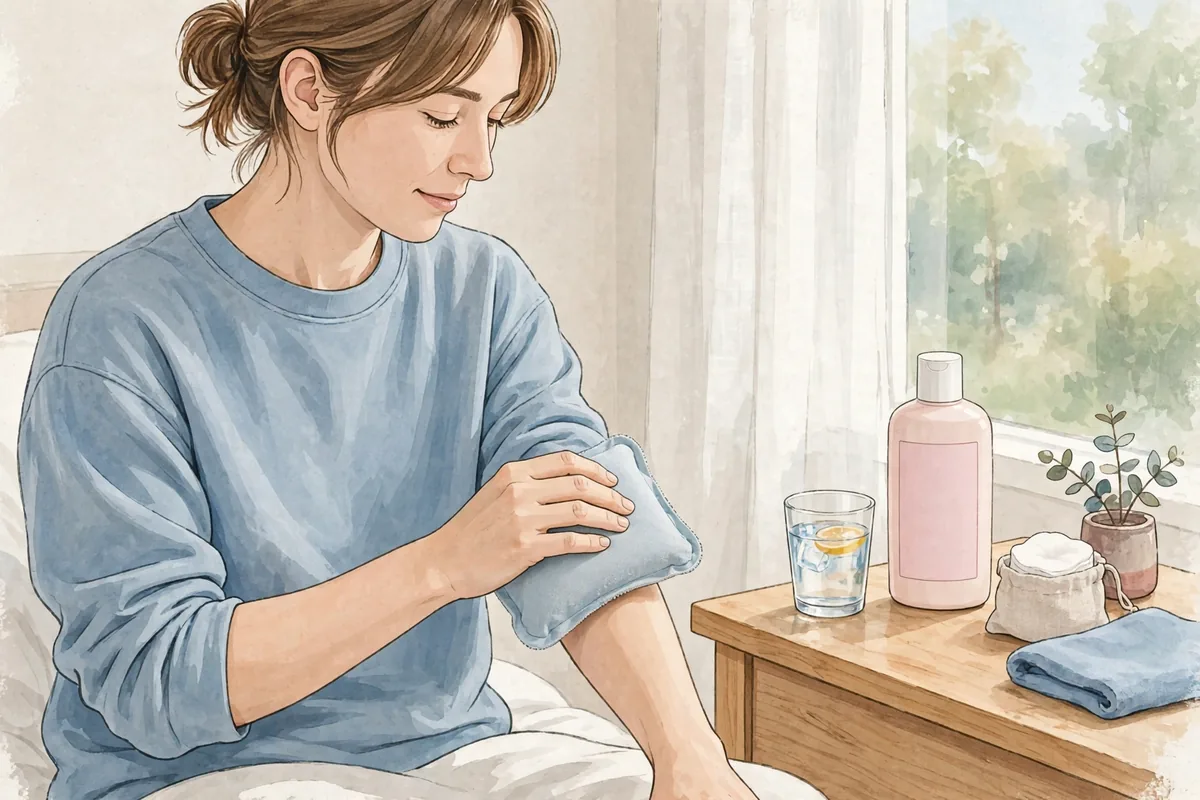
The treatment for both mites is identical, which is convenient, because by the time you are treating, the species question usually matters less than the itch. The goal is to calm inflammation, control the urge to scratch, and prevent the one real complication, which is secondary bacterial infection.
Start with gentle skin care. Wash the affected areas with mild soap and lukewarm water, and take a shower if the exposure was recent; mites that have not yet fed may still be on the skin, and washing removes them. Apply a cool compress to the itchiest welts for 10 to 15 minutes at a time; cold constricts blood vessels near the surface and takes the edge off both itch and swelling. Calamine lotion or a nonprescription hydrocortisone cream can reduce itching, and an oral antihistamine may help, particularly for nighttime itching. Check with your pharmacist about which product fits your situation, especially if you take other medications.
What not to do matters as much as what to do. Do not scratch the welts open. The blisters at the center of some lesions are part of the inflammatory reaction, not pockets of infection, and breaking them open creates the entry point for bacteria. Do not apply nail polish, bleach, alcohol-based “suffocation” remedies, or other home experiments to the skin; none of these address a Pyemotes bite, and several can irritate already inflamed skin, especially in children. Do not waste money on products marketed to “draw out” the mites; humans are a dead-end host, the mites are long gone, and the rash is an immune response, not an infestation.
Launder the clothing and bedding from the exposure day in hot water and dry on high heat. This is more important for straw itch mite exposure, where mites may still be in dust and fabric from the handled material. For oak leaf itch mite exposure, the outdoor clothing carries far fewer mites, but laundering still removes leaf debris and any stragglers. If the exposure involved a barn, storage area, or pile of material that will be handled again, address the source: remove or treat the infested material rather than re-exposing yourself.
Most people improve steadily over a few days. Track the trend rather than any single day: decreasing redness, shrinking welts, and itch that responds to treatment all point the right way. The medical attention section below covers when the trend points the wrong way.
Prevention follows the exposure story, so the two mites get different checklists.
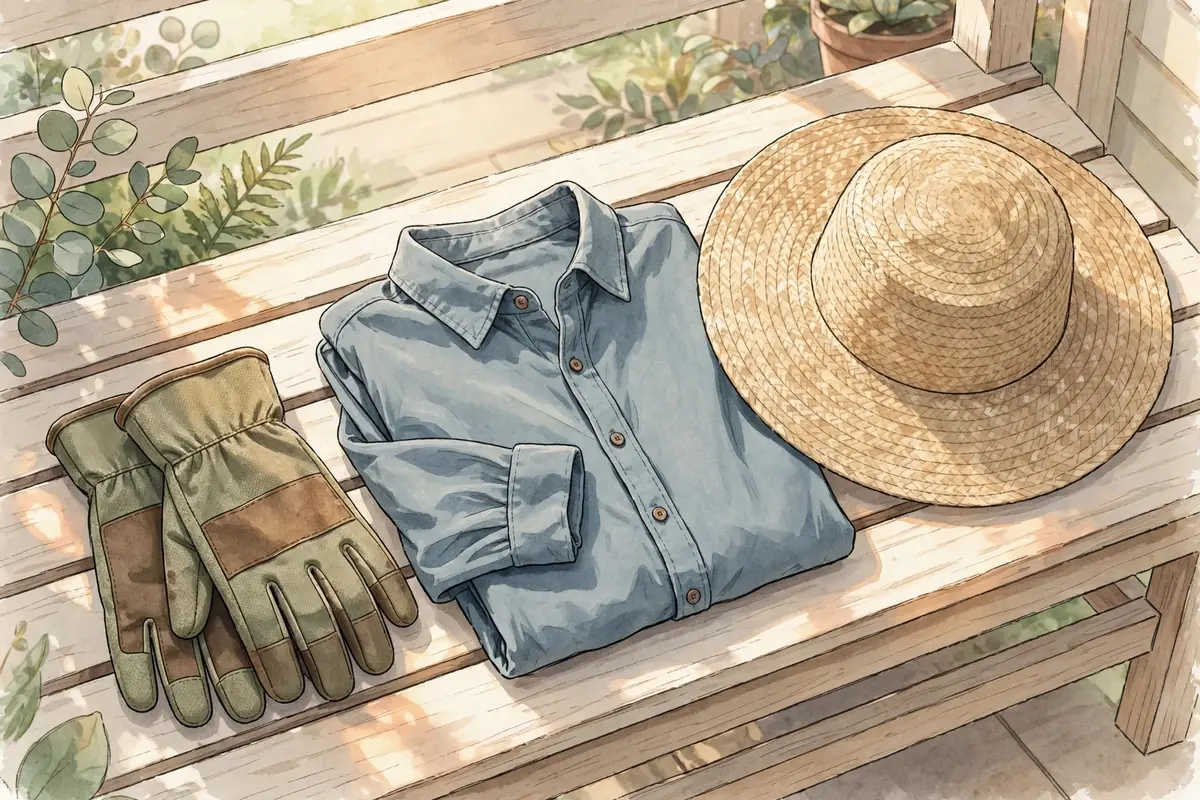
Wear long sleeves, gloves, and clothing that closes tightly at the wrists and neck when handling hay, straw, grain, or dried plant material. Shower and change clothes promptly after barn or bin work rather than sitting around in work clothes. Store grain and feed in clean, dry, sealed containers, and be suspicious of old, dusty lots of hay or straw that may harbor both the grain insects and the mites that prey on them. If a particular barn, bin, or bale lot keeps producing rashes, treat the material problem: remove or replace the infested stock, and consider whether the grain-insect population feeding the mites needs attention. Florists and crafters working with dried arrangements should buy from reputable suppliers and work in ventilated areas.
Time your yard work and use a few barriers. Wear a wide-brimmed hat, long sleeves, and clothing with closed collars when raking or gardening under oaks; the mites fall from above, so the neck and shoulders are the priority zone. Shower and change clothes right after leaf work, and toss the work clothes straight into the laundry. If your neighborhood is in the middle of an outbreak year, consider postponing non-urgent leaf raking under the heaviest oaks until after a hard rain or a freeze, which can knock down dispersing mites. Insect repellents containing DEET or picaridin on exposed skin, and permethrin-treated clothing for heavy yard days, add another layer for people who react strongly. Raking and bagging leaves removes the gall-bearing foliage from the yard, though it will not stop mites drifting in from neighboring trees, so treat leaf cleanup as helpful rather than decisive.
Most Pyemotes bites resolve with home care, but seek medical attention if any of the following occur:
If you are unsure whether the rash is mite bites at all, especially if it is blistering heavily or looks different from what is described here, a clinician or dermatologist can evaluate it in person. Bring your exposure history: what you handled, where you were outdoors, and the timing of the itch relative to the activity. That history is the most useful diagnostic tool available for these invisible biters.
Can you tell straw itch mite bites and oak mite bites apart by looking at them?
Not reliably. Both produce delayed, intensely itchy red welts that can have a small central blister, and individual reactions vary more between people than between the two mite species. The practical way to tell them apart is the exposure story: handling hay, straw, or grain points to the straw itch mite, while raking, gardening, or walking under oak trees points to the oak leaf itch mite.
How long do the bites take to show up?
Typically 10 to 16 hours after exposure, which is why the bites seem to appear overnight with no remembered cause. The delay reflects the immune response to the mite’s saliva rather than the bite itself. If you woke up itchy, think back to what you were doing the previous day, not the previous hour.
Can these mites infest my home or my body?
Humans are a dead-end host for both species. The mites do not burrow into skin, do not reproduce on people, and do not establish indoor infestations the way bed bugs or fleas can. Straw itch mites can persist in infested stored material such as hay or grain kept in a barn, so the material should be addressed, but your body and your home are not colonized.
Why do oak mite outbreaks happen in some years and not others?
Outbreaks follow the population cycles of the mites’ insect hosts. In years when gall midge larvae are abundant on oaks, mite populations explode inside the leaf galls; when the midges are consumed, huge numbers of mites disperse at once and bite people. Weather, midge cycles, and oak mast patterns all feed into this, which is why some falls are quiet and others produce community-wide rashes.
Do I need to treat my yard or trees for oak leaf itch mites?
Evidence for yard treatments is limited, and extension sources generally do not recommend spraying trees for these mites. The mites are microscopic, widely dispersed by wind, and recolonize quickly, so insecticide applications are unlikely to prevent bites and can harm beneficial insects. Personal protection, timely showers and laundry, and leaf cleanup are the more practical defenses. For persistent problems tied to stored material rather than trees, our guide to oak mite bite treatment covers the care side in more depth.
Medically reviewed by Dr. Sarah Jones, MD.
This article is for informational purposes only and isn’t medical advice. If you’re worried about a bite or sting, talk to a healthcare professional.
Dr. Jones oversees StingHelp’s clinical verification process. Every guide is systematically evaluated against active Centers for Disease Control and Prevention (CDC), Environmental Protection Agency (EPA), and American Academy of Allergy, Asthma & Immunology (AAAAI) medical consensus standards to ensure symptom distinctions and care recommendations are clinically sound.
Explore physician-reviewed first-aid procedures, identification clues, and symptom comparisons for other common outdoor bites and stings.

The Short Answer The difference between straw itch mite bites vs chigger bites is mostly a difference of where you were and what you…

Oak Mite Bites vs. Chigger Bites: The Body-Map Test That Tells Them Apart The fast answer: Look at where the bites are. Oak leaf…

Bird Mites After a Nest Removal — and Rodent Mites After the Mice Are Gone: Why the Bites Start When the Host Leaves The…