Jumping Spiders Show Two-Stage Sleep, and a Busy Night Changes the Next Day
A new study of the jumping spider Portia fimbriata has given researchers a clearer picture of how sleep works in a tiny animal with a very different brain from ours, and it has done so with a simple, elegant experiment: let spiders sleep quietly, then let them sleep after a night spent with live prey nearby, and compare what changes. The study, published in PNAS Vol 123 No 45 on October 26, 2026, by Nadja Geiger and colleagues, with DOI 10.1073/pnas.2618030123, describes two distinct stages of spider sleep, including a REM-like stage, and finds that a disturbed, prey-filled night leads to longer sleep and more REM-like sleep over the following day.
For StingHelp readers, this study is interesting for a different reason from most spider stories. It is not a story about bites, venom, danger, or pest control. Portia fimbriata is a jumping spider known for hunting other spiders, and it is not presented here as a medical-bite story. The value of the study lies in what it reveals about sleep itself: that even a small invertebrate can show organised, two-stage sleep, that sleep can respond to prior experience, and that researchers can study those patterns through careful behavioural observation. It does not prove that human sleep works the same way, and this article is careful to keep that boundary clear throughout.
This guide explains the study in plain language, presents its key findings in tables, compares the two sleep stages side by side, discusses what the study does not prove, and offers general sleep-hygiene information for people, with a clear note that this is general information only and not medical advice. If you have persistent sleep problems, the right step is to seek professional advice, not to draw conclusions from a spider study.
Meet Portia Fimbriata, the Jumping Spider in the Study
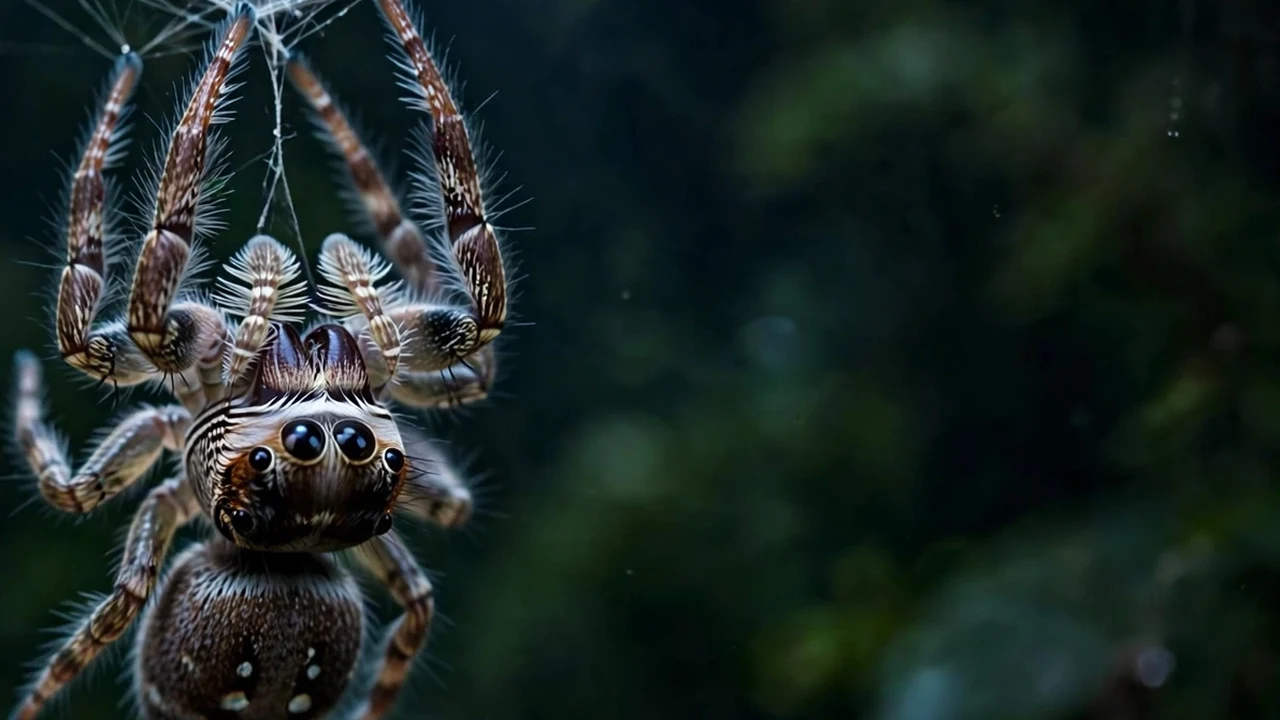
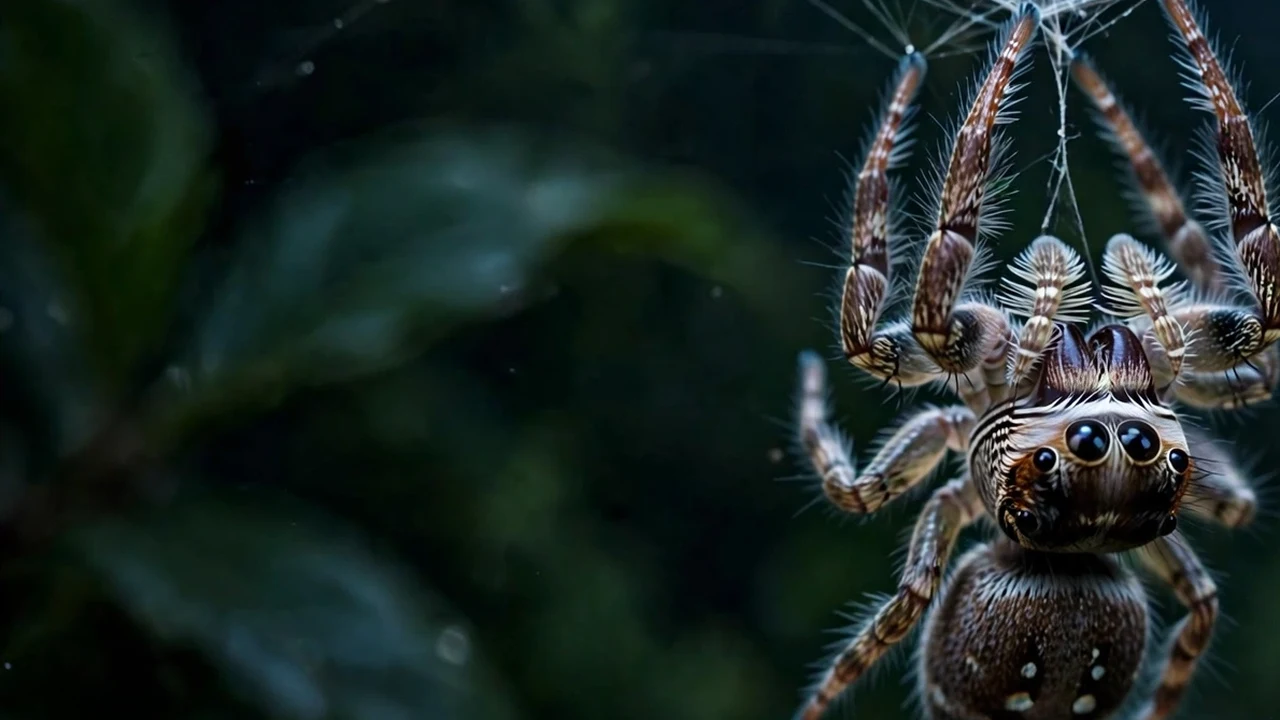
Portia fimbriata is a jumping spider, a group known for excellent vision, active hunting, and complex behaviour relative to their size. The study describes spiders of around 10mm in size, which helps readers picture just how small the animals are. A creature that small, with a nervous system vastly different from a human brain, might seem an unlikely subject for sleep research, yet that is part of the point: if organised sleep appears in such an animal, sleep may be a more widespread and fundamental biological process than a human-centred view would suggest.
Portia is also notable because it hunts other spiders. That hunting lifestyle requires patience, planning-like behaviour, visual tracking, and careful approach, all of which make its daily experience rich in sensory and cognitive demands. A night spent with live prey nearby is therefore not a neutral experience for such a hunter; it is a night filled with potential targets, movement, and decisions about whether to hunt, wait, or rest. The study uses that natural context to ask a focused question: does a night of that kind change sleep afterwards?
It is important not to turn Portia into a symbol for all spiders. Different spider species differ in hunting style, habitat, size, behaviour, and interaction with people. Findings from one captive-bred stock of one species, studied under laboratory conditions, should not be generalised to every spider a reader might meet at home or in the garden. The study is valuable precisely because it is specific: a defined species, a defined setup, and a defined comparison between a quiet night and a prey-filled night.
How the Study Was Done
The study followed a 12h light and 12h dark schedule, which gives spiders a regular day-night cycle to organise their activity and rest. That regularity matters for sleep research, because sleep is strongly tied to light-dark cycles in many animals. Without a stable cycle, it would be hard to tell whether changes in sleep came from the experimental condition or from a shifting schedule.
Overall, 92 spiders were studied in the research programme, while smaller groups contributed to specific parts of the analysis. Ten spiders were filmed overnight, providing detailed video records of sleep behaviour across the night. Thirteen spiders gave usable fly-disturbance data, meaning their records were complete and clean enough to compare sleep before and after the disturbed night. Those numbers are important for interpreting the results honestly: the headline findings about longer sleep and more REM-like sleep rest on the smaller group that provided usable disturbance data, not on all spiders studied overall.
Sleep in the study was identified behaviourally, through observation of posture, movement, eye-like structures, and other visible signs, rather than through brain recordings. That method is standard for early work in animals where brain recording is difficult, but it carries a clear limitation, discussed later in this article: behavioural signs can suggest sleep stages, but they cannot prove that the underlying brain activity matches human sleep stages in detail. The researchers therefore describe one stage as REM-like, not as proven REM sleep identical to human REM sleep.
The Two Stages of Spider Sleep
The study describes sleep beginning around 15 min after lights out, and lasting nearly 11 hours under the laboratory schedule. That timing gives a picture of a long, consolidated rest period, not a series of brief naps scattered through the night. For a small hunter that is active during the day, a long night rest makes sense: daylight is for hunting, exploring, and interacting, while darkness is for recovery.
Within that long sleep period, researchers distinguished a quiet stage and a REM-like stage. The REM-like bouts lasted around 80-83 seconds each, and occurred around 11 times per night on average in the baseline description. Those bouts are brief compared with the whole night, but they recur regularly, which suggests they are a structured part of sleep rather than random twitches or brief awakenings. The regularity of the pattern is one reason researchers take the REM-like stage seriously as a distinct sleep state, even without brain recordings.
The quiet stage, by contrast, is the longer, calmer background of sleep, during which the spider remains still and unresponsive in the manner described for sleep. Together, the two stages form a two-stage sleep architecture: a dominant quiet stage punctuated by shorter, more active REM-like bouts. That structure is reminiscent, in broad outline, of sleep in many vertebrates, where quiet sleep and REM sleep alternate through the night, although the underlying mechanisms and brain activity may differ greatly.
Quiet Stage Versus REM-Like Stage
| Feature | Quiet stage | REM-like stage |
|---|---|---|
| Role in the night | The longer, calmer background of sleep across nearly 11 hours | Shorter bouts recurring through the night |
| Bout length described | Not described as brief bouts in the same way; it forms the main sleep period | Around 80-83 seconds per bout |
| Frequency described | Present throughout the sleep period | Around 11 bouts per night on average in the baseline description |
| Character | Still, quiet rest | More active, REM-like behaviour as observed behaviourally |
| What it suggests | Basic rest and recovery during darkness | A distinct, recurring sleep state that responds to prior experience |
The comparison table should be read with the caveat that both stages are identified behaviourally. The quiet stage and the REM-like stage are useful descriptions of what researchers observed, not direct measurements of brain waves. That does not make them unimportant — behavioural sleep research has a long history and can reveal real patterns — but it does mean readers should avoid saying the study proved spiders dream, or proved spiders have human-like REM sleep. The study shows REM-like behaviour that follows a pattern and responds to experience, which is a strong and interesting finding on its own.
The Fly-Disturbance Night: What Changed
The key experiment involved giving spiders one night with live fruit flies in their enclosures, with 25 live fruit flies per enclosure. For a spider hunter, that is a busy, stimulating night: prey is present, moving, and potentially available, which creates opportunities and decisions that a quiet night does not. The researchers then compared sleep over the next day with sleep before that disturbed night, using the spiders that gave usable data.
After that one disturbed night, spiders slept around 70 min longer over the next 24h, rising from 13.6 hours to 14.8 hours in the comparison described. That is a substantial increase, and it suggests that sleep after a demanding night is not fixed; it can expand to meet a greater need for recovery. The finding fits a common intuition from everyday life: after a busy, stimulating, or tiring day, people often feel they need more sleep, although the mechanisms in spiders and humans may differ.
Even more striking is what happened to REM-like sleep. REM-like time rose by around 80%, from 9.4 min to 16.9 min, and that increase came through more bouts, not longer ones. In other words, spiders did not stretch each REM-like bout; they had more of them. That detail matters because it suggests the sleep system responded by increasing the frequency of a particular state, rather than by simply extending everything proportionally. It also suggests that REM-like sleep may serve a function that becomes more important after a stimulating night, although the study as described here does not prove a specific function.
The pattern was consistent across most of the usable group: 11 of 13 spiders spent more REM-like time after the disturbed night. Consistency across individuals strengthens a finding, especially in a small sample, because it shows the average increase was not driven by one or two extreme cases alone. At the same time, a small sample means individual variation still matters, and future studies with larger groups will be needed to confirm how general the pattern is.
When the Extra Sleep Happened
The timing of the extra sleep adds another layer of interest. Most of the extra sleep occurred by day, accounting for around 43 min of the increase, while most of the extra REM-like time occurred the next night, accounting for around 6 min of the 7.5 extra min of REM-like time described in that timing breakdown. That split suggests sleep recovery is not a single, uniform process. Total sleep and REM-like sleep followed different time courses, with daytime recovery emphasising total sleep and nighttime recovery emphasising REM-like sleep.
For readers, that timing detail is a reminder not to oversimplify the headline. Saying spiders slept longer after a busy night is true, but it hides the more nuanced story: different components of sleep changed at different times. That nuance is common in sleep research, where total sleep time, sleep stages, and timing can all shift independently, and where a single number rarely captures the full picture.
The timing also raises interesting questions for future research. Why would extra REM-like time concentrate on the following night rather than immediately during the day? Does daytime extra sleep serve a different purpose from nighttime extra REM-like sleep? Those questions cannot be answered from the details supplied here, but they illustrate how a well-designed experiment can open new questions even as it answers the original one.
Key Findings at a Glance
| Finding | Detail as reported |
|---|---|
| Study publication | PNAS Vol 123 No 45, published October 26, 2026, authors Nadja Geiger et al., DOI 10.1073/pnas.2618030123 |
| Spiders studied overall | 92 spiders studied overall |
| Overnight filming | 10 spiders filmed overnight |
| Usable fly-disturbance data | 13 spiders gave usable fly-disturbance data |
| Light-dark schedule | 12h light and 12h dark schedule |
| Sleep onset and duration | Sleep began around 15 min after lights out, lasted nearly 11 hours |
| REM-like bouts | Around 80-83 seconds per bout, around 11 per night |
| Disturbed night condition | One night with 25 live fruit flies per enclosure |
| Total sleep after disturbed night | Around 70 min longer over next 24h, from 13.6 hours to 14.8 hours |
| REM-like time after disturbed night | Rose by around 80%, from 9.4 min to 16.9 min, via more bouts not longer ones |
| Consistency | 11 of 13 spiders spent more REM-like time after the disturbed night |
| Timing of extra sleep | Most extra sleep by day, around 43 min; most extra REM-like time the next night, around 6 min of the 7.5 extra min |
The table gathers the core numbers in one place so readers can check claims against the study description without hunting through the text. It also makes the sample-size point visible: the most striking findings come from the group that gave usable disturbance data, which is a smaller group than the overall study population. That is normal in detailed behavioural research, where complete, high-quality records are harder to obtain than a simple headcount, but it is a reason for cautious interpretation.
What This Study Does Not Prove
This section is essential, because spider sleep stories are easy to overclaim. First, the study provides behavioural evidence only, with no brain recordings. Behavioural signs can strongly suggest sleep stages, but they cannot prove that spider REM-like sleep involves the same brain activity, dreaming, memory processing, or other functions associated with human REM sleep. Using the term REM-like, rather than REM sleep without qualification, is therefore not pedantry; it is accuracy.
Second, the sample for the key comparison is small. Thirteen spiders gave usable fly-disturbance data, and ten were filmed overnight, within an overall programme of 92 spiders studied. Small samples can still reveal real effects, especially when the pattern is consistent across individuals, but they are more vulnerable to chance, individual variation, and laboratory-specific conditions. Replication with larger groups, and in different laboratories, would strengthen confidence.
Third, the study used one captive-bred stock and one disturbed night. Captive-bred animals live under controlled light, temperature, feeding, and housing conditions that differ from the wild, and a single disturbed night is not the same as repeated or long-term disturbance. The findings therefore describe what happened under those specific conditions, not a universal law of spider sleep in all environments.
Fourth, and most importantly for human readers, the study does not prove that human sleep works the same way, that human REM sleep increases after a busy day in the same pattern, or that any spider finding can be used as medical advice. Humans and jumping spiders differ enormously in brain structure, ecology, lifespan, and sleep regulation. A spider finding can inspire human research questions, but it cannot substitute for human sleep research, clinical studies, or professional medical advice.
Finally, the study does not prove why REM-like sleep increased. It shows that it did increase, through more bouts, after a prey-filled night. It does not, in the details supplied here, prove that REM-like sleep consolidates memories of hunting, processes prey encounters, or serves any other specific function. Those are hypotheses for future work, not conclusions to present as fact.
Why Sleep Researchers Care About a Tiny Spider
Despite those caveats, the study matters for sleep science. If a jumping spider shows two-stage sleep that responds to experience, sleep may be an ancient and widespread process, not a recent invention of large-brained vertebrates. That idea encourages researchers to look for sleep organisation in more species, to compare how different animals structure rest, and to ask what core functions sleep serves across very different bodies and brains.
The study also matters methodologically. It shows that careful behavioural observation, combined with a simple experimental manipulation — a quiet night versus a prey-filled night — can reveal structured sleep changes without invasive brain recording. That approach can be applied to other small animals where brain recording is difficult, opening new avenues for comparative sleep research. The fly-disturbance design is particularly clever because it uses a natural stimulus, live prey, rather than an artificial stressor that might distort behaviour.
For the broader public, the study is a reminder that sleep is not a passive shutdown but an active, organised process that can adapt to what an animal has experienced. That general idea — sleep as responsive, not fixed — resonates with human experience, even though the details differ. It also helps explain why sleep researchers study animals at all: by comparing sleep across species, they can separate features that are universal from features that are specific to humans, and that comparison can sharpen human sleep research.
This Is Not a Spider-Bite Story
Readers arriving from StingHelp may reasonably wonder whether Portia fimbriata is a bite concern. This study is not a medical-bite story, and this article does not present it as one. The focus is sleep behaviour in a laboratory study of a jumping spider that hunts other spiders. It is not a report of bites to people, allergic reactions, medical treatment, or pest-control advice, and readers should not draw bite-related conclusions from it.
More generally, spider encounters at home raise different questions from laboratory sleep research: identification, habitat, prevention, and what to do if a bite occurs. Those questions are best answered by species-specific, locally relevant, medically reviewed information, not by extrapolating from a sleep study of a different context. If you are concerned about a spider in your home, use reliable identification resources for your region and seek professional pest or medical advice as appropriate, rather than assuming a research spider and a household spider are the same situation.
Keeping the sleep story and the bite story separate protects both topics. The sleep story deserves attention for what it reveals about biology, without being burdened by fear or medical speculation. The bite topic deserves careful, specific guidance, without being confused by a laboratory experiment that was never about bites.
General Sleep Hygiene: Information Only, Not Medical Advice
The following general information is for readers interested in their own sleep, and it is not medical advice and does not replace professional advice. It is included because a sleep study naturally prompts readers to think about their own rest, but the spider findings themselves do not prescribe human behaviour. The general ideas below are widely discussed in sleep-health education and are presented here as general information only.
Keeping a regular sleep schedule, with consistent bedtimes and wake times, helps many people maintain a stable sleep rhythm. A dark, quiet, cool bedroom, with screens and bright light reduced before bed, supports the natural association between darkness and sleep. Regular daytime activity, exposure to daylight during the day, and avoiding heavy meals, alcohol, and stimulating substances close to bedtime are also commonly discussed as part of good sleep hygiene. None of these ideas is a treatment, and none guarantees better sleep for any individual.
Daytime habits matter as well. A busy, stimulating day can leave the mind active at night, so a wind-down routine — dimming lights, stepping away from work messages, reading, stretching, or other calming activities — can help signal that the day is ending. That is a general principle, not a conclusion drawn from spiders, and its effectiveness varies from person to person. If a wind-down routine does not help, or if sleep problems persist, that is a sign to seek professional input rather than to keep trying the same approach alone.
When to See a Clinician for Persistent Sleep Problems
Seek professional advice if sleep problems persist, worsen, or interfere with daily life. General warning signs discussed in sleep-health information include difficulty falling asleep or staying asleep over a prolonged period, excessive daytime sleepiness, loud snoring with pauses in breathing, unusual movements or behaviours during sleep, persistent fatigue despite adequate time in bed, and sleep problems accompanied by anxiety, low mood, or other health concerns. This list is general information only and is not a diagnostic checklist; only a clinician who can review your history and, if needed, arrange testing can assess your situation.
Do not delay seeking care because a spider study, a general article, or a home remedy seems reassuring. Sleep disorders can have medical causes, can interact with other health conditions and medications, and can affect safety, work, driving, and relationships. A clinician can help distinguish common sleep-hygiene issues from conditions that need specific evaluation or treatment, and can refer you for specialist sleep assessment if appropriate.
If you are ever concerned about a sudden change in sleep, severe daytime sleepiness, breathing problems during sleep, or sleep symptoms that appear alongside chest pain, severe headache, or other urgent symptoms, seek urgent medical care. This article is not a substitute for emergency advice, and general sleep information should never delay urgent care.
Frequently Asked Questions
What spider was studied, and what did researchers find about its sleep?
Answer: The study examined the jumping spider Portia fimbriata, around 10mm in size, which hunts other spiders. Researchers described two-stage sleep beginning around 15 min after lights out and lasting nearly 11 hours, with REM-like bouts of around 80-83 seconds occurring around 11 times per night, under a 12h light and 12h dark schedule.
What happened after spiders spent a night with live fruit flies?
Answer: After one night with 25 live fruit flies per enclosure, spiders slept around 70 min longer over the next 24h, from 13.6 hours to 14.8 hours, and REM-like time rose by around 80%, from 9.4 min to 16.9 min, through more bouts rather than longer ones. Eleven of 13 spiders with usable data spent more REM-like time after the disturbed night.
Does this study prove spiders dream like humans?
Answer: No. The evidence is behavioural only, with no brain recordings, so researchers describe the stage as REM-like rather than proven human-like REM sleep. The study shows a recurring, experience-responsive sleep stage, but it does not prove dreaming, memory consolidation, or any specific function for that stage.
Does this spider study apply to human sleep or offer medical advice?
Answer: No. This is general information only, not medical advice, and no claim is made that these spider findings apply to humans. Human sleep should be assessed through human research and professional advice, and persistent sleep problems should be discussed with a clinician.
Is Portia fimbriata a spider-bite concern based on this study?
Answer: No. This study is not a medical-bite story; it is a laboratory sleep study of a jumping spider that hunts other spiders. Bite concerns should be addressed with species-specific, locally relevant, medically reviewed information, not extrapolated from this sleep research.