
Do Clip-On Mosquito Repellents Work? Evidence Review
After years of debunked bracelets, sonic gadgets, and phone apps, mosquito-repellent wearables have a credibility problem. Do clip-on mosquito repellents work? The answer is…
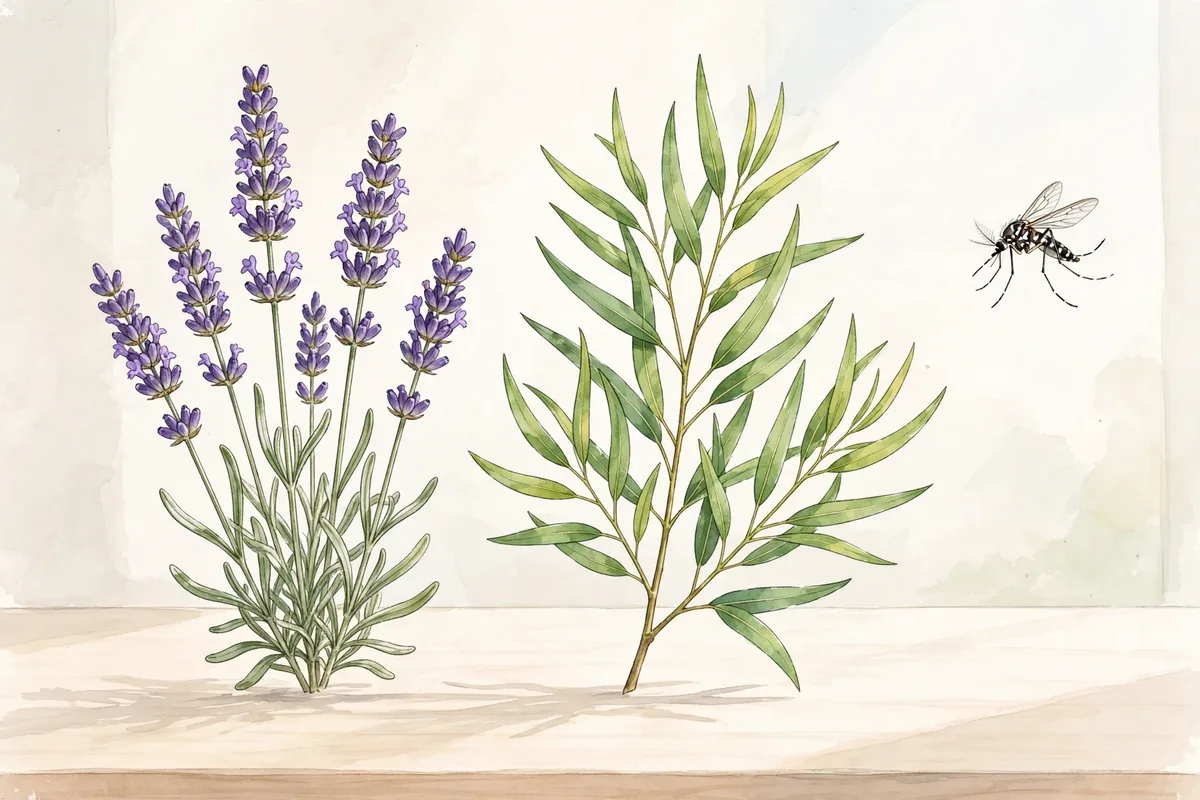
Lavender shows up in nearly every list of "natural mosquito repellents" on the internet. It's in the DIY sprays, the patio candles, the garden-center advice to plant it by your…

Lavender shows up in nearly every list of “natural mosquito repellents” on the internet. It’s in the DIY sprays, the patio candles, the garden-center advice to plant it by your back door. The scent is lovely, the idea of a chemical-free shield is appealing, and plenty of people swear their lavender sachets keep the biters away. But wishful thinking has launched a thousand ineffective repellents, so the question deserves a harder look.
Does lavender oil repel mosquitoes? Partially, and not for long. Published research shows lavender’s key compound can genuinely repel mosquitoes — with strong results in still indoor air that fade substantially outdoors — but the protection is shorter-lived and weaker than EPA-registered repellents like DEET or picaridin. Lavender is a pleasant supplement, not a replacement.
This article walks through what the studies actually found, why lavender affects mosquitoes at all, how to use the oil safely if you try it, and which plant-based option health authorities actually stand behind.
If you’re hoping for a yes-or-no verdict, here it is: lavender oil has real but modest repellent activity. In controlled tests, its main active compound — a terpene alcohol called linalool — has shown strong protection in enclosed indoor settings and noticeably weaker results outdoors, where wind disperses the scent. A separate 2019 study reported roughly 80% repellency, again over a short window. These are legitimate findings, not folklore.
The catch is duration and consistency. Essential oils evaporate quickly off skin, and research reviews note that most plant oils protect for something like 20 to 30 minutes — a fraction of what a registered repellent provides. Lavender also performs unevenly across mosquito species and conditions, and there’s a wide gap between a lab test of concentrated linalool and a lavender candle flickering on a breezy patio.
So the honest framing: lavender oil is one of the better-supported botanical options, and it’s reasonable to use it as a light extra layer — a diffuser on the porch, diluted oil for a quick evening outside. It is not in the same league as DEET, picaridin, or oil of lemon eucalyptus for real protection, and it should never be your only defense where mosquitoes carry disease.
The most-cited work comes from entomologist G.C. Müller and colleagues, who tested botanical repellents including linalool — lavender’s signature compound — against mosquitoes in both indoor and outdoor settings. Their 2009 field study, published in the Journal of Vector Ecology, found that linalool provided roughly 93% protection indoors but about 58% outdoors. That indoor-outdoor gap tells the whole story of botanical repellents: in still air the scent envelope holds, and in moving air it doesn’t.
Müller’s team had already compared citronella, linalool, and geraniol candles for indoor protection against mosquitoes and sand flies in a 2008 study, finding the botanical candles offered measurable but limited protection. Other small studies have reported broadly similar patterns — measurable repellency immediately after application that fades quickly as the oil evaporates — but the evidence base is thin and formulations vary too widely for firm, generalizable conclusions.
What’s missing matters too. No large, long-duration field trial has established lavender oil as a reliable multi-hour skin repellent, and results vary with concentration, formulation, mosquito species, and airflow. That’s why health authorities don’t list lavender among recommended repellents. The evidence supports “helps a bit, briefly” — not “proven protection.”

Mosquitoes navigate the world largely by smell. Their antennae, maxillary palps, and the sensory structures on their mouthparts work together to detect the carbon dioxide, lactic acid, and skin odors that mark a living host. Linalool — the compound that gives lavender its distinctive floral scent — appears to interfere with that olfactory system at high enough concentrations, effectively jamming or overwhelming the receptors mosquitoes use to track you.
This is the same general principle behind most botanical repellents: flood the mosquito’s senses with a strong volatile compound so the host cues get lost in the noise. It works best at close range and in still air, which is exactly what the indoor-outdoor gap in the research shows. Outdoors, the scent dilutes within minutes and the mosquito’s guidance system recovers.
It’s worth noting that this mechanism is concentration-dependent. A lavender plant in a pot releases far less linalool into the air than a diffuser or a properly diluted skin application. That’s why “plant lavender by your door” advice, while lovely gardening, has the weakest evidence of all — the plant simply doesn’t perfume enough cubic feet of air to matter to a mosquito hunting at ankle height three feet away.
If you decide to try lavender oil, safety rules come first — essential oils are concentrated plant chemistry, not harmless water. Follow these precautions:
Special populations need extra care. If you’re pregnant, nursing, or choosing protection for children, read our guide to insect repellent safety for children and pregnancy before using any essential oil. And if a bite does happen despite your efforts, keep the area clean, avoid scratching, and ask your doctor about pregnancy-safe relief options.

Here’s the comparison that matters most. The CDC recommends EPA-registered repellents with active ingredients proven to work for hours: DEET, picaridin, IR3535, and oil of lemon eucalyptus (OLE, whose active component is PMD). Of these, oil of lemon eucalyptus is the plant-based option with genuine authority behind it — in testing by New Mexico State University researchers, an OLE product performed about as well and lasted about as long as DEET products.
Lavender sits a clear tier below. It has some evidence and a pleasant scent, but shorter protection, weaker outdoor performance, and no EPA registration as a repellent — which means no standardized testing of efficacy or standardized labeling. A product being “natural” doesn’t make it safer or more effective; poison ivy is natural too. The registration process exists precisely to verify that a repellent does what it claims for as long as it claims.
That doesn’t make lavender useless. A lavender diffuser on a screened porch, lavender sachets in a closet, or diluted oil as a light extra layer on a low-risk evening are all reasonable uses. Just keep the hierarchy straight: for a backyard barbecue at dusk, lavender is ambiance; for a hike, a camping trip, or any area with mosquito-borne disease, reach for a registered repellent.
Garden-center advice loves the idea of mosquito-repelling plants, and lavender leads the list. The evidence for landscaping-as-repellent is thin across the board — plants release their oils in tiny amounts compared with extracted, concentrated oil, and outdoor air movement dilutes them almost immediately. A row of lavender along your patio smells wonderful and supports pollinators, but it won’t create a meaningful mosquito-free zone.
If you want the plant to pull any weight at all, placement and disturbance help slightly: pots of lavender right beside seating, where brushing the foliage releases bursts of scent, do more than a bed ten feet away. Crushing a few leaves and rubbing them on skin is a folk method with a kernel of logic — you’re applying the plant’s oils directly — but the dose is uncontrolled and the protection fleeting, and some people react to direct leaf contact.
The diffuser route is the most defensible home use: an electric diffuser or a bowl of hot water with a few drops of oil on a covered porch concentrates the scent where you sit. Even then, treat it as atmosphere, not armor. For keeping mosquitoes from getting inside in the first place, screens, sealed gaps, and eliminating indoor breeding sources do far more — see our home and yard bite-prevention guide for the full checklist.
Most mosquito bites are a minor nuisance, but get medical care promptly if you notice:
Does lavender oil repel mosquitoes as well as DEET?
No. Studies show lavender’s active compound provides partial, short-lived repellency — strong indoors, much weaker outdoors — while DEET and picaridin provide hours of consistent protection. Lavender is a reasonable supplement, not a substitute.
Can I put lavender oil directly on my skin?
You shouldn’t. Undiluted essential oil can irritate skin and cause sensitization. Always dilute a few drops in a carrier oil or unscented lotion, patch test first, and reapply often given the short protection window.
Will planting lavender keep mosquitoes out of my yard?
Not meaningfully. Plants release far less scent than extracted oil, and outdoor air dilutes it immediately. Lavender is great for pollinators and your nose, but it won’t create a mosquito-free zone.
Is lavender oil safe around kids and pets?
Use caution. Keep concentrated oil away from small children, never let kids ingest it, and note that lavender oil is toxic to cats. Check our repellent safety guide for children and pregnancy for registered options.
What’s the best natural mosquito repellent?
Oil of lemon eucalyptus (OLE/PMD) is the plant-based repellent with CDC recognition and DEET-comparable performance in testing. Lavender has some evidence but sits a clear tier below in both duration and reliability.
Medically reviewed by Dr. Sarah Jones, MD.
This article is for informational purposes only and isn’t medical advice. If you’re worried about a bite or sting, talk to a healthcare professional.
Dr. Jones oversees StingHelp’s clinical verification process. Every guide is systematically evaluated against active Centers for Disease Control and Prevention (CDC), Environmental Protection Agency (EPA), and American Academy of Allergy, Asthma & Immunology (AAAAI) medical consensus standards to ensure symptom distinctions and care recommendations are clinically sound.
Explore physician-reviewed first-aid procedures, identification clues, and symptom comparisons for other common outdoor bites and stings.

After years of debunked bracelets, sonic gadgets, and phone apps, mosquito-repellent wearables have a credibility problem. Do clip-on mosquito repellents work? The answer is…
It's a warm July evening, the grill is going, and within ten minutes your ankles are under attack. You've heard the backyard advice a…
DynaTrap's ads promise up to an acre of mosquito protection with no zapping, no propane, and no chemicals — just plug it in and…