
Does Lavender Oil Repel Mosquitoes? Evidence Review
Lavender shows up in nearly every list of "natural mosquito repellents" on the internet. It's in the DIY sprays, the patio candles, the garden-center…
After years of debunked bracelets, sonic gadgets, and phone apps, mosquito-repellent wearables have a credibility problem. Do clip-on mosquito repellents work? The answer is a qualified yes — but essentially…

After years of debunked bracelets, sonic gadgets, and phone apps, mosquito-repellent wearables have a credibility problem. Do clip-on mosquito repellents work? The answer is a qualified yes — but essentially for one product. The OFF! Clip-On, which vaporizes the repellent metofluthrin with a small battery-powered fan, is the only wearable device that has held up in peer-reviewed testing, including a 2017 New Mexico State University study and an outdoor field trial. The catch: it protects a small zone around a stationary person, not a bubble you carry through the woods.
This article reviews the actual studies, explains the honest limits — wind, movement, and range — covers the label safety rules, and helps you choose between a clip-on and a spray for your situation. For the bracelet-style alternatives, note that citronella candles failed in the same NMSU testing; for bite care, our mosquito bite itching guide.
Most clip-on and wearable repellents on the market have no meaningful evidence behind them. The OFF! Clip-On is the exception, and understanding why it differs explains everything else.
How it works: the device holds a replaceable mat infused with metofluthrin, a volatile pyrethroid. A battery-powered fan circulates the vapor outward, creating a small cloud of repellent around the wearer. This is fundamentally different from a bracelet, which relies on passive diffusion of oils from a band on your wrist — a mechanism researchers found produces concentrations too low to matter.
What “works” means here: in testing, the Clip-On significantly reduced mosquito attraction and landings compared to no repellent. It doesn’t make you invisible to mosquitoes; it creates a zone of protection roughly around one seated person. Think of it as a personal patio diffuser you wear, not a force field.
The honest framing: this is the rare wearable that survived scientific scrutiny — not proof that clip-ons in general work. Generic clip-on devices using citronella, lemongrass, or unspecified “natural” ingredients have no comparable evidence. When shopping, the evidence attaches to the metofluthrin fan mechanism specifically, not to the clip-on form factor.
The key study is Rodriguez et al., “Efficacy of Some Wearable Devices Compared with Spray-On Insect Repellents for the Yellow Fever Mosquito,” published in the Journal of Insect Science in 2017 (DOI: 10.1093/jisesa/iew117). Researchers at New Mexico State University tested 11 products head-to-head against Aedes aegypti mosquitoes in a wind-tunnel setup: five wearables (the OFF! Clip-On, a sonic repeller, and three bracelets), one citronella candle, and five sprays.
The Clip-On was the only wearable that worked. The sonic repeller and all three bracelets showed no significant reduction in mosquito attraction. The citronella candle also failed. The researchers hypothesized that the bracelets’ active ingredients may be genuine repellents, but the concentrations they emit are simply too low to have an effect.
Sprays still won overall. Among the five spray-on repellents, those containing DEET and oil of lemon eucalyptus (PMD) were the most effective by far — consistent with multiple other studies. The study’s takeaway, widely covered by science press at the time: consumers should be skeptical of wearable claims generally, with the Clip-On as the lone evidence-backed exception.
Why this study carries weight: it was independent university research, published in a peer-reviewed entomology journal, testing products side by side under identical conditions — not manufacturer-funded testimonials. The lead researchers were explicit that false confidence from ineffective repellents is itself a danger, since people skip real protection believing they’re covered.
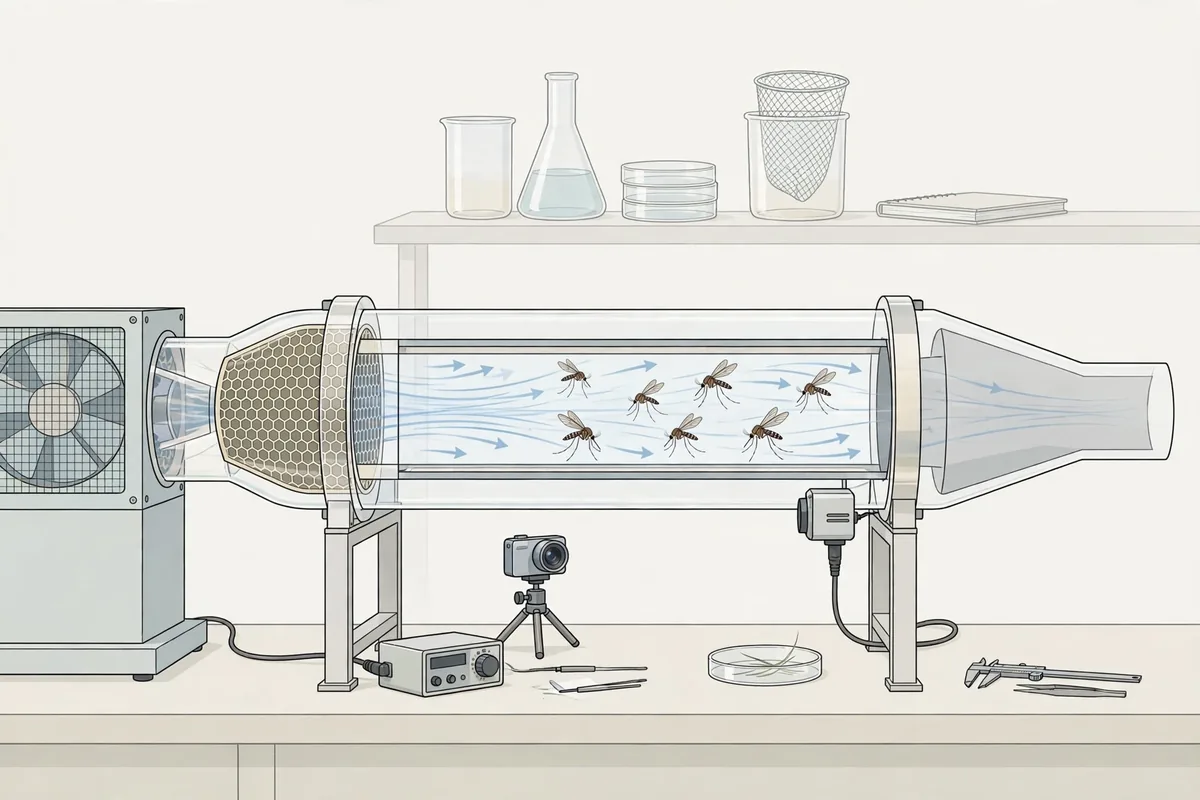
Lab wind tunnels are one thing; a backyard is another. A separate study by Christopher Bibbs and Rui-De Xue of the Anastasia Mosquito Control District in Florida tested the OFF! Clip-On outdoors against hungry Aedes aegypti — the mosquito behind Zika, dengue, and chikungunya — and published the results in the Journal of Medical Entomology (2015; DOI: 10.1093/jme/tjv200).
What they found: the device produced high mosquito knockdown and mortality rates up to about 0.3 meters (roughly one foot) from the device — enough to protect a single person wearing it. Effectiveness dropped off at greater distances, which the researchers measured at 0.6 and 0.9 meters. The lead researcher noted his surprise, remarking that consumer pest-control tools so often fail that finding one that worked was a welcome change.
What this means practically: the protection zone is genuinely small — about an arm’s length. That’s plenty for one person sitting on a patio chair, watching a game from the sidelines, or fishing from a dock. It is not coverage for a group, and it doesn’t extend across a yard. The device protects the wearer, not the party.
Wind breaks the cloud. The device works by maintaining a vapor zone around you. In wind, that vapor disperses, and protection drops. Calm evenings on the patio are the ideal use case; breezy conditions are the worst. If the air is moving enough to be comfortable, it’s moving enough to thin the repellent cloud.
Movement resets the zone. Every time you get up and walk somewhere, you leave your protective cloud behind, and it takes a few minutes to rebuild around you in the new spot. The product’s own directions acknowledge this: if you move, allow a few minutes for the unit to rebuild its protection. For active use — hiking, gardening that has you moving around the yard, chasing kids — a spray you wear on your skin is far more practical.
Range is one person, not one area. Don’t buy a single Clip-On expecting to protect a dinner table of six. Each device covers roughly its wearer. For group settings, multiple devices or a different strategy (a patio-scale spatial repellent, screened area, or everyone in spray) makes more sense.
Refills and batteries are ongoing costs. Each refill lasts up to about 12 hours of use and expires 14 days after opening, whichever comes first. The unit runs on AAA batteries, and the LED indicator signals when roughly three hours of refill and battery remain. It’s not a buy-once device — factor the refill cost against a bottle of spray.

Metofluthrin is a registered pesticide, and the label is the law — “it is a violation of Federal law to use this product in a manner inconsistent with its labeling,” as the directions state. The key rules:
Keep away from children and pets. Don’t let small children handle the unit or the refills. The directions warn not to touch the treated refill cloth when inserting or removing it, and to wash hands thoroughly immediately after handling a refill. Store the unit where kids can’t reach it.
Outdoor use, away from food. Use it in outdoor settings — backyard, camping, sidelines, patio — and don’t place it near food, or near sources of heat, ignition, or moisture. When setting it on a surface rather than clipping it on, lay it on its clip so air circulates freely.
Don’t open or cut the refills. The repellent is contained in the mat; damaging it increases exposure without improving performance. Replace refills 14 days after opening or after 12 hours of use.
Not a substitute for disease protection where it counts. In areas with active mosquito-borne disease transmission, public health guidance prioritizes proven measures — EPA-registered skin repellents, protective clothing, and source reduction. A clip-on can be part of the plan, but it shouldn’t be the only layer when the stakes are high.
Choose the clip-on when: you’ll be mostly stationary outdoors — patio dinners, sideline spectating, fishing, reading on the porch — and you’d rather not put repellent on your skin. It’s also useful for people who dislike the feel or smell of sprays, and for creating a small comfort zone without coating yourself.
Choose a spray when: you’ll be moving (hiking, yard work, sports), it’s windy, you need the strongest and longest-lasting protection, or disease risk is elevated. DEET and oil of lemon eucalyptus sprays remain the most effective and best-studied options, and they go where you go.
Use both when: conditions are bad and you’re stationary — a spray for baseline protection plus a clip-on for the zone effect is a reasonable combination, not overkill.
Don’t forget the yard itself. No wearable compensates for breeding mosquitoes next door. Dumping standing water, maintaining screens, and keeping grass trimmed do more for your bite count over a season than any device. Structural exclusion (intact screens, sealed gaps) covers the indoor side, and our outdoor bite prevention checklist is a good pre-evening routine.

Mosquito bites are usually minor, but seek care if:
How long does an OFF! Clip-On refill last?
Each refill provides up to about 12 hours of protection and expires 14 days after opening, whichever comes first. The unit’s LED indicator lights up when roughly three hours of refill and battery life remain. Replace both the refill and the AAA batteries when the fan stops or the indicator goes dark.
Do clip-on repellents work while walking or hiking?
Poorly. The protective vapor cloud needs a few minutes to rebuild every time you move, so walking continuously keeps you outside effective coverage. For hiking or any active use, an EPA-registered skin-applied repellent (DEET, picaridin, or oil of lemon eucalyptus) is the evidence-backed choice.
Are clip-on repellents safe around kids and dogs?
Follow the label strictly: keep the unit and refills away from small children, don’t let children handle refills, wash hands after handling them, and don’t place the device where pets will chew it. It’s an outdoor product containing a registered pesticide — treat it with the same respect as any other.
Do the generic citronella clip-ons work too?
There’s no comparable peer-reviewed evidence for generic citronella or “natural” clip-on devices. In the NMSU study, citronella-based wearables (bracelets) and a citronella candle all failed to reduce mosquito attraction. The evidence supports the metofluthrin fan mechanism specifically — don’t assume the clip-on shape alone does anything.
Can one clip-on protect a whole patio or group?
No. Field testing showed effective protection only within about 0.3 meters (one foot) of the device — essentially the wearer. For groups, each person needs their own device, or use a different strategy like a larger spatial repellent, screened seating, or everyone wearing spray repellent.
Medically reviewed by Dr. Sarah Jones, MD.
This article is for informational purposes only and isn’t medical advice. If you’re worried about a bite or sting, talk to a healthcare professional.
Dr. Jones oversees StingHelp’s clinical verification process. Every guide is systematically evaluated against active Centers for Disease Control and Prevention (CDC), Environmental Protection Agency (EPA), and American Academy of Allergy, Asthma & Immunology (AAAAI) medical consensus standards to ensure symptom distinctions and care recommendations are clinically sound.
Explore physician-reviewed first-aid procedures, identification clues, and symptom comparisons for other common outdoor bites and stings.

Lavender shows up in nearly every list of "natural mosquito repellents" on the internet. It's in the DIY sprays, the patio candles, the garden-center…
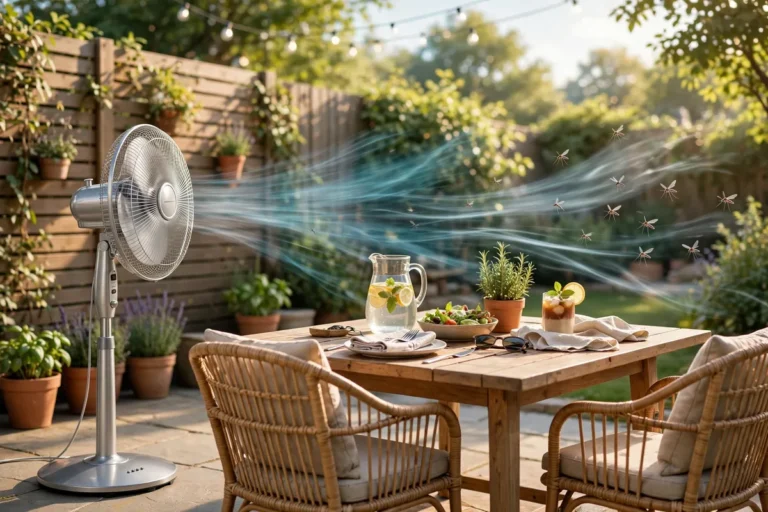
It's a warm July evening, the grill is going, and within ten minutes your ankles are under attack. You've heard the backyard advice a…
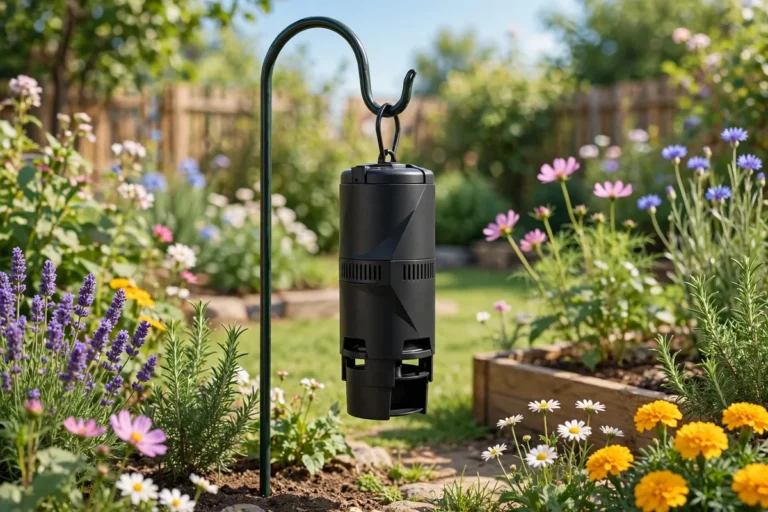
DynaTrap's ads promise up to an acre of mosquito protection with no zapping, no propane, and no chemicals — just plug it in and…