
If mosquitoes are biting your ankles in broad daylight, you may be meeting the Asian tiger mosquito. This aggressive daytime biter has spread across much of the United States, and its bites itch like any other mosquito’s — but its disease-carrying potential makes it worth knowing. Asian tiger mosquito bite symptoms are the familiar small, itchy welt; the real story is learning to identify the insect and cut down its numbers around your home.
Identifying the Asian tiger mosquito #
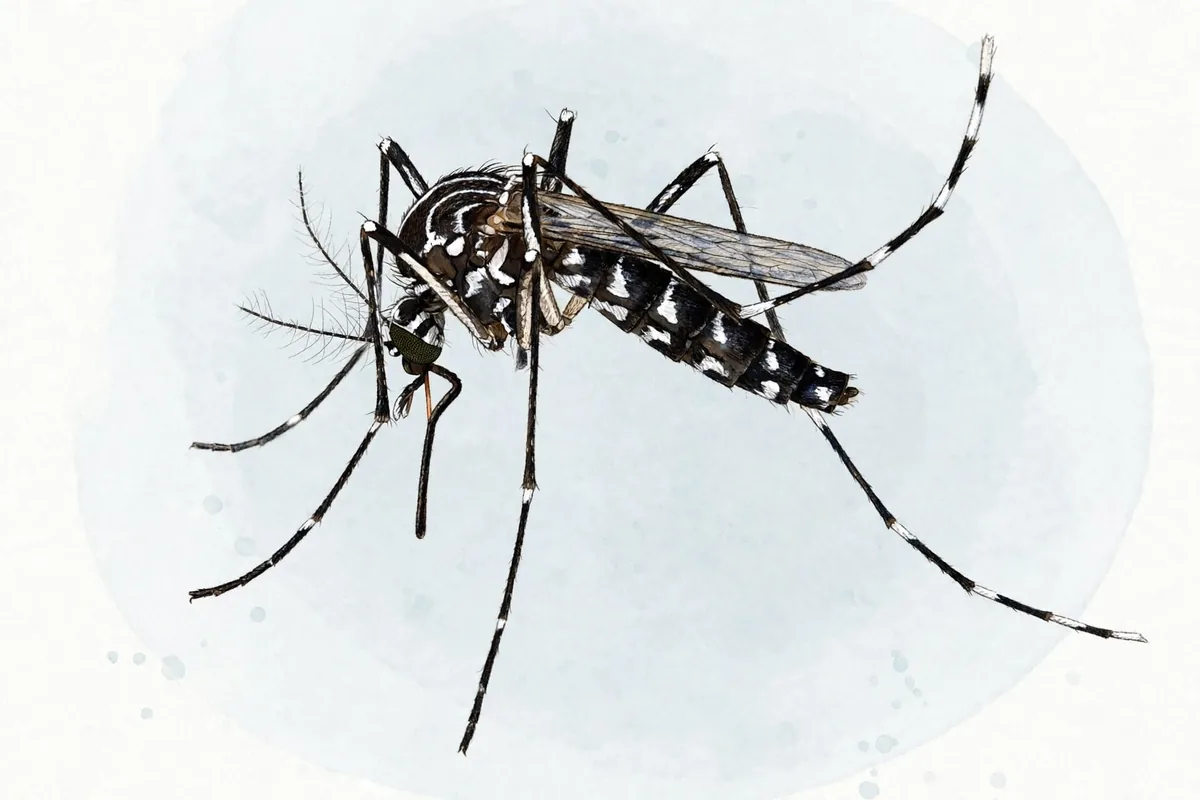
The Asian tiger mosquito (Aedes albopictus) is unmistakable once you know the markings: a black body with bright white stripes on the legs and a single white stripe running down the middle of its back. It is smaller than many native mosquitoes, roughly a quarter inch long, and its bold patterning stands out against skin. If the mosquito that just bit you looks like it is wearing white-striped socks, you have your suspect.
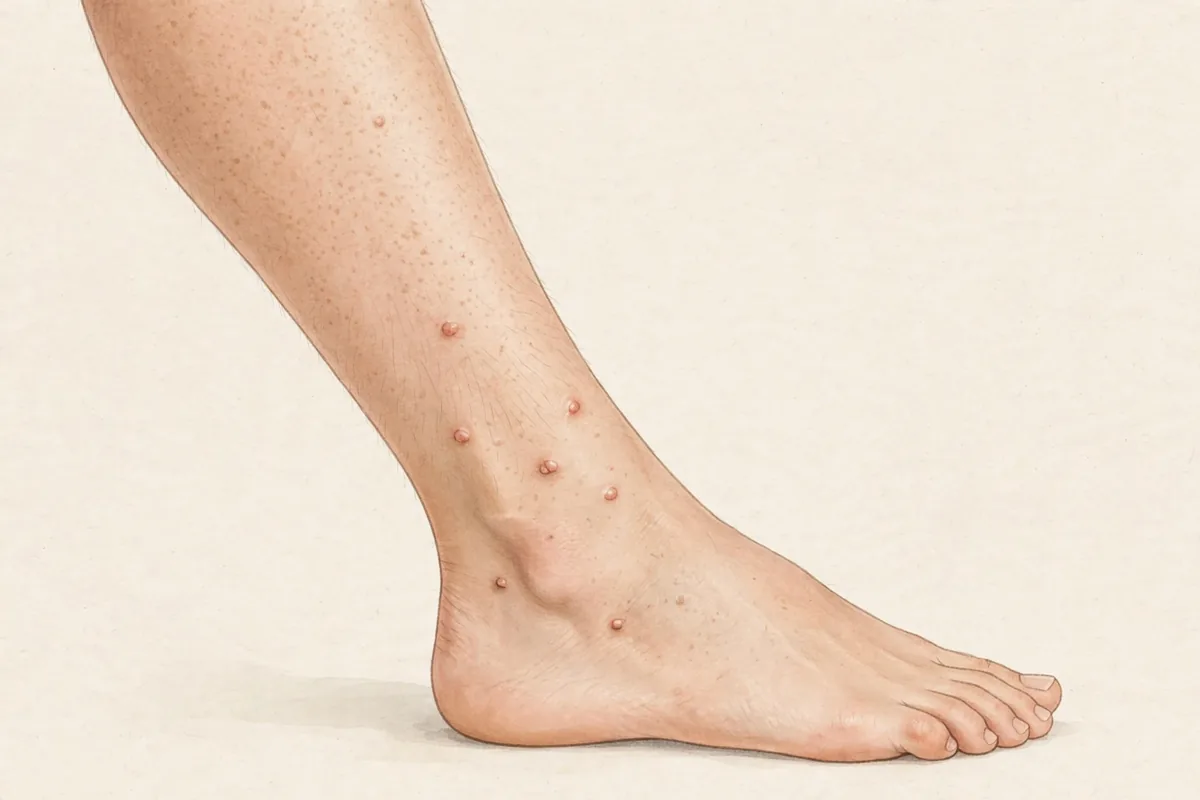
Behavior is the second clue. Unlike most mosquitoes, which hunt at dusk and dawn, the Asian tiger mosquito is an aggressive daytime biter, most active in early morning and late afternoon. It flies low and targets ankles, feet, and lower legs — the classic “bitten at the barbecue while standing around” pattern. It is also a persistent biter that will keep trying even when swatted at, and it can bite through thin clothing. This species breeds in tiny amounts of standing water — bottle caps, plant saucers, clogged gutters, children’s toys — which is why it thrives in suburbs and cities.
What the bites feel like #
The bite itself feels like any mosquito bite: a small red welt that itches, sometimes with mild swelling, appearing within minutes to hours. People who react strongly to mosquito saliva may develop larger, puffier welts, and children sometimes show dramatic swelling that looks worse than it is — the mosquito bite swelling in children guide explains what is typical at different ages.
Treat the bites the same way you would any mosquito bite: wash the area, apply a cold compress, and avoid scratching. An oral antihistamine taken per label directions helps with itching, and a dab of calamine lotion or hydrocortisone cream per label can soothe individual welts. Do not scratch bites open — broken skin invites bacterial infection, which is a bigger practical risk than anything the mosquito itself transmitted in most US settings. Most welts fade within a few days.
Why this species gets special attention #
According to the CDC, the Asian tiger mosquito is a known vector for several viruses, including dengue, chikungunya, and Zika. In the continental United States, local transmission of these diseases remains uncommon, but the mosquito’s competence as a vector is exactly why public-health agencies track it closely — and why travelers returning from tropical regions are advised to avoid bites for a few weeks, so local mosquitoes cannot pick up and spread an imported virus.
This does not mean every bite is a medical event. It means two practical things: take daytime mosquito protection seriously in areas where this species is established, and pay attention to unusual symptoms after travel to regions where dengue or chikungunya circulate. For travelers, the dengue article covers what that illness looks like and when it needs care.
Reducing bites around your home #
Because this mosquito breeds in containers, not ponds, source reduction works remarkably well. Once a week, walk your yard and empty anything holding water: plant saucers, buckets, toys, tarps, grill covers, and clogged gutters. Scrub the insides of containers too — the eggs stick to surfaces above the waterline and survive drying, hatching when water returns.
For personal protection during peak biting hours, use an EPA-registered repellent (DEET, picaridin, or oil of lemon eucalyptus) per label directions, wear light-colored long sleeves and pants when gardening, and consider treating clothing with permethrin for heavy-exposure activities. Keep window screens in good repair, and run fans on patios — mosquitoes are weak fliers and moving air disrupts their approach. Neighborhood-wide, the biggest wins come when everyone dumps standing water on the same schedule, since these mosquitoes do not fly far from where they hatch.
Warning signs: when to seek care #
Call 911 immediately if a bite causes trouble breathing or swallowing, swelling of the face, lips, tongue, or throat, widespread hives, dizziness or fainting, or a racing heartbeat. Severe allergy to mosquito bites is rare but possible.
See a doctor or urgent-care clinic if a bite shows spreading redness, red streaks, increasing pain and warmth, pus, or fever — signs of secondary infection. After travel to regions where mosquito-borne viruses circulate, seek care promptly for high fever, severe headache, pain behind the eyes, joint pain, or rash developing within two weeks of return, and mention your travel history. Routine itchy welts without these features need no medical visit.
Frequently asked questions #

How is an Asian tiger mosquito bite different from a regular mosquito bite? #
The welt itself is not reliably different — bite reactions vary more by person than by mosquito species. The differences are in the biter: the white-striped daytime mosquito going for your ankles at 3 p.m. is the giveaway, not the bump it leaves behind.
Can Asian tiger mosquitoes transmit diseases in the US? #
They are capable vectors for dengue, chikungunya, and Zika per the CDC, but locally acquired cases of these diseases remain uncommon in the continental US. The risk rises after international travel or during local outbreaks, which is why health departments monitor this species and why bite prevention matters.
Why do they always bite my ankles? #
They are low-flying mosquitoes that typically stay under a few feet off the ground, so ankles and lower legs are simply the first skin they encounter. Long pants, socks, and repellent applied to the lower legs specifically are the most effective countermeasures.
Do bug zappers or ultrasonic repellers work against them? #
Evidence for both is weak — zappers mostly kill moths and beetles, not biting mosquitoes, and ultrasonic devices have not shown meaningful repellent effects in studies. Source reduction (dumping standing water), EPA-registered repellents, and screens are the measures with real evidence behind them.
Medical and editorial note #
This guide is general information about identifying the Asian tiger mosquito and managing its bites, not medical advice. Most bites are minor irritations, but mosquito-borne illnesses are serious when they occur. If you develop fever, rash, or joint pain after bites — especially following travel — consult a healthcare professional promptly and mention your exposure history.


