
Bed Bug Bites vs Eczema: How to Tell Apart
You wake up with itchy red marks, and the internet offers two suspects: bed bugs or eczema. The question of bed bug bites vs…
Compare a deer tick bite with a bald-faced hornet sting using attachment, immediate pain, nest exposure, allergy symptoms, tick-borne disease warning signs, and first aid.
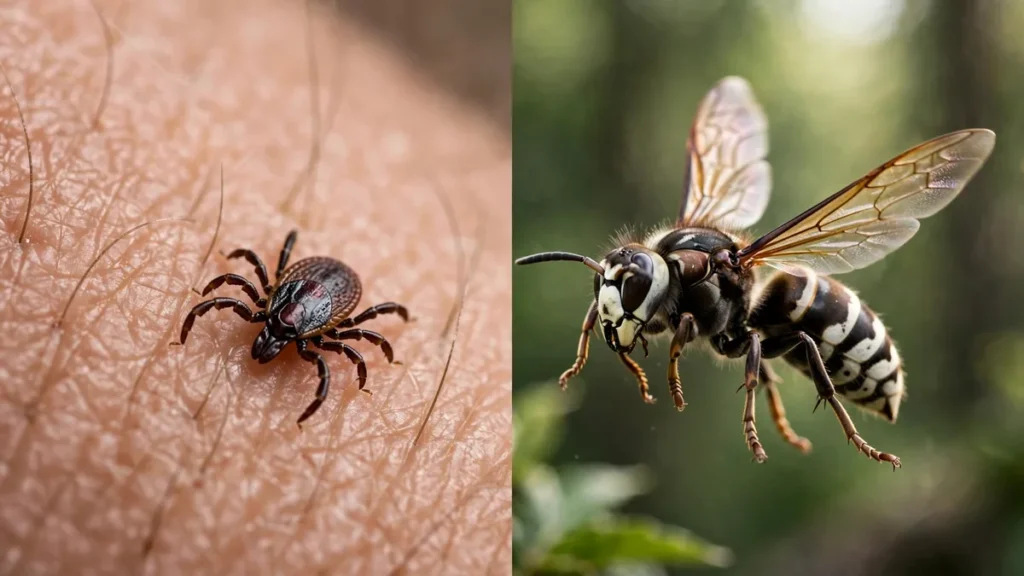
Direct answer: A deer tick bite and a bald-faced hornet sting are usually separated by one major clue: attachment versus immediate venom pain. A deer tick may remain fixed to the skin and feed without causing obvious pain. A bald-faced hornet sting is typically sudden and painful, usually after a close encounter with a large aerial paper nest in a tree, shrub, or on a structure.
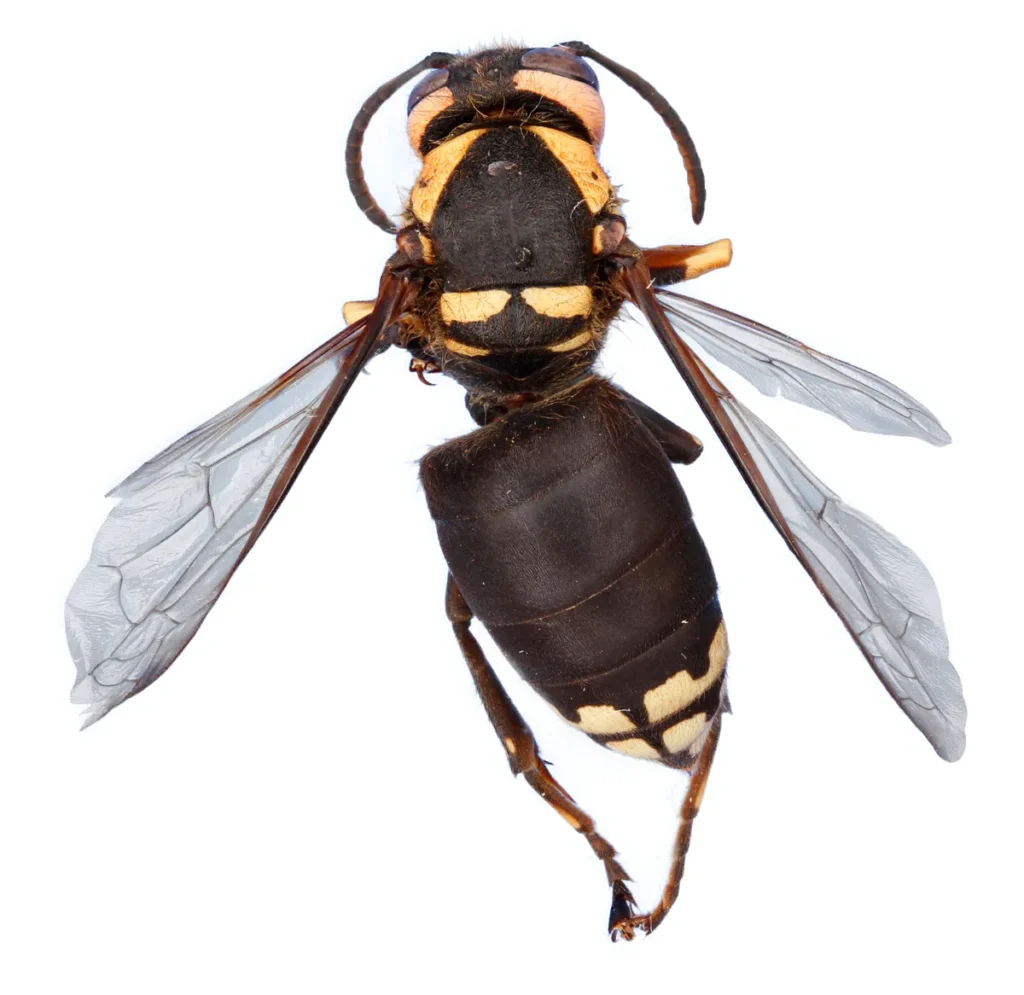
Important naming note: The bald-faced hornet is not a true hornet. Penn State Extension describes Dolichovespula maculata as an aerial yellowjacket. That detail matters because its behavior and sting risk are closer to other social yellowjackets than to a tick exposure.
| Question | Deer tick bite | Bald-faced hornet sting |
|---|---|---|
| Was there immediate pain? | Often little or none | Usually yes |
| Does the arthropod remain on the skin? | Often yes while feeding | No; the wasp stings and moves away |
| Where is exposure common? | Brush, woodland edges, tall grass, leaf litter, yards, pets | Near large aerial paper nests in trees, shrubs, eaves, or structures |
| Main concern | Tick-borne infection risk | Venom reaction, including anaphylaxis |
| Urgent timeline | Illness may emerge later | Severe allergy can begin within minutes |
Bald-faced hornets build enclosed gray paper nests that can become large and conspicuous. Penn State Extension notes that these nests are commonly built in bushes and trees and can also occur on the outside of buildings. A person trimming a hedge, pruning a tree, moving a ladder, mowing near a low nest, or working around an eave may trigger defensive stinging.
A deer tick exposure is very different. The tick reaches the host from vegetation or another surface, crawls to a suitable area, and attaches. You may discover it only later while showering, changing clothes, checking a child, or examining a pet.
People often look for specific puncture patterns to identify bites and stings. That is unreliable. A hornet sting, tick bite, scratched papule, inflamed follicle, or minor wound can all leave tiny marks. The actual arthropod and exposure history are much stronger evidence.
If a tick is visibly attached, that is the clearest clue. If a large black-and-white wasp was seen leaving the skin immediately after a painful sting near a papery aerial nest, that strongly favors a bald-faced hornet sting.
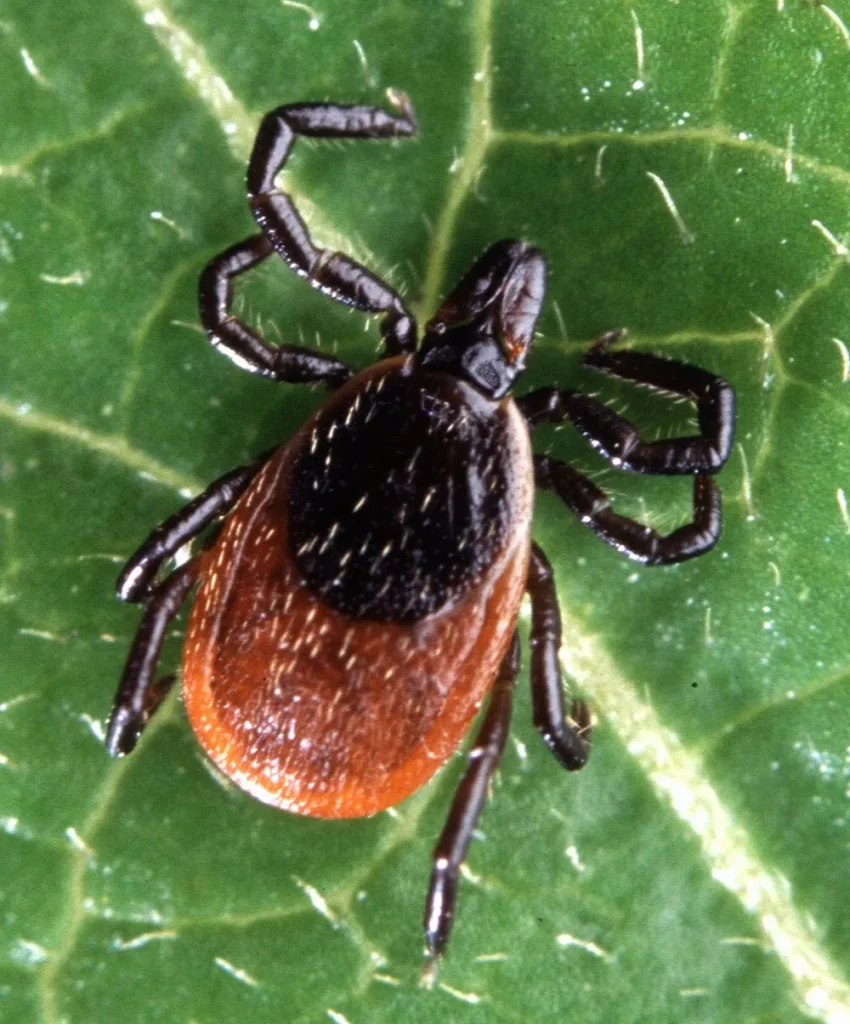
In common U.S. usage, “deer tick” usually refers to the blacklegged tick, Ixodes scapularis, which can transmit Lyme disease and other tick-borne pathogens. The term is informal, but it is widely used by the public.
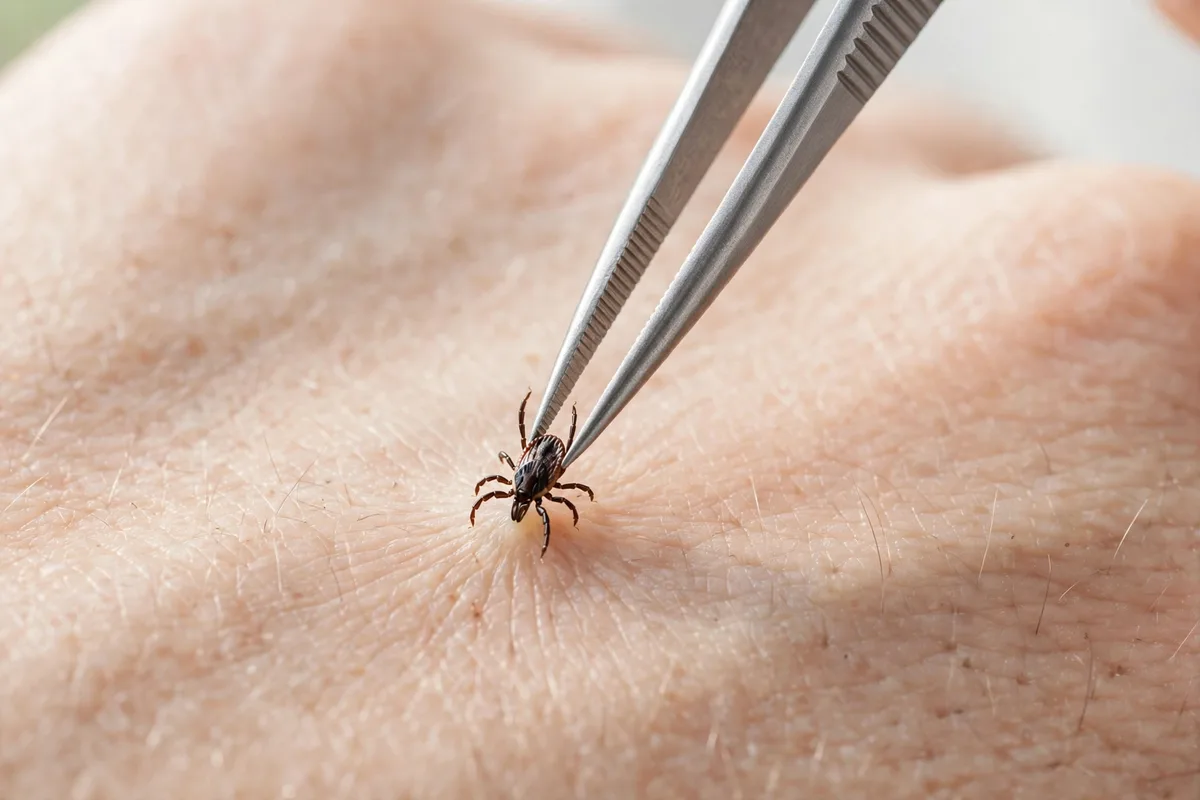
Because a tick can remain attached for a prolonged period, finding and removing it promptly matters. CDC recommends removing an attached tick as soon as possible rather than waiting for medical care solely for removal.
Avoid folk methods such as burning the tick, coating it with petroleum jelly, or applying nail polish. Mechanical removal is faster and more predictable.
The sting is a venom injection. Immediate sharp pain, burning, redness, and swelling are common. The local reaction can expand over several hours. A large local reaction may be uncomfortable and dramatic without being a life-threatening allergy.
What matters most is whether symptoms spread beyond the sting area. Widespread hives, throat or tongue swelling, breathing difficulty, severe dizziness, fainting, vomiting, diarrhea, or signs of shock may indicate anaphylaxis and require emergency treatment.
Bald-faced hornets are social wasps that defend their colony. A person who accidentally gets close to a nest may be stung more than once or by more than one insect. This is different from a single tick attachment.
Multiple stings can increase the total venom exposure. Even without a classic allergic reaction, numerous stings can produce more significant illness. Children, older adults, and people with heart, lung, or other major medical conditions may need earlier evaluation after a large number of stings.
Leave the area first. Do not remain near the nest to identify the insect more precisely. Once safe, check for signs of a systemic allergic reaction. Wash the sting site gently and use a cool compress for pain and swelling.
If the person has a prescribed epinephrine auto-injector and a clinician-provided emergency plan for venom allergy, follow that plan. Emergency evaluation is still needed after epinephrine for suspected anaphylaxis.
Tick-borne disease risk is not judged by how painful the bite was. Many people never feel the initial bite. A small red area immediately after removal may simply reflect local irritation.
CDC advises watching for later fever or rash after a tick bite. An erythema migrans rash associated with Lyme disease may expand gradually over days. It does not always look like a perfect bull’s-eye, and it may not be especially itchy or painful.
These symptoms are not specific to Lyme disease, but the combination of symptoms plus a relevant tick exposure should be discussed with a healthcare professional.
These findings after a sting are emergency warning signs. Do not wait for them to improve on their own.
Large swelling around the sting site can reflect inflammation from venom. It does not automatically mean infection, and it does not automatically mean anaphylaxis. Infection is more concerning when the area becomes progressively hotter and more painful, drainage appears, fever develops, or the overall trend is worsening rather than stabilizing.
Anaphylaxis is defined by systemic involvement, not merely the diameter of local redness.
A sting around the eye can cause dramatic swelling because eyelid tissue is loose. A sting inside the mouth or throat is more concerning because swelling can threaten the airway. Seek urgent medical advice for mouth or throat stings, vision changes, severe eye pain, breathing symptoms, or rapidly progressive facial swelling.

No. Lyme disease is transmitted through infected blacklegged ticks. A bald-faced hornet is a stinging wasp and does not transmit Lyme disease through its sting.
Tick bites can trigger allergic reactions in some people, but the classic emergency concern in this comparison is more strongly associated with venom from a social wasp sting. Any exposure that causes breathing difficulty, throat swelling, fainting, or other severe systemic symptoms requires emergency care regardless of the suspected insect.
Blacklegged ticks are especially relevant in parts of the Northeast, mid-Atlantic, and upper Midwest, with the western blacklegged tick on the Pacific Coast. Bald-faced hornets are widespread across much of North America. Penn State Extension reports them across much of the contiguous United States as well as Canada and Alaska.
Location changes probability but does not identify a skin lesion by itself. Travel and outdoor activity history are important.
A large enclosed gray paper nest in a tree or shrub is a strong environmental clue for a bald-faced hornet encounter. By contrast, a close-up of a red welt may not distinguish a sting from another bite or inflammatory reaction.
Do not approach an active nest to take a better picture. A distant photo is enough for documentation if it can be obtained safely.
For a suspected tick bite, provide the date, location, estimated attachment time if known, whether the tick was saved or photographed, and any later fever or rash.
For a suspected bald-faced hornet sting, describe the immediate pain, number of stings, whether a nest was involved, and whether any symptoms occurred away from the sting site. Mention any prior serious reaction to bees, wasps, hornets, yellow jackets, or fire ants.
Emergency care: Call 911 for trouble breathing, swelling of the tongue or throat, fainting, severe dizziness, shock, or other signs of anaphylaxis after a sting.
Prompt medical advice after a tick exposure: Seek care for fever, an expanding rash, facial weakness, severe headache, neurologic symptoms, new joint swelling, or other significant illness after a deer tick bite.
Medical evaluation after either exposure: Seek care for rapidly worsening pain, pus, significant fever, extensive tissue injury, or uncertainty about a high-risk reaction.

Bald-faced hornets are visually distinctive at a distance because they are predominantly black with white or ivory markings. Their enclosed gray paper nests may hang from tree limbs, shrubs, eaves, or other elevated structures. You do not need a close-up photo to make the history useful. If a painful sting occurred directly after disturbing a hanging paper nest, that environmental clue is important enough to report.
A deer tick exposure produces almost the opposite story. There may be no dramatic event at all. The person may simply discover a small attached tick during a shower or skin check after yard work, hiking, hunting, camping, or time with a pet. That lack of immediate pain does not make the exposure unimportant.
A social wasp defends a colony quickly. The sting delivers venom immediately, so the most dangerous allergic symptoms usually belong to the early phase of the event. A tick’s medical significance is related to feeding and potential pathogen transmission, so the person may feel well during the bite and only later develop signs of illness.
This is also why the question “Which one hurts more?” is less important than “When did symptoms start?” Sudden pain at the moment of contact is a useful hornet clue. Delayed fever, expanding rash, or other illness after an attached tick is a different clinical pattern.
A previous systemic reaction to a bee, wasp, hornet, yellow jacket, or fire ant sting changes the safety plan. People with a clinician-prescribed epinephrine auto-injector should keep it accessible and follow their emergency plan after a suspected serious sting reaction. An allergist can evaluate venom allergy and discuss longer-term prevention strategies. A past venom allergy does not increase the chance that a tick bite will transmit infection; these are separate risks that need separate follow-up.
Despite the common name, Penn State Extension classifies it as an aerial yellowjacket rather than a true hornet.
Yes. Social wasps can sting more than once.
Yes. CDC recommends removing an attached tick as soon as possible using steady mechanical removal.
No. Infection depends on whether the tick carries a pathogen and other exposure factors. Monitor for symptoms and seek medical advice when appropriate.
No. A large local reaction can stay confined to the sting area. Severe allergy is more concerning when symptoms involve breathing, circulation, the gastrointestinal system, or widespread hives and swelling.
Educational information only. StingHelp does not diagnose an insect exposure or replace care from a qualified healthcare professional. Seek emergency help for breathing difficulty, throat swelling, fainting, or other severe systemic symptoms.
Dr. Jones oversees StingHelp’s clinical verification process. Every guide is systematically evaluated against active Centers for Disease Control and Prevention (CDC), Environmental Protection Agency (EPA), and American Academy of Allergy, Asthma & Immunology (AAAAI) medical consensus standards to ensure symptom distinctions and care recommendations are clinically sound.
Explore physician-reviewed first-aid procedures, identification clues, and symptom comparisons for other common outdoor bites and stings.
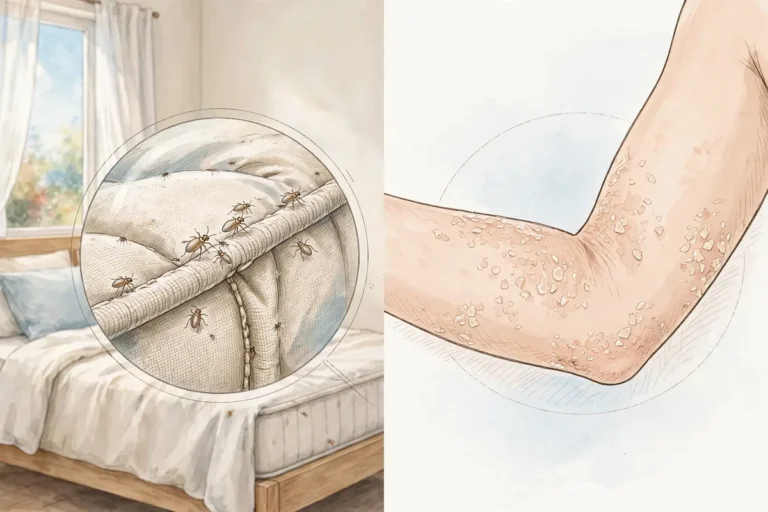
You wake up with itchy red marks, and the internet offers two suspects: bed bugs or eczema. The question of bed bug bites vs…

Your child wakes up covered in itchy red spots and the questions start immediately: is this chickenpox vs bug bites, an allergic reaction, or…

Your child comes in from the yard clutching a caterpillar they thought looked cool, and now their hand is burning. Or you brush a…