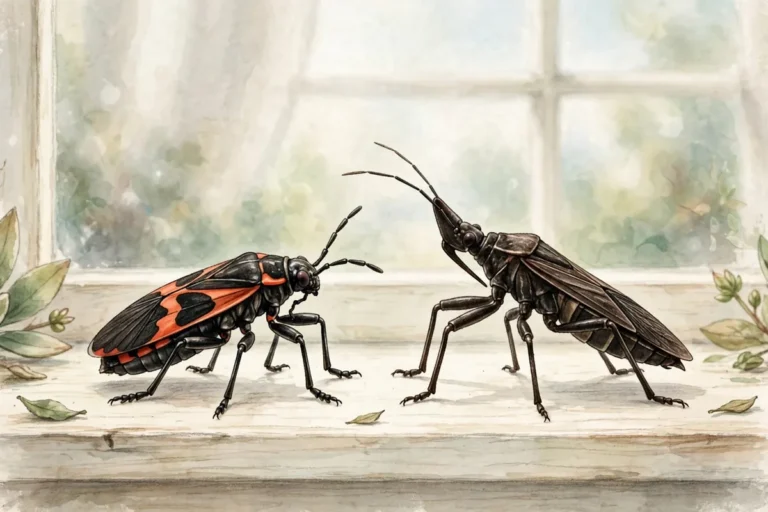
You woke up with an itchy red rash — or came home from a hike with one — and the question is immediate: is this contact dermatitis vs bug bites? The two get confused constantly, and it’s easy to see why. Both cause red, itchy skin. Both can appear in clusters. Both make you miserable at 2 a.m. But they have different causes, different patterns, and different next steps — and treating one like the other wastes time and comfort.
This article is an educational comparison only. No article can diagnose your rash, and this one won’t try. Instead, you’ll learn how dermatologists think about the distinction — the pattern clues, the exposure history questions, and the red flags that mean “stop guessing and see a clinician.” If your rash is persistent, spreading, or severe, a dermatologist is the right call, full stop.
Contact Dermatitis: The Basics
Contact dermatitis is skin inflammation triggered by direct contact with something your skin reacts to. It comes in two main types:
- Irritant contact dermatitis — the more common type. Harsh substances (strong soaps, detergents, solvents, bleach, frequent handwashing) damage the skin’s protective barrier directly. Anyone’s skin will react if the exposure is strong or long enough.
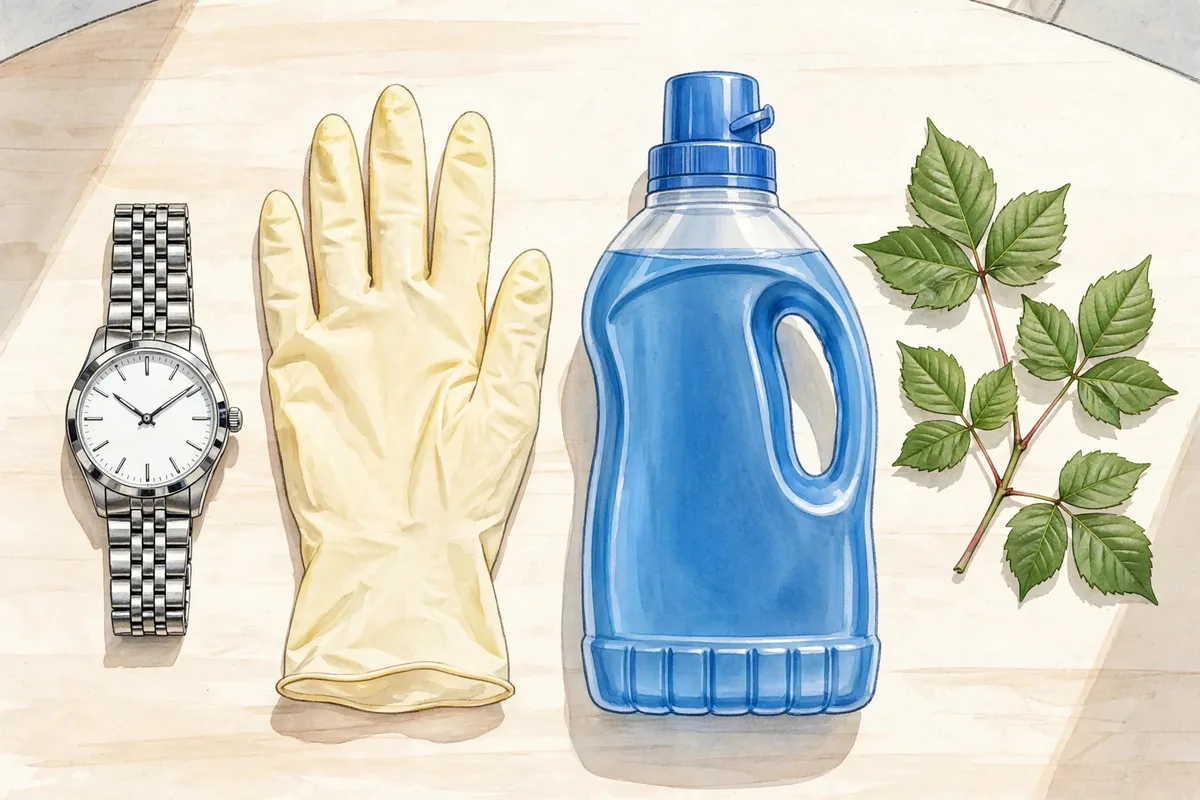
- Allergic contact dermatitis — an immune reaction to a specific substance. Common triggers include nickel (jewelry, watch backs, belt buckles, jean buttons), latex (gloves), fragrances and preservatives (lotions, cosmetics), formaldehyde-releasing agents, and plants like poison ivy, poison oak, and poison sumac. Unlike irritant reactions, allergic contact dermatitis requires prior sensitization — you can wear nickel earrings for years, then suddenly react.
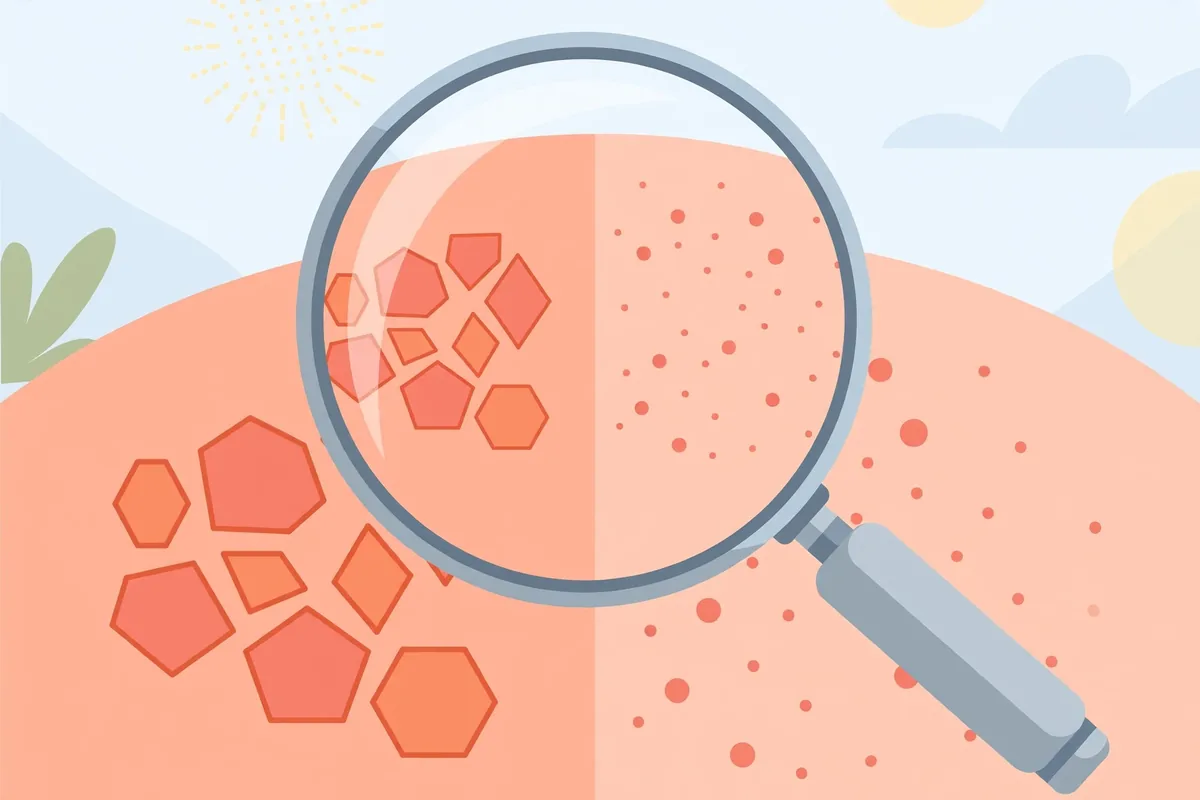
The hallmark of contact dermatitis is that the rash maps to the contact. It appears where the substance touched the skin, often in geometric, band-like, or sharply defined shapes — a rectangle under a watch, a line where a waistband sat, streaks where poison ivy brushed the leg. The rash is typically diffuse (a patch or area) rather than a set of discrete, separate bumps, and it’s often symmetric when the exposure was symmetric (both hands in gloves, both wrists under bracelets).
Bug Bites: The Basics
Bug bites and stings are the skin’s reaction to an arthropod — mosquitoes, bed bugs, fleas, chiggers, ticks, spiders — injecting saliva, venom, or other substances. The itch and redness come from your immune response, mainly histamine-driven.
The hallmark of bug bites is that lesions are discrete and scattered — individual bumps, each centered on a bite site, rather than one continuous patch. Clues that point toward bites:
- A central punctum — a tiny central dot or puncture mark in the middle of the bump, where the mouthparts entered. Contact dermatitis doesn’t produce puncta.
- Known bite patterns — for example, bed bugs often (not always) leave small clusters or lines of 3–4 bites; see our guide to bites in a line or cluster pattern. Chiggers cluster where clothing was tight. Flea bites favor ankles.
- Exposure history — sleeping in a new place, hiking through brush, sitting on grass, a pet with fleas.
- Asymmetry — bites land where the insect happened to feed, which is often random and one-sided, unlike the symmetric patterns of many contact reactions.
For a systematic approach to bite identification, our bite-sting clue checklist walks through the questions to ask.
Why They Get Confused
Several situations make the distinction genuinely hard — even for experienced clinicians, who sometimes need a skin exam or patch testing to sort it out:
- Both itch, both redden. Itch and erythema are the skin’s generic alarm signals, not specific diagnoses.
- Clusters mimic patches. A tight cluster of chigger or bed bug bites around an ankle can look like one continuous rash at a glance, especially after scratching blurs the boundaries.
- New products coincide with travel. You start a new detergent the same week you stay in a hotel — is the rash the sheets’ detergent or bed bugs? Timing overlaps mislead.
- Scratching destroys evidence. Vigorous scratching turns discrete bite bumps into excoriated, weepy patches that look exactly like dermatitis — and breaks skin, inviting infection. (More on why scratching and squeezing make things worse.)
- Poison ivy looks like “bites in a line.” The linear streaks of plant contact dermatitis are famously mistaken for bite lines, and vice versa.
This is precisely why the guidance here is pattern education, not diagnosis. When the picture is muddy, a dermatologist’s trained eye — and tests like patch testing for contact allergies — resolve what checklists can’t.
The Clue Checklist: Patterns That Point Each Way
Work through these observations. None is definitive alone; the pattern across several is what matters:
Points toward contact dermatitis:
- The rash is a diffuse patch or area rather than separate bumps
- It has sharp borders or a geometric shape matching something that touched the skin (watch, glove, waistband, plant streak)
- It’s symmetric (both hands, both wrists, both sides of the neck from a necklace)
- It started hours to days after a new product, jewelry, glove use, or plant contact
- It doesn’t spread to untouched areas — it stays where the contact was
- No central punctum in the lesions
Points toward bug bites:
- Discrete, separate bumps, each potentially with a central punctum
- Asymmetric, scattered distribution
- A recognizable arrangement (lines, clusters) or location (ankles, exposed skin, waistband)
- Recent exposure: new sleeping location, outdoors in grass/brush, pets with fleas
- Others in the household or group have similar bumps (suggests a shared biter)
- Bites appeared overnight in a linear or clustered group
Ask yourself the exposure questions: What’s new in the last 72 hours — products, jewelry, gloves, plants, travel, outdoor time, hotel stays? The answer often points the way. And if you suspect bites, our spider bite first aid and identification guide covers how spider reactions compare with insect bites — though true spider bites are far rarer than people assume.
How a Dermatologist Sorts It Out

When pattern clues leave the question open, a dermatologist works through the same logic systematically — with tools you don’t have at home:
- A full skin exam under good lighting and magnification, studying the borders, surface texture, and distribution of the rash in ways photos rarely capture.
- A detailed exposure history — every new product, medication, glove, jewelry item, plant encounter, trip, and sleeping location in the weeks before the rash, not just the last day. Allergic contact reactions can lag exposure by days, so the timeline matters more than most people expect.
- Patch testing for suspected contact allergies, where standardized allergens are taped to the back and read over several days (more on this in the FAQ below).
- Ruling out lookalikes. Hives, scabies, fungal infections, and eczema flares can all mimic either condition, and a clinician can spot — or test for — possibilities no checklist can.
None of this is meant to be replicated at home: improvised “patch tests” with household substances can cause strong reactions or misleading results. The takeaway is simpler — the point where pattern clues stop being useful is exactly the point where professional evaluation starts being useful.
What To Do While You Figure It Out
Regardless of cause, the immediate care overlaps:
- Stop scratching. It worsens both conditions and risks infection. Keep nails short; cover itchy areas at night if needed.
- Cool the skin. Cool compresses or lukewarm baths calm itch from either cause.
- Remove the suspect. If you suspect a new product, stop using it. If you suspect bites, wash bedding in hot water and inspect the sleeping area.
- Don’t apply random remedies. Bleach, alcohol, essential oils, and other harsh DIY treatments irritate both dermatitis and bites. Gentle, fragrance-free moisturizers and label-directed anti-itch products are the safe defaults.
- Document. Photos over several days plus notes on timing and new exposures are enormously helpful if you end up seeing a doctor.
What not to do: don’t start steroid creams on a hunch without guidance if the area might be infected, don’t take oral steroids or antibiotics prescribed for someone else, and don’t assume “it’s just bites” for a rash that’s spreading or blistering.
When to See a Doctor or Dermatologist
See a clinician promptly — and consider a dermatologist for persistent or puzzling rashes — if:
- The rash is spreading rapidly, blistering, oozing, or severely painful
- Your face, eyes, or genitals are involved, or swelling is significant
- You have signs of skin infection: increasing warmth, swelling, pain, pus, red streaks, or fever. Know the warning signs of bite and sting complications
- Any breathing difficulty, facial/lip/tongue swelling, or dizziness — possible severe allergic reaction; seek emergency care
- The rash persists beyond 2–3 weeks despite removing suspected triggers, or keeps recurring
- You can’t identify the cause after working through the patterns above — persistent undiagnosed rashes deserve professional evaluation, which may include patch testing for contact allergies
- It’s interfering with sleep or daily life — you don’t need to wait for a red flag to deserve care
Bring your photos, your timeline, and a list of every product and exposure you can remember. That preparation turns a 15-minute appointment into a productive one.
Frequently Asked Questions
Can contact dermatitis look exactly like bug bites?
Sometimes, yes — particularly when dermatitis forms small papules rather than a diffuse patch, or when scratched bites blur into a patch that mimics dermatitis. The exposure history and the shape/borders of the rash are usually more informative than any single bump’s appearance.
How quickly does contact dermatitis appear after exposure?
Irritant reactions can appear within hours. Allergic contact dermatitis typically takes 24–72 hours after exposure in a sensitized person — which is why the culprit is often something you used days ago, not today. Bug bite reactions also commonly peak 24–48 hours after the bite, so timing alone rarely settles it.
Can I have both at once?
Absolutely — and it’s common. People with itchy bites scratch, apply fragranced lotions or home remedies, and develop contact dermatitis on top of the bites. If a rash changes character partway through (new pattern, new locations, worsening despite bite treatment), consider that a second process may have joined the first, and see a clinician.
Will antihistamines help contact dermatitis?
Oral antihistamines are commonly used for itch relief in many skin conditions, but they don’t address the underlying contact reaction the way removing the trigger does. Talk to your pharmacist or doctor about what’s appropriate for your situation rather than self-treating a persistent rash.
Is patch testing worth it?
If you have a recurring rash that you suspect is contact-related, dermatologists often recommend patch testing — small amounts of common allergens applied to the back for 48 hours to identify specific sensitivities. It’s the definitive way to answer “what am I reacting to” when the culprit isn’t obvious.
This article is for informational purposes only and isn’t medical advice. If you’re worried about a bite or sting, talk to a healthcare professional.