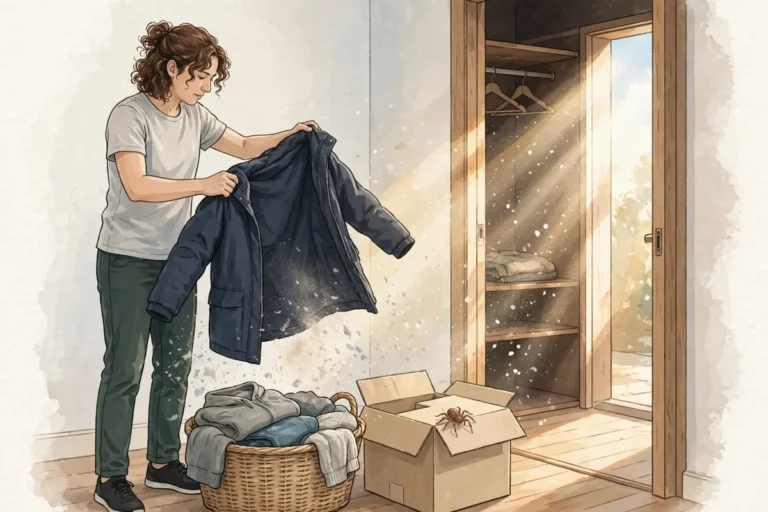
Every October, the same scene plays out in houses across the country: black-and-reddish bugs appear on sunny windows, gather on siding, and slip through gaps into living rooms. Most are boxelder bugs, harmless fall invaders looking for a warm place to wait out winter. But a smaller number of worried homeowners look closer and wonder whether they are seeing something else: a kissing bug, the blood-feeding insect associated with Chagas disease. Getting boxelder bug vs kissing bug right matters, because one is a nuisance and the other deserves a careful, health-informed response.
Here is the direct answer: boxelder bugs (Boisea trivittata) do not bite people and do not spread disease; they are a seasonal household nuisance. Kissing bugs (triatomines, also called conenose bugs) are blood feeders that bite sleeping people, usually around the face, and some carry the parasite Trypanosoma cruzi, which causes Chagas disease. The two can be told apart by size, markings, and behavior: boxelder bugs are smaller, gather in conspicuous fall clusters on sunny surfaces, and have three distinct stripes on the thorax; kissing bugs are larger, about the size of a penny, with a cone-shaped head and reddish-orange markings along the edges of the abdomen. This article gives you the full visual ID, explains the real Chagas risk, and tells you exactly what to do if you find either bug indoors.
Why Fall Brings the Confusion
Boxelder bugs are, in the words of Ohio State’s entomology outreach, a poster insect for fall home invasion. As temperatures drop in October, adult boxelder bugs congregate on the warm, sunny sides of houses, sometimes in the hundreds, and push through cracks around windows, doors, siding, and foundations to overwinter in wall voids and attics. Homeowners notice them precisely because there are so many, and because they show up on windowsills and walls inside the house all winter.
This is the season when the confusion peaks. A homeowner who has heard news coverage about kissing bugs and Chagas disease sees a dark bug with reddish markings in the bedroom and reasonably asks the scary question. Pest control blogs run “boxelder vs kissing bug” explainers every fall because homeowners keep asking, and extension services in Ohio and Illinois both list the boxelder bug among the documented kissing-bug look-alikes. The confusion is understandable: both are true bugs with dark bodies and reddish-orange markings, both can turn up indoors, and both have “bug” in the name.
But the biology could hardly be more different. Boxelder bugs feed on the seeds of boxelder, maple, and ash trees; they have no interest in blood and no equipment for biting people. Kissing bugs feed on the blood of mammals, including humans, and seek out sleeping hosts at night. Understanding that one is a seed-eater that wandered inside and the other is a blood-feeder that came looking for a meal reframes the whole encounter, and the markings below let you confirm which one you are looking at.
Visual ID: The Markings That Matter
Take a breath and look closely. The differences are clear once you know them.
Boxelder bug (Boisea trivittata)
About half an inch long, flat-backed, black with distinct red or reddish-orange markings. The signature field mark is on the thorax, the segment behind the head: three lengthwise stripes, which is exactly what the species name trivittata means, “three-striped.” The wings show red edging, and the abdomen has red markings underneath. They are almost always found in groups in the fall, clustered on sunny walls, windows, and the warm sides of houses. They move slowly and do not bite, sting, or feed on blood.
Kissing bug (Triatominae, e.g. Triatoma species)
Noticeably larger, roughly the size of a penny at about an inch long, with a narrower, cone-shaped head that gives them the “conenose” name. The body is dark brown to black with reddish-orange or yellowish markings along the outer edges of the abdomen, a banded or striped border rather than the boxelder’s three thoracic stripes. The legs are long and thin, built for a night-feeding insect. They are usually found singly, not in clusters, and are most often encountered at night or in bedrooms, since they feed on sleeping people, often biting around the mouth, lips, face, or eyes, which is where the “kissing” nickname comes from.
Here is the comparison in one place:
| Feature | Boxelder bug | Kissing bug |
|---|---|---|
| Scientific name | Boisea trivittata | Triatominae (e.g. Triatoma spp.) |
| Size | About 1/2 inch | About 1 inch, penny-sized |
| Head shape | Ordinary, blunt | Narrow and cone-shaped |
| Key markings | Three red stripes on thorax; red wing edging | Reddish-orange banding along abdomen edges |
| Grouping | Clusters in fall, often dozens to hundreds | Usually solitary |
| Where found | Sunny walls, windows, siding in fall | Bedrooms, cracks, near sleeping hosts, at night |
| Feeding | Seeds of boxelder, maple, ash | Blood of mammals and birds |
| Bites people? | No | Yes, painless night bites, often on the face |
Ohio State’s “An Ohio Kissing Bug” bulletin specifically lists the boxelder bug as a look-alike and points to the size difference and the three-striped thorax as the quickest separators. If the bug is small, striped three ways on the thorax, and one of many on a sunny window, it is a boxelder bug. If it is penny-sized, cone-headed, and found alone near a bed, treat it as a possible kissing bug and follow the steps below.
Which One Bites, and What the Bite Means
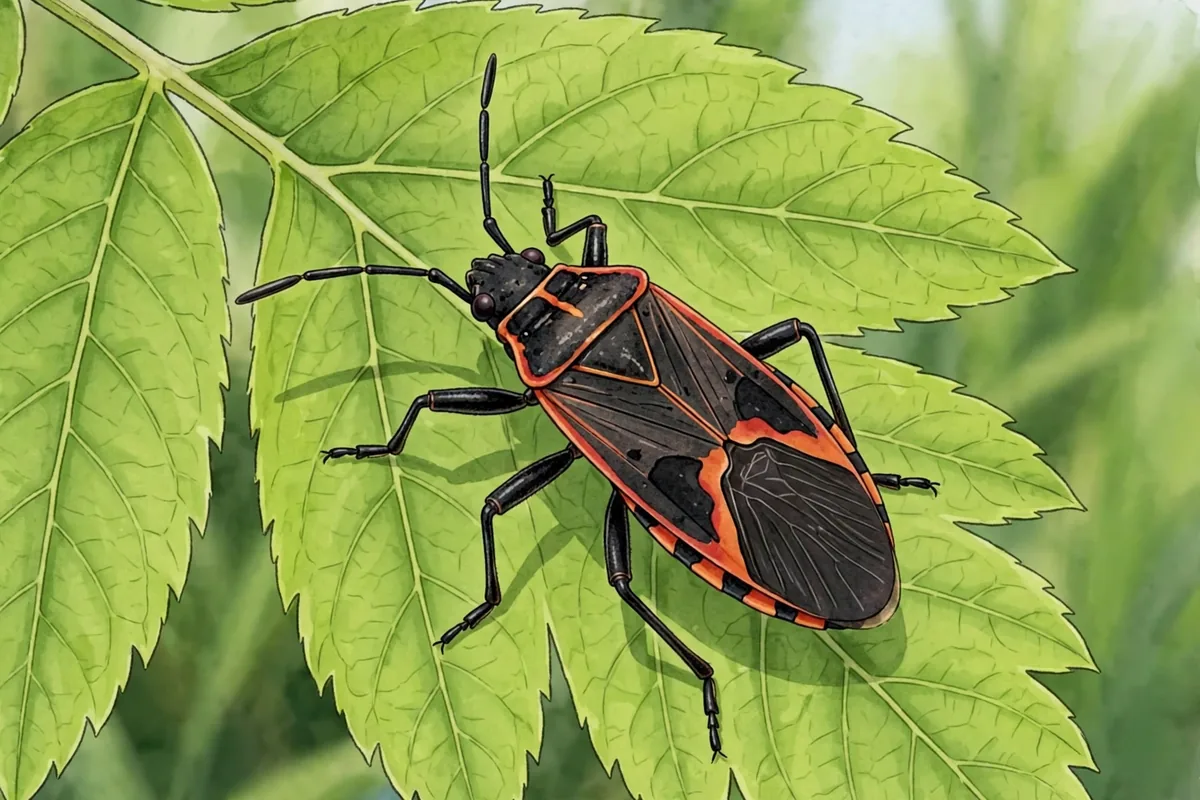
This is the heart of the health question. Boxelder bugs do not bite humans, period. They cannot spread disease, they do not feed on blood, and they have no venom. Their entire impact on a household is nuisance: staining on curtains and walls from their droppings, an unpleasant odor when crushed, and the sheer annoyance of dozens of slow-moving bugs on the windowsill. You can read more about identifying mystery bites generally in our bite-sting clue checklist, but a boxelder bug will never be the explanation for one.
Kissing bugs do bite, and the bite itself is painless; most people sleep through it and never develop a reaction to the saliva, though some people have allergic responses. The medical concern is not the bite but what may follow it, which is the subject of the next section. If you wake with unexplained bites around the face or eyes and find a cone-headed, penny-sized bug in the bedroom, do not assume it is a boxelder bug just because boxelder bugs are common; get the insect identified.
One caution that applies to both: never handle either bug with bare hands. For boxelder bugs this is about avoiding stains and odor, but for a possible kissing bug it is about safety: the CDC advises against squashing a suspected kissing bug, because crushing it can smear potentially infectious material. Capture it carefully in a jar, as described below, and let professionals identify it.
The Chagas Question: Feces, Not the Bite
The single most misunderstood fact about kissing bugs is how Chagas disease actually spreads, and getting it right changes the advice completely.
Chagas disease is caused by the parasite Trypanosoma cruzi. The parasite lives in the kissing bug’s gut, not in its saliva. Transmission happens like this: the bug takes a blood meal, and during or after feeding it defecates near the bite. The parasite is in the feces. Infection occurs when a person scratches the bite or rubs the area and works the fecal material into the bite wound, or into a mucous membrane such as the eye. In other words, the bite is the opening act; the feces are the vector. This is a standing point worth repeating because so much scary coverage implies the bite itself injects the disease. It does not.
Several qualifiers keep the risk in proportion. Not every kissing bug carries T. cruzi; infection rates vary by species and region. Not every exposure leads to infection. In the United States, kissing bugs are documented in 32 states across 11 species, with the highest densities in Texas, New Mexico, and Arizona, yet locally acquired human Chagas infections remain uncommon; the CDC estimates more than 300,000 people in the US live with Chagas disease, but most acquired their infections in other countries. The acute phase can bring fever, fatigue, body aches, headache, and swelling around the eyes; many infections are initially silent, and a portion of infected people can develop serious cardiac or digestive complications years or decades later.
The practical takeaway: a kissing bug in the house deserves respect and a proper response, not panic. Do not crush it in living areas, do not ignore it, and do follow the identification steps next.
What to Do When You Find One Indoors

If it is a boxelder bug
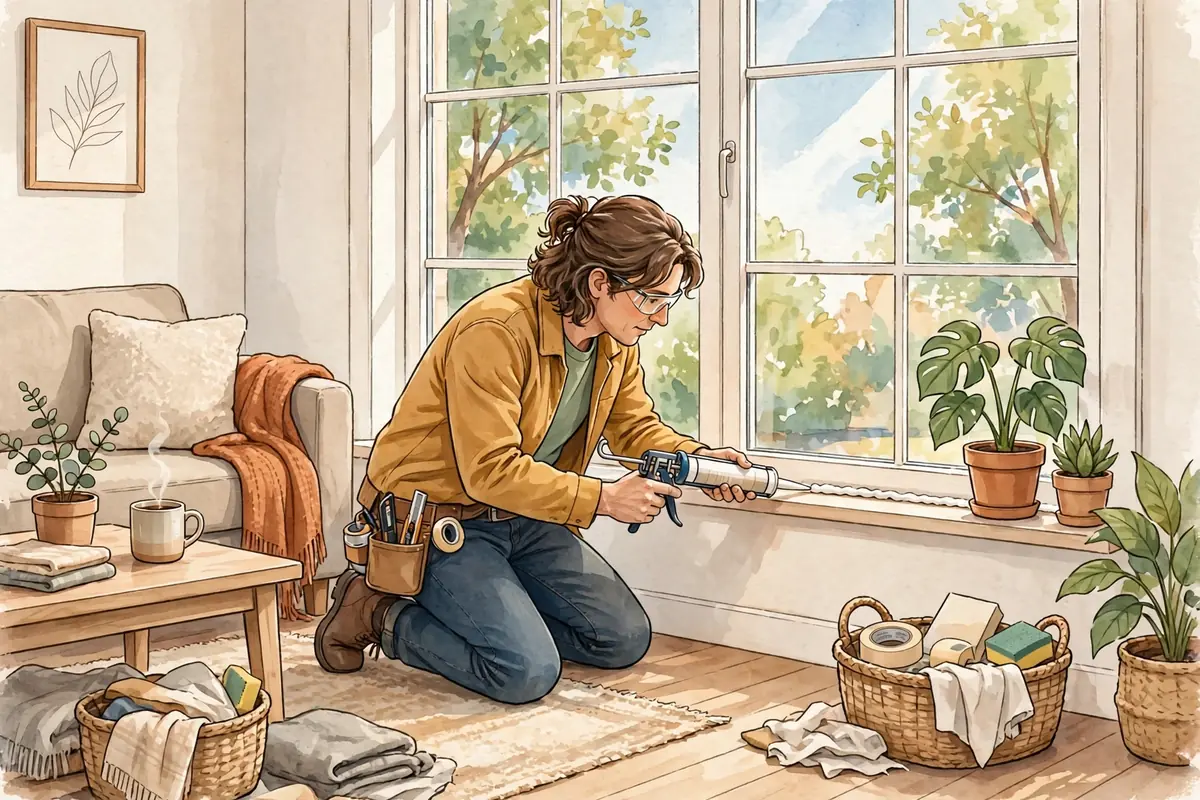
Vacuum them up with a hose attachment, empty the vacuum outside, and focus on exclusion. Seal gaps around windows, doors, siding, and foundations with caulk and weatherstripping; repair torn screens. They do not reproduce indoors in winter, so the indoor population you see is the whole problem, and sealing entry points is the durable fix. Avoid crushing them on walls and fabrics, since they can stain. Insecticides are rarely necessary indoors for a nuisance insect that will die off on its own; exclusion beats spraying.
If it might be a kissing bug
Follow the CDC-advised protocol. Do not squish it. Wearing gloves, capture the bug in a jar or sealed container. You can preserve it in rubbing alcohol or place the sealed container in the freezer, then bring it to your local health department, cooperative extension office, or a university entomology department for identification. Note where and when you found it. Clean the area where it was found. If you have unexplained bites, especially around the face, see your clinician and mention the possible kissing bug exposure; bring the identification results when you have them. Our guide to kissing bug bite treatment covers the bite-care side in detail.
For the house itself
Whether the invader is a boxelder bug or a kissing bug, the long-term answer is the same kind of exclusion work. Seal cracks and crevices in the foundation and around windows and doors, keep screens in good repair, move firewood and debris away from the house, and reduce outdoor lighting near entrances at night, since lights can attract night-flying insects. For confirmed kissing bug activity, a pest management professional experienced with triatomines is the right call rather than a do-it-yourself spray program.
Fall Prevention: Keeping the Next Wave Outside
October is the month to act, because the invasion is happening now. Walk the perimeter of the house on a sunny fall afternoon, which is exactly when boxelder bugs are scouting entry points, and seal what you find. Pay special attention to the south and west walls, which warm first and attract the most congregating insects. Install or repair door sweeps, since the gap under an exterior door is a highway for overwintering insects. Trim back tree branches and shrubs that touch the house, eliminating bridges that crawling insects use.
For kissing bug risk areas, add bedroom-level habits: keep beds away from walls where practical, reduce clutter where a night-feeding insect could hide by day, and consider that pets sleeping indoors can be hosts too, so include pet sleeping areas in your inspection. None of this requires fear; it requires the same tidy, sealed house that keeps out every other fall invader.
When to See a Doctor for a Bug Bite
Boxelder bugs need no medical attention. For possible kissing bug encounters, seek care if:
- You found a bug you believe is a kissing bug and you have unexplained bites, especially around the face, lips, or eyes. Bring the insect, preserved as described above, or the identification report from the health department.
- A bite area becomes increasingly red, warm, swollen, or painful after the first day or two, or develops pus or red streaks, which suggest secondary infection rather than Chagas.
- You develop fever, fatigue, body aches, headache, a rash where the parasite may have entered, or swelling around the eyelids in the weeks after a suspected exposure. Mention the kissing bug encounter explicitly so it is factored into the evaluation.
- You experience any signs of a severe allergic reaction to a bite: difficulty breathing, swelling of the lips or tongue, widespread hives, or dizziness. Call 911.
Routine Chagas testing is a decision for your clinician and public health authorities based on the identification of the insect and your exposure, not something to pursue on your own from a single unidentified bug.
Frequently Asked Questions
Do boxelder bugs bite humans?
No. Boxelder bugs feed on the seeds of boxelder, maple, and ash trees. They do not bite people, do not feed on blood, and do not transmit any disease. They are strictly a nuisance pest, known for invading homes in large numbers in the fall and for staining surfaces when crushed.
How can I be sure the bug I found is not a kissing bug?
Check three things: size, head shape, and markings. Boxelder bugs are about half an inch long with three red stripes on the thorax and red-edged wings, and they appear in clusters on sunny surfaces. Kissing bugs are about an inch long with a narrow cone-shaped head and reddish-orange banding around the abdomen edges, and they are usually found singly, often in bedrooms. When in doubt, capture the insect without crushing it and have your extension service or health department identify it.
Should I crush a kissing bug if I find one?
No. The CDC advises against squashing a suspected kissing bug, because the parasite that causes Chagas disease is in the bug’s feces and gut contents, and crushing it can smear potentially infectious material. Capture it in a sealed jar with gloves, preserve it in rubbing alcohol or freeze it, and bring it to your local health department or university for identification.
Can I get Chagas disease from a kissing bug bite in the United States?
The bite itself does not transmit the parasite; transmission requires the bug’s feces, containing Trypanosoma cruzi, to enter the bite wound or a mucous membrane. Not all kissing bugs carry the parasite, and locally acquired infections in the US are uncommon, though the insects are documented in 28 states. If you have a confirmed exposure, discuss testing with your clinician rather than trying to assess the risk yourself.
Why are there suddenly so many boxelder bugs on my house?
Fall is their invasion season. As temperatures drop, boxelder bugs congregate on warm, sunny exterior walls and push inside through tiny gaps to overwinter in wall voids and attics. The clustering is a survival strategy, not an infestation; they do not breed indoors over winter. Sealing entry points now prevents both this year’s stragglers and next fall’s wave.
Medically reviewed by Dr. Sarah Jones, MD.
This article is for informational purposes only and isn’t medical advice. If you’re worried about a bite or sting, talk to a healthcare professional.