Short answer: A blacklegged tick bite and a no-see-um bite are usually separated best by the exposure event. A blacklegged tick may remain physically attached to the skin and can go unnoticed while feeding. No-see-ums are tiny flying biting midges that often attack exposed skin repeatedly near marshes, beaches, estuaries, lakes, and other damp habitats. Their bites are usually multiple, itchy, and linked to a short period outdoors rather than one long attachment.
Fastest clue: A visible tick anchored to the skin strongly supports a tick bite. Several small itchy bites on exposed ankles, legs, arms, neck, or face after time near water or humid coastal habitat fit biting midges better.
Blacklegged tick bite vs no-see-um bite at a glance
| Clue | Blacklegged tick bite | No-see-um bite |
|---|---|---|
| What the arthropod does | Attaches and feeds for an extended period | Briefly bites and flies away |
| Typical number of marks | Often one or a few | Frequently multiple bites |
| Common setting | Woods, brush, tall grass, leaf litter, yards, trails | Marshes, beaches, coastal areas, wetlands, lake edges, humid outdoor spaces |
| Body pattern | Any accessible skin, often protected body folds | Mostly exposed skin |
| Main concern | Potential tick-borne infection | Itch, local inflammation, scratching-related infection; travel context matters for disease risk |
| Most useful proof | The actual attached tick | Repeated tiny flying-insect bites in a characteristic habitat |
Start with what happened outdoors
The skin reaction alone may not distinguish these exposures. A small red bump can follow many arthropod bites. The history gives more useful information.
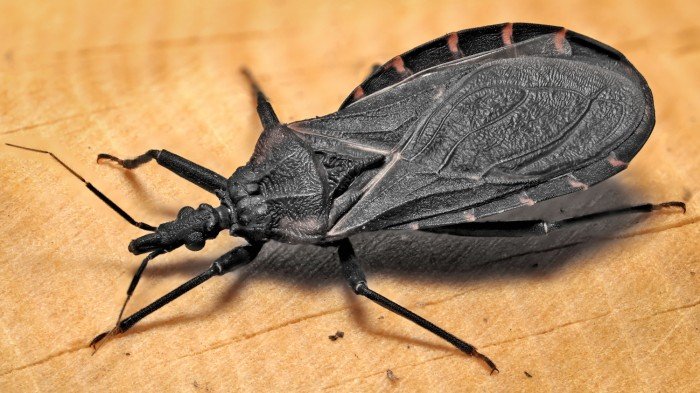
Blacklegged ticks are picked up in vegetation and crawl onto a host. They do not jump or fly. Once they find a suitable spot, they attach to the skin and feed. Many people do not feel the bite as it happens. You may discover the tick hours later while showering, changing clothes, checking a child, or examining a pet.
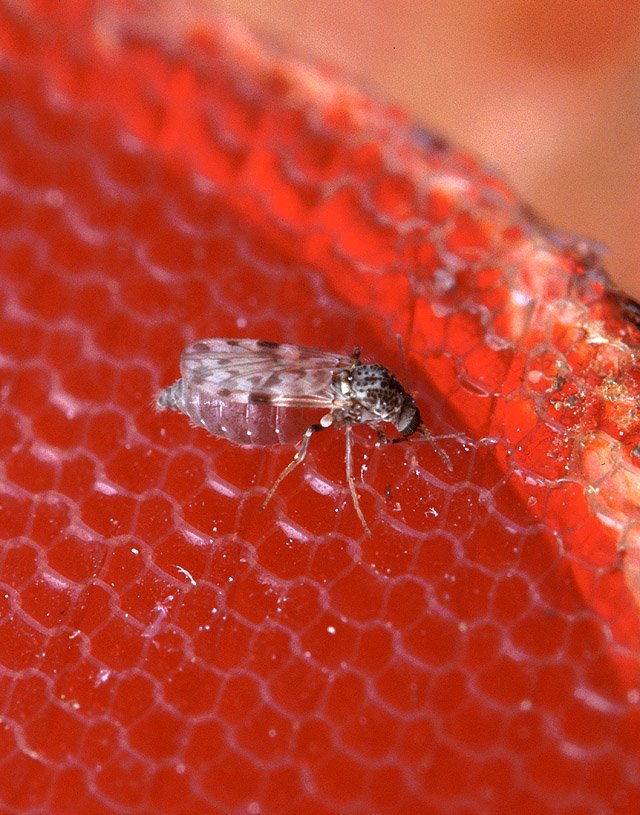
No-see-ums, by contrast, are tiny flies. University of Florida IFAS Extension describes many biting midges as being around a millimeter long, small enough that people may barely see them and some can pass through ordinary window screening. Exposure often feels like repeated pinprick bites or burning sensations while sitting or walking outdoors in a suitable habitat.
What a blacklegged tick exposure often looks like
The strongest sign is a visible tick fixed to the skin. Ticks may attach behind the knees, in the groin, around the waist, in the armpits, on the scalp, behind the ears, or other protected areas. A tick may be tiny, especially in the nymph stage, so careful body checks matter.
After removal, a small local red bump can occur. That immediate reaction does not by itself mean Lyme disease. The more important follow-up is whether new symptoms develop later.
What no-see-um exposure often feels like
Biting midges may attack in groups, and several bites can happen within minutes. People frequently notice them around the ankles and lower legs, but any uncovered skin can be affected. The bite may sting or burn initially and later become itchy.
Because the insects are so small, people sometimes blame “invisible bugs” without realizing they were outdoors in a classic no-see-um environment. Repeated bites during a calm humid evening near a marsh or coast are much more suggestive than one isolated bump noticed after a woodland hike.
Why location on the body matters
A blacklegged tick can hide under clothing. In fact, protected warm areas are common attachment sites. No-see-ums more often bite the skin they can reach directly.
If dozens of spots appear on exposed calves and forearms after sunset near a lagoon, biting midges become more plausible. If one small tick is physically attached at the waist after a trail hike, that is a tick bite even if there are no other marks.
How quickly symptoms appear
No-see-um bites may be felt immediately or become itchy soon afterward. In sensitive people, irritation can continue for days.
A blacklegged tick bite itself may produce little sensation. If tick-borne illness occurs, the medically important symptoms can appear days to weeks later. This delay is one of the biggest reasons these two exposures should not be managed the same way.
What to do if a blacklegged tick is attached
CDC recommends removing an attached tick as soon as possible. Use clean fine-tipped tweezers. Grasp the tick close to the skin and pull upward with steady, even pressure. Avoid squeezing the body, twisting aggressively, or applying heat, petroleum jelly, nail polish, or irritating chemicals to make it release.
After removal, clean your hands and the bite area. Record the date and location of exposure. A clear photo of the tick can be useful if later symptoms develop.
What to do after no-see-um bites
Move away from the biting area first. Wash exposed skin gently, then use a cool compress to reduce burning and itch. Avoid scratching, because tiny bites can become excoriated and infected.
Over-the-counter anti-itch options may help some people, but medication choices depend on age, pregnancy, allergies, other medications, and medical history. Follow the product label and ask a pharmacist or clinician if you are unsure what is appropriate.
Lyme disease risk belongs to the tick side of this comparison
Blacklegged ticks can transmit the bacteria that cause Lyme disease in areas where infected ticks occur. No-see-ums are not Lyme disease vectors.
After a relevant tick exposure, watch for an expanding rash, fever, chills, headache, unusual fatigue, body aches, swollen lymph nodes, facial weakness, neurologic symptoms, or new joint swelling. These symptoms are not proof of Lyme disease, but they justify medical evaluation when paired with a real tick exposure.
Do no-see-ums transmit disease?
Most no-see-um encounters in the United States are nuisance biting events. University of Florida IFAS notes that biting midges can transmit human pathogens in some parts of the world, so international travel changes the context.
If fever or systemic illness develops after bites during travel outside the United States, tell the clinician exactly where the exposure occurred. Do not assume a routine U.S. no-see-um reaction explains a travel-associated illness.
Why the “bull’s-eye” shortcut can mislead
People often search for a target-shaped rash after any bite. A tick-related erythema migrans rash does not always form a perfect bull’s-eye. It is more useful to consider whether there was a true tick exposure and whether a rash progressively expands over time.
Multiple itchy no-see-um welts can form irregular circles or rings as inflammation changes, but that appearance alone does not indicate Lyme disease.
Can no-see-ums get through screens?
Yes. Their very small size is one reason they are notorious around coastal homes. Standard screens may not exclude them. Finer “no-see-um” mesh can be helpful in locations with persistent biting-midge problems.
Air movement may also reduce biting because these tiny insects are relatively weak fliers. A fan on a porch or patio can sometimes make the area less favorable even though it does not eliminate the insects.
What if bites keep appearing indoors?
No-see-ums can enter through screens, but they do not live under the skin. If new lesions continue appearing for days while you are indoors and windows are closed, consider other causes such as fleas, bed bugs, contact dermatitis, folliculitis, or another skin condition.
Keep a simple log of when new lesions appear and where you were during the previous several hours. Repeated outdoor timing may reveal the source.
What if you never saw the insect?
Use a probability approach. Ask whether there was recent woodland or brush exposure, whether an attached tick was found later, whether the bites occurred near wetlands or a beach, whether there were many lesions or one, and whether the affected skin was exposed or covered.
A dermatologist or primary-care clinician may need to consider other causes if the pattern does not fit either exposure.
Secondary infection: the shared complication
Both bite types can become irritated if scratched. Infection is more concerning when pain is increasing rather than decreasing, the skin becomes progressively hot and tender, pus or drainage appears, fever develops, or redness continues spreading along with worsening symptoms.
An uncomplicated no-see-um reaction is usually itchy. A routine tick bite site may be mildly irritated. Increasing pain and systemic illness deserve medical assessment.
Children and sensitive skin
Children may scratch no-see-um bites until the skin breaks. Keep nails short, cool the skin, and use age-appropriate itch relief. For tick exposure, perform careful body checks after outdoor activity and remove attached ticks promptly.
Seek earlier medical advice if a child develops fever, an expanding rash, significant facial swelling, breathing difficulty, or other concerning symptoms.
U.S. environment clues
Blacklegged ticks are important in parts of the Northeast, mid-Atlantic, and upper Midwest, with western blacklegged ticks on the Pacific Coast. No-see-ums are especially troublesome in coastal and wet environments, including parts of Florida, the Gulf Coast, Atlantic Coast, and other humid areas.
Travel can change the picture. Always report where the exposure happened, not only where you live.
Prevention strategies are different
Reduce blacklegged tick exposure
- Use EPA-registered repellent as directed.
- Wear protective clothing in brushy or wooded areas.
- Perform tick checks after outdoor activity.
- Check children and pets.
- Shower after likely exposure when practical.
Reduce no-see-um exposure
- Use an EPA-registered repellent according to the label.
- Cover exposed skin during peak biting periods.
- Use fine-mesh screening in problem areas.
- Use fans where practical on patios and porches.
- Avoid the most heavily infested marsh or shoreline areas when insects are active.
A practical scenario guide
One attached arthropod after hiking
This strongly favors a tick. Remove it promptly and document the exposure.
Ten small itchy spots after a sunset beach walk
No-see-ums are more plausible, especially if the bites are on exposed ankles and legs.
A rash that keeps expanding days after a tick was removed
Seek medical evaluation. The timing and progression matter more than whether the rash forms a textbook bull’s-eye.
New itchy lesions every morning despite no outdoor exposure
Consider an indoor source or another skin condition rather than assuming repeated no-see-um bites.
When to seek medical care
Contact a healthcare professional after a blacklegged tick exposure if you develop fever, an expanding rash, facial weakness, severe headache, neurologic symptoms, new joint swelling, or other significant illness.
For suspected no-see-um bites, seek care if the reaction is unusually severe, signs of infection develop, the rash persists without improvement, or illness follows international travel.
Call emergency services for breathing difficulty, tongue or throat swelling, fainting, collapse, or other signs of a severe systemic reaction after any bite or sting.
Why a fan can help with midges but not ticks
A practical environmental clue is how the arthropod moves. Tiny biting midges are flying insects and can be disrupted by strong air movement, which is why porch fans sometimes reduce biting. Ticks do not fly, so a fan does nothing to prevent a tick from crawling from vegetation onto clothing or skin.
This difference reinforces the prevention strategy: screens, clothing coverage, repellent, and air movement may reduce no-see-um exposure, while tick prevention relies more heavily on avoiding brush contact, repellents, clothing, body checks, and prompt removal.
Related StingHelp guides
- Tick bites: removal, symptoms, and warning signs
- No-see-um bite treatment
- What Bit Me? identification guide
- Bite and sting prevention
Frequently asked questions
Can no-see-ums cause Lyme disease?
No. Lyme disease is associated with infected blacklegged ticks, not biting midges.
Do no-see-ums stay attached to skin?
No. They bite briefly and fly away.
Can a blacklegged tick bite itch?
Yes, a local tick bite can itch or become irritated, but severe clusters of itchy exposed-skin lesions are more suggestive of another biting insect.
Are no-see-um bites always visible immediately?
No. Some people feel the bite, while others notice the redness or itch later.
Should I identify either exposure from a photo alone?
No. The actual arthropod, exposure location, timing, number of lesions, and body distribution are usually more informative.
Authoritative references
- CDC: What to Do After a Tick Bite
- CDC: Lyme Disease Signs and Symptoms
- University of Florida IFAS Extension: Biting Midges / No-See-Ums
- U.S. EPA: Insect Repellents
Educational information only. StingHelp does not diagnose a bite or rash from a photograph. Seek professional care for severe, persistent, infected, travel-associated, or otherwise concerning symptoms.