Every October, houses in the Midwest and Northeast turn into landing strips. Thousands of orange beetles pile onto sunny walls, squeeze through window frames, and settle in attics for the winter. Most people know them as ladybugs, but the insect staging this invasion is usually the multicolored Asian lady beetle, and unlike the native ladybugs it resembles, asian lady beetles invading homes fall bites are a real complaint. The good news: the bites are mild, the beetles are not dangerous, and a weekend of sealing work does more to protect your home than any spray ever will.
This guide covers how to tell an Asian lady beetle from a harmless native ladybug, what to do if one bites you, why crushing them is a mistake, and how to keep the swarm outside where it belongs.
Why They Swarm Houses Every Fall
The multicolored Asian lady beetle (Harmonia axyridis) was introduced to the United States from Asia to control aphids and other crop pests. In summer it is a working insect, eating aphids in soybean and grain fields. The trouble starts at harvest. When soybean fields are cut and temperatures drop, the beetles lose their food supply and look for a warm, sheltered place to spend the winter. Buildings make ideal substitutes for the rocky outcrops they use in their native range.
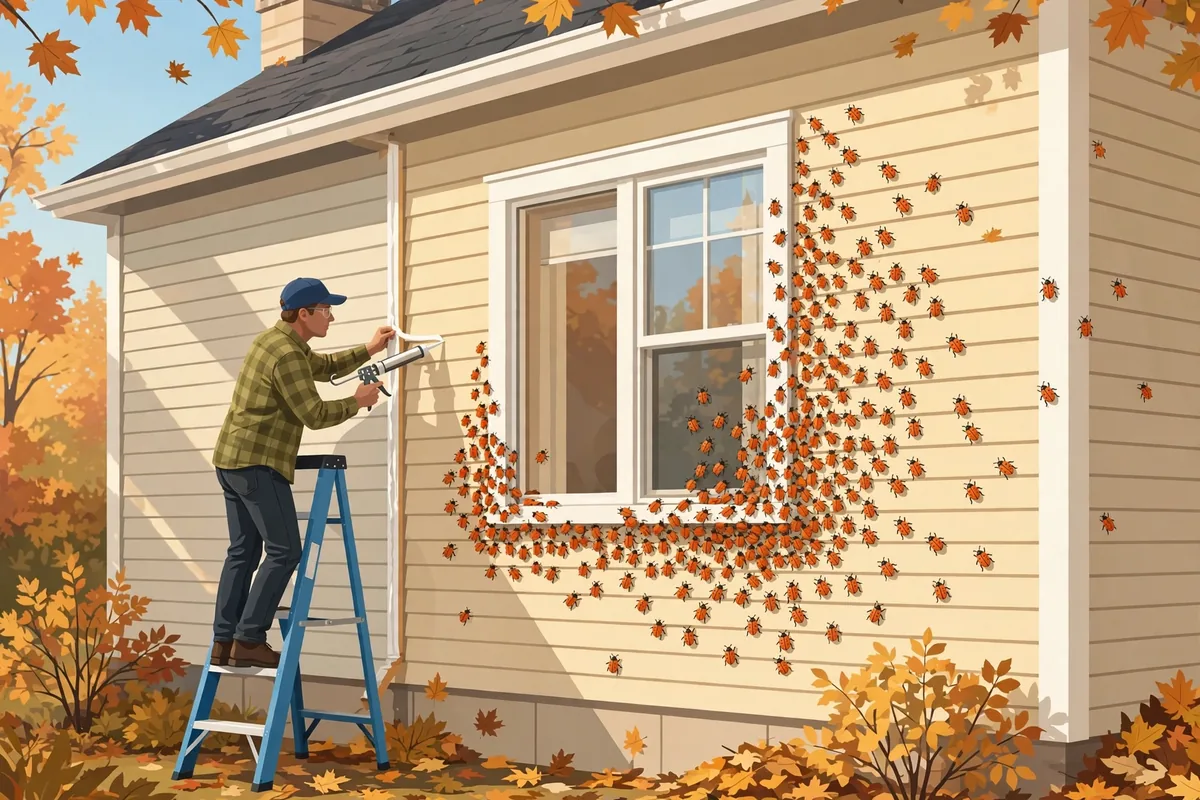
They are especially drawn to light-colored buildings with sunny south or southwest exposures, where the wall holds afternoon heat. Once a few beetles settle on a wall, they release an aggregation pheromone that calls in thousands more, which is why an invasion can go from a dozen beetles to several thousand in a single warm afternoon. From the wall they work their way indoors through cracks around windows, utility pipes, door frames, and attic vents. They do not eat wood, chew wiring, or damage structures, and they cannot breed indoors. They are simply waiting out the winter, and on warm days in late fall or midwinter they may wake up and buzz around windows, which is when most people finally notice how many are sharing the house.
Extension entomologists consistently give the same timeline: the invasion push starts in late September and peaks in October. That means the work that prevents the problem has to happen in late summer, not after the swarm has already arrived.
Asian Lady Beetle vs Native Ladybug: The ID Test
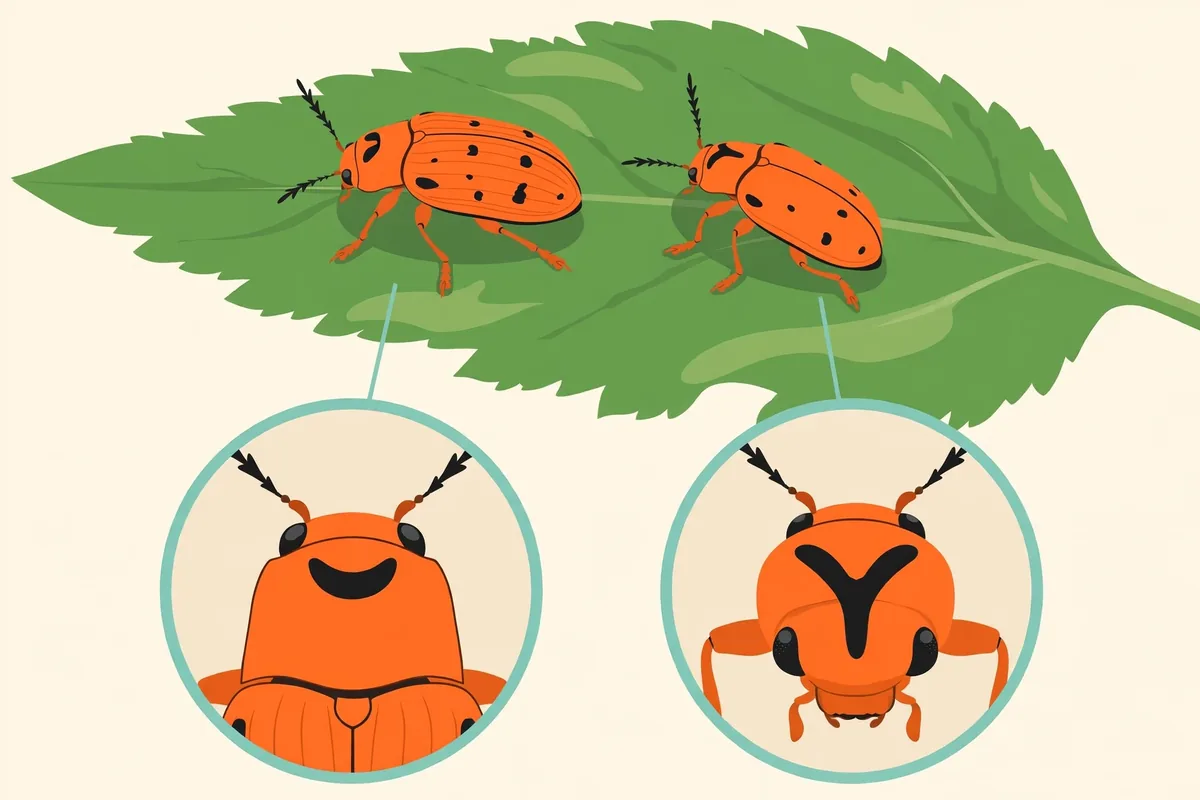
The single most useful identification mark is the one right behind the head. Asian lady beetles have a black “M” or “W” shaped marking on the white area of the pronotum, the shield between the head and the wing covers. Native ladybugs do not have this mark. It is visible without magnification if you look closely, and it settles the question instantly.
Color is unreliable on its own. Asian lady beetles range from pale yellow-orange to deep red, with anywhere from zero to more than twenty spots. Native ladybugs, such as the familiar seven-spotted ladybug, have a more consistent red color and a set number of spots. Behavior is another clue: native ladybugs rarely gather in large numbers inside houses, while Asian lady beetles are famous for exactly that. The University of Minnesota Extension notes that Asian lady beetles are slightly larger on average, but the M-mark remains the practical field test.
| Feature | Asian Lady Beetle | Native Ladybug |
|---|---|---|
| Mark behind head | Black M or W shape on white area | No M or W mark |
| Color range | Yellow-orange to deep red, highly variable | Usually consistent red |
| Spots | 0 to 20+ | Usually a fixed number |
| Fall behavior | Swarms buildings, overwinters indoors in large groups | Rarely enters homes in numbers |
| Bites people | Yes, documented | Rarely |
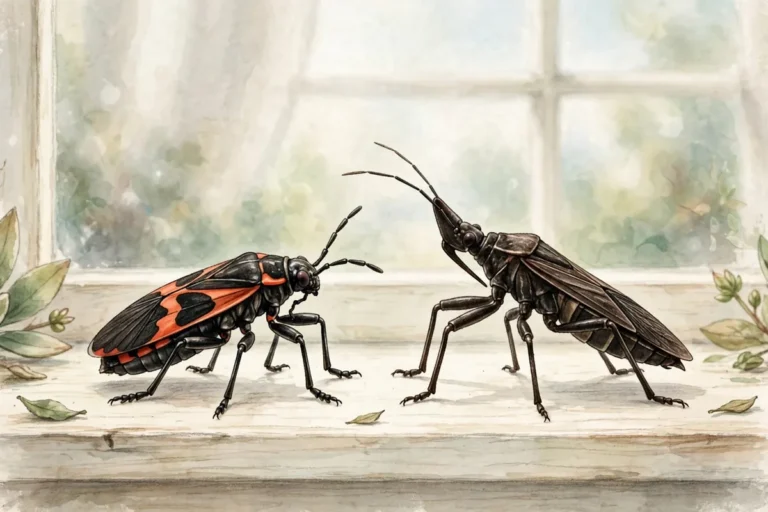
A quick caution: Asian lady beetles are also confused with boxelder bugs and other fall invaders, but those insects have elongated bodies and lack the rounded beetle shape entirely. When in doubt, look for the M.
Do Asian Lady Beetles Actually Bite?
Yes, they do. This is one of the main things that separates the Asian lady beetle from native ladybugs. University extension sources confirm that the beetles bite, describing the sensation as a sharp pinch or sting that makes you flinch. Arkansas extension specialists report that bites may raise welts lasting 24 to 48 hours, and that people with sensitivities can develop dermatitis from the beetle’s defensive secretions.
Context matters. The bite is a defensive reaction when the beetle is trapped against skin, not an attack. The venom load, if you can call it that, is nothing like a wasp sting. There is no evidence that Asian lady beetle bites cause serious injury or lasting medical problems in healthy people. The most common outcome is brief redness and minor irritation that fades on its own.
The subtler health issue is not the bite at all. When large numbers of beetles die inside wall voids, the dust from their accumulated bodies can trigger allergies or asthma in sensitive people. Allergic reactions to the beetles’ defensive fluid have also been documented. These are real but uncommon problems, and both are reasons to prevent the invasion in the first place rather than living with a few thousand overwintering roommates.
First Aid for Asian Lady Beetle Bites
Because the bites are mild, first aid is simple and short.
Clean the Area
Wash the bite with mild soap and cool water. This removes any defensive fluid the beetle may have released and lowers the chance of irritation from rubbing the area.
Calm the Skin
Apply a cool compress or a damp cloth for 10 to 15 minutes. Most of the sting sensation fades within minutes to an hour. Try not to scratch; scratching turns a minor welt into broken skin that can take days to settle. If itching is bothersome, general bite-soothing guidance from resources like StingHelp’s don’t scratch guidance explains why leaving the skin intact speeds healing.
Watch and Wait
A small red bump that fades within a day or two is the normal course. Mark the edges of any expanding redness with a pen so you can tell whether it is growing. If the area becomes increasingly painful, hot, or swollen after 24 hours, or if red streaks appear, treat it like any potentially infected bite and get medical advice. The home and yard bite prevention guide has broader steps for keeping seasonal pests from becoming repeat problems.
Some people ask about over-the-counter antihistamines for the itch. Evidence specific to lady beetle bites is limited, so talk to a pharmacist or clinician about what is appropriate for you rather than assuming a standard bite remedy fits.
The Stain and Odor Problem

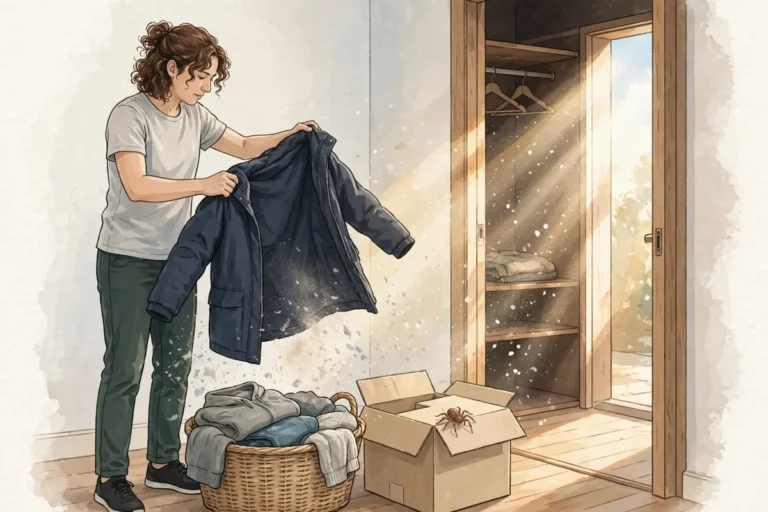
The bite is not the worst thing these beetles do indoors. When disturbed or crushed, Asian lady beetles release a foul-smelling yellow-orange fluid called reflex blood. It stains walls, carpeting, drapes, and upholstery, sometimes permanently. It also smells bad enough that homeowners who vacuumed up a swarm sometimes report the odor lingering in the vacuum for weeks.
This is why the removal advice from extension offices is consistent: do not crush them. Sweep them gently into a dustpan or use a vacuum with a disposable bag, then empty the bag outside away from the house. If you vacuum without a bag, empty the canister immediately for the same reason. Some homeowners use a light trap placed in the center of a dark room at night, since the beetles are drawn to light; these work best in warm rooms with no competing light sources.
One more indoor habit to avoid: sealing an active aggregation inside a wall with caulk. Extension guidance warns that trapping beetles inside can push them into living spaces through electrical outlets and fixtures. Seal entry points in late summer, before the swarm, not while thousands of beetles are already staging on your siding.
Sealing Your Home Before the Swarm
Extension entomologists are unanimous that exclusion beats chemicals for this pest. Illinois Extension states plainly that insecticides are not recommended for indoor use against these beetles, and that the best approach is preventing entry in the first place.
Seal Gaps and Cracks
Walk the exterior in August or early September and seal openings larger than about one-sixteenth of an inch around doors, windows, siding, utility pipes, and vents. Use a good silicone or silicone-latex caulk. Check attic and exhaust vents and cover them with fine insect screening. Replace torn window screens and make sure frames fit snugly.
Doors and Weather Stripping
Install sweeps on door bottoms and weather stripping around doors and windows that open directly outside. Pay special attention to sliding glass doors, which often have gaps that beetles exploit. Garage doors are another common entry route worth inspecting.
What About Sprays?
Purdue and other extension programs note that professional pest operators can apply long-lasting perimeter treatments to the outside of the home in late September or October, timed for when beetles begin congregating but before they enter. These are exterior-only applications with products labeled for household-invading pests, and they are most effective when combined with sealing. What extension sources do not recommend is fogging or spraying inside the house, which exposes the household to chemicals without solving the entry problem and can agitate beetles into staining more surfaces.
Start the sealing work before the first cold snap. By the time beetles are clustered on the wall, the exclusion window for that season is closing.
When to See a Doctor for a Bug Bite
Asian lady beetle bites rarely need medical care, but a few situations call for a clinician or urgent care:
- Signs of infection: increasing pain, spreading redness, warmth, swelling after 24 to 48 hours, pus, or red streaks leading away from the bite
- A welt that keeps growing or does not fade within several days
- Allergic symptoms: widespread hives, facial or lip swelling, wheezing, or difficulty breathing, which are rare but possible in sensitive individuals and warrant emergency care by calling 911
- A bite on or near the eye, or in the mouth, where swelling can cause functional problems
- Symptoms in an infant or a person with a compromised immune system that seem out of proportion to a minor bite
Most bites resolve without any of these, and the visit is about ruling out infection rather than treating beetle venom.
Frequently Asked Questions
Do Asian lady beetles bite humans on purpose?
No. Bites happen when a beetle is trapped against skin, often while you are handling infested items or the beetles are crawling on you. It is a defensive pinch, not a feeding bite, and they do not seek people out.
How can I tell an Asian lady beetle from a regular ladybug?
Look for the black M or W shape on the white area behind the head. Native ladybugs lack this mark. Asian lady beetles also vary widely in color and spot count and gather in large numbers on buildings in fall, while native ladybugs do neither.
Are Asian lady beetle bites dangerous?
For most people, no. They cause brief pain and sometimes a welt that lasts a day or two. People with beetle allergies can have stronger skin or respiratory reactions, which is uncommon but documented. There is no evidence of serious venom effects from these bites.
Why does my house smell bad when the beetles are inside?
Disturbed beetles release a foul yellow-orange defensive fluid. Crushing them makes the odor worse and stains surfaces. Vacuum them gently with a disposable bag and empty it outside promptly.
Will they damage my house or reproduce indoors?
No. They do not eat wood, fabric, or stored food, and they cannot breed inside homes. They are a nuisance, staining, and odor problem, not a structural pest.
Medically reviewed by Dr. Sarah Jones, MD.
This article is for informational purposes only and isn’t medical advice. If you’re worried about a bite or sting, talk to a healthcare professional.