
A jellyfish sting in the first 10 minutes is about stopping more venom, not about chasing pain away. Get out of the water, rinse with the right liquid for the species, remove tentacles without using bare hands, and then use hot water for pain relief. If breathing difficulty, throat tightness, widespread hives, dizziness or fainting, or severe pain appears, call 911 right away.
The First 10 Minutes, Step by Step #
The first 10 minutes after a jellyfish sting decide how much venom reaches the skin and how bad the next few hours feel. Jellyfish tentacles carry thousands of tiny stinging cells, and many of those cells can still fire after the tentacle leaves the animal. Anything that rubs, scrapes, or presses the skin can trigger more of them. That is why the order of steps matters more than speed alone. Move calmly, avoid rubbing, and work through the sequence below instead of improvising.
Your first goal is to get out of the water. Staying in the water risks more contact with the same animal or with other jellyfish nearby, and it makes every later step harder. Walk or wade out steadily, keeping the stung area still. Do not thrash, swim hard, or rub the area as you move. If the sting is on a leg, avoid kicking. If it is on an arm, hold the arm still against your side. Once you are on shore, sit down in the shade if you can, and ask someone nearby to stay with you while you work through first aid. A second person can fetch vinegar, ocean water, tweezers, or a towel while you keep the area still, and can call for help if symptoms change.
Tell a lifeguard right away if one is on duty. Lifeguards at ocean beaches deal with jellyfish stings often, they usually stock vinegar and first aid supplies, and they can watch for warning signs while you rest. If there is no lifeguard, use your own supplies or ask another beachgoer for help. Do not delay the rinse step while searching for a perfect kit. Ocean water is right there at the shoreline, and for some species it is exactly the right rinse anyway, as the comparison table later in this guide explains.
Minute zero to minute one: exit and stay still #
Get out of the water as soon as you feel the sting. Keep the stung limb still and avoid touching the area with bare hands. Sit down on a towel or in the shade. Take slow breaths and check how you feel overall, not just how the sting feels. Most stings cause local pain, redness, and itching, and those symptoms alone are not an emergency. Breathing difficulty, throat tightness, swelling of the lips or tongue, widespread hives, dizziness, fainting, chest pain, or severe pain that spreads rapidly are different. Any of those signs means emergency care comes first, before the rinse and tentacle steps. Call 911, use prescribed emergency medication if you carry it, and stay with another person until help arrives.
Minutes one to three: rinse before you touch #
Rinse the area with the right liquid before you try to remove anything. The rinse step comes first because it helps stop unfired stinging cells from firing while you work. For most jellyfish found along United States coasts, the American Red Cross guidance is to irrigate the area with large amounts of vinegar as soon as possible for at least 30 seconds. If vinegar is not available, a baking soda slurry is the suggested backup in that same guidance. For Portuguese man-o-war and bluebottle stings, the guidance is different: use ocean water instead of vinegar, because vinegar can trigger more venom release from that species. Do not use fresh water on most jellyfish stings, and do not use ammonia or rubbing alcohol, because those liquids can increase pain or trigger more stinging cells.
If you do not know which species stung you, ocean water is the safe default rinse while you sort out the rest. Ocean water will not make most stings worse, and it washes loose tentacle fragments off the skin. You can then look at the situation, ask a lifeguard, and decide on the next step. Never let uncertainty about the species delay getting out of the water and rinsing with ocean water.
Minutes three to ten: remove, then soothe #
Once the area has been rinsed, remove any visible tentacles with tweezers, a gloved hand, or a towel, as described in the next section. Do this gently, without rubbing or scraping. After the tentacles are off and the stinging action has stopped, move to pain relief with hot water. The American Red Cross guidance describes hot water immersion at a temperature as hot as can be tolerated without scalding, about 113 degrees Fahrenheit if the temperature can be measured, for at least 20 minutes. A hot shower works if a basin is not available. Keep checking the water temperature with an unaffected hand so the soak soothes rather than burns.
Your first 10 minutes checklist #
- Exit the water: Move out calmly, keep the stung area still, and sit down.
- Check yourself: Look for breathing difficulty, throat tightness, widespread hives, dizziness, or severe pain. If any appear, call 911 first.
- Alert a lifeguard: Lifeguards stock vinegar and first aid supplies and can watch for warning signs.
- Rinse first: Vinegar for at least 30 seconds for most jellyfish, ocean water for Portuguese man-o-war and bluebottle stings.
- Remove tentacles gently: Use tweezers, gloves, or a towel. Never use bare hands and never rub.
- Soothe with hot water: Soak in hot but not scalding water for at least 20 minutes.
- Keep watching: Stay with another person and recheck symptoms for at least the next hour.
Removing Tentacles Without Getting Stung Again #
Tentacles left on the skin can keep stinging, so removing them matters. But removing them badly can be worse than leaving them briefly in place while you rinse. The rule is simple: nothing bare, nothing rough. Bare fingers can pick up stinging cells and transfer them to another patch of skin, or to the face and eyes if you touch your face afterward. Rubbing, scraping with sand, or pressing with a dry towel can fire cells that would otherwise have stayed quiet.
Use tweezers if you have them. Grasp each visible strand near the skin and lift it away gently, then drop it onto a towel or into a bag rather than onto the sand beside you, where someone else could step on it. If you do not have tweezers, use gloved hands, a thick towel, a credit card edge, or the edge of a shell to lift strands off, working in one direction rather than scrubbing back and forth. Work slowly and check the area in good light. Some strands are nearly transparent and easy to miss, especially on wet skin in bright sun. Ask another person to help look, since a second pair of eyes catches strands you cannot see on your own arm, leg, or back.
What to do with clothing and swimwear #
Tentacles can cling to swimsuits, rash guards, and towels. If the sting happened through or near clothing, remove the garment carefully without dragging it across unaffected skin. Rinse the garment in ocean water or vinegar before handling it further, and do not put it back on until it has been rinsed and checked. A tentacle trapped under a swimsuit strap can keep stinging long after you leave the beach, and it is a common reason pain seems to return after first aid. Wash swimwear thoroughly before the next swim, and check it in good light.
What not to do while removing tentacles #
Do not use bare hands, even if the pain makes you impatient. Do not rub the area with sand, a dry towel, or your other hand. Do not scrape hard with a knife, a shell edge, or any sharp object, and do not try to cut the skin. Do not apply urine, meat tenderizer, or alcohol to the area. None of these steps helps, and several of them trigger more stinging cells or damage skin that is already irritated. If a strand is stuck and will not lift easily, rinse again and try once more gently. If it still will not come off, leave it, cover the area loosely, and seek advice from a lifeguard or clinician rather than forcing it.
Rinse Right: Vinegar, Ocean Water, or Neither #
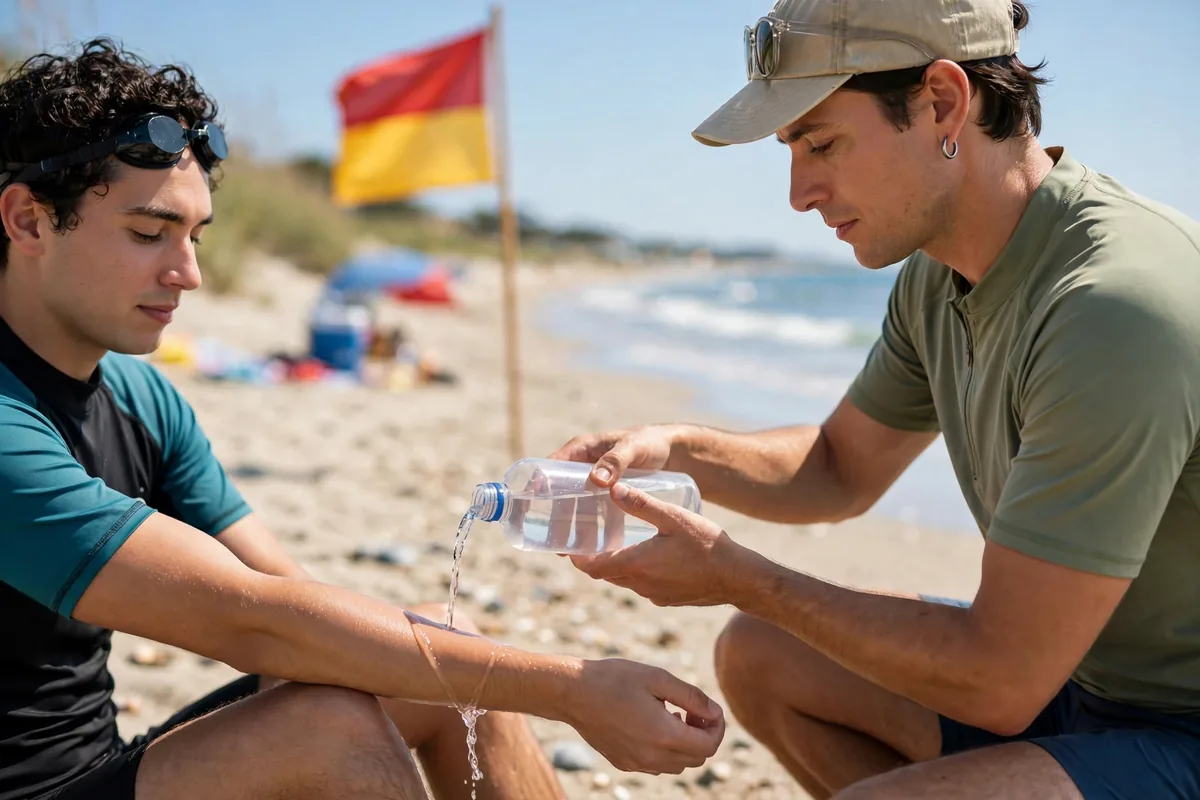
The rinse question causes more confusion than any other part of jellyfish first aid, because the correct answer depends on the species. Many beach guides give one blanket answer, and that is exactly the mistake to avoid. Vinegar is the standard rinse for most jellyfish, including box jellyfish type stings, because it deactivates unfired stinging cells. But Portuguese man-o-war and bluebottle stings are the exception: for those, the American Red Cross guidance says to use ocean water instead of vinegar, because vinegar can cause more venom to be released from unfired cells of that species. Using the wrong rinse does not just fail to help. For a man-o-war sting, it can actively make things worse.
The table below gives the rinse rule by species group, based on American Red Cross guidance and widely published marine first aid guidance. If you are unsure which animal stung you, default to ocean water, ask a lifeguard, and do not use vinegar until the species is reasonably clear.
| Species or group | Correct first rinse | Why | What to avoid | | — | — | — | — | | Most jellyfish (sea nettles, moon jellies, lion’s mane, and other common coastal species) | Vinegar, poured generously for at least 30 seconds | Deactivates unfired stinging cells so they cannot fire during tentacle removal | Fresh water, ammonia, rubbing alcohol, rubbing with sand | | Box jellyfish type stings | Vinegar, poured generously for at least 30 seconds, before removing tentacles | Stops further venom release from a dangerous species, and buys time for emergency care | Fresh water rinse before vinegar, bare hand removal, delay while searching for other remedies | | Portuguese man-o-war and bluebottle | Ocean water only, poured or splashed generously | Vinegar can trigger more venom release from unfired cells of this species | Vinegar, fresh water, ammonia, rubbing alcohol | | Unknown species | Ocean water while you assess and ask a lifeguard | Ocean water washes away loose fragments without triggering most species, and it is always available at the shoreline | Guessing with vinegar before the species is known, fresh water, rubbing |
Why fresh water is the wrong rinse for most stings #
Fresh water, including bottled drinking water, tap water, and shower water used as a rinse, can trigger unfired stinging cells on many jellyfish species. That is why the guidance is so consistent on this point: rinse with vinegar or ocean water, not fresh water. The one place fresh water belongs in jellyfish first aid is later, as hot water for pain relief, and only after the stinging action has stopped and tentacles are removed. That distinction matters. A hot shower too early, before rinsing and tentacle removal, can fire remaining cells and worsen the sting. Sequence is everything: rinse right, remove gently, then soak in hot water.
How to rinse in practice #
Pour the liquid generously over the whole stung area, not just the most painful spot. Tentacle contact often covers a wider patch than the visible marks suggest, and missed edges can keep stinging. Let the liquid run off rather than pooling and rubbing it in. If you are using vinegar from a beach first aid kit, use the whole bottle if the area is large. If you are using ocean water, scoop it in a bucket or bottle and pour it over the area rather than wading back into the surf, where you risk more contact. Reapply the rinse if you find more tentacle fragments during removal, and rinse again after removal to wash away any loose cells.
Hot-Water Relief and Warning Signs #
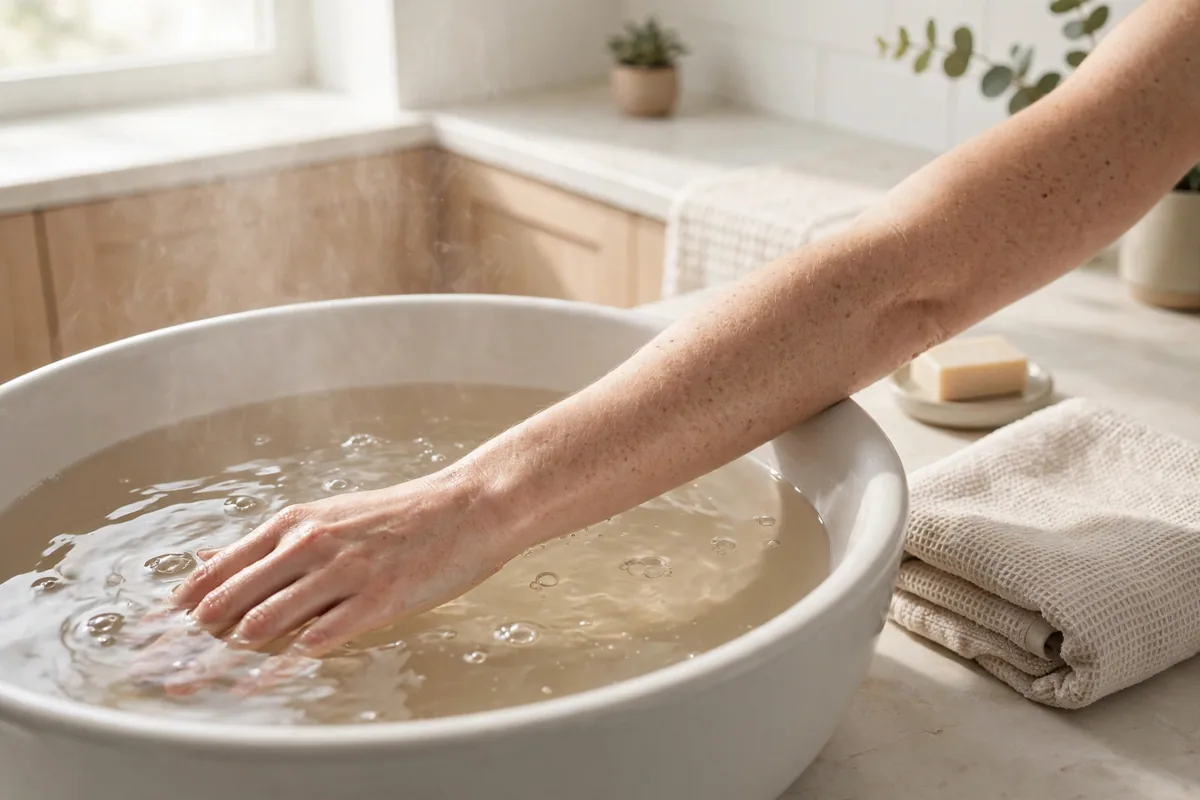
Once the stinging action has stopped and tentacles are removed, pain relief becomes the priority. Hot water is the most consistently recommended method in American Red Cross guidance for jellyfish stings. The guidance describes immersion in water as hot as can be tolerated without scalding, about 113 degrees Fahrenheit if the temperature can be measured, for at least 20 minutes. A hot shower is an acceptable alternative if a basin or tub is not available. The heat helps deactivate remaining venom components and eases the burning, throbbing pain that follows most stings.
Test the water with an unaffected hand or forearm before immersing the stung area. Skin that has just been stung may not judge temperature reliably, and a scald on top of a sting is a real risk, especially for children, older adults, and people with reduced feeling in their limbs. If the water feels painfully hot to unaffected skin, let it cool slightly. If no hot water is available at the beach, a warm compress or a warm shower at home still helps, and a cold pack can be used if hot water is unavailable and cold feels better. Do not alternate rapidly between very hot and very cold, and do not apply ice directly to bare skin.
Making the hot soak work #
Keep the stung area immersed for the full soak time if you can. Twenty minutes feels long when you are in pain, but a short dip that ends after two or three minutes often lets pain return quickly. Sit comfortably, support the limb, and keep the water warm by topping it up as it cools. Watch the skin during the soak. If redness spreads rapidly, blistering appears, pain suddenly worsens, or whole body symptoms develop, stop the soak and seek emergency care. After the soak, pat the area dry gently rather than rubbing it, and keep it uncovered or loosely covered so you can watch for changes.
Pain relief beyond hot water #
For lingering pain or itching after the soak, simple measures help. Keep the area clean and uncovered when possible, wear loose clothing over it, and avoid scratching. An oral antihistamine used exactly as the product label directs may help some people with itching, and a pharmacist can advise whether that option suits you. A plain hydrocortisone cream or calamine lotion, used as the product label directs, may ease itching for some people. Do not combine products, do not exceed label directions, and ask a clinician or pharmacist if you take other medicines or have health conditions. If pain remains severe after hot water and basic care, or if it worsens instead of easing, seek medical advice rather than layering on stronger products at home.
What NOT to Do After a Jellyfish Sting #
Well meaning beach remedies cause a surprising share of jellyfish sting problems. The table below pairs common mistakes with the reason each one harms, so you can recognize bad advice quickly even when it comes from a confident bystander.
| Do not do this | Why it harms | Do this instead | | — | — | — | | Rinse with fresh water (bottled, tap, or shower water as a rinse) | Can trigger unfired stinging cells on many species, releasing more venom | Rinse with vinegar for most species, ocean water for man-o-war stings | | Use vinegar on a Portuguese man-o-war or bluebottle sting | Can trigger more venom release from that species | Use ocean water only for man-o-war and bluebottle stings | | Rub the area with sand, a dry towel, or your hand | Fires remaining stinging cells and spreads them to new skin | Pour rinse liquid over the area and lift tentacles gently with tweezers or a towel | | Remove tentacles with bare hands | Transfers stinging cells to your fingers and to any skin you touch afterward | Use tweezers, gloves, a towel, or a card edge | | Apply urine, alcohol, ammonia, or meat tenderizer | Irritates skin and can trigger more stinging or worsen pain | Stick to vinegar or ocean water, then hot water for pain | | Apply a tight bandage or tourniquet | Traps venom near the sting and can cut off circulation | Keep the area uncovered or loosely covered and watch for changes | | Ignore the sting and keep swimming | Risks further contact with the same animal or others nearby | Exit the water right away and sit down for first aid | | Delay calling for help when whole body symptoms appear | Severe allergic reactions and dangerous species stings can worsen fast | Call 911 at the first sign of breathing difficulty, throat tightness, widespread hives, or fainting |
Two mistakes deserve special emphasis because they sound harmless. The first is the “rub it with sand” suggestion, which persists at beaches despite every major guidance warning against it. Sand is abrasive, it grinds stinging cells into the skin, and it adds grit to an already irritated area. The second is the idea that a sting is minor because the pain fades quickly. Some stings, especially from box jellyfish type species and Portuguese man-o-war, can produce delayed or whole body symptoms. That is why watching yourself for at least an hour after the sting, and staying near other people, matters even when the first minutes go well.
After the First 10 Minutes: The Next Hours and Days #
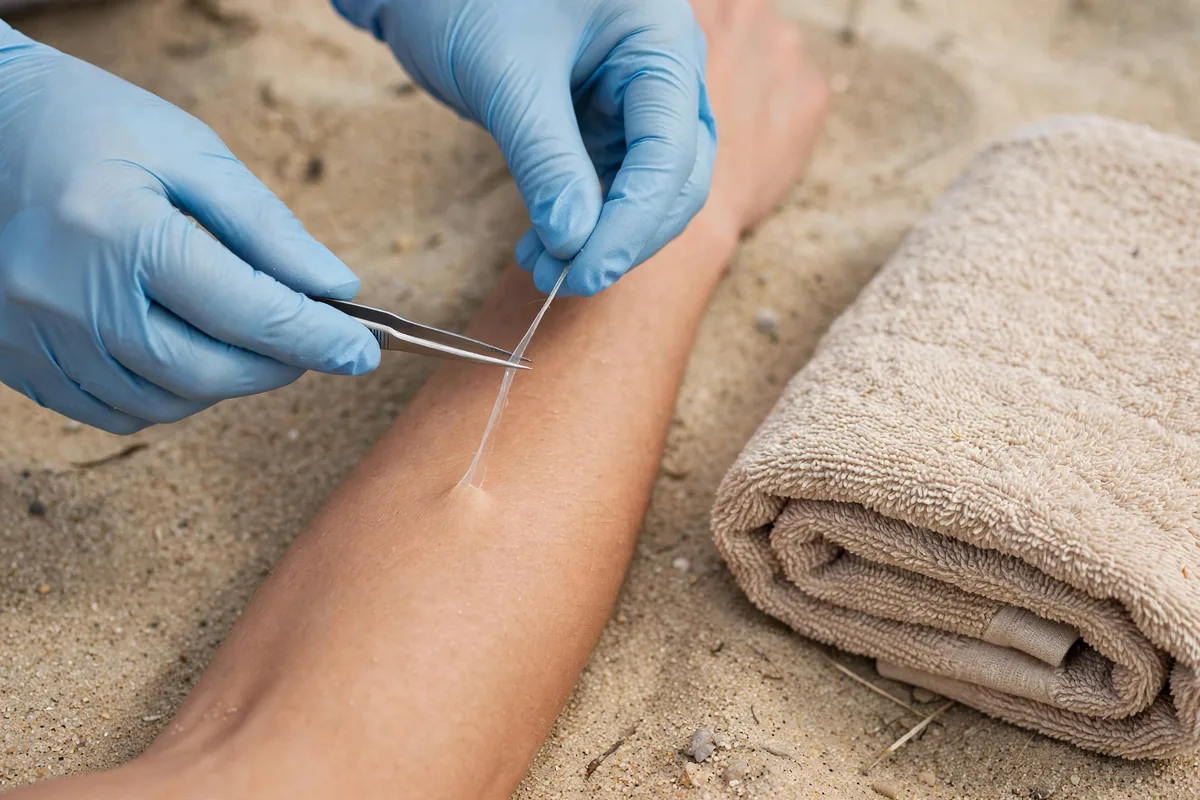
The first 10 minutes get the most attention, but recovery continues for hours and days. Most ordinary jellyfish stings follow a predictable course. Pain is strongest in the first hour, then eases into soreness, itching, or a burning feeling that comes and goes. Redness and mild swelling may appear as lines or patches matching where tentacles touched the skin. Itching often peaks a day or two later as the skin calms. For most people, the area looks and feels much better within a few days, though faint marks can linger for a week or longer.
Skin care during recovery #
Wash the area daily with soap and clean water, and pat it dry gently. Keep the area uncovered when you can, and wear loose clothing that does not rub it. Avoid scratching, even when itching is intense, because broken skin invites infection, especially after a beach sting where sand and salt water have already irritated the surface. Keep nails short and clean during recovery. If itching flares at night, a cool damp cloth or a repeat warm soak often helps more than scratching. Watch for signs that the area is becoming infected rather than simply healing: spreading redness, increasing warmth, swelling that grows after the first day, pus, or fever. Any of those changes deserves prompt medical advice.
Tracking changes without guessing #
Photograph the sting area once a day in similar light, so you can compare redness and marks honestly instead of relying on memory. Note pain and itching each morning and evening in simple terms, such as mild, moderate, or severe, along with whether the area is better or worse than the day before. Record the time of the sting, the beach, and the species if known, since a clinician will ask for those details if you seek care later. If you have ever had a severe reaction to a sting, review your sting allergy action plan checklist before your next beach trip, so you know your emergency steps in advance rather than improvising during a crisis.
When the course is not typical #
Seek medical advice promptly if pain keeps worsening after the first hours instead of easing, if redness keeps expanding after the first day, if blistering appears, if the area becomes very swollen, or if new symptoms such as fever, joint pain, muscle cramps, nausea, or numbness develop. Also seek advice if the sting was on the face, eyes, mouth, or genitals, if a child or older adult was stung over a large area, or if you are unsure which species stung you and symptoms are more than mild. A sting that looks like a minor rash can occasionally hide a deeper problem, and a clinician can judge that better than a home checklist can.
Warning Signs That Need Emergency Care #
Some jellyfish stings need emergency care, not home first aid. Box jellyfish type stings and Portuguese man-o-war stings can cause severe whole body effects, and any person can have a severe allergic reaction to any sting. The signs below are emergencies. Do not wait to see whether home care helps, and do not try to drive yourself to care if these symptoms are developing.
Call 911 immediately if you have breathing difficulty, throat tightness, swelling of the lips or tongue, widespread hives, dizziness or fainting, chest pain, severe pain that spreads rapidly, muscle cramps, numbness, confusion, or a feeling that something is seriously wrong. Use prescribed emergency medication if you carry it, stay with another person, and keep the stung area still while you wait for help.
Beyond those emergencies, seek same day urgent care for stings covering a large area of the body, stings on the face or eyes, stings in a child who is inconsolable or unusually drowsy, or any sting where pain is severe and does not ease after proper rinsing, tentacle removal, and a full hot water soak. People with heart conditions, breathing conditions, or a history of severe sting reactions should seek advice earlier than others, even if the sting looks mild at first. When in doubt, call a healthcare professional and describe the sting, the species if known, the time it happened, and the symptoms you are seeing. That call costs little and can catch a serious problem early.
Preventing the Next Sting #
A sting you have already had does not protect you from the next one, and some people react more strongly on repeat exposure. Prevention is mostly about awareness, clothing, and paying attention to beach conditions. Check local beach reports and lifeguard flags before swimming, especially in warm months when jellyfish are more common and after storms or onshore winds, which can push jellyfish and man-o-war toward shore. If lifeguards report jellyfish in the water, or if you see jellyfish washed up on the sand, treat that as a clear signal to stay out or to choose another beach.
Before you swim #
Wear a rash guard, wetsuit, or swim leggings when jellyfish are reported in the area. Tentacles cannot sting through fabric, so covered skin is protected skin, and even partial coverage of the torso and limbs reduces the area at risk. Avoid swimming at dawn and dusk in areas known for jellyfish, and avoid murky water where you cannot see what is near you. Teach children not to touch jellyfish on the sand, even ones that look dead or dried out, because beached tentacles can still sting. Keep a small beach first aid kit with vinegar, tweezers, gloves, and a towel, so the rinse and removal steps never depend on finding supplies in a hurry.
In the water #
Swim near a lifeguarded area when possible, and stay aware of what is around you. If you feel a sting, exit the water right away rather than finishing your swim. If you see a jellyfish or a man-o-war float nearby, move away calmly without splashing, since splashing increases contact risk. Do not try to push a jellyfish away with your hands or feet. After a sting anywhere on the beach, tell a lifeguard even if you feel fine, because reports help lifeguards warn other swimmers and track whether a bloom is moving through the area.
Frequently Asked Questions #
Should I rinse a jellyfish sting with vinegar or ocean water? #
It depends on the species, and that distinction is the most important fact in this guide. For most jellyfish, including box jellyfish type stings, vinegar poured generously for at least 30 seconds is the recommended rinse, because it deactivates unfired stinging cells. For Portuguese man-o-war and bluebottle stings, use ocean water instead of vinegar, because vinegar can trigger more venom release from that species. If you do not know the species, use ocean water while you assess and ask a lifeguard. Never use fresh water as a rinse for most jellyfish stings, and never use ammonia or rubbing alcohol.
What should I do first after a jellyfish sting? #
Get out of the water, keep the stung area still, and check for emergency symptoms. If breathing difficulty, throat tightness, widespread hives, dizziness, or severe pain appears, call 911 first. Otherwise, rinse with the right liquid for the species, remove tentacles gently with tweezers or a towel, and then soak the area in hot water for at least 20 minutes. Tell a lifeguard right away if one is on duty, and stay with another person while you work through these steps.
Can I use fresh water or a shower to rinse a jellyfish sting? #
Fresh water as a rinse is not recommended for most jellyfish stings, because it can trigger unfired stinging cells and worsen the sting. That rule applies to bottled water, tap water, and an early shower used as a rinse. Hot water does have a role, but only later, after rinsing and tentacle removal, when it is used as a soak for pain relief. The sequence matters: rinse right, remove gently, then soak in hot water. A shower taken too early, before the rinse and removal steps, can fire remaining cells.
How long does jellyfish sting pain last? #
Pain is usually strongest in the first hour and then eases over the next few hours, though soreness, itching, or a burning feeling can come and go for a day or two. Redness and mild swelling often match the pattern of tentacle contact and fade over several days. Faint marks can linger for a week or longer. Pain that keeps worsening after the first hours, spreads rapidly, or returns strongly after improving is not the usual course, and it deserves prompt medical advice.
What if I do not know what kind of jellyfish stung me? #
Use ocean water as your rinse, remove tentacles gently without bare hands, soak in hot water for pain, and ask a lifeguard for help identifying the species. Ocean water is the safe default because it washes away loose fragments without triggering most species. Watch yourself closely for at least an hour for warning signs, and seek care promptly if symptoms are more than mild, cover a large area, or involve the face or eyes. If itchy bumps appear later in places where sand touched your skin rather than where a tentacle touched, the cause may be different, and comparing with a sand flea bite treatment guide can help you sort out the pattern.
Can children be treated the same way as adults after a jellyfish sting? #
The same sequence applies: exit the water, rinse right for the species, remove tentacles gently, and use hot water for pain. With children, extra care matters. Test hot water temperature with your own unaffected hand, since a child may not judge heat reliably, and keep the soak at a temperature that is warm and comfortable rather than as hot as possible. Keep the child seated, calm, and with an adult, and watch closely for whole body symptoms, since a smaller body can react more strongly to a large sting area. Seek care promptly if a child is stung over a large area, on the face, or shows any warning sign, and do not send a child back into the water where the sting happened.
Diagnostic Limitations and Species-Specific First Aid #
A skin mark or painful rash alone cannot reliably identify a jellyfish species or predict severity. First-aid recommendations can differ by species and region, so do not assume vinegar or any single rinse is correct for every sting. Get out of the water, avoid rubbing the area, alert a lifeguard when available, and follow local lifeguard, Poison Control, or emergency-clinician instructions. Call 911 for breathing difficulty, chest pain, collapse, severe systemic symptoms, or a rapidly worsening reaction.
Authoritative Sources #
- NOAA Ocean Service: Beach Dangers — jellyfish hazards and why local lifeguard guidance matters.
- NOAA: Fact vs. Fiction About Jellyfish — first-aid considerations and common myths.
- MedlinePlus: Jellyfish Stings — symptoms, urgent-care warning signs, and Poison Control information.
Medical Disclaimer #
This guide provides general information about first aid after a jellyfish sting. It is not medical advice and does not replace professional care. Jellyfish species, sting severity, and individual health conditions vary, and the steps described here cannot cover every situation. If you are worried about your symptoms, have a history of severe reactions to stings, have heart or breathing conditions, or notice any warning sign described above, contact a healthcare professional promptly or seek emergency care when needed. Always follow the advice of lifeguards, emergency responders, and clinicians on scene, since they can see the sting and the species involved.


