
Why Do Wasps Sting Unprovoked? The Real Triggers Explained
Introduction: The Short Answer Wasps rarely sting for no reason at all, even when the sting feels completely unprovoked to the person who receives…
You have just been stung, and your first instinct is to look for the stinger. Do wasp stings leave a stinger? No, they do not. Wasps, yellow jackets, and hornets…
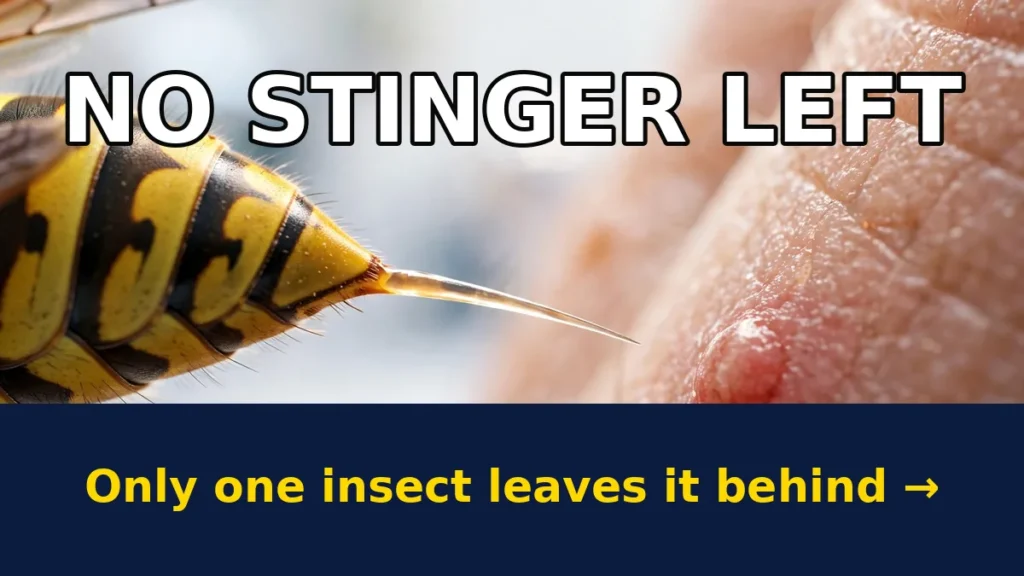
You have just been stung, and your first instinct is to look for the stinger. Do wasp stings leave a stinger? No, they do not. Wasps, yellow jackets, and hornets have smooth stingers that slide out of the skin cleanly, so there is nothing left behind to pull out. The only common stinging insect that leaves a stinger in the skin is the honeybee, whose barbed stinger tears free from its body.
This mix-up matters because the answer changes your first aid. Hunting for a stinger that is not there wastes time and can irritate the wound. This article lays out the anatomy behind the difference, how to read the skin to identify what stung you, the right first aid for each case, and the myths that keep this confusion alive.
If a wasp, yellow jacket, or hornet stung you, there is no stinger embedded in your skin. These insects have smooth, needle-like stingers that enter and withdraw without damage to the insect. That is also why a wasp can sting more than once: the stinger stays attached to the wasp, ready for the next jab. Medical and pest-education sources describe this consistently, and the absence of a stinger is one of the most reliable field clues that the culprit was a wasp rather than a honeybee.
One common point of confusion is the tiny pale dot at the center of a sting welt. That pale spot is the puncture mark where the stinger entered, not a stinger left behind. Poking at it with tweezers or a needle will not extract anything and risks breaking the skin further.
The stinger is a modified egg-laying organ, which is why only female bees, wasps, and hornets can sting. What differs between species is the shape of the stinger’s surface.
| Feature | Honeybee Stinger | Wasp, Yellow Jacket, and Hornet Stinger |
|---|---|---|
| Surface | Barbed, like a tiny fishhook | Smooth, like a needle |
| Left in the skin? | Yes, it tears free and stays embedded | No, it withdraws cleanly |
| Fate of the insect | The bee dies after stinging | The insect survives and can sting again |
| Venom delivery | The attached venom sac keeps pumping venom after the bee is gone | Venom is injected during the sting, then the stinger is withdrawn |
| First-aid implication | Remove the stinger promptly | Nothing to remove; skip straight to wound care |
The barbs on a honeybee stinger point backward, so once it is driven into skin it cannot be pulled back out. When the bee tries to fly away, the whole stinging apparatus tears free from its abdomen along with the venom sac and attached muscles. That is why a honeybee can sting only once. A wasp’s smooth stinger meets no such resistance, which is why wasps can sting repeatedly and why their attacks, especially from a disturbed nest, can involve many stings in quick succession. Our guide on why wasps sting more than once explains this mechanism in more detail.
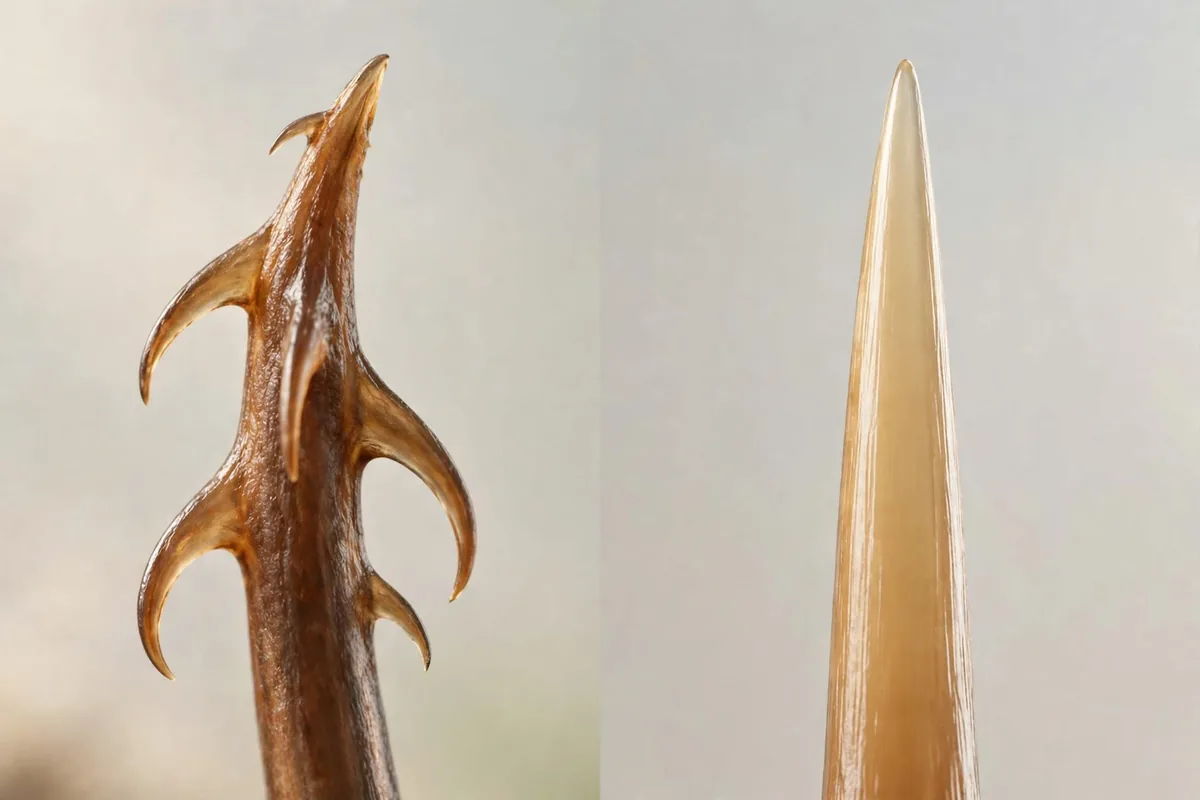
Honeybees are the outlier, and their exception is worth understanding because it is the source of nearly all stinger confusion. When a honeybee stings, the barbed stinger and venom sac remain in the skin and the detached muscles keep contracting, pumping additional venom for some time after the bee has flown off. Classic venom-delivery experiments found that most of the sac’s venom enters the skin within about 20 seconds (delivery is essentially complete within a minute), which is why every sting-care source puts removal speed first. That is why fast removal of a bee stinger is the priority: every minute it stays in, more venom can enter.
Bumble bees are a middle case that trips people up. They can sting, and they can sting more than once, because their stingers are not strongly barbed. But bumble bees are docile and rarely sting unless handled or stepped on. For practical first aid, the rule of thumb holds: a visible stinger in the skin points to a honeybee. For more on bee-specific care, see our honey bee sting treatment article and the step-by-step remove a bee stinger guide.
You can learn a lot from a close look at the sting site, and the stinger question is the fastest way to narrow down the culprit.
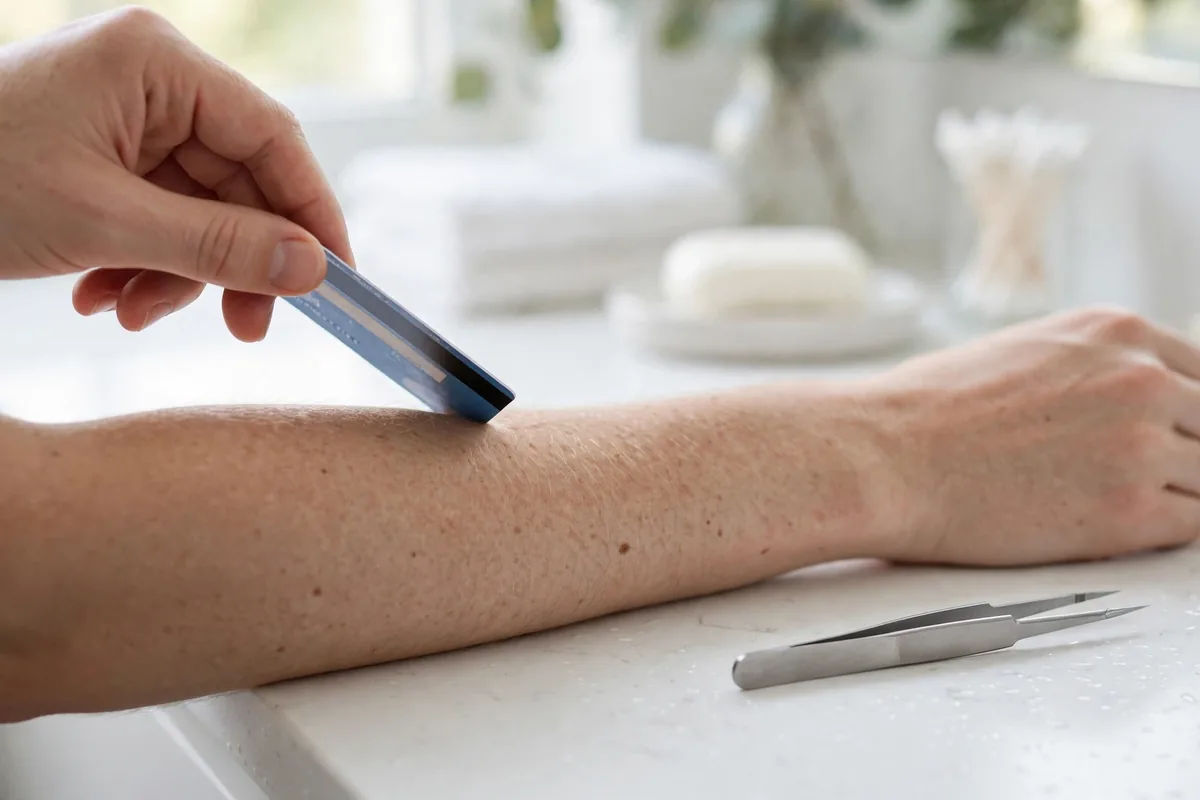
A honeybee stinger looks like a tiny dark splinter or thread sticking out of the skin, sometimes with a small sac visible at the base. If you see that, you were almost certainly stung by a honeybee. Remove it promptly, then treat the wound. Speed matters more than technique: scrape it out with a fingernail, a credit card edge, or a piece of gauze. The old advice about never using tweezers comes from the fear of squeezing more venom in, but most sources now agree that getting the stinger out quickly is the priority, and either method works if you are fast.
If there is no dark sliver, just a red welt with a pale puncture dot, you were likely stung by a wasp, yellow jacket, or hornet. Do not keep digging. Switch to standard sting first aid: clean, cold, and monitor. One caution: absence of a visible stinger is a strong clue, not a laboratory diagnosis. If you did not see the insect and the reaction is severe, treat the reaction, not your guess about the species.
Since there is no stinger to hunt for, wasp sting first aid is simpler than many people expect. The goal is to limit pain and swelling and to watch for signs that the reaction is more than local.
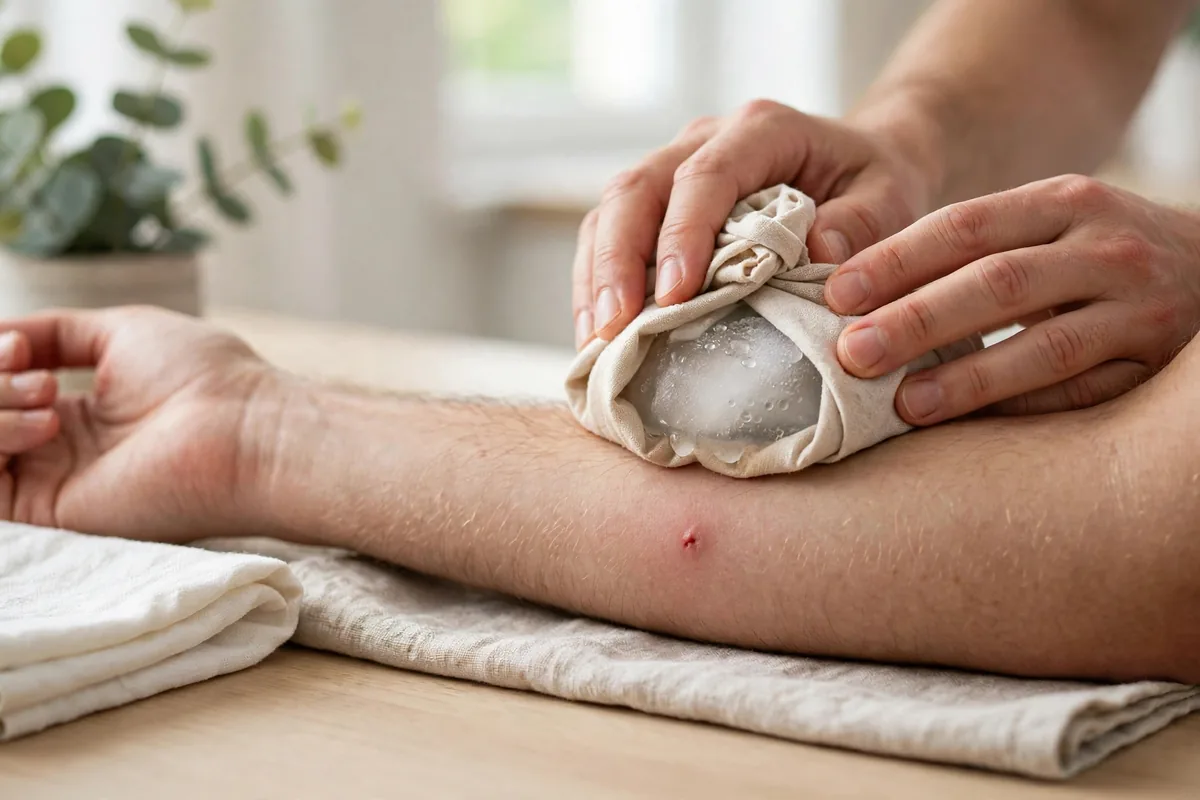
Move away from the area first. Wasps can sting repeatedly, and lingering near a disturbed nest invites more stings. Then wash the sting site with plain soap and water to reduce the chance of infection. Apply a cold compress, a cloth-wrapped ice pack or a cold damp cloth, in intervals of about ten minutes on and off to ease pain and swelling. Elevate the limb if the sting is on an arm or leg, since that can reduce swelling.
Expect the welt to be most noticeable in the first hours, with redness, warmth, and itching that typically peak within a day and fade over a few days. A mild over-the-counter pain reliever or antihistamine, used as directed on the package, is what most people use for comfort. Avoid scratching, since broken skin invites infection, and keep the area clean. A large local reaction, swelling that spreads well beyond the sting site, can look alarming but often resolves on its own within a week. Our full wasp sting first aid checklist covers the timeline in more detail.
Finding a stinger means you are dealing with a honeybee sting, and the priorities shift slightly. Remove the stinger as fast as you can, because the detached venom sac keeps pumping venom while it sits in the skin. Scrape it out with the edge of a fingernail, a credit card, or a piece of gauze swept firmly across the skin. If tweezers are what you have in hand, use them quickly rather than hunting for a better tool; the old squeeze-the-sac concern is less supported than it once was, and speed is what most sources now emphasize.
After removal, treat it like any sting: soap and water, a cold compress, and monitoring. Watch the site over the next day for increasing redness, warmth, or swelling that spreads, which can signal infection rather than a normal local reaction.
This confusion survives because a few myths keep circulating, in backyards and online alike.
Only honeybees routinely leave their stinger behind. Wasps, yellow jackets, hornets, and bumble bees do not. If someone tells you to always look for the stinger, they are generalizing from bee stings to all stings, and that advice costs time after a wasp sting.
That is a bee fact misapplied to wasps. A honeybee dies after stinging because its barbed stinger tears free. A wasp’s smooth stinger stays with the wasp, which is exactly why a single wasp can sting you several times and why disturbed nests are so much more dangerous than a single bee encounter.
There is no evidence that squeezing, sucking, or cutting a sting site removes venom or helps healing. These methods irritate the wound and can push bacteria into broken skin. Cleaning the site and using a cold compress are the supported steps.
The pale or white dot in the middle of a sting welt is the puncture point, not an embedded stinger. Digging at it with a needle or tweezers does nothing useful and can introduce infection.
Most single wasp stings are painful but resolve without medical care. Get help promptly for any of the following:
Do wasp stings leave a stinger in the skin?
No. Wasps, yellow jackets, and hornets have smooth stingers that withdraw cleanly, so nothing is left behind. Only honeybees leave a barbed stinger embedded in the skin.
How do I know if I was stung by a wasp or a bee?
Look for a stinger. A tiny dark sliver sticking out of the skin points to a honeybee. No stinger, just a red welt with a pale puncture dot, points to a wasp, yellow jacket, or hornet. The insect’s appearance helps too: fuzzy and round suggests a bee, smooth and narrow-waisted suggests a wasp.
Should I try to remove something from a wasp sting?
No. There is nothing to remove. Trying to dig out a stinger that is not there irritates the wound and raises infection risk. Move straight to washing the site and applying a cold compress.
Why can wasps sting multiple times but bees cannot?
It comes down to stinger shape. A honeybee’s barbed stinger lodges in the skin and tears free, killing the bee. A wasp’s smooth stinger slides in and out without damage, so the same wasp can sting again and again.
Can a wasp sting leave a stinger if it stings really hard?
No. Stinger retention is about barbs, not force. No matter how forceful the sting, a smooth wasp stinger withdraws. If you genuinely see a stinger in the skin, the insect was almost certainly a honeybee, not a wasp.
What should I do first after any sting if I am not sure what stung me?
Move away from the area, check the skin for a stinger, and remove one promptly if you see it. Then wash with soap and water, apply a cold compress, and watch for signs of a severe allergic reaction, which need emergency care regardless of the insect.
Medically reviewed by Dr. Sarah Jones, MD.
This article is for informational purposes only and isn’t medical advice. If you’re worried about a bite or sting, talk to a healthcare professional.
Dr. Jones oversees StingHelp’s clinical verification process. Every guide is systematically evaluated against active Centers for Disease Control and Prevention (CDC), Environmental Protection Agency (EPA), and American Academy of Allergy, Asthma & Immunology (AAAAI) medical consensus standards to ensure symptom distinctions and care recommendations are clinically sound.
Explore physician-reviewed first-aid procedures, identification clues, and symptom comparisons for other common outdoor bites and stings.
Introduction: The Short Answer Wasps rarely sting for no reason at all, even when the sting feels completely unprovoked to the person who receives…
# Are Yellow Jackets Active at Night? The short answer is no, yellow jackets are not really active at night. These wasps are daytime…
Finding a gray, umbrella-shaped nest hanging under your porch eave can trigger an instant question: are paper wasps aggressive, and is my family in…