
Finding a spider crawling on your baby — or spotting a red mark you cannot explain — can turn a calm evening into a racing-heart emergency in seconds. Here is the direct answer for spider bite on baby first aid: keep your baby calm and still, wash the area gently with soap and water, apply a cool cloth to the site, watch your baby closely for the next several hours, and call your pediatrician promptly — especially if you suspect a black widow or brown recluse bite, or if your baby shows any sign of pain, spreading redness, or systemic symptoms. Most spider bites in infants are mild, but babies cannot tell you what happened, so a pediatrician-first approach is the safest way to handle every case.
The first 60 seconds: steady yourself, steady your baby #
Your baby takes emotional cues from you. If you gasp, scoop them up frantically, and start shouting, a minor mark becomes a traumatic memory for both of you — and a crying, thrashing baby makes it harder to examine the skin. So the real first step of spider bite on baby first aid is parent management: take one slow breath, pick your baby up gently, and hold them securely against your chest.
Move away from the spider. If you saw the spider, step away from the area before you do anything else. Do not chase the spider while holding your baby. Once your baby is safe in another room or held by another adult, you can deal with the spider.
Look at the mark. Gently expose the area. You are looking for: one or two tiny puncture dots (many spider bites show two close fang marks), a raised red bump, local swelling, or any fluid-filled blister. Many suspected “spider bites” turn out to be mosquito bites, flea bites, or contact rashes — but treat the situation the same way until you know more. Do not squeeze, scratch, or try to “pop” the mark, and do not attempt to cut the skin or suck out venom — those old home remedies cause tissue damage and raise the infection risk.
Note the time. Write down when you first noticed the mark and what you saw — spider description, where your baby was, and what symptoms appeared first. Your pediatrician will ask for this. A quick photo of the mark next to a coin for scale, taken at the time and again a few hours later, is one of the most useful things you can do.
Step-by-step first aid for a baby’s spider bite #
Follow these steps in order. None of them requires medication, and none of them replaces a call to your pediatrician — they are the safe bridge between noticing the bite and getting professional guidance.
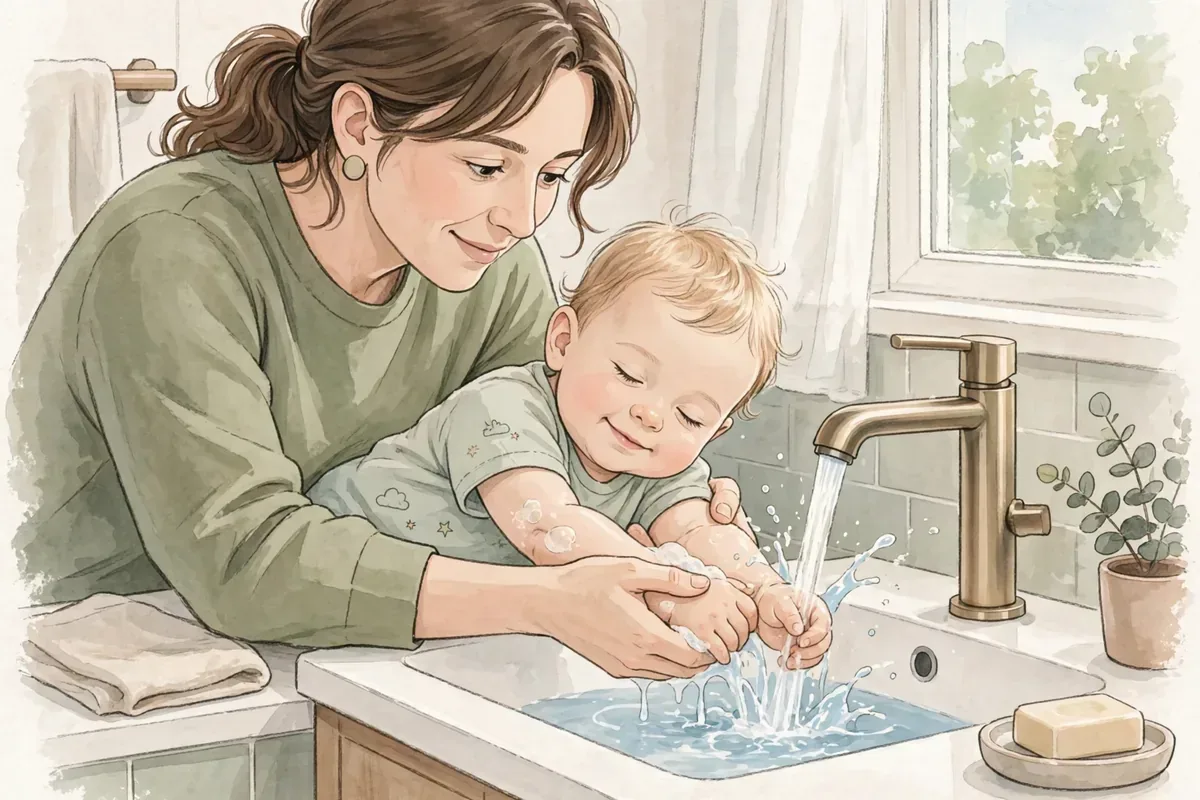
Step 1 — Wash gently. Run lukewarm water over the area and wash with a mild soap for about 20 seconds. Use a soft cloth, not a scrub brush, because baby skin is thin and irritates easily. Pat the skin dry. This single step does more than you might expect: it removes surface debris, any residual venom on the skin surface, and bacteria that could enter a broken spot.
Step 2 — Cool the area. Wrap a few ice cubes or a bag of frozen peas in a thin cloth, or use a cool damp washcloth, and hold it against the mark for 10 minutes at a time, then remove it for 10 minutes. Never place ice directly on a baby’s skin — frost injury happens fast on infant skin. A cool compress reduces local pain and swelling and is the main comfort measure you have in the first hour.
Step 3 — Keep the area uncovered and clean. Do not wrap the bite tightly, do not apply household products like toothpaste, meat tenderizer, or nail polish, and do not use topical remedies that are not meant for babies unless your pediatrician specifically recommends them. Plain skin heals best when it is clean and observable.
Step 4 — Keep your baby still-ish and upright-ish. If the bite is on a hand or foot, try to keep the limb slightly elevated on a pillow while your baby rests — this limits swelling. More importantly, keep your baby where you can watch them. A bite you ignore for three hours because the baby went down for a nap can evolve silently, so set a quiet alarm to re-check the mark every hour while they sleep.
Step 5 — Do not give any medicine unless your pediatrician says so. No antihistamine syrups, no pain-reliever drops, no creams with active ingredients — nothing by mouth or on the skin — without explicit pediatrician approval. Infant dosing is weight- and age-specific, and what is routine for an adult can be dangerous for a baby. If your baby seems uncomfortable, call your pediatrician and describe the situation; they will tell you exactly what is appropriate, including whether a plain cool compress is enough.
Step 6 — Call your pediatrician. Even if the mark looks small and your baby seems fine, a same-day call is the standard recommendation for any suspected spider bite on a baby. Describe the mark, the timing, where it happened, and any symptoms. The pediatrician may ask for photos, may want to see your baby the same day, or may direct you to urgent care or the emergency department — follow their direction.
Black widow or brown recluse: descriptive identification pointers #
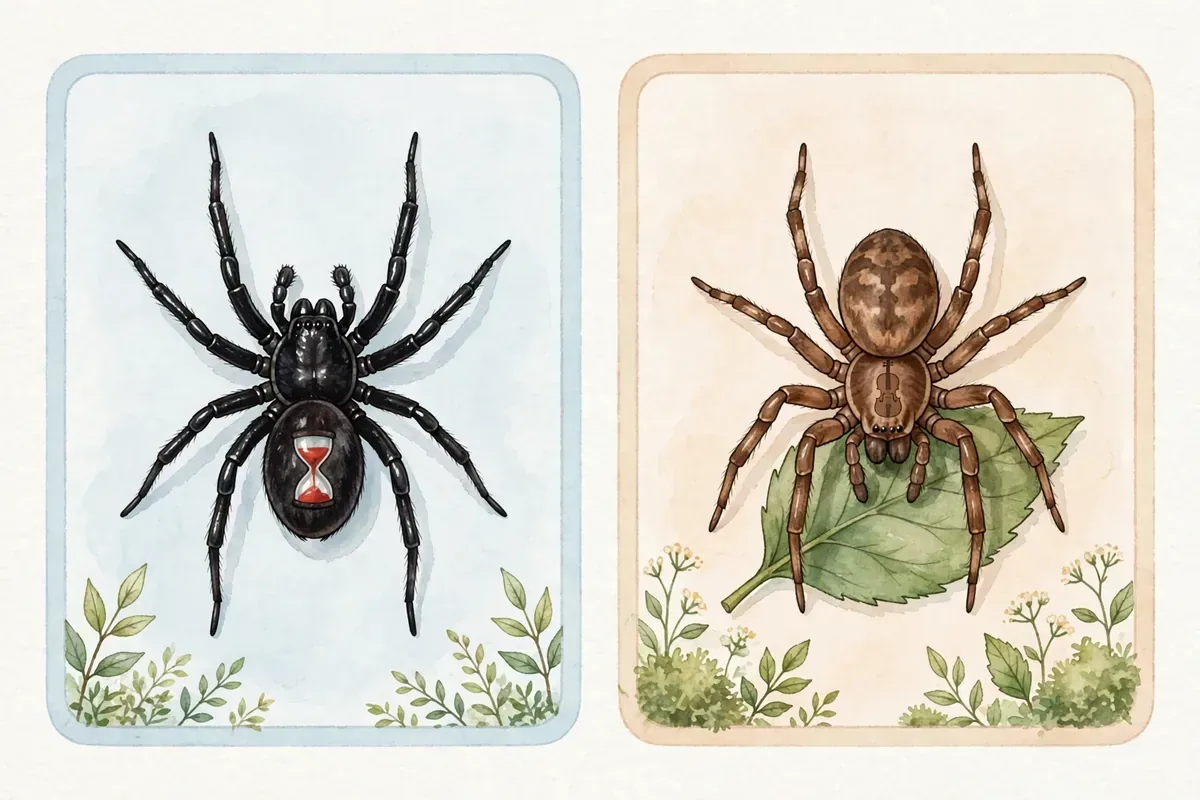
In the United States, the two spiders of real medical concern are the black widow and the brown recluse. Neither is aggressive — both bite only when trapped against skin, for example in clothing, bedding, or a diaper. The pointers below are descriptive, not diagnostic: you are gathering information for your pediatrician, not making the diagnosis yourself.
| Feature | Black widow (Latrodectus) | Brown recluse (Loxosceles) | |—|—|—| | Appearance | Shiny, jet-black, round abdomen; females often have a red or orange hourglass shape on the underside; about half an inch long not counting legs | Dusty tan-to-brown, about the size of a quarter including legs; often described violin or fiddle marking on the back of the body, with the neck of the violin pointing toward the rear | | Where they hide | Dark, undisturbed places: woodpiles, sheds, garages, under patio furniture, outdoor toys, meter boxes | Closets, attics, basements, inside shoes, behind baseboards, cardboard boxes, bedding stored in storage rooms | | US range | Found in every state; most common in the South and West | Central and southern states roughly from Nebraska to Ohio and down to Texas and Georgia; reports outside this range are frequently misidentifications | | Typical bite evolution | Sharp pain at the time or shortly after; may show two small fang marks; followed by spreading muscle cramping — especially belly cramping and stiffness — nausea, and restlessness within hours | Often painless at first; redness and burning within 2 to 8 hours; a deep blue-purple center with a pale ring and red outer ring (bull’s-eye look) may develop; a blister or ulcer can form over days | | When it is an emergency | Any suspected black widow bite on a baby: call your pediatrician immediately and be ready for the ER | Any suspected brown recluse bite on a baby: call your pediatrician the same day; the lesion needs professional monitoring over the following days |
Do not try to catch the spider with your bare hands. If you can safely trap it under a jar or cup without touching it, a clear photo through the glass can help a professional identify it later. If trapping it is risky, a detailed description — color, size relative to a coin, where you found it — is nearly as useful. Pediatric emergency departments and poison control centers are experienced at working from descriptions and photos.
A note on “spider bite” diagnoses: clinicians widely report that most skin lesions blamed on spiders were never witnessed and often turn out to be infections (such as impetigo or cellulitis), allergic reactions, or bites from other insects. That does not mean you should ignore a mark — it means the mark deserves a professional look rather than an assumed diagnosis. If your pediatrician thinks the lesion is something other than a spider bite, that is valuable information, not a dismissal.
What the next 72 hours may look like: a symptom timeline #
Babies cannot narrate symptoms, so you become the observer. The timeline below shows how a typical uncomplicated bite evolves and where the danger signals hide. Check the mark and your baby’s overall behavior against this schedule.
| Time after bite | Typical, reassuring signs | Signs to escalate | |—|—|—| | First hour | Small red bump or two dots; baby cries briefly then settles; mild local swelling | Severe inconsolable crying; vomiting; unusual drowsiness or limpness | | 2–8 hours | Slight growth of redness (within about an inch); itchiness begins; baby feeds normally | Spreading redness beyond a couple of inches; belly cramping or rigid tummy (black widow concern); burning pain (brown recluse concern) | | 8–24 hours | Redness stabilizes; swelling peaks gently then starts to fade; baby sleeps and feeds normally | Red streaks moving away from the mark; swelling that doubles in size; fever; a blue-purple center or blister forming | | 24–72 hours | Steady improvement: redness fades, bump flattens, baby back to normal | Worsening pain; pus or cloudy drainage; hot, hard swelling; fever persists or rises; mark turns dark or ulcerated |
Behavior is your best thermometer. A baby whose bite looks unimpressive but who stops feeding, becomes floppy or unusually sleepy, cries in a way that cannot be soothed, or arches away from touch needs medical attention regardless of what the skin looks like. Skin is only half the story with infants — behavior is the other half, and it is the half that flags systemic effects earliest.
Mark the borders. Draw a light line with a pen around the outer edge of the redness, and note the time. If the redness crosses the line in the next few hours, photograph it and call your pediatrician — spreading inflammation is one of the clearest objective escalation signals, and the marked border turns a vague worry into measurable evidence.
Extra-caution checklist: babies are not small adults #
Pediatric clinicians treat spider bites in infants with a lower threshold for escalation, and you should too. The reasons are physiological, and understanding them helps you stay calm instead of second-guessing every call.
Smaller body, larger relative exposure. The same amount of venom that causes a local reaction in an adult represents a bigger dose per pound in a 15-pound baby. This is the core reason pediatrician-first guidance applies to every bite, even ones that look trivial.
Thin, delicate skin. Infant skin breaks down faster under inflammation, which means a lesion that would stay superficial in an adult can ulcerate more readily in a baby. Keep the area clean, do not apply irritating home remedies, and do not cover it with adhesive bandages for long stretches — you need to see it.
Communication gap. An adult can tell you “my stomach is cramping” or “my vision is blurry.” A baby can only cry, go quiet, or refuse the bottle. Any behavior change — poor feeding, unusual sleepiness, inconsolable crying, new vomiting — is a symptom report from your baby, and it deserves the same seriousness as a spoken complaint.
Faster dehydration and temperature swings. Fever in a baby under three months is always an emergency-room matter on its own, bite or no bite. Keep your baby hydrated with their normal feeds, and if you are unsure whether they are taking enough, that question alone is worth a pediatrician call.
Immature immune response. Babies are more vulnerable to secondary bacterial infection at any break in the skin. Watch for the infection quartet: increasing pain, expanding redness, warmth, and swelling — plus fever or pus. Do not wait these out “to see”; call early, because early infections in infants are treated more simply than late ones.
How babies get bitten: prevention around the home and yard #
Almost all spider encounters with babies are preventable, because spiders do not hunt people — they get trapped in the small, dark, warm spaces babies occupy.
Cribs and bedding. Shake out crib sheets and blankets before placing your baby down, especially after storage. Keep the crib away from the wall by a few inches, and do not let blankets drape down to the floor, which creates a spider highway. Store out-of-season bedding in sealed bins, not open cardboard boxes.
Clothing and shoes. Shake out any clothing that has been sitting in a closet, drawer, or laundry pile — and yes, tiny socks and shoes count. Black widows and brown recluses both favor undisturbed fabric. If clothes were dried on an outdoor line near a woodpile or shed, shake them again before dressing your baby.
Play areas. Outdoor play mats, toy boxes, and sandbox covers are classic spider real estate. Empty and shake toy bins that live in the garage weekly. Move woodpiles, compost bins, and stacked bricks at least 20 feet from play areas, and keep grass trimmed short around the play zone.
Indoor decluttering. Spiders thrive in clutter they can hide behind: stacks of boxes in the nursery, under-crib storage crammed with bags, curtains pooling on the floor. Sealed storage, regular vacuuming of corners and baseboards, and keeping the nursery uncluttered are the highest-yield indoor measures.
Screens and seals. Intact window screens, door sweeps, and sealed gaps around pipes keep wandering spiders outside. This is a one-afternoon project that pays off against spiders and every other household pest — and it complements the kind of systematic inspection routines described in guides like our article on how to check a hotel room for bed bugs, which doubles as a good model for checking any sleeping area for unwanted visitors.
What to tell your pediatrician: the information checklist #
When you call, organized information gets you better guidance faster. Have this ready before you dial.
The essentials: your baby’s age in months and current weight; when the mark was first noticed and whether anyone saw a spider; the exact location of the mark on the body; what the mark looked like at first and what it looks like now; any symptoms and when they started (crying, vomiting, fever, behavior change).
The spider, if you saw it: color, approximate size (compare to a coin), where it was (crib, laundry, yard, garage), and whether it is still there or you have a photo. If you trapped it safely in a jar, say so — the pediatrician or poison control may want it brought in.
Your baby’s history: any known allergies, current medications or recent vaccinations, and whether the skin around the mark is getting better or worse over the last few hours. A photo series with timestamps is worth a thousand anxious descriptions — send it through your patient portal if your practice supports that.
Poison Control as a backup. If you cannot reach your pediatrician promptly and the situation feels uncertain, the national Poison Control line at 1-800-222-1222 is staffed around the clock and experienced with spider exposures in children. Keep the number saved in your phone — it is one of the highest-value contacts a parent of a curious crawler can have.
Warning signs: when to seek care #

Call 911 immediately if your baby has any of these: trouble breathing or swallowing; swelling of the face, lips, tongue, or throat; widespread hives or a rash spreading quickly; sudden unusual drowsiness, limpness, or unresponsiveness; or a seizure. If your baby has a prescribed epinephrine auto-injector for a known allergy, use it exactly as your doctor instructed, then call 911.
Call your pediatrician the same day — or go to urgent care or the emergency department if you cannot reach them — for: any suspected black widow or brown recluse bite, even if your baby seems fine; redness spreading rapidly or red streaks moving away from the mark; swelling that keeps growing after the first day; pus, cloudy drainage, or increasing warmth and pain at the site; fever, vomiting, or refusal to feed; a blister that turns dark, black, or ulcerated; or a mark on the face, especially near the eye, or on the genitals. When in doubt, err on the side of the call. Pediatricians would far rather reassure you about a harmless bump than see a baby whose parents waited too long.
Frequently asked questions #
How do I know if the red mark on my baby is really a spider bite? #
Honestly, you often cannot know at home — and neither can most parents. True spider bites usually show one or two tiny puncture marks, while mosquito bites show a single raised bump and flea bites appear as clusters of small red dots, often around the ankles. But the appearance overlaps a lot, which is why our guide to the spider bite healing timeline is useful for tracking how the mark evolves. Take dated photos, note any behavior changes, and let your pediatrician weigh in. A mark that worsens over 24 to 72 hours deserves professional evaluation regardless of what caused it.
Should I try to catch the spider that bit my baby? #
Only if you can do it without any risk of another bite. Slide a clear jar or cup over the spider, slip a stiff card underneath, and secure the lid — then wash your hands. Do not use your fingers, a tissue held loosely, or a shoe near your baby. If catching it is not safe, take the best photo you can from a distance and write down a description: color, size, where it was found. Pediatricians and poison control centers work from photos and descriptions routinely, and your safety comes first.
Can I put any cream or medicine on my baby’s spider bite? #
Not without your pediatrician’s explicit approval. Baby skin absorbs topical products more readily than adult skin, and oral medicines for infants are dosed by weight and age — both reasons to make the call first. Safe home care is limited to gentle washing with soap and water and a cool compress wrapped in cloth. If your baby is uncomfortable, describe the situation to your pediatrician and ask what they recommend; they may approve a specific product or may want to see your baby instead.
How long does a typical spider bite take to heal on a baby? #
An uncomplicated bite — the common kind that is really a mild local reaction — usually improves noticeably within 2 to 3 days and resolves within a week to 10 days. Healing can run a little slower on babies because their skin is delicate, and scratching (or rubbing against bedding) can reopen the area. If the mark is not clearly improving after 3 days, or if it worsens at any point, call your pediatrician. Any blister that darkens, ulcerates, or develops a black center needs same-day medical evaluation.
Are black widow and brown recluse spiders common inside homes? #
Black widows are found across the United States but prefer undisturbed outdoor and garage spaces — woodpiles, sheds, under patio furniture, and cluttered storage areas. They rarely establish themselves inside lived-in rooms. Brown recluses are concentrated in the central and southern states and favor quiet indoor hiding spots like closets, attics, and storage boxes — but even there, bites are uncommon because the spiders avoid contact. Regular decluttering, shaking out stored clothing and bedding, and sealing gaps around doors and windows are the most effective long-term protections. If you live in brown recluse territory, a yearly check of storage areas and closets is a sensible habit.
Medical and editorial note #
This guide is general information for parents and caregivers, not medical advice for your baby. Every infant is different, and only your pediatrician — who knows your baby’s age, weight, and health history — can give guidance specific to your situation. If you are worried about a mark on your baby’s skin or a change in your baby’s behavior, call your pediatrician or seek care promptly rather than waiting. This article was prepared as an educational reference and does not replace professional medical evaluation.


