
Head Lice vs Dandruff: How to Tell Apart
Every school year, the same scene plays out in kitchens across the country: a parent parts a child's hair, spots white specks, and feels…
Intense itching in the pubic area is distressing, and the first question most people ask is what is causing it. Two parasites sit at the top of the suspect list:…
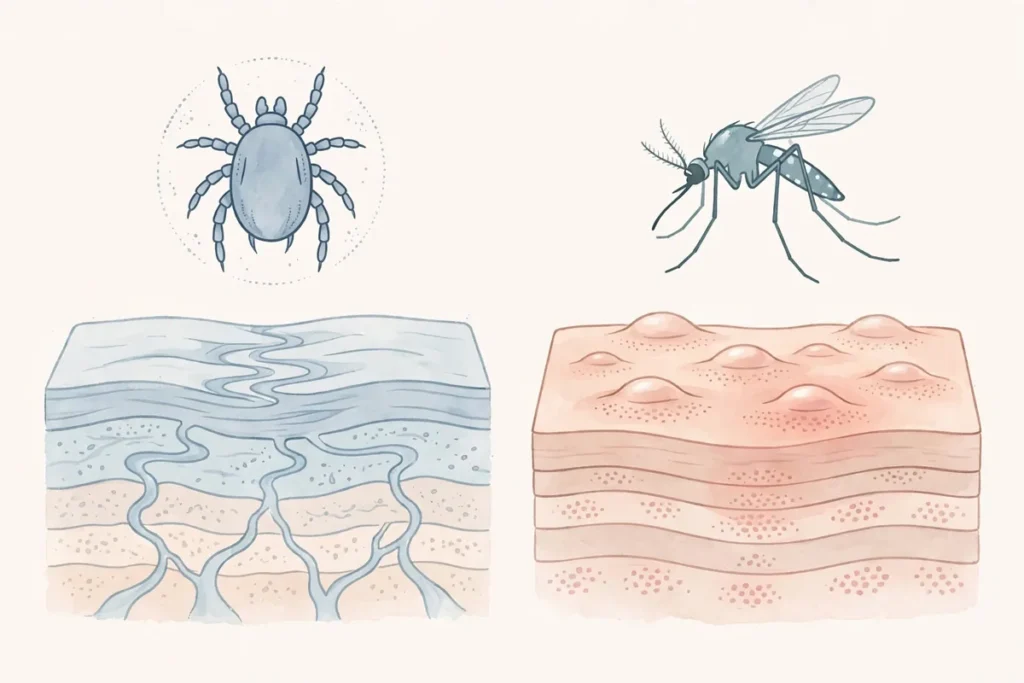
Intense itching in the pubic area is distressing, and the first question most people ask is what is causing it. Two parasites sit at the top of the suspect list: pubic lice and scabies. They share one major symptom, severe itch, but they are different organisms, they look different under close inspection, they spread differently, and they require different treatment. Sorting out pubic lice vs scabies correctly matters, because using the wrong treatment wastes time while the real infestation keeps spreading.
This article compares the two conditions in plain, stigma-free language. Genital itching is a common medical complaint with many possible causes, and having one of these parasites says nothing about a person’s character or hygiene. What it does require is accurate identification, because the treatments differ and close contacts often need to be managed too. Nothing here replaces a clinician’s diagnosis; both conditions are confirmed by finding the parasite or its signs, and a healthcare provider can do that quickly.
Pubic lice and scabies are frequently confused because their signature symptom is identical: itching that can be intense enough to disrupt sleep and daily life. Both are associated with close physical contact, both can involve the genital area, and both are common enough that sexual health clinics see them regularly. But the resemblance ends at the itch.
The practical stakes of getting it right are real. Pubic lice are diagnosed by finding the lice or their eggs on hair, and treatment targets the hair-bearing areas where they live. Scabies is diagnosed by finding burrow tracks or the mites themselves, and treatment must cover the whole body from the neck down because the mites live in the skin, not on the hair. Treat one like the other and the infestation continues. Making matters more complicated, both conditions can coexist with other skin problems, and scratching can create secondary skin changes that mask the original signs. A careful look, often with magnification, settles the question.
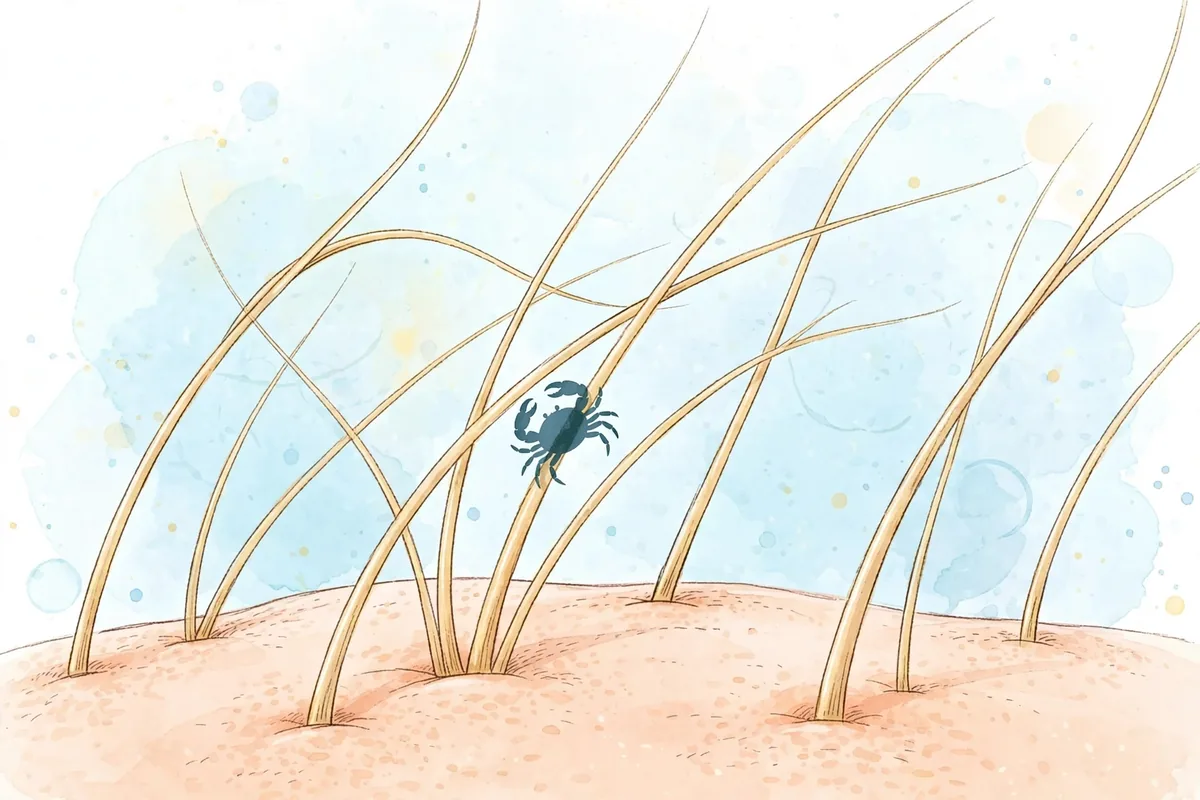
Pubic lice are tiny parasitic insects, scientifically known as Pthirus pubis (sometimes spelled Phthirus pubis), colloquially called “crabs.” Adults are roughly 1 to 2 millimeters long, about the size of a pinhead, with a wide, flat, crab-like body and large claw-like front legs that grip hair shafts. They are usually tan, gray, or brownish, and may look darker after feeding on blood. Unlike head lice, which move quickly through hair, pubic lice tend to stay put, often gripping more than one hair at a time, which can make them harder to spot at a glance.
Female lice lay eggs called nits, which are tiny oval capsules cemented firmly to hair shafts near the skin. They appear as small white or yellowish specks that, unlike dandruff or skin flakes, cannot be brushed or flicked off. Finding nits in the pubic area strongly suggests an infestation even when no crawling lice are visible. Because there may be only a few lice, a magnifying lens and bright light make inspection far more productive; without them, the lice are easy to miss.
As the name suggests, pubic lice most commonly infest coarse pubic hair, but they can also be found on other coarse body hair: the perianal area, armpits, beard, mustache, chest hair, and even eyebrows or eyelashes. They do not typically infest scalp hair. They feed on blood several times a day and can live only about one to two days away from a human host, which is why transmission usually requires close contact rather than casual environmental exposure.
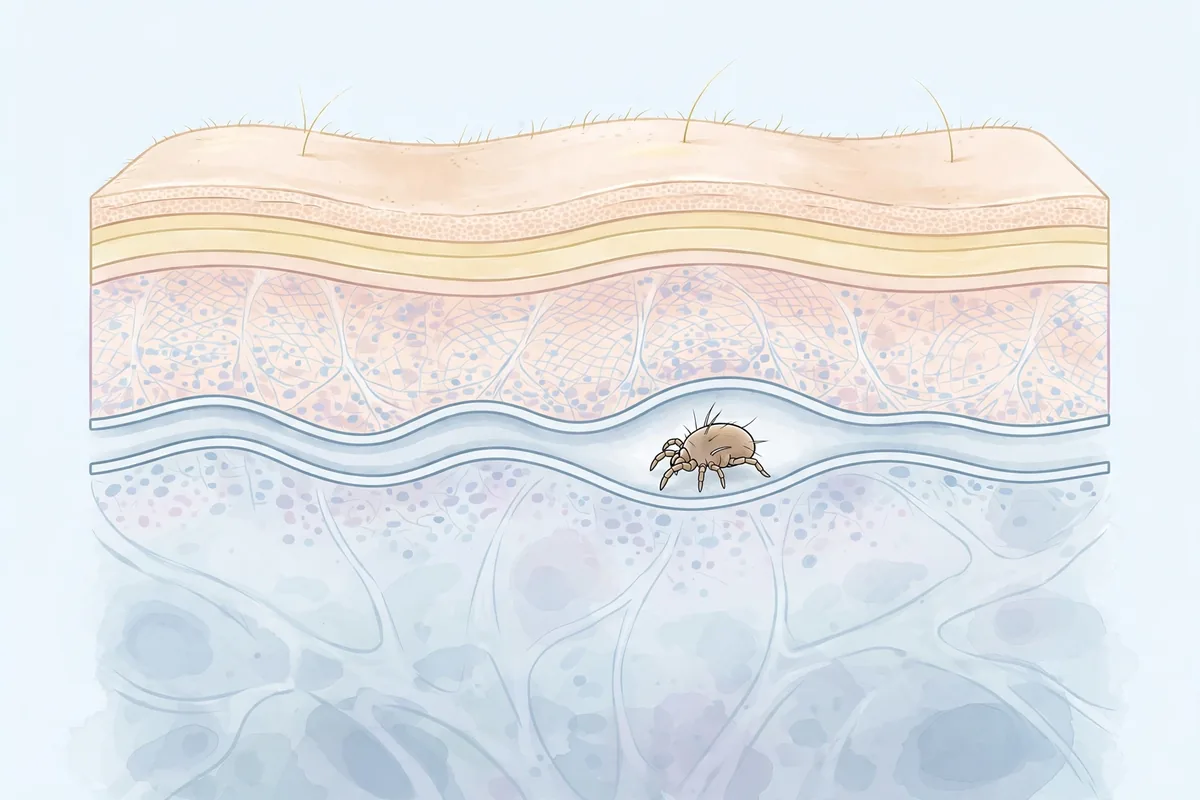
Scabies is caused by Sarcoptes scabiei, a microscopic mite, not an insect you can see with the naked eye. The female mite burrows into the upper layer of the skin to lay her eggs, and it is this burrowing, plus the allergic reaction to the mites, their eggs, and their waste, that drives the ferocious itch. You will never see a scabies mite crawling on the skin’s surface the way you might spot a pubic louse.
The most distinctive sign of scabies is the burrow itself: a thin, wavy, silvery or grayish line on the skin, sometimes just a few millimeters long, often with a tiny dark dot at one end where the mite sits. Burrows are most commonly found in the webs between the fingers, on the wrists, elbows, armpits, waistline, buttocks, and around the genitals. In men, scabies frequently causes intensely itchy bumps on the penis and scrotum. Unlike the visible insects of pubic lice, burrows require a trained eye, or a clinician with a dermatoscope, to confirm.
Scabies is not restricted to hairy areas. It favors skin folds and thin-skinned regions across the whole body, and in adults it typically spares the face and scalp. The itching of scabies is characteristically worse at night, a feature it shares with many itchy conditions but one that clinicians still ask about because it is so typical. The rash itself consists of small raised bumps, tiny blisters, and scratch marks, which can become crusted or infected from scratching.
| Feature | Pubic Lice (Crabs) | Scabies |
|---|---|---|
| Organism | Insect (Pthirus pubis), 1-2 mm, visible | Microscopic mite (Sarcoptes scabiei), not visible to naked eye |
| Signature sign | Lice and nits clinging to hair shafts | Thin burrow tracks in the skin |
| Location | Coarse hair: pubic, perianal, armpit, beard, eyelashes | Skin folds: finger webs, wrists, waist, genitals, buttocks |
| Itch pattern | Intense itch, often worse at night | Intense itch, characteristically worse at night |
| Other skin clues | Blue-gray spots (maculae caeruleae) where lice fed; dark specks in underwear | Silvery burrow lines; small bumps and blisters |
| How diagnosed | Finding a louse or nits on hair (magnifier helps) | Finding burrows; clinician may do a skin scraping |
| Off-host survival | About 1-2 days | About 2-3 days |
| Main spread route | Close physical/sexual contact; occasionally shared bedding or clothing | Prolonged skin-to-skin contact; also shared bedding/clothing |
| Treatment scope | Targeted to infested hair areas + decontaminating bedding | Whole body from neck down (mites live in skin, not hair) |
Pubic lice spread most often through sexual contact, and they are most common in adults. Less commonly, they can spread through close personal contact or through shared articles such as clothing, bed linens, or towels recently used by an infested person. One persistent myth deserves a clear correction: pubic lice are almost never spread by sitting on a toilet seat, because lice cannot survive long away from a warm body and their claws are not built to grip smooth surfaces. Anyone diagnosed with pubic lice should also be evaluated for other sexually transmitted infections, since the same contact that transmitted lice can transmit other infections, a standard recommendation from public health authorities, not a judgment.
Scabies spreads through prolonged skin-to-skin contact, the kind of sustained contact typical of sexual partners, household members, or caregivers. Brief contact like a handshake is unlikely to transmit it, but sharing a bed or wearing an infested person’s clothing can. Because the mites survive a couple of days off the body, bedding and clothing worn recently need decontamination. Scabies outbreaks are well known in settings where people live in close quarters, such as nursing facilities, though ordinary households see cases too.
Both conditions require thinking beyond the individual. Sexual partners from the recent past generally need evaluation and treatment for pubic lice, and household members and close contacts typically need treatment for scabies even if they are not yet itchy, the itch of scabies can take weeks to develop in a first infestation, so asymptomatic contacts can still be carrying mites. A clinician will advise exactly who should be treated and when; do not guess at this on your own.
Both conditions cause itching that ranges from annoying to severe, and both tend to be worse at night. In pubic lice, the itch results from an allergic reaction to louse saliva and usually develops within days to a few weeks of infestation. In scabies, the itch is driven by the immune system’s reaction to the mites and their burrowing, and in a first infestation it can take two to six weeks to appear, which means a person can be spreading scabies for weeks before feeling anything. In someone who has had scabies before, the itch can start within days.
This is where the two diverge most clearly. Pubic lice may cause small blue-gray spots on the skin where lice have been feeding (called maculae caeruleae), plus tiny dark specks in underwear that may be louse droppings. The lice and nits themselves are the main visible finding, clinging to hair. Scabies produces the thin burrow lines, scattered small bumps, tiny blisters, and the scratch marks and crusting that come from the intense itching. Around the genitals, scabies often causes firm, itchy nodules that can linger even after successful treatment.
Itch alone cannot distinguish the two, and neither can the fact that it is worse at night. The distinguishing features are structural: visible insects and eggs on hair point to lice; burrow lines in the skin point to scabies. If you cannot find either, that is information too, it means a clinician’s examination, possibly with magnification or a skin scraping, is the right next step rather than more self-inspection.
For pubic lice, diagnosis rests on finding a crab louse or nit on hair in the pubic region or elsewhere on the body. A clinician may use a magnifying lens or dermatoscope, and good lighting makes all the difference. For scabies, the clinician looks for burrow tracks and may take a skin scraping, gently scraping the top layer of skin from a burrow and examining it under a microscope for mites, eggs, or mite droppings. This is quick and only mildly uncomfortable.
Both conditions are easy to misidentify at home. Nits can be confused with dandruff or hair debris; burrows can be obscured by scratching; and the genital location makes thorough self-examination awkward. Add the fact that other conditions, eczema, contact dermatitis, folliculitis, can mimic either one, and the case for professional evaluation is strong. Our bite and sting clue checklist can help you organize what you are seeing (onset, pattern, spread) so you can describe it clearly at the appointment.
Pubic lice on a child’s eyelashes or pubic area can be a sign of sexual exposure and should prompt careful, sensitive medical evaluation. Scabies in its crusted form (sometimes called Norwegian scabies) causes thick, scaly skin with enormous numbers of mites and is highly contagious, it occurs most often in people with weakened immune systems or limited ability to scratch, and it needs urgent medical management. Neither situation should be handled at home.
Pubic lice are typically treated with topical products designed to kill lice and nits, applied according to the product’s directions, with a second application often needed about a week later to catch newly hatched lice. A clinician or pharmacist can recommend an appropriate product. Lice on the eyelashes need a different approach, plain petrolatum applied carefully to the lid margins is one option clinicians use, because standard lice products must never go near the eyes. Bedding, towels, and clothing used in the days before treatment should be machine-washed in hot water and dried on high heat, or sealed away from human contact for at least 72 hours, since lice die within a day or two off the body. Sexual partners need evaluation and treatment as well. If treatment does not seem to work, see a clinician rather than repeating applications endlessly, resistance and misdiagnosis are both possible.
Scabies treatment must cover the entire body from the neck down, because the mites live in the skin everywhere, not just where the itching is worst. Prescription topical treatments are applied to the whole body and left on for the directed number of hours, then washed off; a second application about a week later is commonly recommended. Everyone in the household and recent close contacts generally need treatment at the same time, even without symptoms, or reinfestation cycles continue indefinitely. Clothing, bedding, and towels used in the days before treatment need hot washing and high-heat drying. Itching often persists for two to four weeks after successful treatment as the skin heals and the allergic reaction settles, this lingering itch does not necessarily mean the treatment failed, but a clinician should confirm that.
Do not use pubic-lice products for scabies or scabies treatments for pubic lice without clinical direction, the application areas and regimens differ. Do not apply any pesticide product to broken, infected, or severely irritated skin without asking a clinician first. Do not shave the area thinking it will solve the problem; shaving irritates the skin, does not remove burrowing mites, and can worsen secondary infection. And do not delay care out of embarrassment, clinicians see these conditions routinely, treatment is straightforward, and waiting only extends the itch and the window for spreading it.

The single most effective prevention step for both conditions is treating all the right people at the same time. For pubic lice, that means recent sexual partners; for scabies, household members and close contacts. Staggering treatment, one person this week, another next month, is how infestations bounce back and forth for months.
Environmental steps support, but do not replace, treating people. Wash bedding, clothing, and towels used in the few days before treatment in hot water and dry on high heat; items that cannot be washed can be sealed in bags for several days until any lice or mites die off. Avoid sharing unwashed clothing, towels, and bedding during treatment. There is no need to fumigate the house or discard the mattress, both parasites need a human host and die within days without one. For general guidance on documenting bite and sting patterns while you sort out what is going on, the bite and sting warning signs guide covers when any skin reaction deserves prompt medical attention.
How can I tell if it is pubic lice or scabies at home?
Look for the structural clues: pubic lice means finding tiny crab-shaped insects or white-yellow nits cemented to hair shafts, a magnifying glass and bright light help enormously. Scabies means finding thin, wavy burrow lines in the skin, often between the fingers, on the wrists, or around the genitals. Itch alone, even itch that is worse at night, cannot distinguish them. If you cannot find either sign, see a clinician rather than guessing.
Can you get pubic lice or scabies from a toilet seat?
This is extremely unlikely for both. Pubic lice cannot live long away from a warm body and cannot grip smooth surfaces, so toilet-seat transmission would be extraordinarily rare. Scabies mites survive only a couple of days off the body and require prolonged skin-to-skin contact or shared bedding to spread. Both spread through close personal contact, not casual contact with bathroom fixtures.
Do sexual partners need treatment too?
Usually, yes, and this is one of the most important steps. For pubic lice, recent sexual partners should be evaluated and treated. For scabies, household members and close contacts generally need treatment at the same time even if they are not itchy, because the itch can take weeks to appear in a first infestation. Treating only one person while contacts go untreated is the most common reason infestations keep coming back.
Why am I still itchy weeks after scabies treatment?
Lingering itch for two to four weeks after treatment is common and does not necessarily mean the treatment failed. The itch of scabies is an allergic reaction, and the skin needs time to clear the dead mites and heal. However, persistent or worsening itch, new burrows, or no improvement at all should be rechecked by a clinician, treatment failure, reinfestation from an untreated contact, or a wrong initial diagnosis are all possible.
Can pubic lice infest the scalp or eyebrows?
Pubic lice prefer coarse body hair and do not typically infest scalp hair, but they can infest eyebrows, eyelashes, beard, mustache, armpits, and chest hair. Eyelash infestation needs special handling, standard lice products must never be used near the eyes, and clinicians may recommend carefully applied petrolatum instead. Any eyelash involvement should be managed with a clinician’s guidance.
Medically reviewed by Dr. Sarah Jones, MD.
This article is for informational purposes only and isn’t medical advice. If you’re worried about a bite or sting, talk to a healthcare professional.
Dr. Jones oversees StingHelp’s clinical verification process. Every guide is systematically evaluated against active Centers for Disease Control and Prevention (CDC), Environmental Protection Agency (EPA), and American Academy of Allergy, Asthma & Immunology (AAAAI) medical consensus standards to ensure symptom distinctions and care recommendations are clinically sound.
Explore physician-reviewed first-aid procedures, identification clues, and symptom comparisons for other common outdoor bites and stings.
Every school year, the same scene plays out in kitchens across the country: a parent parts a child's hair, spots white specks, and feels…
You wake up with itchy red marks, and the internet offers two suspects: bed bugs or eczema. The question of bed bug bites vs…
Your child wakes up covered in itchy red spots and the questions start immediately: is this chickenpox vs bug bites, an allergic reaction, or…