
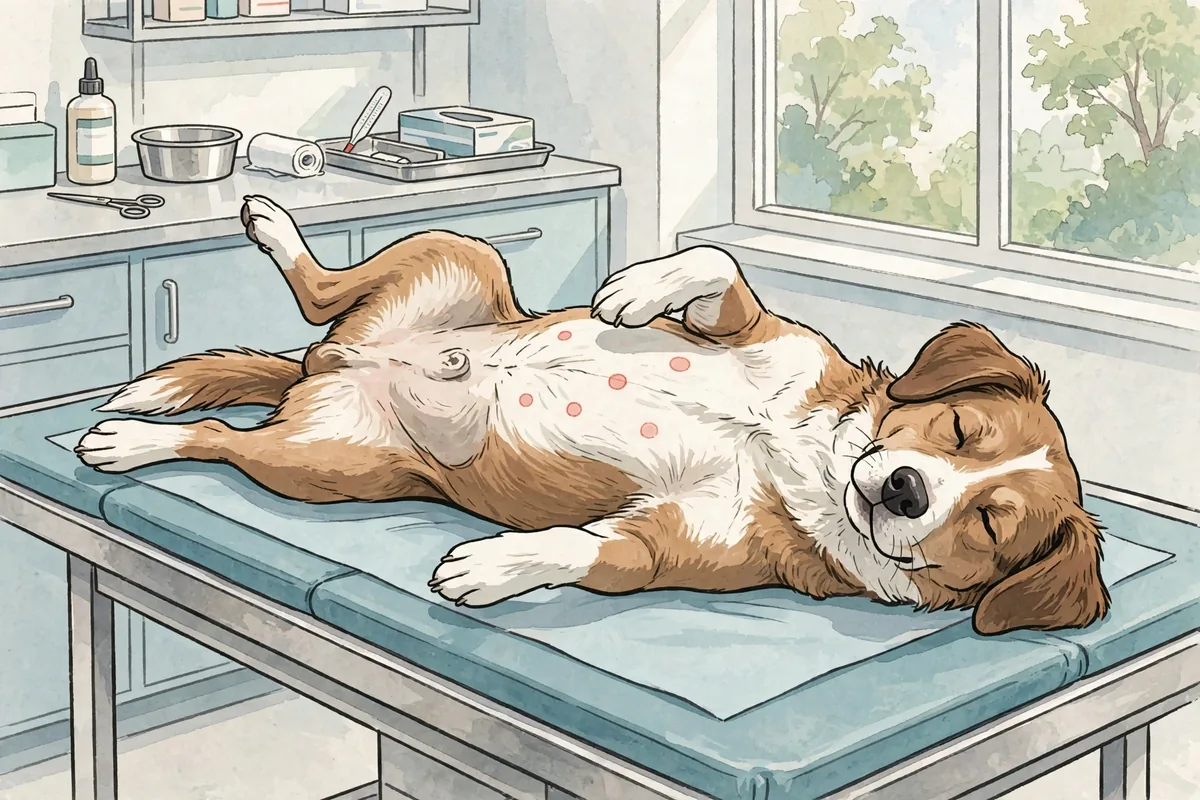
Spring arrives, the dog comes inside from the yard, rolls over — and the belly is covered in red rings that look like tiny targets. Your stomach drops: is that Lyme disease? Ringworm? Something worse? In most cases during black fly season, it is none of those. Black fly bites on dog belly treatment is usually simple home care, because these dramatic-looking marks are, in the words of many veterinarians, a condition that looks far worse than it feels. This guide shows you how to identify them, soothe them, and know when they need a vet.
What those red rings on the belly actually are #
Black flies — also called buffalo gnats — are small, hump-backed biting flies that breed in running water: streams, rivers, and creeks. In late spring and early summer, typically May through June (longer in wet years and in warmer regions), they emerge in swarms and feed during calm daytime hours. They are low flyers with a strong preference for the warm, dark, thin-skinned underside of animals, which is why dogs get hit on the belly, groin, and inner thighs rather than on the back.
The bite mark is distinctive. Each bite forms a bullseye or target: a pinpoint puncture at the center, a paler ring of swelling around it, and a vivid red outer rim where blood has spread under the skin. The marks are usually flat rather than raised, nickel-sized or smaller, and they arrive in clusters — black flies feed socially, so where you find one mark you typically find four or five. The redness comes from a small hemorrhage under the skin combined with the fly’s anticoagulant saliva, which keeps blood flowing while it feeds.
Here is the reassuring core fact: black fly bites on dogs are usually harmless and resolve on their own within days. Unlike ticks, black flies do not transmit diseases to dogs. The marks look alarming — owners regularly mistake them for the Lyme disease bullseye rash — but the two have nothing to do with each other. Tick bites on dogs do not produce target lesions at all, and black fly marks are a bite reaction, not a disease rash. If your dog is otherwise acting normally — eating, playing, comfortable — the correct response is calm home care and observation, not panic.
First aid: cleaning and soothing the bites #
Most black fly belly bites need nothing more than gentle care. Work through these steps once, then leave the area alone.
Clean the area. Wash the belly with lukewarm water and a mild, dog-safe soap, then rinse thoroughly and pat dry. This removes fly saliva residue, dirt, and any bacteria from the yard that could complicate healing. Do this once — repeated scrubbing irritates the skin and delays healing.
Cool it down. A cold compress (a damp cloth from the fridge, or frozen peas in a thin towel) held against the belly for five to ten minutes reduces itching and mild swelling. Most dogs tolerate this well if you keep it gentle and pair it with calm petting. Do not apply ice directly to the skin.
Discourage scratching and licking. This is the step that actually prevents complications. A dog that can reach the bites will worry them into open sores, and open sores invite bacterial infection — the main way a harmless bite becomes a vet visit. If your dog is fixated on the belly, a recovery suit, a light T-shirt, or an Elizabethan collar for a day or two breaks the cycle. Bitter-tasting sprays made for dogs can help for mild cases, but a physical barrier is more reliable.
Ask your vet before any product. Dog-safe hydrocortisone creams and vet-approved antihistamines are sometimes used for itchy bites, but product choice, strength, and whether they are appropriate at all depend on your dog, the number of bites, and what else is going on with the skin. A quick call to the clinic gets you an answer matched to your dog — and keeps you from applying a human product that is wrong for the situation. Never use essential oils, rubbing alcohol, or peroxide on the bites.
Track the healing. Take a photo on day one. The marks should fade noticeably within three to five days and be gone or nearly gone within a week or two. If they are spreading, multiplying after the swarm is over, or developing scabs, pus, or open sores, that is your signal to call the vet.
Black fly bites vs the look-alikes #
The bullseye pattern causes most of the confusion. Use this table to sort the possibilities.
| Feature | Black fly bites | Ringworm (fungal) | Tick bite reaction | Allergy / hot spot | |—|—|—|—|—| | Pattern | Clusters of flat red targets on belly/groin | Single or few expanding scaly rings, often with hair loss | Solitary bump, tick may still be attached | Red, moist, inflamed patch; dog chews it raw | | Timing | Appears after outdoor time in fly season (May-July) | Develops gradually over days to weeks | Appears where the tick fed | Any season; often recurrent | | Itch level | Mild to moderate | Mild | Mild | Intense — the dog cannot leave it alone | | Number | Multiple marks at once | Usually one or two lesions | One | One or a few, spreading by chewing | | Heals | Fades in days without treatment | Spreads without antifungal treatment | Resolves after tick removal | Worsens without addressing the cause |
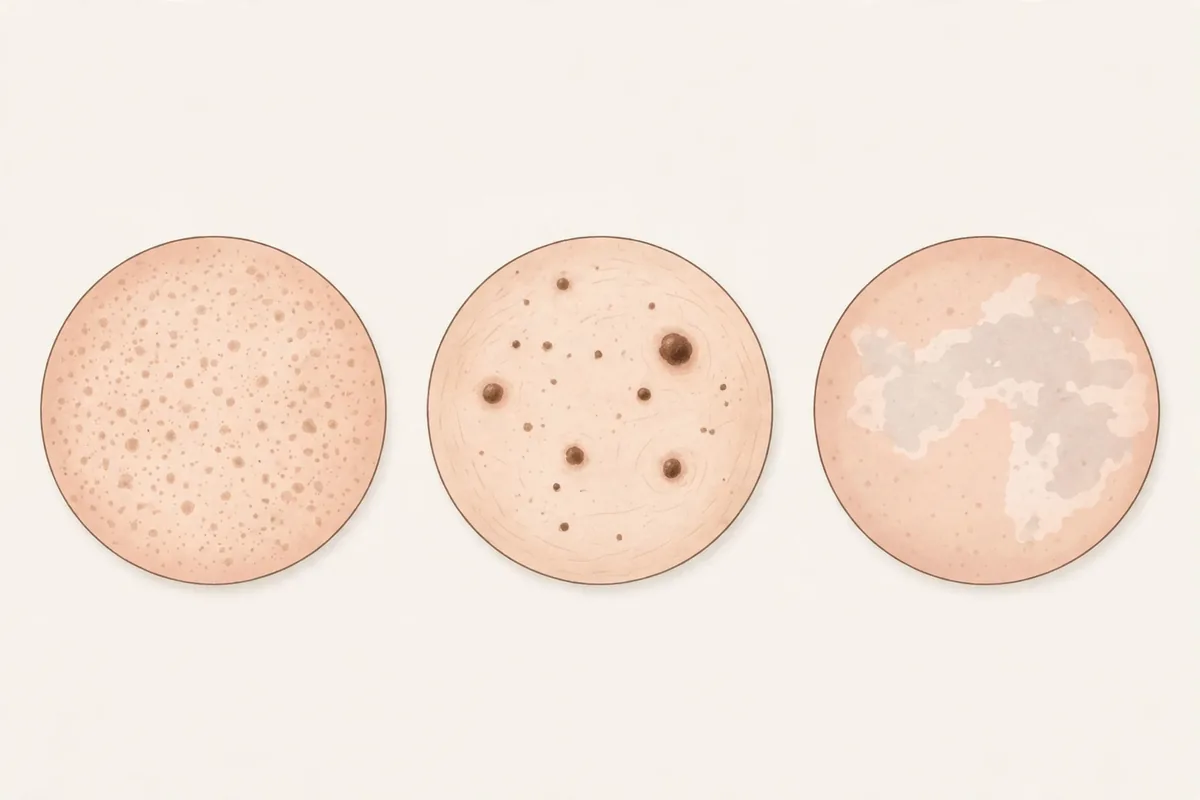
The single most useful differentiator is timing and clustering: a belly full of fresh red targets that appeared after a spring outing near water is black flies until proven otherwise. A solitary ring that grows over two weeks with flaking skin and hair loss points toward ringworm, which needs a vet diagnosis and antifungal treatment — do not guess between these two.
When the swarm hits hard: many bites at once #
A light peppering of marks is one thing; a dog that walked through a swarm cloud and came home with dozens of bites is another. Heavy exposures can cause more significant itching, restlessness, and in sensitive dogs, a stronger inflammatory response with raised, scabby bumps rather than flat marks.
For a heavily bitten dog, do the same cleaning and cooling routine, but be more generous with observation: watch for hives appearing on parts of the body that were not bitten (face, ears, flanks), facial swelling, or sudden vomiting — the signs of an allergic reaction to the bites. Allergic reactions to black fly bites are uncommon, but they do occur, and they need a vet promptly. Keep the dog calm and indoors for the rest of the day; excitement and heat increase blood flow to the skin and make itching worse.
Also check the ears. Black flies that miss the belly often hit the ear flaps, especially the thin edges — and ear bites bleed dramatically because flies slice rather than pierce the skin. For ear-specific care, see fly bites on dogs ears treatment. A little blood on the ear edges after fly season looks scary but usually stops on its own; persistent bleeding or swelling needs veterinary attention.
Preventing infection: the scratching and licking battle #
Infection, not the bites themselves, is what turns this into a medical problem. Bacteria live on every dog’s skin and in every yard; they only need an opening. The opening comes from the dog’s own teeth and claws.
Barriers beat willpower. A dog will not decide to leave the bites alone. Use a recovery suit or T-shirt for belly bites — it protects the area while letting air circulate, which matters because trapped moisture encourages bacterial growth. Change or wash the covering daily.
Keep nails short. Freshly trimmed nails do less damage during the scratching the barrier does not catch. This is a good moment for a nail trim anyway.
Watch for infection signs. Increasing redness spreading outward from the marks, warmth, swelling that grows after day two, yellow or green discharge, scabbing that thickens instead of flaking off, a foul smell, or a dog that becomes painful when the belly is touched — any of these means the bacteria won and the vet needs to see the dog. Skin infections from bites usually respond well to veterinary treatment when caught early; they become stubborn when ignored for a week.
Prevention for next black fly season #
You cannot eliminate black flies, but you can sharply reduce your dog’s exposure.
- Time outings wisely. Black flies feed during calm daytime hours and are worst near running water. Walk away from streams and rivers during peak season, and favor breezy, open areas — the flies struggle in wind.
- Rinse after outings. A quick belly rinse after walks near water washes off flies that are still crawling and looking for a spot to bite.
- Ask your vet about repellents. Dog-specific insect repellents exist, but human products — especially those with DEET — can be toxic to dogs. Never apply a human repellent to your dog. Your vet can recommend products formulated for canine use and tell you which are worth the money in your region.
- Yard tweaks. If your property borders a stream, keep the dog’s play area mowed, sunny, and away from the water’s edge during May and June. Fine-mesh screening on kennel runs helps for dogs that live outdoors.
- Know your season. Mark the calendar when the bites first appear each year. Black fly season is remarkably consistent locally, and knowing your window lets you shift walk routes for just those few weeks.
For context on how black fly bites differ from mosquito bites on people (useful when the whole family is getting bitten), see black fly bite vs mosquito bite.
Warning signs: when to seek care #

Call your vet or an emergency animal hospital immediately if your dog develops signs of an allergic reaction to the bites: hives spreading beyond the bitten area, facial swelling, swelling of the tongue or throat, sudden vomiting, difficulty breathing, or collapse. Allergic reactions are uncommon with black fly bites but can be dangerous — do not wait them out.
Call your regular vet promptly for: bite marks that are not clearly fading after a week, increasing redness, heat, swelling, pus, or foul odor (infection signs), a dog that is intensely itchy despite barriers, or bites on the ear edges that bleed repeatedly. For the classic presentation — flat red targets on the belly, dog comfortable, appearing in fly season — home care with monitoring is reasonable, and a call to the clinic for confirmation never hurts.
Frequently asked questions #
Are black fly bites on my dog’s belly contagious to people or other pets? #
No. The marks are a reaction to the bites, not an infection, and there is nothing to transmit. Your other pets and your family cannot “catch” them. The flies themselves will happily bite people too, though — if the dog is getting hit, check your own ankles and arms after the same outings.
Could these red rings be Lyme disease? #
This is the most common worry, and the answer is reassuring: no. The bullseye rash of Lyme disease is a human phenomenon; dogs with Lyme disease do not develop target rashes. Black fly target marks are bite reactions, and black flies do not transmit Lyme disease or any other disease to dogs. If your dog is limping with shifting-leg lameness and fever months after tick exposure, that is a different conversation for your vet — but the belly rings alone are not it.
How long do black fly bites last on dogs? #
Most fade visibly within three to five days and resolve within one to two weeks without any treatment. Marks that persist beyond two weeks, or that develop scabs, crusts, or hair loss, should be examined — at that point you may be looking at a secondary issue rather than the original bites.
My dog’s belly bites turned into scabs. Is that normal? #
Light scabbing on a few bites can happen, especially in dogs with sensitive skin or after a heavy swarm. What is not normal is thick, spreading crusts, oozing sores, or scabs that multiply days after the flies are gone — those suggest infection or an ongoing skin problem, and they need a vet’s eyes.
Do I need to treat my yard for black flies? #
Broad yard spraying is rarely effective against black flies because they breed in running water, often far from your property, and fly in from a distance. Focus on exposure reduction — timing, location, rinsing, vet-approved repellents — rather than chemical warfare on the lawn, which risks harming beneficial insects and your dog for little benefit.
Medical and editorial note #
This guide is general information for dog owners, not veterinary advice. Black fly bites are usually a cosmetic alarm rather than a medical emergency, but skin is a dog’s largest organ and infections do not always announce themselves politely. If the marks are not behaving the way this guide describes — not fading, spreading, oozing, or paired with a dog that feels unwell — let your veterinarian take a look.


