
Bug Bites on Babies and Toddlers: What You Can Safely Put on Them, by Age
Bug Bites on Babies and Toddlers: What You Can Safely Put on Them, by Age The fast answer: A bug bite on a baby…
The Short Answer The classic October parenting puzzle of kids playing in leaf piles bug bites goes like this: your child spends a happy afternoon buried in autumn leaves and…

The classic October parenting puzzle of kids playing in leaf piles bug bites goes like this: your child spends a happy afternoon buried in autumn leaves and wakes up covered in intensely itchy red bumps. The two usual culprits are chiggers, which live in the leaf litter and low vegetation, and oak itch mites, which rain down from oak trees into the leaves below. Both cause clusters of itchy welts that show up hours after play, and both are treatable at home with gentle, kid-safe measures. What you should not do is reach for harsh folk remedies, bleach, rubbing alcohol, or nail polish have no place on children’s skin and only make things worse. This guide covers how to tell the two apart, the post-play shower-and-change routine that prevents most bites from ever developing, safe itch relief for kids, and the signs that mean it is time to call the pediatrician.
Leaf piles are worth the small risk. Outdoor play in fall is good for children, and the goal here is not to ban the leaf pile but to manage it: a few simple habits before, during, and after play keep the fun high and the itching low. Think of this the way you think about sunscreen in summer, a routine layer of protection, not a reason to stay inside.
A leaf pile is, from a mite’s perspective, prime real estate. Understanding why helps you see the risk clearly without overreacting to it.
Oak itch mites (Pyemotes herfsi) live in oak trees, where they prey on the larvae of gall insects. In late summer and fall, large numbers of these nearly invisible mites drop from oak canopies, and they land exactly where children play: in the leaf litter below. They do not bite out of malice; like their close relative the straw itch mite, they bite people opportunistically when disturbed. A child who dives into a pile of oak leaves can collect dozens of bites in minutes without feeling a thing at the time. The welts appear later, which is why parents are often baffled about the source.
Chiggers are the larval stage of trombiculid mites, and leaf litter is classic chigger habitat. Fallen leaves hold moisture and create the humid, shaded ground layer where chigger larvae quest for hosts. Children are ideal targets: they sit directly in the litter, roll in it, and bury themselves in it, maximizing skin contact with the leaf layer where larvae wait. Unlike oak mites that fall from above, chiggers are already in the pile.
Both mites are most active in the warm months, but October concentrates the exposures. Trees are shedding heavily, so oak mite fallout peaks. Leaves are accumulating, so chigger habitat is at its deepest. Children are drawn to the biggest piles, which are usually under the biggest trees, exactly where both mites overlap. Add Halloween yard decorations, school fall festivals with leaf activities, and weekend yard work with kids “helping,” and you have a perfect storm of exposure. None of this means keeping kids away from leaves; it means timing your prevention to the season.

Telling the two apart helps you answer the inevitable “what bit me?” and fine-tune prevention, though treatment is similar for both. Here is how they typically present on children.
Oak itch mite bites often appear as surprisingly large red welts, sometimes with a small blister in the center, on exposed skin: the face, neck, arms, and any skin that was uncovered during play. Children who played in short sleeves may show a dramatic pattern of welts on the forearms. The itching is intense, and parents are often alarmed by how angry the bumps look. Bites can appear within hours of exposure. Because oak mites drop from above, bites may also appear on the scalp and shoulders, areas chiggers rarely reach.
Chigger bites show up as clusters of smaller red papules concentrated where clothing fits snugly: at sock lines, waistbands, underwear elastic, and behind the knees. On children, the classic presentation is a ring of itchy bumps around the ankles where socks met skin, plus clusters at the waistband. The itching often starts hours after play and intensifies over the next day or two. Chiggers migrate across the skin until clothing stops them, which is why the distribution follows clothing lines so neatly.
| Feature | Oak Itch Mite Bites | Chigger Bites |
|---|---|---|
| Source | Mites falling from oak trees into leaves | Larvae living in the leaf litter itself |
| Bite location | Exposed skin: face, neck, arms, shoulders, scalp | Clothing lines: ankles, waistband, underwear, behind knees |
| Bite appearance | Larger red welts, sometimes blistered centers | Smaller uniform red papules in clusters |
| Onset | Often within hours of play | Hours later, worsening over 24–48 hours |
| Worst when | Playing under or around oak trees | Sitting or burrowing deep in leaf litter |
In practice, children who played hard in a big oak-leaf pile often have both, which is fine. The treatment is the same, and the prevention routine below addresses both at once.
A few minutes of preparation dramatically reduces bite counts. None of this diminishes the fun; kids will not even notice most of it.
Dress for the pile. Long sleeves, long pants, and socks pulled up over pant cuffs create barriers that stop both mites. Tuck shirts into pants. This single step does more than any repellent, because both mites struggle to reach skin through fabric layers. Save the short sleeves for the playground and suit up for the leaf pile.
Use repellents correctly. For children old enough for repellents, an EPA-registered product containing DEET or picaridin, applied to exposed skin and clothing according to label directions, deters chiggers effectively. Read our guide to insect repellent safety for children for age-specific guidance, including which products are appropriate for young children and how to apply them safely. Do not use adult-strength formulations on small children, and never apply repellent to children’s hands, since hands go straight into mouths.
Choose the pile wisely. If you have a choice, steer play toward leaf piles away from directly under large oak trees, since oak mite fallout is heaviest in the drip zone beneath the canopy. Freshly raked piles are lower risk than piles that have sat damp for weeks, which have had time to develop rich chigger habitat. And keep play piles away from brushy, weedy edges where chigger populations are densest.
Tell children the plan in positive terms, not scary ones. “We wear our leaf-pile armor” (long sleeves and tucked pants) “and then we do the tickle-check shower after” turns prevention into part of the game. Kids who understand the routine cooperate with it. Kids who are simply forbidden from the pile will find one at a neighbor’s house without any protection at all.
This is the single most important section of this article. A prompt post-play routine prevents the majority of bites from ever developing, because it removes mites before they settle in and feed.
Step 1: Clothes off at the door. Have children change out of play clothes immediately after coming inside, before sitting on furniture or beds. Mites riding on clothing can transfer to upholstery and bedding, extending the exposure for hours.
Step 2: Hot wash. Put play clothes straight into the washing machine on hot water, then dry on high heat. This kills any mites in the fabric. Do not let leaf-pile clothes sit in the hamper for days, and do not shake them out indoors, which just redistributes whatever is on them.
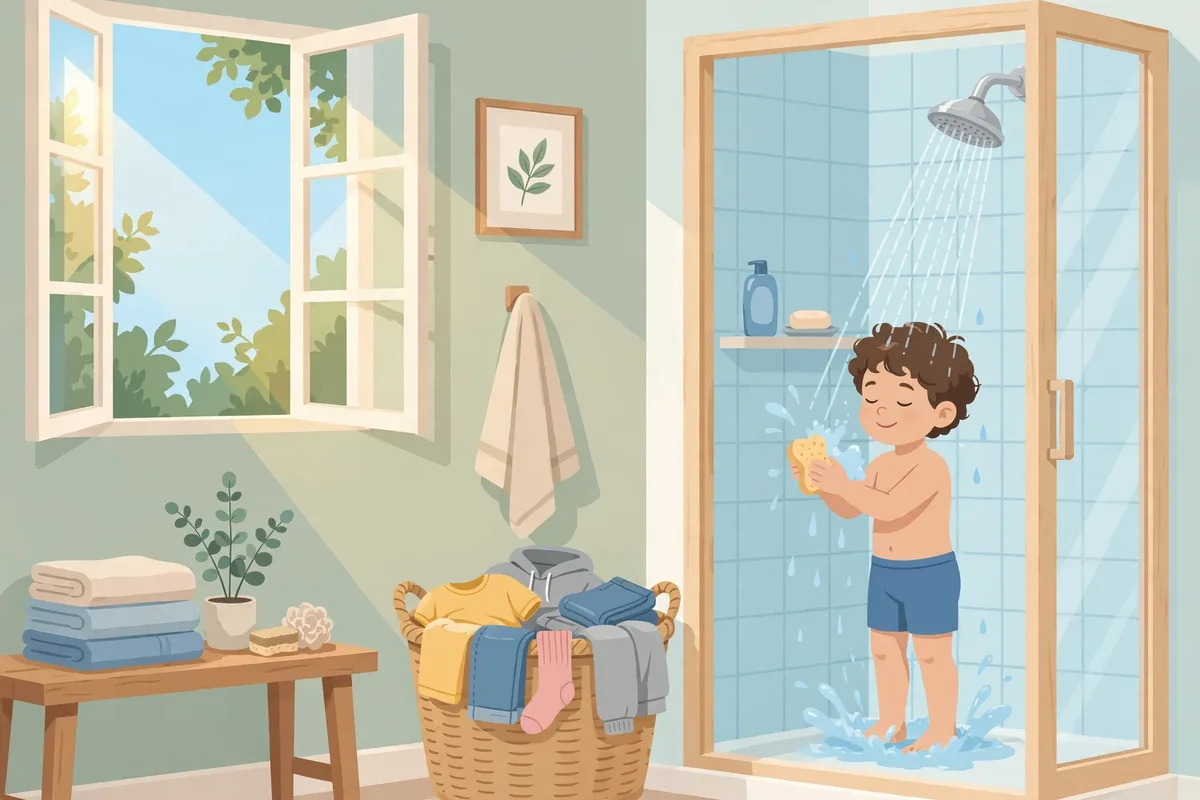
Step 3: Shower with soap. A thorough shower with soap and warm water washes away mites that have not yet attached or begun feeding. For chiggers especially, which may wander the skin for hours before settling, prompt showering genuinely interrupts the process. Make it routine: leaf pile, then shower, every time, the way pool time means a shower after.
Step 4: Check the usual spots. After the shower, take a quick look at the classic bite zones: ankles and sock lines, waistband area, behind the knees, armpits, and the groin area in young children. You are looking for the first small red bumps. Early detection lets you start itch relief before nighttime scratching begins, which is when most of the damage happens.
Neither oak mites nor chiggers burrow instantly or bond permanently on contact. There is a window, minutes to hours, during which they are on the skin but have not yet fed significantly. Showering and changing clothes exploits that window. Parents who make this routine automatic often report that the “mystery itch” seasons simply stop happening, not because the mites went away but because the exposure chain gets broken every time.
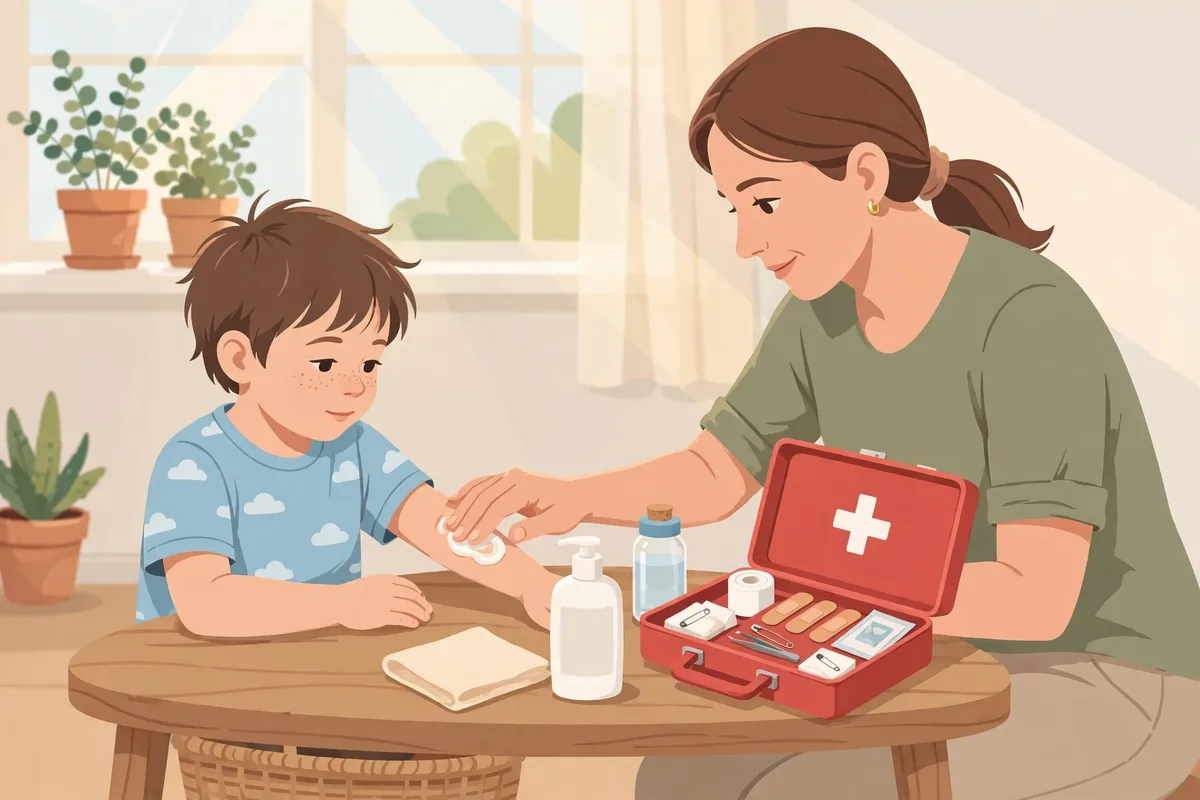
When bites do appear despite your best efforts, the goal is to control itching gently while the bumps resolve on their own over one to two weeks. Children’s skin is more sensitive than adults’, and children scratch more aggressively, so kid-specific care matters.
Start with cool and simple. A cool, damp cloth on the itchiest areas for 10 to 15 minutes soothes without any medication. An oatmeal bath, lukewarm, not hot, can calm widespread itching across many bites at once. Keep the child’s fingernails trimmed short and consider cotton gloves or socks on the hands at night for young children who scratch in their sleep.
Over-the-counter options, used carefully. Calamine lotion is a gentle first choice for spot treatment. A low-strength hydrocortisone cream (1 percent or less) can be used sparingly on children’s bites for short periods; follow package directions for the child’s age and do not use it on the face or in skin folds without pediatric guidance. An age-appropriate oral antihistamine at bedtime can reduce nighttime itching and help the child sleep; choose a product labeled for the child’s age and follow dosing exactly.
What never goes on children’s skin. Do not apply bleach, rubbing alcohol, nail polish, or other harsh household chemicals to bites. These folk remedies are based on the myth that mites burrow into skin, which neither oak mites nor chiggers do, and they burn and irritate children’s skin while doing nothing to the bite. Do not use high-potency steroid creams prescribed for someone else. Do not apply essential oils to children’s skin as bite treatments; many are irritants or sensitizers for young skin, and some are toxic if ingested by mouthing hands.
Itching leads to scratching, scratching breaks the skin, broken skin gets infected, and infected bites itch more. Breaking this cycle is the real treatment. Distraction helps enormously with children: the itch feels worse when a child is bored and focused on it. Cool compresses, covered bumps (a small bandage over the worst ones reduces both scratching access and the visual reminder), and consistent bedtime antihistamine use during the worst nights will get most families through the week until the bumps fade.
Most leaf-pile bites resolve at home, but children warrant a lower threshold for professional care than adults. Trust your instincts; you know your child’s normal.
Call your pediatrician if bites show signs of infection: increasing redness, warmth, swelling that worsens after the first couple of days, pus, red streaks spreading from bites, swollen glands, or fever. Children scratch bites open more readily than adults, so secondary bacterial infection, including impetigo and cellulitis, is the most common complication. Also call if itching is severe enough to disrupt sleep for more than a couple of nights despite home measures, if your child develops a widespread rash beyond the bite areas, or if bites are not improving after 10 to 14 days.
Seek urgent care or the emergency department if your child develops signs of a severe allergic reaction: difficulty breathing, swelling of the face, lips, or tongue, widespread hives, dizziness, or unusual drowsiness. Severe reactions to mite bites are uncommon, but any suspected anaphylaxis in a child is an emergency. Our anaphylaxis warning signs guide covers the full picture.
Mention the exposure when you call. Telling the pediatrician “she was playing in oak leaves yesterday and woke up covered in welts” gives the clinician an immediate, useful frame. Bring your phone photos of the bumps if you took any; progression photos help clinicians distinguish bite reactions from other rashes.
Tape this to the fridge for October and November, or save it on your phone for the leaf season.
Before play:
Right after play:
If bites appear:
Call the pediatrician for:
For general bite prevention strategies that apply year-round, our outdoor bite prevention checklist is a useful companion, and the chigger bite treatment guide goes deeper on chigger-specific care.
My child woke up covered in itchy bumps after playing in leaves. What bit them?
The most likely culprits in fall are oak itch mites, which drop from oak trees into leaf piles, and chiggers, which live in the leaf litter itself. Oak mite bites tend to be larger welts on exposed skin like the face, neck, and arms; chigger bites cluster as smaller bumps at clothing lines like sock tops and waistbands. Many children get both from one good leaf-pile session. Either way, the treatment is the same: gentle itch relief and watching for infection signs.
Are oak mite bites dangerous for children?
Oak mite bites are intensely itchy and can look alarming, with large red welts that worry parents, but they are not dangerous in themselves for most children. The mites do not transmit diseases to people in North America and do not infest the body or home. The main risks are secondary bacterial infection from scratching and, rarely, allergic reactions. Keep nails short, treat the itch, and call your pediatrician if you see infection signs or if your child has trouble breathing or facial swelling, which would be an emergency.
Should I keep my kids out of leaf piles entirely?
No. The developmental benefits of active outdoor play far outweigh a manageable bite risk, and the prevention routine in this article, protective clothing, repellent where age-appropriate, and the shower-and-change protocol afterward, reduces bites dramatically. Think of it like sun protection: you do not keep kids indoors all summer, you use sunscreen and shade. Leaf piles get the same treatment: dress for it, clean up after, and enjoy fall.
Can chiggers spread from my child to other family members?
No. Chiggers do not infest people the way lice do, and they do not spread from person to person. Each person’s bites come from their own contact with infested vegetation or leaf litter. If several family members are itching after the same yard day, each was exposed independently, not infected by the others. There is no need to isolate anyone or treat the whole family; just make sure everyone’s play clothes get hot-washed and everyone showers.
How long will the bites last, and when should I worry?
Most oak mite and chigger bites resolve within one to two weeks, with itching peaking in the first few days. Worry and call your pediatrician if: bites show infection signs (spreading redness, warmth, pus, red streaks, fever), itching prevents sleep for multiple nights despite treatment, a rash spreads well beyond the bite areas, or bumps are still worsening after 10 to 14 days. Take photos of the progression; they help the pediatrician assess what is happening.
Medically reviewed by Dr. Sarah Jones, MD.
This article is for informational purposes only and isn’t medical advice. If you’re worried about a bite or sting, talk to a healthcare professional.
Dr. Jones oversees StingHelp’s clinical verification process. Every guide is systematically evaluated against active Centers for Disease Control and Prevention (CDC), Environmental Protection Agency (EPA), and American Academy of Allergy, Asthma & Immunology (AAAAI) medical consensus standards to ensure symptom distinctions and care recommendations are clinically sound.
Explore physician-reviewed first-aid procedures, identification clues, and symptom comparisons for other common outdoor bites and stings.

Bug Bites on Babies and Toddlers: What You Can Safely Put on Them, by Age The fast answer: A bug bite on a baby…
Papular Urticaria: Why Your Child's Old Bug Bites Keep Flaring Up Like New Ones The fast answer: If your child keeps "getting bitten" in…

Your four-year-old comes home from forest school glowing — muddy boots, pine needles in the hair, stories about the fort they built. Then you…