It starts with a smell. Bed bug infestations sometimes give off a faint, sweet, musty odor, and plenty of frustrated people reach for the nearest spray bottle on the shelf. So the question comes up constantly: does Febreze kill bed bugs, or does it just make the room smell better while the bugs keep biting?
The honest answer is no. Febreze does not kill bed bugs in any way that matters. It is an odor eliminator, not an insecticide. Its active odor-trapping ingredient is a molecule called hydroxypropyl cyclodextrin, which is designed to capture odor molecules, not to poison insects. The product carries no EPA pesticide registration and its label makes no claim about killing bugs of any kind. A bug that is soaked directly in a heavy spray may die from being drenched in liquid, the same way a bug dropped in a glass of water would, but that is a far cry from controlling an infestation.
This article explains the chemistry behind Febreze, why viral spray-and-die videos are misleading, what the label actually says, and which methods genuinely work against bed bugs.
Why the Myth Looks So Convincing
Search the question online and you will find dramatic videos: someone sprays a bed bug with Febreze, the bug twitches, and within minutes it stops moving. Viewers conclude the product is a secret weapon. This is the most convincing part of the myth, and it deserves a fair explanation rather than a dismissal.
Almost any liquid sprayed directly onto a small insect can kill it. Soapy water, window cleaner, and even plain water in sufficient volume can drown or suffocate a bug by coating its body, blocking the tiny openings it breathes through, and disrupting the waxy layer on its shell. Bed bugs breathe through openings called spiracles along their abdomens, and a thorough soaking can shut those down. What the videos show is liquid suffocation, not insecticidal action. If the same bug had been misted with plain water from the same distance, the result would often look identical.
The second reason the myth spreads is that Febreze really does help with one bed-bug-adjacent problem: odor. A heavy infestation can produce a recognizable musty, sweet smell, and Febreze genuinely neutralizes odors. People spray it, the smell fades, and the room feels handled. The psychological relief is real even though the insects are untouched. That relief then gets misremembered as effectiveness.
Finally, some low-quality websites publish articles claiming a “study” showed bed bugs dying in a dish within ten minutes of being sprayed with Febreze. These are not published studies. They are content-farm pages with no methodology, no sample sizes, no controls, and no peer review. A dish demo with no control group cannot distinguish insecticidal action from drowning, and it says nothing about the 90 percent of an infestation hiding where spray never reaches.
What Febreze Actually Contains
Febreze publishes its ingredients openly, and reading them is the fastest way to settle the question. According to the manufacturer’s own ingredient listings, the product is built around a few functional groups.
The odor-trappers are hydroxypropyl cyclodextrin and diethylene glycol. Cyclodextrin is a ring-shaped molecule derived from starch that works like a tiny cage: odor molecules slip inside the ring and get locked away so your nose cannot detect them. This is odor chemistry, not insect toxicology. There is no known mechanism by which cyclodextrin harms insects.
The odor-neutralizers are sodium citrate and sodium maleate, which balance the pH of acidic odor compounds. The odor-magnets include a polyamine polymer that binds fatty cooking odors. Then there is fragrance, which gives the fresh scent, plus carriers and preservatives. Some formulations also contain ingredients like dimethicone.
What Is Missing From the Label
What you will not find on any Febreze label is an EPA registration number, an active insecticidal ingredient, or any claim about killing insects. In the United States, any product that claims to kill, repel, or control pests must be registered with the Environmental Protection Agency, and the label must state the pests it targets. Febreze has none of this because it was never formulated, tested, or registered as a pesticide. The company has never claimed otherwise. The gap between “I sprayed it and the bug died” and “this is a registered bed bug treatment” is the entire story of this myth.
Why Cyclodextrin Cannot Fight an Infestation

Even setting the label aside, the biology of a bed bug infestation defeats a product like Febreze at every level. Understanding this biology is what separates a contact-kill demo from real control.
Bed bugs are harborage insects. During the day they hide in narrow cracks and crevices: mattress seams, box spring joints, bed frame screw holes, behind baseboards, inside electrical outlets, and in the folds of upholstered furniture. They emerge at night, feed for a few minutes, and retreat. In a typical infestation, the bugs you can see represent a small fraction of the total population. A spray that only affects bugs it directly hits will always miss the hidden majority.
Then there are the eggs. Female bed bugs glue their eggs into seams and cracks, and the eggs are tiny, whitish, and tucked out of reach. No household spray that is not specifically formulated and tested as an ovicide can be counted on to kill them. Even the EPA-registered products used by professionals struggle with eggs, which is why proper treatment plans include follow-up visits timed to the egg hatch cycle.
Febreze also has no residual action. Once the mist dries, nothing remains that continues to affect insects. Real bed bug control relies on residual products that keep working for weeks on the surfaces bugs walk across, or on physical methods like heat and encasements that do not depend on the bug being present at the moment of application. A product that stops working the moment it dries cannot suppress a population that feeds at 3 a.m.
The Petri-Dish Trap: Contact Kill Is Not Control
The single most important concept in this whole debate is the difference between contact kill and population control. Contact kill means the product kills an insect it directly touches under test conditions. Population control means it reduces a real infestation in a real room. These are wildly different standards, and confusing them is how household myths survive.
Rutgers University’s entomology program tested this distinction directly. In their published fact sheet on cost-effective bed bug control methods, researchers direct-sprayed bed bugs with rubbing alcohol at 70 percent and 91 percent concentrations. Even under perfect laboratory conditions, with the bugs fully soaked, the sprays killed at most half of them. The same fact sheet reports that a disinfectant spray some people believed effective killed none of the bugs it hit: every single bed bug survived direct treatment. If dedicated solvents and disinfectants perform that poorly in a dish, an odor eliminator with no insecticidal ingredients cannot be expected to do better in a bedroom.
The Math of a Missed Majority
Consider what a dish demo leaves out. A moderate infestation can hold hundreds of bugs spread across dozens of harborages. Eggs hatch in about a week. If a spray kills every bug it touches but reaches only the 10 percent of the population that happens to be exposed, the infestation barely notices. The surviving 90 percent keeps feeding and breeding, and the eggs keep hatching. This is why entomologists insist on methods that reach harborages or that keep working after application. A product’s ability to kill a bug in a dish tells you almost nothing about its ability to end an infestation.
Household Sprays vs Proven Bed Bug Tools
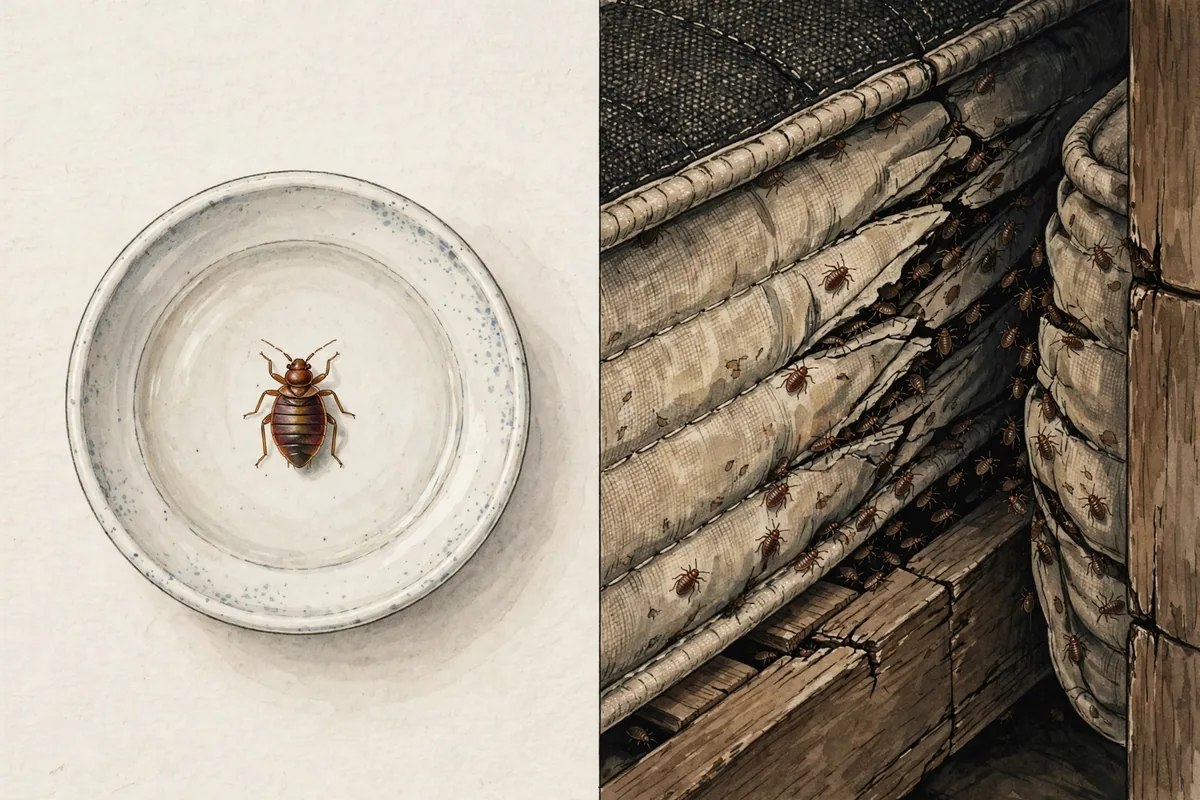
It helps to see Febreze in context against both other household liquids people try and the tools that actually work. The pattern is consistent: liquids that are not registered insecticides fail at the population level, while methods that reach harborages or provide residual action succeed.
| Method | Kills on direct contact? | Reaches hidden bugs? | Kills eggs? | Residual effect? | Verdict |
|---|---|---|---|---|---|
| Febreze | Maybe, by drowning | No | No evidence | None | Not a treatment |
| Rubbing alcohol (91%) | Up to ~50% in lab tests | No | Unreliable | None, plus fire hazard | Rutgers advises against |
| Vinegar (5%) | Too weak to rely on | No | No | None | Not a treatment |
| Bleach | Only if drenched | No | No | None, damages fabrics | Dangerous, impractical |
| Diatomaceous earth (food grade) | Slow, by dehydration | Yes, where dusted in cracks | Limited | Yes, stays active dry | Useful supplement |
| Dry steam (200F+) | Yes, instant | Yes, penetrates seams | Yes | None needed | Effective contact tool |
| Mattress encasements | Traps and starves | Covers the harborage | Traps emerging nymphs | Months to a year | Proven |
| Professional heat treatment | Yes, whole room | Yes, with monitoring | Yes | N/A | Most reliable single method |
| EPA-registered residual sprays | Yes | Yes, applied to harborages | Some labeled for eggs | Weeks | Core of pro treatment |
The table makes the real distinction visible. Everything in the top half requires the bug to be standing in the open at the moment of spraying. Everything in the bottom half either reaches into hiding places, keeps working after you leave, or both. If you are already dealing with bites and want to confirm the culprit, our guide on how long insect bites usually last can help you match symptoms to the pest before you spend money on treatments.
Why Spraying Random Liquids Can Backfire
There is a worse outcome than a spray simply failing: some sprays actively make infestations harder to eliminate. Bed bugs respond to irritating substances by scattering, abandoning a treated harborage and spreading into new cracks, adjacent rooms, and wall voids. Pest professionals call this budding or dispersal, and it turns a contained problem into a widespread one.
A strong-smelling, wet spray like Febreze is exactly the kind of disturbance that can trigger movement without delivering a lethal dose. The bugs that survive the misting relocate deeper into the structure, where they are harder for a professional to reach later. This is one reason entomologists warn against improvised chemical warfare: the do-it-yourself phase often determines whether the professional phase is a single visit or a months-long campaign.
There is also the resistance angle. Repeated exposure to sub-lethal doses of actual insecticides is how resistant bed bug populations develop. While Febreze contains no insecticide and therefore cannot drive resistance directly, the broader habit it represents, spraying whatever is under the sink, delays effective treatment while the population grows and hardens. Every week of delay is another breeding cycle. A female can lay hundreds of eggs in her lifetime, and those eggs hatch in roughly a week, so a “harmless” month of Febreze can easily double or triple the size of the problem.
What Actually Works Against Bed Bugs
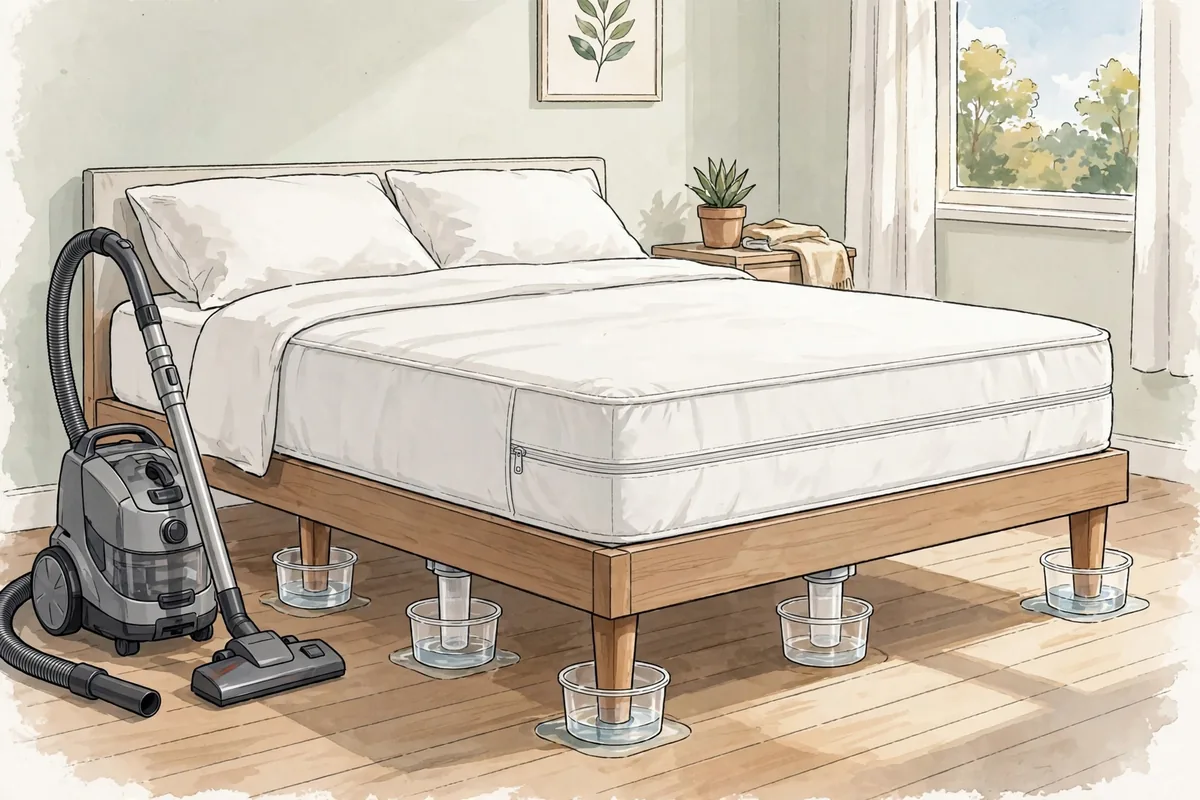
The good news is that bed bugs are beatable with methods backed by university research rather than internet folklore. An integrated approach works best because no single tactic reaches every bug and egg.
Start with the clothes dryer, which is the most underrated weapon in the house. Running bedding and clothing on high heat for at least 30 minutes kills all life stages, including eggs. This handles the items; the room itself needs a different approach.
Vacuum thoroughly and repeatedly, using a crevice tool along mattress seams, bed frame joints, and baseboards, then seal and discard the vacuum bag or empty the canister outside. Vacuuming physically removes bugs and eggs from harborages and gives you a visible measure of the population.
Encase the mattress and box spring in bed-bug-proof encasements. This traps bugs inside, where they eventually starve, and seals the seams so new bugs cannot hide there. Encasements must stay on for at least a year to outlast the bugs’ ability to survive without feeding.
Place interceptor traps under bed legs. These simple cups catch bugs traveling to and from the bed, reduce biting immediately, and serve as monitors that show whether the population is shrinking. If you are unsure whether your bites are even from bed bugs, our explainer on whether bed bugs can bite through clothes helps narrow the diagnosis.
For anything beyond a small, early infestation, hire a licensed pest management professional. Professionals combine EPA-registered residual products applied directly to harborages with follow-up visits timed to the egg cycle. Whole-room heat treatment, which raises the space to lethal temperatures with professional monitoring, is the most reliable single intervention available. For bite care while treatment proceeds, a cold compress can reduce itching and swelling.
When to See a Doctor for a Bug Bite
Bed bugs are not known to transmit diseases to humans, which is genuinely good news, but their bites can still create medical situations worth taking seriously.
Call 911 or seek emergency care if you develop signs of a severe allergic reaction: difficulty breathing, swelling of the lips, tongue, or throat, dizziness, fainting, or a widespread rash with a racing heartbeat. Severe reactions to bed bug bites are uncommon but documented.
See a doctor promptly if a bite shows signs of infection: increasing redness, warmth, swelling, or pain after the first day or two, red streaks spreading from the bite, pus or drainage, or fever. Scratching bites open invites bacteria, and cellulitis from a scratched bite needs medical treatment.
See a doctor if bites are extremely numerous, blistering, or not improving after a week or two of basic care, or if you cannot sleep because of the itching and need help managing symptoms. People with compromised immune systems, and parents of young children with widespread bites, should get professional guidance sooner rather than later. Our bite and sting warning signs checklist covers the full list of red flags.
Frequently Asked Questions
Will Febreze kill bed bugs on contact?
A bed bug soaked directly in a heavy spray of Febreze may die, but that is liquid suffocation, not insecticidal action. Plain water or soapy water would do the same. Contact kill in a dish has no bearing on controlling an infestation, since the vast majority of bugs and all of the eggs are hidden where spray never reaches.
Is Febreze registered as a pesticide?
No. Febreze carries no EPA pesticide registration and its label makes no claim about killing, repelling, or controlling insects. Its active odor-fighting ingredient is hydroxypropyl cyclodextrin, an odor-trapping molecule with no known insecticidal mechanism.
Can I use Febreze to make my mattress smell better during an infestation?
You can use it for odor, but understand its limits. Masking the musty smell of an infestation can actually work against you by reducing the urgency to get real treatment. Treat the odor as a reminder to act, not as progress.
What about the videos showing bed bugs dying after being sprayed?
Those videos demonstrate what happens when any small insect is drenched in liquid. They do not show a controlled test, they do not address hidden bugs or eggs, and they do not show what the room looks like a month later. Rutgers researchers found that even rubbing alcohol, a far harsher liquid, killed at most half of directly sprayed bed bugs in lab conditions.
What is the first thing I should do instead of spraying household products?
Confirm the pest, then start with heat and physical removal: run bedding through a hot dryer for 30 minutes, vacuum seams and crevices thoroughly, and put interceptor traps under the bed legs. If bites continue after a week or two of these measures, call a licensed pest professional rather than escalating to stronger household chemicals.
Medically reviewed by Dr. Sarah Jones, MD.
This article is for informational purposes only and isn’t medical advice. If you’re worried about a bite or sting, talk to a healthcare professional.