The fall wardrobe swap is the riskiest spider moment most households ever face. Summer clothes go into boxes, winter coats come out of closets, boots emerge from the garage, and somewhere in that shuffle a shy brown spider may be sheltering in a sleeve or a boot toe. The scenario of brown recluse spiders in stored winter clothes fall bites is real enough that extension entomologists in the South and Midwest give the same advice every October: shake everything out before you wear it.
The reassuring part is that brown recluses do not hunt people. Nearly every bite is a defensive accident, and a simple shake-out habit breaks the entire chain of events. This guide explains how to identify the spider, the exact clothing and storage protocol that prevents bites, what first aid looks like, and which signs mean you should call a doctor rather than wait.
Why Fall Clothing Storage Is the Exposure Moment
Brown recluse spiders are reclusive by nature. They are nocturnal hunters that spend daylight hours in undisturbed places: cardboard boxes, closets, basements, attics, woodpiles, and storage areas. They do not spin messy catching webs like widows; they build small silk retreats low to the ground and wait.
The problem is that human behavior hands them perfect shelter twice a year. A coat hangs in a dark closet from March to November. Boots sit in a garage all summer. Blankets fold into attic boxes. To a brown recluse, a stored sweater is a dry, dark retreat that nobody disturbs for months. When you pull that sweater on in October, a spider resting inside is suddenly pressed between fabric and skin, and the bite that follows is pure self-defense.
Texas A&M AgriLife entomologists describe these bites as accidents, not attacks. The spider cannot simply decide to bite; its fangs need counter-pressure, which is exactly what clothing pressed against skin provides. That is why stored winter clothes, and not open rooms, produce most of the encounters people worry about.
How to Identify a Brown Recluse
Misidentification is the norm with this spider, and it runs in both directions. People far outside its range blame it for mystery bites, while people inside its range miss actual specimens. The brown recluse lives mainly in the Midwest and Southeast, roughly from Texas and Oklahoma across to the Carolinas and north into southern Illinois, Indiana, and Ohio. If you live in the Pacific Northwest, New England, or the desert Southwest, a suspected brown recluse is almost certainly something else.
Two physical marks matter more than color:
- The violin marking. A dark brown violin shape sits on the spider’s back, with the neck of the violin pointing toward the rear of the abdomen. Many harmless brown spiders have vaguely similar patterns, so this mark alone is not proof.
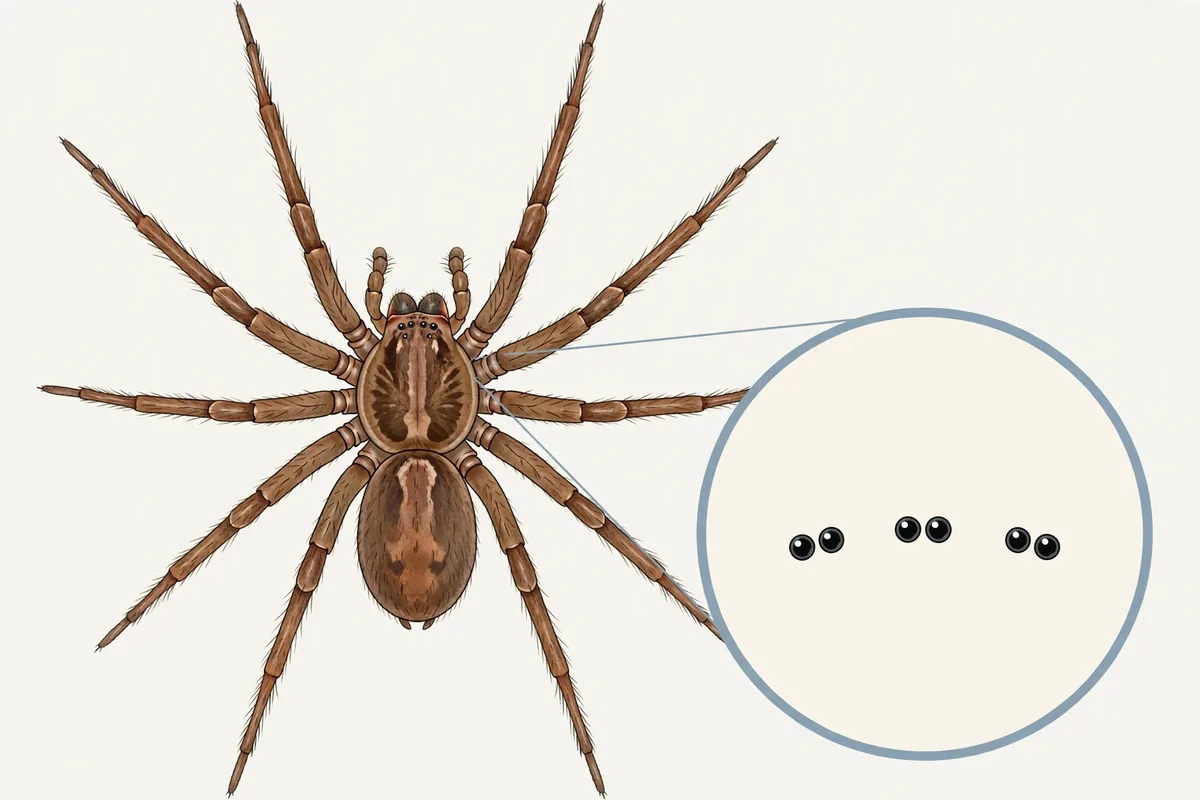
- The eye pattern. Brown recluses have six eyes arranged in three pairs, unlike the eight eyes of most spiders. This is the feature entomologists trust most, though it requires magnification to check.
Adults are about the size of a quarter including the legs, uniformly tan to dark brown, with no bands, stripes, or spines on the legs. Never handle a spider to check these marks. If you find one indoors, the safe move is to catch it in a sealed jar for a pest professional or extension office to identify, using a cup and stiff paper, never your fingers.
| Feature | Brown Recluse | Wolf Spider | Brown House Spider |
|---|---|---|---|
| Body size (with legs) | About quarter-sized | Often larger, up to 2 inches | Smaller, pea-sized body |
| Markings | Violin on back, plain legs | Striped or mottled, robust legs | Mottled abdomen, no violin |
| Eyes | 6 in 3 pairs | 8, two very large | 8 in two rows |
| Webs | Small silk retreat, no catching web | None, active hunter | Messy cobwebs in corners |
| Behavior when found | Freezes, then flees | Runs fast, may carry young | Retreats into web |
The Fall Shake-Out Protocol
This is the single habit that prevents nearly all clothing-related bites, and it comes directly from extension and pest-management guidance.
Shake Every Stored Garment
Take each piece of stored clothing outside or over a bathtub and shake it hard, turning sleeves and legs inside out. Shake blankets, linens, and towels the same way. University of California spider researcher guidance adds a practical detail: if you left clothes on the floor overnight, ball them up and shake them before putting anything on.
Use the Dryer as Backup
For clothes that have been in storage all summer, Texas A&M entomologists recommend putting them in the dryer on high heat for about 45 minutes before wearing them. The heat drives out or kills any sheltering spiders. This is the same logic that makes a hot dryer the standard response to many stored-fabric pests.
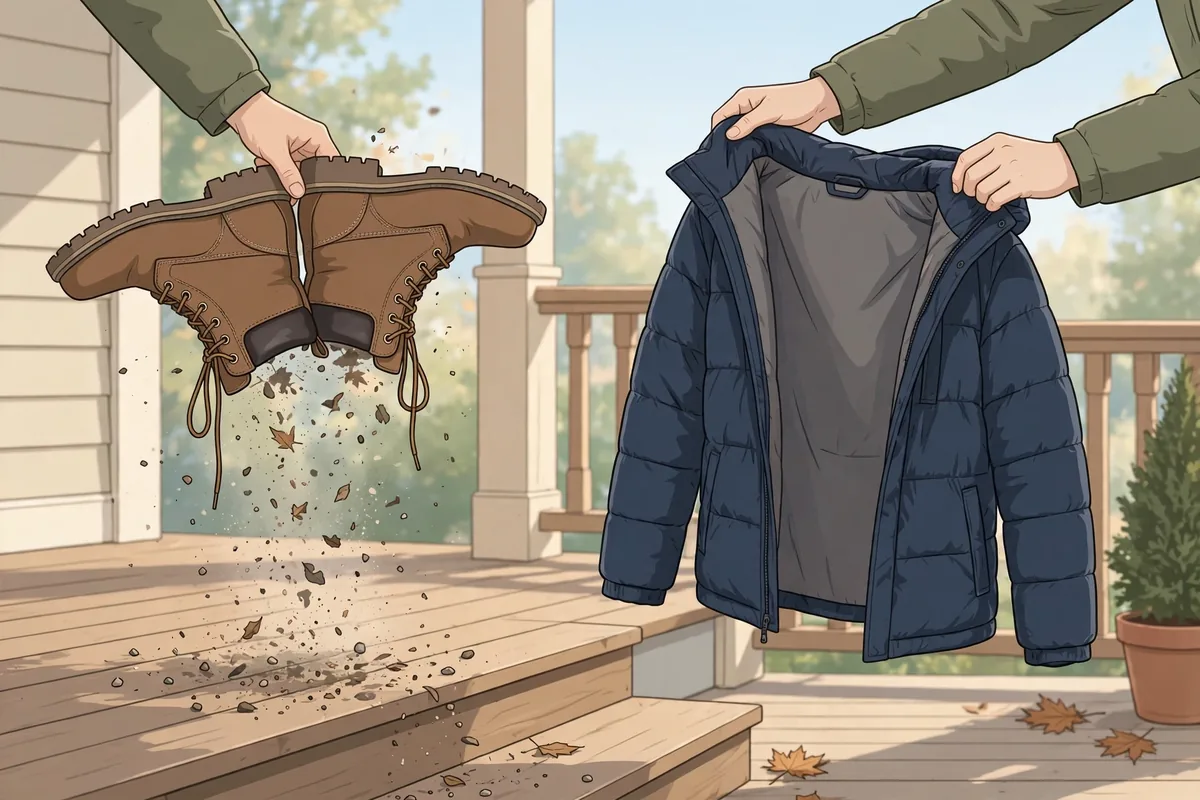
Check Shoes and Boots Every Time
Shoes that sat in a closet or garage are prime spider real estate. Turn each shoe or boot upside down and bang it hard against a solid surface before putting it on. Shine a flashlight into boots to check the toe box rather than feeling inside with your fingers, which is exactly how a bite happens.
Gloves Before Storage Boxes
When you pull boxes out of the attic, basement, or garage, wear leather work gloves first. Brown recluses favor the space under folded cardboard flaps, and gloves protect against the press of a finger onto a hidden spider. Check the gloves themselves before putting them on. Pest professionals also suggest storing seasonal clothes in sealed plastic containers rather than cardboard boxes, since spiders favor cardboard and cannot chew through hard plastic.
Storage Habits That Keep Spiders Out
The shake-out protocol handles the moment of risk; storage habits shrink the risk over time.
- Elevate and separate. Store boxes at least eight inches off the ground and eight inches away from walls, a spacing spider researchers specifically recommend.
- Declutter the hot zones. Basements, attics, and garages full of cardboard, firewood, and stacked items are brown recluse habitat. Reducing clutter removes the retreats they prefer.
- Keep clothes off the floor. Do not let laundry sit in hampers or on bedroom floors, especially overnight. Pest-management guidance explicitly warns against this.
- Seal the building. Caulk cracks around the foundation, fix door sweeps, and screen vents to reduce the spiders wandering in from outside.
- Pull beds from walls. Recluses travel along baseboards, so moving beds a few inches from the wall and keeping bedding off the floor removes the most common sleeping-hour encounter.
If you find multiple brown recluses in the house, that suggests an established population, and extension sources recommend a licensed pest professional for inspection and treatment rather than a DIY campaign. Sticky traps along baseboards can confirm how many you are dealing with before you call.
First Aid for a Suspected Brown Recluse Bite
Most suspected recluse bites turn out to be something else entirely, including bacterial skin infections, which is why medical guidance starts with documentation rather than panic.
Document and Clean
Photograph the area so you can track changes over the coming days. Wash the bite with soap and water, then apply a cold compress for 10 to 15 minutes at a time to reduce swelling. Avoid cutting the skin, applying suction devices, or using home chemical remedies; these cause harm without helping and are specifically discouraged by poison and extension sources. The brown recluse bite treatment guide walks through the standard first-aid sequence in more detail.
Ease Pain and Itching Without Guessing
A cool compress is the safest first step for pain and swelling. Some people use over-the-counter antihistamines for itching, but since evidence specific to spider bites is limited, ask a pharmacist about options that fit your situation and other medications. Do not apply prescription creams or take leftover antibiotics; bacterial infection is a real concern with any bite, but it needs a clinician’s judgment.
Capture the Spider Safely, If Possible
If you can trap the spider in a sealed jar using a cup and stiff card, do so, because positive identification changes everything. Do not chase it, crush it beyond recognition, or handle it. Bring the intact specimen to urgent care or your doctor’s office; an identified spider lets the clinician stop guessing. General spider-bite guidance at spider bites explains why identification matters so much for these cases.
When to See a Doctor for a Spider Bite

Brown recluse bites deserve prompt medical evaluation more than most spider bites because of the small chance of tissue damage. Go to urgent care or call your doctor if you notice:
- A bite that becomes increasingly painful over several hours, or pain that feels out of proportion to a small mark
- A pale, bluish, or purplish center developing inside a red ring, the classic color change clinicians watch for
- Blistering, an open sore, or blackened skin at the bite site
- Spreading redness, warmth, swelling, or red streaks, which suggest bacterial infection
- Fever, chills, nausea, or body aches developing after the bite
- Any bite on a child, an older adult, or a person with diabetes or a weakened immune system, since these groups face higher complication risk
The venom can take hours to declare itself and wounds can take weeks to heal, so a same-day visit for a convincing suspected recluse bite is reasonable even if symptoms still look mild. Bring the spider if you captured one safely.
Frequently Asked Questions
Are brown recluse spiders aggressive?
No. They are famously shy and bite only when trapped against skin, such as inside clothing, shoes, or bedding. They do not chase people or drop from ceilings to attack.
Can a brown recluse bite through clothing?
Bites typically happen when the spider is already inside the clothing and gets pressed against skin. The bite occurs because fabric and skin together provide the counter-pressure the fangs need, which is why shaking out stored clothes prevents it.
How do I know if a bite is really from a brown recluse?
Honestly, most people cannot know. Dermatologists note that the majority of wounds blamed on brown recluses are other conditions, especially skin infections. The bite is only convincing if the spider was seen and identified, the person lives in the spider’s range, and the wound follows the known pattern. When in doubt, treat it as a wound that needs medical evaluation rather than a confirmed spider bite.
Does the 45-minute dryer method really work?
Texas A&M entomologists recommend high heat in the dryer for about 45 minutes for stored seasonal clothes. The heat drives spiders out of garments or kills them, making it a reliable backup when shaking alone does not feel like enough.
Should I spray my closet for brown recluses?
Sealing, decluttering, sticky-trap monitoring, and proper storage do more than random spraying, and spraying without knowing where the spiders are can scatter them. If traps show an established indoor population, a licensed pest professional is the safer route.
Medically reviewed by Dr. Sarah Jones, MD.
This article is for informational purposes only and isn’t medical advice. If you’re worried about a bite or sting, talk to a healthcare professional.