
Yellowjacket Ground Nests & Mowing: Sting Attack Guide
The mower passes over a bare patch of lawn, and suddenly the air fills with angry yellow-and-black insects. Your legs burn with stings before…
The Answer Is No, and That Is Only Half the Story Homeowners hang mothballs from eaves, scatter them around patios, and tuck them into garden beds every summer, convinced the…
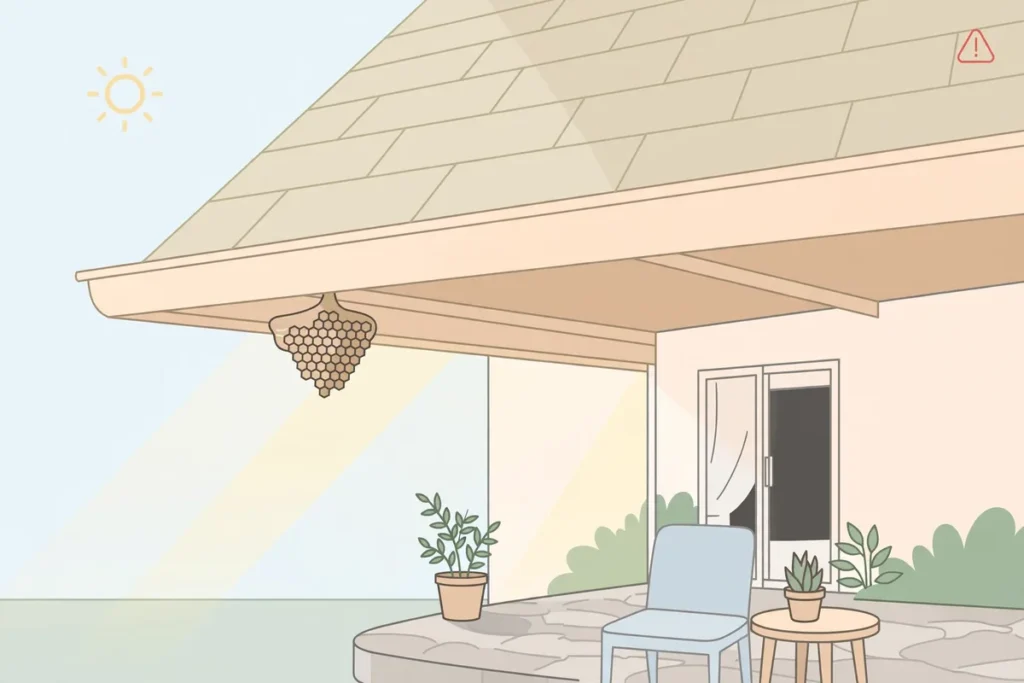
Homeowners hang mothballs from eaves, scatter them around patios, and tuck them into garden beds every summer, convinced the strong fumes keep wasps away. If you are asking do mothballs repel wasps, the answer is a firm no: there is no research showing that mothballs repel or kill wasps, and outdoors the fumes simply blow away. But the more important answer is that using mothballs this way is illegal. Mothballs are registered pesticides, and federal law requires you to use them exactly as the label directs, which means only inside sealed containers against clothes moths and fabric pests. Hanging them outside to repel wasps violates that law, and it puts children and pets at risk of poisoning.
This article explains why the folk remedy persists, why it cannot work, the legal and health consequences of trying it anyway, and what actually keeps wasps away from your home.
Mothballs smell powerfully of chemicals, and strong smells feel like they should repel insects. The active ingredients are naphthalene, paradichlorobenzene, or camphor, all of which slowly turn from solid to vapor at room temperature. Inside a sealed garment bag, those fumes build up to concentrations that kill clothes moths, their larvae, and their eggs. That is the entire registered purpose of the product.
The folk leap is that if fumes kill moths in a closet, they must repel wasps on a patio. You see this logic extended to squirrels, snakes, mice, raccoons, and just about any backyard nuisance. State extension specialists and pesticide regulators have a name for these uses: folklore and myth. A New Jersey Department of Environmental Protection enforcement alert on mothball misuse states plainly that using mothballs to repel animals, insects, or reptiles from structures is an illegal and dangerous use. The products are not designed, tested, or labeled for any of it.
The smell is real, but smell alone is not pest control. Wasps are not clothes moths, and an open patio is not a sealed garment bag.
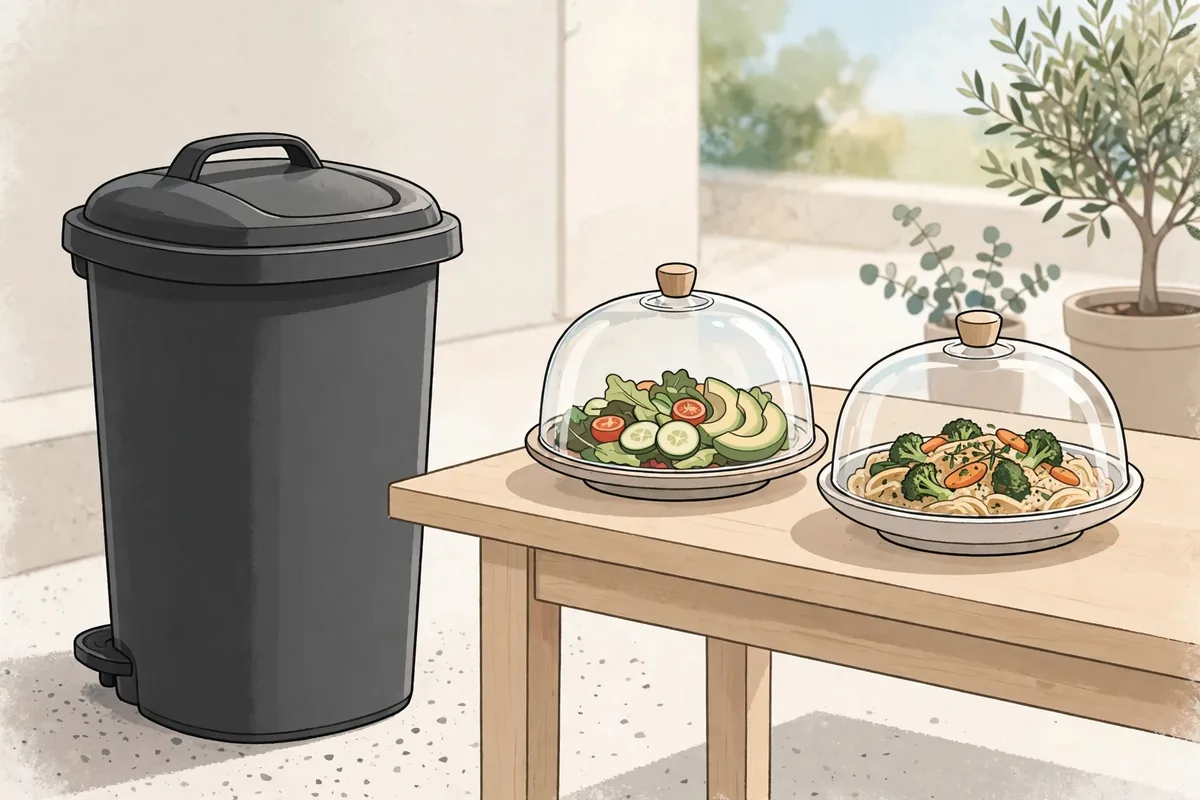
For a repellent to work, the active ingredient has to reach the pest at a meaningful concentration and the pest has to actually avoid it. Mothballs fail on both counts outdoors.
First, naphthalene and paradichlorobenzene vapors dissipate rapidly in open air. The whole mechanism of a mothball depends on confinement: the label instructs you to place them in an airtight container so fumes accumulate. Hung under an eave or scattered on a patio, the vapor concentration never gets close to the levels inside a sealed bag. The wind carries it off, and the wasps never encounter anything but a faint chemical smell.
Second, no published research demonstrates that these fumes deter wasps, hornets, or yellowjackets. Wasps navigate by sight, scent cues from food, and colony pheromones. A vague chemical odor in the air does not register as a threat to them. Pest control professionals consistently report finding active wasp nests within feet of mothballs that homeowners placed as deterrents, which is exactly what you would expect from a remedy with no evidence behind it.
The danger of a remedy that does nothing is the false sense of security it creates. A family that believes the eave is protected stops looking for nests, and the nest grows undisturbed until someone gets stung.
This is the part many homeowners do not know, and it is stated as plainly as law gets.
Mothballs are pesticides regulated by the Environmental Protection Agency. Under the Federal Insecticide, Fungicide, and Rodenticide Act (FIFRA), it is a violation of federal law to use a pesticide in a manner inconsistent with its labeling. The phrase regulators use is simple: the label is the law. Mothball labels permit use only in sealed containers against clothes moths, their eggs and larvae, and sometimes carpet beetles. Every other use, including scattering them outdoors or hanging them to repel wasps, is off-label and therefore illegal.
State agencies enforce this. The New Jersey DEP’s mothball enforcement alert calls out exactly these DIY uses and notes that its Bureau of Pesticide Compliance and Enforcement actively educates and pursues violators. The EPA itself lists illegal naphthalene moth-repellent products among the common illegal pesticide products it takes enforcement action against. Penalties under FIFRA can include fines running into the thousands of dollars per violation, with steeper consequences when misuse causes environmental contamination or harms people.
Oregon State University extension puts it bluntly: people often use mothballs in inappropriate sites and against incorrect pests, including in attics, crawl spaces, gardens, trash cans, and vehicles, and any such use is illegal and can be harmful to human health. If a neighbor reports the smell, or if a child or pet is poisoned, “I saw it on the internet” is not a defense.
Illegality aside, off-label mothball use is genuinely dangerous, and children and pets pay the price.
Naphthalene and paradichlorobenzene are poisons. Ingestion, inhalation of concentrated fumes, or prolonged skin contact can cause nausea, vomiting, abdominal pain, confusion, and in serious cases hemolytic anemia (destruction of red blood cells) and methemoglobinemia (a blood disorder that impairs oxygen delivery). Children are at the highest risk because mothballs look like candy: they are small, round, and milky white. A toddler who finds one on a patio can swallow it in seconds. The EPA specifically warns that illegal mothball products are hazardous to young children for exactly this reason.
Pets face the same risk. Dogs explore with their mouths, and cats groom contaminated paws. Naphthalene poisoning in pets can cause vomiting, lethargy, and the same blood disorders seen in people. Because mothballs are used as solids that slowly vaporize, they remain toxic the entire time they are off-gassing, which can be weeks.
If you believe a child or pet has ingested a mothball, do not wait for symptoms. Call Poison Control at 1-800-222-1222 immediately, and call your veterinarian or pediatrician. Keep the product packaging if you have it, since the active ingredient matters for treatment.
Note that even the European Union banned naphthalene mothballs back in 2008 over toxicity concerns. The rest of the world has moved toward treating these products with the caution they deserve.
Everything that genuinely reduces wasp encounters targets what wasps actually want: food, water, and shelter.
Remove food attractants. Keep outdoor trash bins sealed with tight-fitting lids, rinse recyclables, and clean up fallen fruit from trees. If you eat outside, cover dishes and wipe tables promptly. Wasps, especially yellowjackets in late summer and fall, are relentless around exposed protein and sugar. Our guide to yellowjacket sting response covers what to do if one finds you anyway.
Seal entry points. In spring, walk your home’s exterior and seal gaps under eaves, around vents, and in siding where queens look for nest sites. A few dollars of caulk in April prevents a nest in August.
Manage water. Fix dripping outdoor faucets and empty standing water. Wasps need water too, and a leaking spigot near a patio invites them in.
Handle existing nests professionally. If wasps have already built a nest on your home, do not improvise. Nests attached to the house should be dealt with by a licensed pest professional, who has the protective equipment and the right products. Disturbing a nest yourself is how most multiple-sting incidents happen.
Use traps correctly, if at all. Commercial wasp traps can reduce foraging wasps around a patio, but place them well away from seating areas so they draw wasps away from people, not toward them. Traps are a supplement, not a solution, and they do nothing about a nest.
Wasps can sting repeatedly, and their stings demand respect. Get emergency or prompt medical care if you notice:
For ordinary single stings, clean the area, apply a cold compress, and watch it. Wasps leave no stinger behind, so there is nothing to remove.
Do mothballs keep wasps away from my porch?
No. There is no evidence they repel wasps, the fumes dissipate outdoors, and using them that way violates federal pesticide law. Remove food attractants and seal nest sites instead.
Is it really illegal to put mothballs in my yard?
Yes, if the label does not direct that use, which it does not. Under FIFRA, using any pesticide in a manner inconsistent with its labeling is a federal violation. State agencies, including New Jersey’s DEP, have issued enforcement alerts specifically about mothball misuse.
What should I do with mothballs I already placed outside?
Pick them up while wearing gloves, place them in a sealed bag, and dispose of them through your local household hazardous waste program. Do not sweep them into soil or drains, since naphthalene contaminates soil and water.
Are there legal wasp repellents I can use outdoors?
Peppermint-oil sprays and similar products marketed as wasp deterrents are legal to buy, but evidence for them is limited. The reliable approach is attractant removal, entry sealing, traps placed away from people, and professional nest treatment.
My neighbor uses mothballs for wasps. Should I report it?
You can contact your state pesticide regulatory agency if the use is creating a hazard, especially where children or pets are exposed. At minimum, share that off-label mothball use is illegal and dangerous; many people genuinely do not know.
This article is for informational purposes only and isn’t medical advice. If you’re worried about a bite or sting, talk to a healthcare professional.
Dr. Jones oversees StingHelp’s clinical verification process. Every guide is systematically evaluated against active Centers for Disease Control and Prevention (CDC), Environmental Protection Agency (EPA), and American Academy of Allergy, Asthma & Immunology (AAAAI) medical consensus standards to ensure symptom distinctions and care recommendations are clinically sound.
Explore physician-reviewed first-aid procedures, identification clues, and symptom comparisons for other common outdoor bites and stings.
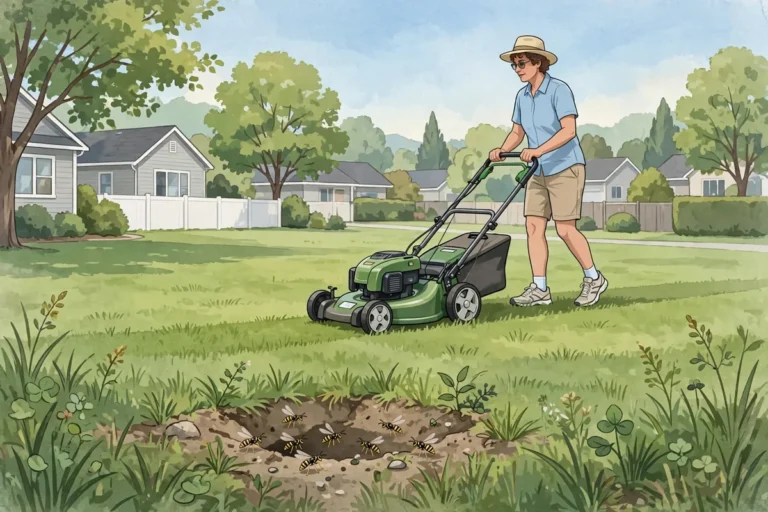
The mower passes over a bare patch of lawn, and suddenly the air fills with angry yellow-and-black insects. Your legs burn with stings before…
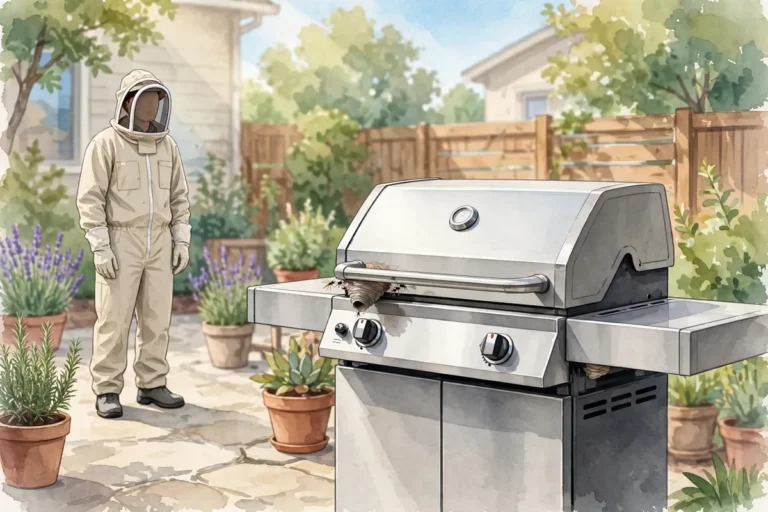
A wasp nest in a grill is one of the most awkward pest situations a homeowner can face: the usual fix (wasp spray) is…
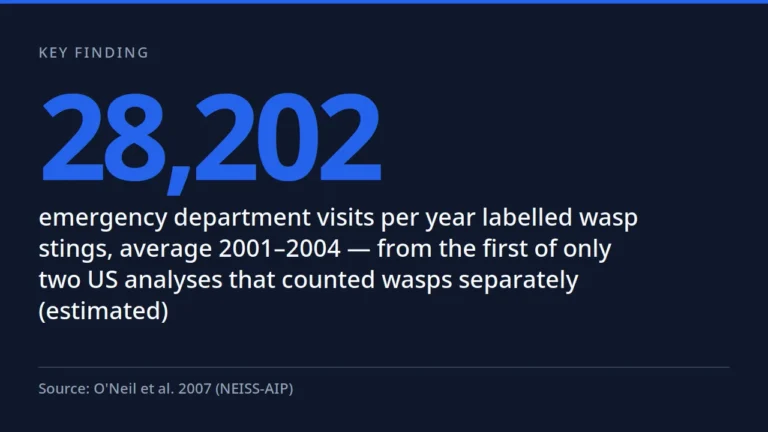
The only sourced US counts of wasp and yellow jacket stings — 28,202 and 11,797 emergency department visits a year in 2001–2004 — with every newer combined bee/wasp/hornet figure labelled and dated.