
It feels personal, but it probably is not. When bed bugs bite me and not my partner, the most common explanation is not that the bugs have a favorite — it is that both of you are being bitten, but only one of you shows it. Understanding why reactions differ will save you from the wrong conclusion: a bite-free partner is not proof your home is clear.
The Short Answer: They Are Probably Biting Both of You #
Roughly 3 in 10 people have no allergic reaction to bed bug bites at all, according to Ohio State University’s bed bug FAQ. Other estimates put the figure at about 30 percent of the population. For those people, bites leave no mark, no itch, no evidence — even though the bugs fed on them just the same.
Timing adds to the confusion. Bite reactions can be delayed, sometimes by days and in some cases up to a couple of weeks, especially in people who have never been exposed before. Your partner’s marks may simply not have appeared yet, or their reaction may be so mild it fades before breakfast. The CDC notes that because bed bug bites affect everyone differently, some people may have no reaction and develop no visible signs of being bitten.
So the first rule: do not use one person’s clear skin as evidence that the other person’s bites came from somewhere else. If one of you is waking up with new marks, assume the bedroom needs inspecting regardless of who is — and is not — reacting.
Why Your Body Reacts and Theirs Does Not #
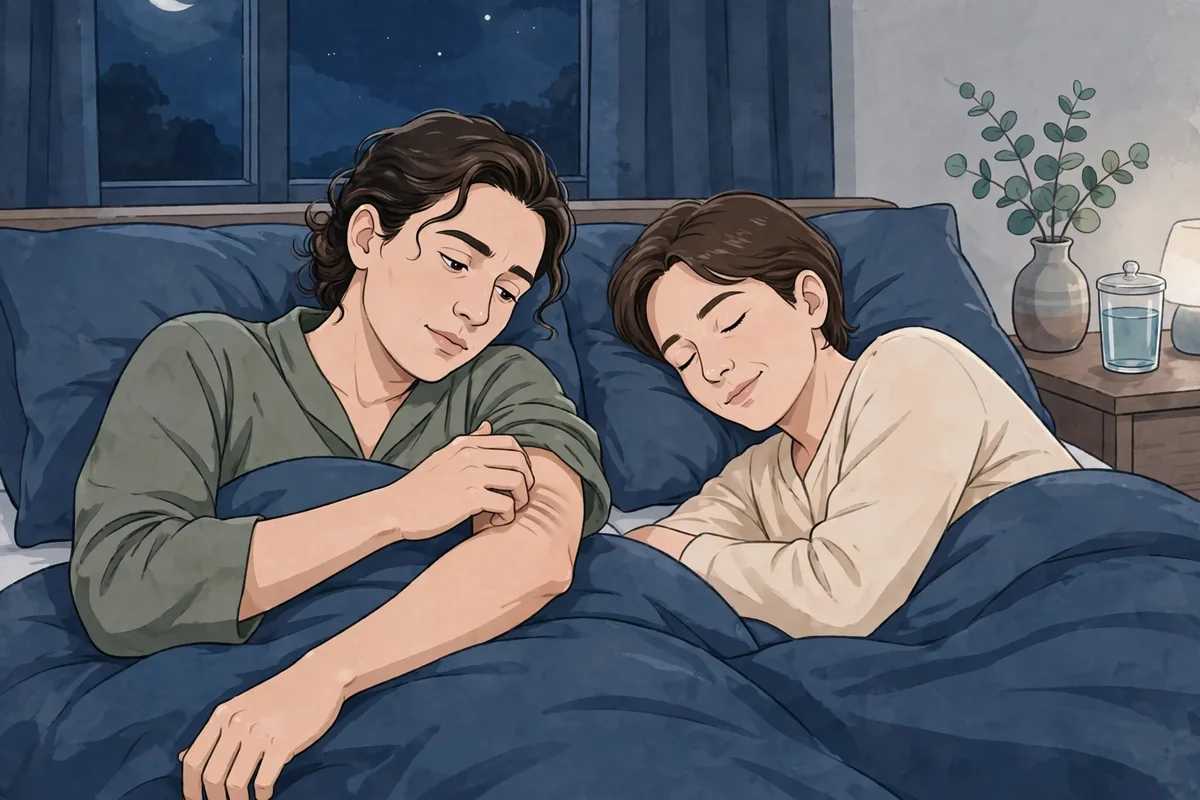
The itch is not caused by the bite itself. It is your immune system’s response to proteins in the bed bug’s saliva — the same saliva that numbs the skin and keeps blood flowing while the bug feeds. Whether you react, and how strongly, depends on your individual immune response.
- Prior exposure sensitizes you. People who have been bitten before are more likely to react, and to react faster. A first encounter often produces no visible reaction at all, while later bites in the same person can flare within hours.
- Sensitivity varies enormously. At one end of the spectrum, some people develop only a faint redness that fades in minutes. At the other, some develop large swollen welts or blister-like eruptions. Two people in the same bed can sit at opposite ends of that spectrum.
- Reactions can change over time. Someone who barely reacted last year may react strongly now, and vice versa. The immune system is not a fixed setting.
- Medications and health conditions can dampen or alter skin reactions, which is another reason two partners can look so different.
None of this means the bugs prefer you. It means your body sounds the alarm and your partner’s stays quiet.
What Actually Attracts Bed Bugs #
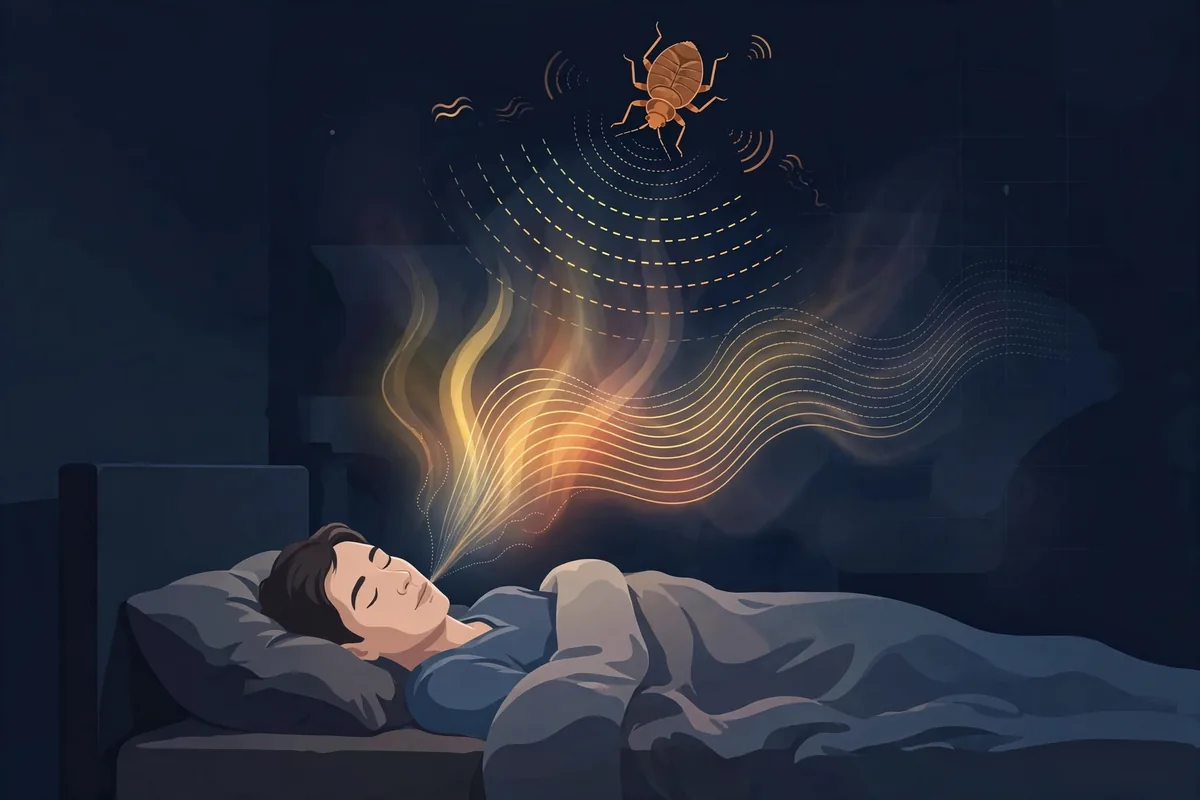
Hungry bed bugs feed on whoever is closest and available. Research suggests they home in on the carbon dioxide you exhale, body heat, and natural body odors — the basic signature of a sleeping human. When given a choice between two sleeping people, minor differences in CO2 output or warmth may nudge them toward one side of the bed, but in practice they will feed on any available host rather than crawl past a meal.
A few persistent myths deserve honest answers:
- Blood type. There is no conclusive evidence that bed bugs prefer one blood type over another in real-world infestations.
- Perfume or scented lotion. There is limited evidence that fragrances meaningfully influence bed bug behavior. Their main cues are breath and heat.
- Cleanliness. Bed bugs are not attracted to dirt or poor hygiene. They want blood, and they infest spotless homes as readily as cluttered ones. Do not let a clean house talk you out of inspecting.
The bottom line: if bed bugs are in the bedroom, both sleepers are on the menu. Any apparent preference is usually just biology and timing, not choice.
How to Confirm the Bites Are Bed Bugs #
Here is the uncomfortable truth from Ohio State’s entomologists: a firm diagnosis cannot be made unless a bug is seen. Even a doctor cannot identify a bed bug bite just by looking at the mark. Bite patterns can hint — bed bugs tend to bite exposed skin during sleep, often leaving marks in rows or small clusters on the neck, arms, and shoulders — but hints are not proof. If the marks appeared after travel, review what to do about bed bug bites picked up in a hotel as well, since hotels are a classic introduction point.
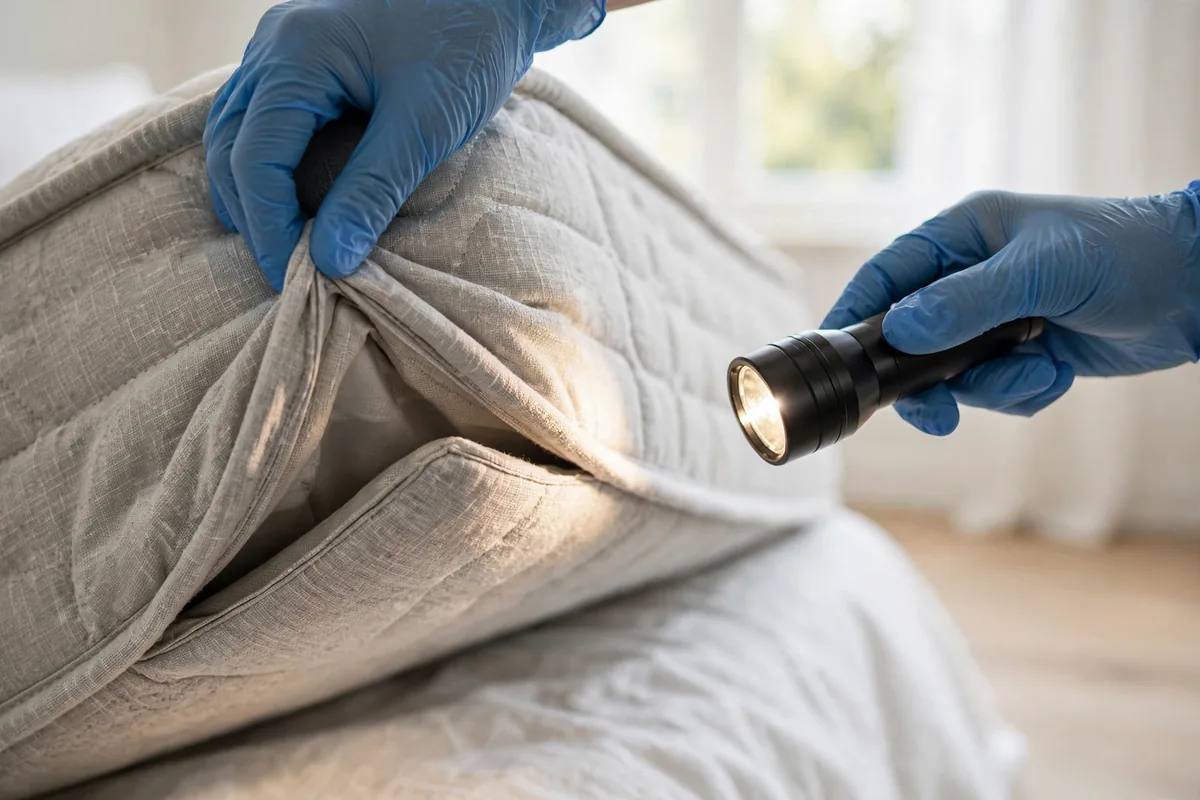
Inspect the bed, not the bites. Tonight, with a flashlight:
- Pull back the sheets and check the mattress seams and tufts, especially near the head of the bed. Look for the bugs themselves (flat, oval, reddish-brown, apple-seed size), shed skins, or tiny dark spots.
- Check the box spring, bed frame joints, and headboard. Bed bugs hide in cracks and crevices within a few feet of where you sleep.
- Look behind nightstands and along baseboards near the bed.
- Consider interceptors — simple cups placed under bed legs that trap bugs traveling to and from the bed. They both confirm activity and reduce bites.
If you find signs, call a licensed pest management professional. Bed bugs are notoriously hard to eliminate with do-it-yourself methods, and partial treatments can scatter them deeper into the home. And while you deal with the itch, do not scratch or squeeze the bites — broken skin invites infection, which is a bigger problem than the bite itself.
Warning signs: when to seek care #
Call 911 immediately if you notice any of these red flags: trouble breathing or swallowing, swelling of the face, lips, tongue, or throat, widespread hives or flushing, dizziness, fainting, or a racing heartbeat. Severe allergic reactions to insect bites are rare but possible, and they need emergency care.
For bed bug bites specifically, see your doctor or urgent care if the bites show signs of infection — spreading redness, increasing warmth or pain, red streaks, swelling that worsens after a couple of days, or pus. A fever alongside worsening bites also warrants prompt care. Beyond the skin, take seriously the toll an infestation can take: persistent insomnia, anxiety, and stress from nightly bites are legitimate health concerns. If bites are disrupting your sleep or wellbeing, talk to your doctor while you address the infestation itself.
Frequently asked questions #
Will the bed bugs eventually start biting my partner too? #
They may already be biting your partner — the bites just are not showing. And sensitivity can develop: someone who shows nothing today may start reacting after repeated exposure. Either way, treat the bedroom as infested based on one person’s bites and one inspection, not on who has marks.
Do bed bugs prefer certain blood types? #
There is no conclusive evidence for a blood-type preference in real-world infestations. Studies on biting insects have explored possible links, but nothing consistent has emerged for bed bugs. Proximity, warmth, and exhaled carbon dioxide matter far more than what is in your blood.
Is there a repellent I can wear to bed so they bite my partner instead? #
No reliable option exists for this. Standard insect repellents are not designed or labeled for all-night use under bedding, and there is limited evidence they would meaningfully redirect hungry bed bugs. The effective approach is to eliminate the infestation — encasements, interceptors, decluttering around the bed, and professional treatment — rather than trying to become the less appealing sleeper.
We just got back from a trip. Could that be where this started? #
Very possibly. Hotels, rentals, and even public transit are common introduction points, and delayed reactions of a week or more mean the bites can appear long after you are home. Inspect luggage away from the bedroom, wash and hot-dry everything you traveled with, and check the bed as described above.
Medical and editorial note #
This guide is general information, not medical advice. Bite reactions vary widely between individuals, and no article can determine what bit you or why. If you are concerned about persistent bites, signs of infection, or a possible infestation, see a healthcare professional for the skin issues and a licensed pest professional for the bugs. Do not rely on one person’s lack of reaction as a reason to delay either step.


