Late summer brings the same scene to cookouts, playgrounds, and patio doors across America: something black-and-yellow is buzzing around the food, someone yells “bees!”, and the guesses start flying. Most of the time, the culprit is not a bee at all. The yellowjacket vs honeybee question matters far more than picnic bragging rights, because the two insects behave differently, sting differently, and need completely different responses when they set up housekeeping near your home.
Here is the direct answer. A honeybee is a fuzzy, round-bodied pollinator with a golden-brown coat of fine hairs; it can sting only once in self-defense, leaving its barbed stinger behind, and it dies afterward. A yellowjacket is a smooth, glossy wasp with bright yellow markings, a pinched waist, and no fuzz; it can sting repeatedly, defends its nest aggressively, and does not die when it stings. Knowing which one you are looking at is the first step toward reacting safely — because trapping and poisoning beneficial honeybees is a real ecological loss, while ignoring an underground yellowjacket nest can be genuinely dangerous.
Appearance: Fuzzy Bee vs. Smooth Wasp
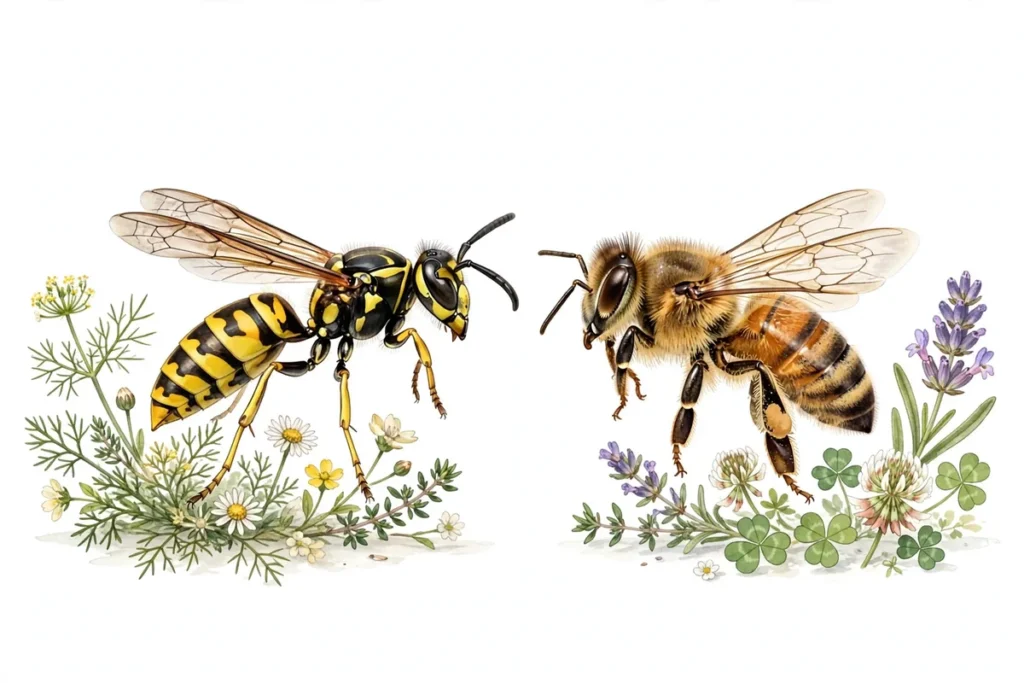
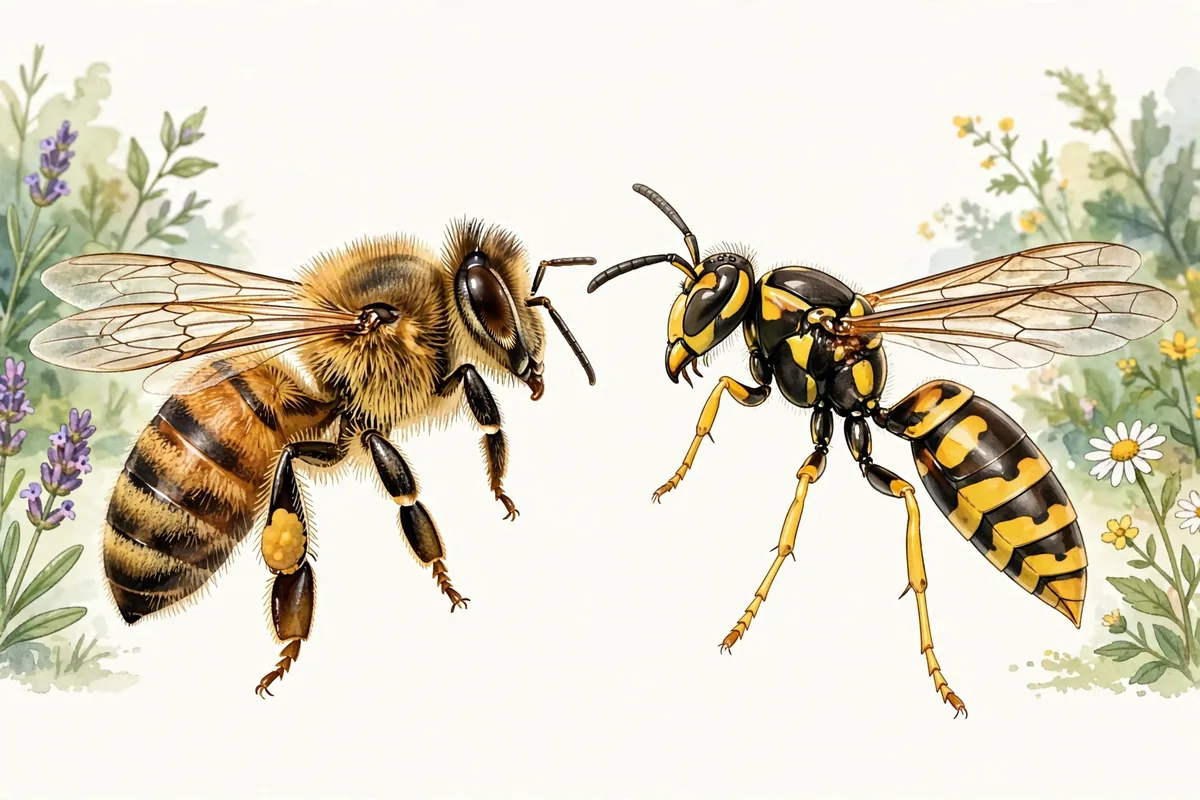
The fastest field mark is texture. A honeybee looks soft. Its entire body — thorax, abdomen, even legs — carries branched, fuzzy hairs that give it a golden-brown, slightly dusty look. These hairs are not decoration; they are pollen traps, evolved over millions of years of pollination work. A worker honeybee is roughly half an inch long, oval and round-bodied, and its yellow-and-black striping is muted, almost amber, with the fuzzy coat softening the pattern.
A yellowjacket looks hard. Its exoskeleton is smooth and glossy, with bold, high-contrast markings in bright yellow and black (some species lean toward white-and-black). Look for the “wasp waist” — a dramatic pinching between the thorax and abdomen that no honeybee has. Yellowjackets are also slightly smaller and more slender than honeybees, with long legs that dangle a bit in flight, giving them a dangling, almost jittery look as they move.
Behavior in flight is another giveaway. Honeybees fly with purpose: flower to flower, or in a straight line home. Yellowjackets patrol — hovering near food and drinks, investigating every crack of your picnic table, and circling back repeatedly. If the black-and-yellow insect at your cookout keeps landing on your soda can or your plate, it is almost certainly a yellowjacket; honeybees have no interest in your lunch.
The Stinger: Why Honeybees Can Sting Only Once
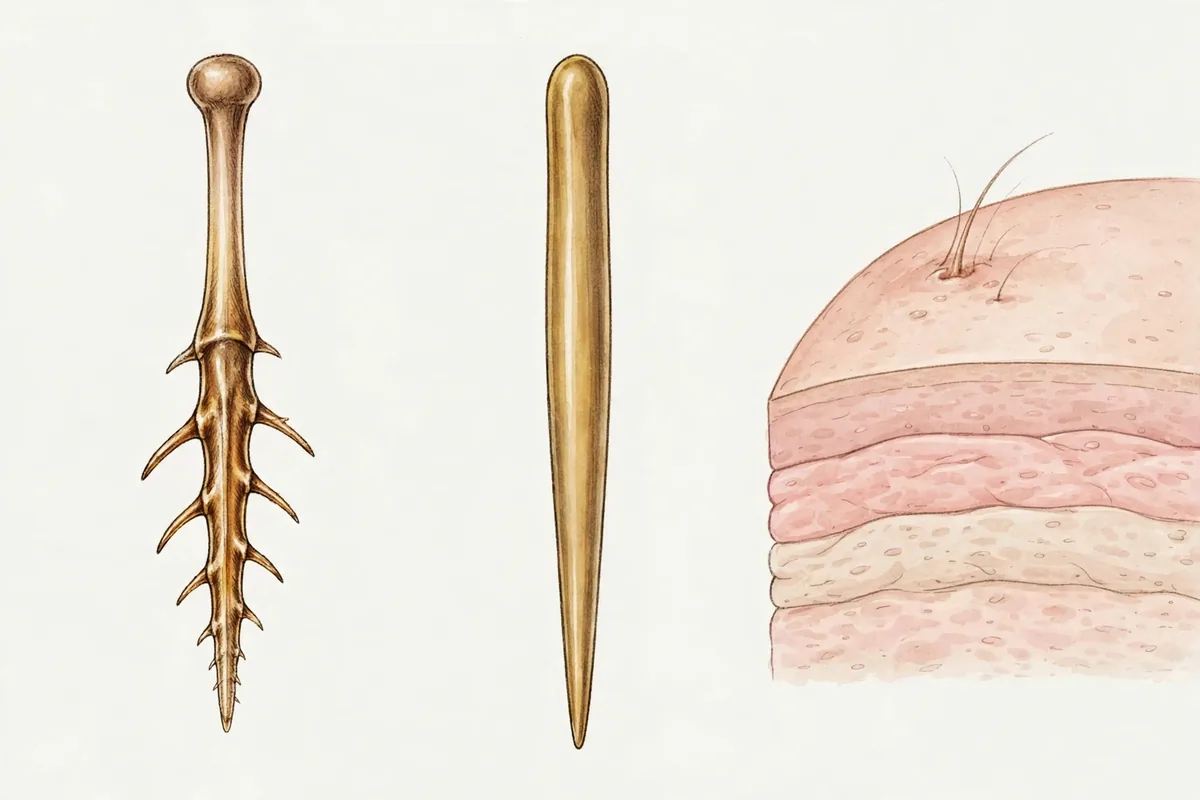
The most consequential difference between these two insects hides at the tip of the abdomen. A worker honeybee’s stinger is lined with backward-facing barbs, like a tiny fishhook. When the bee drives it into mammal skin, the barbs catch in the elastic tissue. As the bee pulls away, the entire stinger apparatus — barbs, venom sac, and attached nerves — tears free of her body, and the bee dies within a short time. The detached stinger keeps pumping venom for several minutes on its own, which is why fast removal matters. (Learn the exact technique in our guide to honey bee sting treatment.)
A yellowjacket’s stinger is essentially smooth. It slides in and out of skin freely, so a single yellowjacket can sting you again and again — and will, if it feels its nest is threatened. Yellowjackets also release alarm pheromones when they sting, which summon nestmates to join the attack. That is why disturbing a ground nest can lead to dozens of stings in seconds, while a honeybee encounter almost never involves more than one or two stings: each honeybee that stings is gone for good.
There is a common misunderstanding worth clearing up. Worker honeybees lose their stingers — and their lives — only when stinging thick-skinned mammals like people or dogs, where the barbs catch. Against thin-skinned insects or rival bees, the barbs do not lodge the same way. The practical takeaway stands: one honeybee means one sting; one angry yellowjacket can mean several.
Behavior and Nests: Why Yellowjackets Are the Ones to Fear
Temperament is the real divide. Honeybees are colony defenders, but they are remarkably restrained about it. A foraging honeybee on a flower will not sting you for existing nearby; it will only sting if stepped on, swatted, or handled, or if the hive itself is directly disturbed. Beekeepers routinely work hives in protective gear with thousands of bees and take few stings. A honeybee swarm — a dramatic-looking ball of bees that has outgrown its hive — is actually at its calmest, since swarming bees have no nest to defend.
Yellowjackets are a different animal entirely. They are predators and scavengers, and late summer and early fall are the worst months: by then, the colony is at peak size, natural food is thinning, and the workers grow frantic — which is exactly when your picnic becomes interesting to them. Stepping on a ground nest, mowing over it, or even walking too close can trigger a mass defense response.
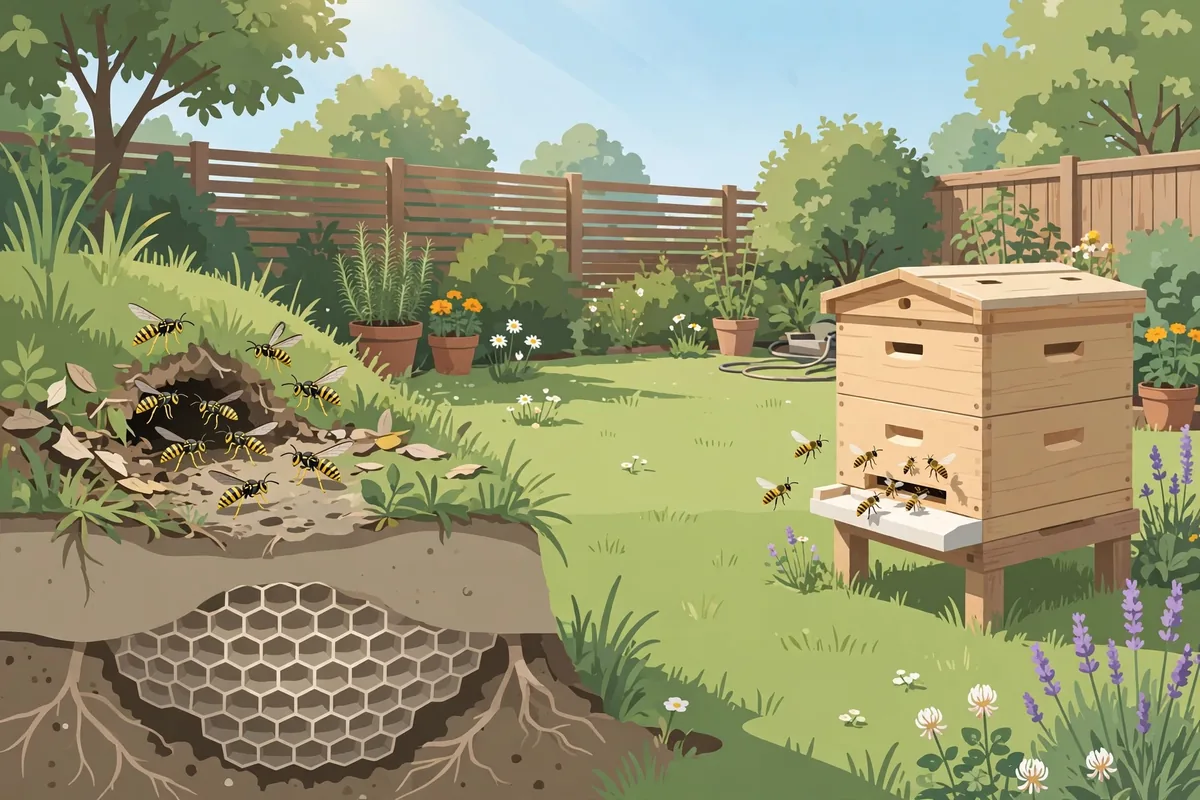
The nests themselves differ completely, and recognizing them matters. Honeybees nest in cavities — hollow trees, wall voids, sometimes a hive box placed by a beekeeper — and build vertical combs of wax. Yellowjackets favor the ground: abandoned rodent burrows, soil cavities under bushes, or hidden wall and attic voids, often with a single hole entrance that commuters stream in and out of. That single busy hole in the lawn, especially with a traffic jam of black-and-yellow insects at midday, is the classic yellowjacket signature. Never plug or flood a suspected ground nest — trapping angry yellowjackets underground can drive them inside through other routes.
What to Do After a Sting from Each Insect
Sting first aid is nearly the same for both insects, with one key difference: a honeybee usually leaves a stinger behind, and a yellowjacket does not. So the first step after any suspected honeybee sting is to get the stinger out fast. Speed matters more than technique — scrape it out with a fingernail, a credit card, or even a piece of gauze; any method beats standing around debating tweezers versus scraping while venom keeps pumping. Then clean the area with soap and water and apply a cold compress to slow the local reaction. If you think multiple stings may have happened, review what to do in the first 10 minutes after a sting.
For a yellowjacket sting, skip the stinger search and go straight to cleaning and cold. Elevate the area if it is a hand or foot. Over-the-counter pain relievers and oral antihistamines, used exactly as their labels direct, are the standard self-care tools most people reach for. A baking-soda paste or calamine lotion can take the edge off itching for some people.
What not to do matters just as much. Do not squeeze the sting site, scratch it into a raw spot, or apply heat, alcohol-heavy home remedies, or anything else abrasive to the wound. Watch the sting site over the next day or two instead of assuming the story is over: increasing pain, spreading redness, warmth, or red streaks after the first day suggest an infection brewing, not just a normal sting reaction. Yellowjacket stings, because they can number in the dozens, deserve a lower threshold for concern — a large cluster of stings around the head or neck is always worth a call to a healthcare professional or poison control.
How to Respond to a Nest Near Your Home
This is the section where the yellowjacket-vs-honeybee distinction turns into real-world consequences. Getting it wrong costs money, kills pollinators, or puts someone in the hospital — so take the ID seriously before acting.
If you believe the nest is a honeybee colony — fuzzy, golden bees from a cavity — contact a local beekeeper or beekeeping association first. Many beekeepers will remove an accessible colony for free or at low cost, and spraying an identified honeybee colony is discouraged in many areas — many pest professionals will not take the job and will refer you to a beekeeper instead. Sealing honeybees inside a wall is also a terrible idea: the trapped colony dies, the honeycomb rots, and the fermenting mess attracts every pest imaginable.
If the nest is a yellowjacket nest — smooth, bright wasps streaming to a hole in the ground or a void entrance — the only safe move is to call a pest management professional. Do not attempt a DIY nest destruction. Pouring gasoline, bleach, or boiling water into a ground nest can get you chased and stung dozens of times, and aerosol sprays used up close put you within strike range of a nest that can mobilize in seconds. Professionals have the protective equipment, the reach, and the correct products to eliminate the nest safely, usually after dark when foragers are home.
When to See a Doctor for a Sting
Most single stings from either insect are painful but self-limiting, resolving within a few days with basic first aid. But stings are one of the classic triggers of anaphylaxis, and the time to know the warning signs is before you need them — review the full list at bee sting warning signs and anaphylaxis sting warning signs. Call 911 immediately for:
- Trouble breathing, wheezing, or a feeling of the throat tightening or closing
- Swelling of the face, lips, tongue, or throat
- Dizziness, faintness, rapid or weak pulse, or a sense of impending doom
- Hives or itching spreading far beyond the sting site
- Vomiting, stomach cramps, or diarrhea following a sting
Seek prompt medical care (same-day urgent care or your doctor) if:
- You were stung many times, or stung on the face, inside the mouth, or inside the ear
- Swelling covers a large area — for example, an entire hand, foot, or most of a limb — and keeps growing after 24 to 48 hours
- You develop signs of infection days later: increasing pain, spreading redness, warmth, swelling, pus, red streaks, or fever
- The sting site is not improving at all after 3 days, or pain is worsening instead of easing
- You have a known sting allergy and were stung, even if you feel fine initially — delayed reactions happen, and you should have an emergency action plan from your allergist
Frequently Asked Questions
Can yellowjackets sting more than once?
Yes. A yellowjacket’s smooth stinger slides in and out of skin freely, so one yellowjacket can sting repeatedly — and often does when defending a nest. This is the opposite of a worker honeybee, whose barbed stinger stays behind and is fatal to the bee.
Are yellowjackets bees?
No. Yellowjackets are wasps, not bees. The name similarity trips people up, but taxonomically and behaviorally they are different insects: yellowjackets are carnivorous scavengers and nest defenders, while honeybees are fuzzy pollinators focused on flowers and hive work.
Why are yellowjackets so aggressive in the fall?
Late summer and early fall is when yellowjacket colonies peak in size and natural food runs scarce, so workers get bolder around human food — and nest defense runs hottest when the nest is largest, which is why August and September encounters produce the worst incidents.
What should I do if I find a nest in my yard?
Identify the insect first: fuzzy golden bees with wax comb point to honeybees — call a beekeeper, not an exterminator. Smooth, bright yellowjackets streaming to a ground hole or wall void point to a yellowjacket nest — call a pest professional and never attempt to dig it out or flood it yourself.
Do honeybees or yellowjackets pollinate?
Honeybees are dedicated, highly effective pollinators — pollination is their entire evolutionary job. Yellowjackets visit flowers occasionally and do move some pollen around, but they are primarily predators of other insects and scavengers of meat and sweets, so they are not meaningful pollinators by comparison.
Medically reviewed by Dr. Sarah Jones, MD.
This article is for informational purposes only and isn’t medical advice. If you’re worried about a bite or sting, talk to a healthcare professional.