Ask anyone who hikes, fishes, or works outdoors in Florida about May and June, and you will hear about the yellow fly — a golden, nearly silent biter that the University of Florida calls a fierce biter and that locals rank among the worst insect encounters of the year. Meanwhile, across much of the rest of the country, deer flies own the same reputation: small, fast, circling your head on woodland trails all summer. The yellow fly vs deer fly comparison trips people up because both belong to the horse fly family (Tabanidae), both have females that slice skin to feed, and both deliver bites that swell impressively. But they are different insects with different ranges, habits, and identification marks — and knowing which one got you changes how you plan your next outing.
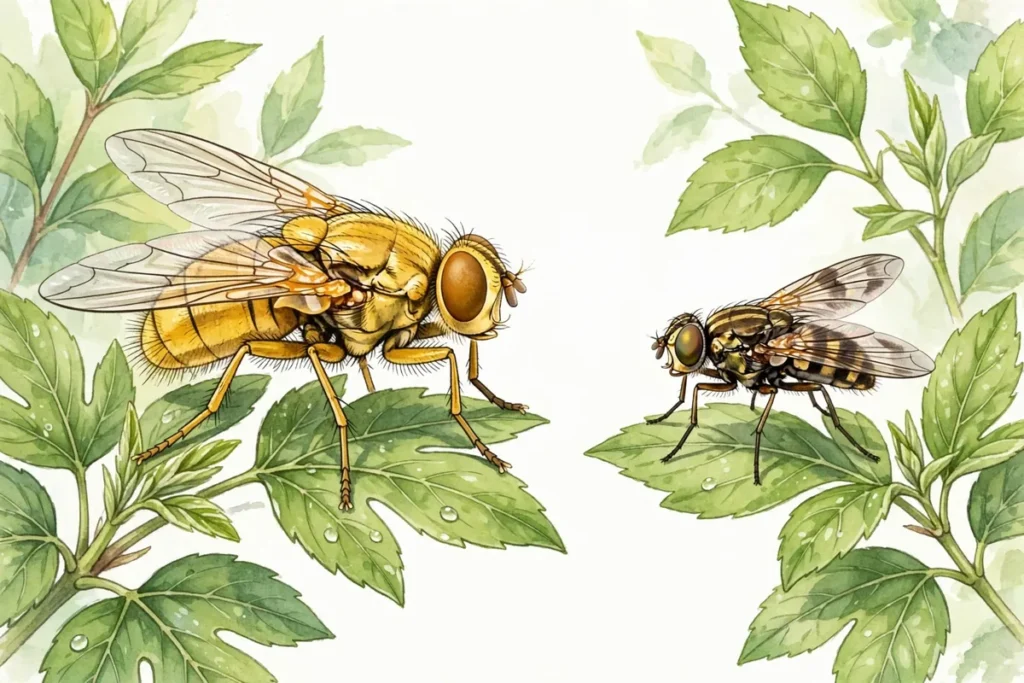
The direct answer: the yellow fly (Diachlorus ferrugatus) is a golden-yellow to orange-brown fly with vivid iridescent green eyes, found mainly in the southeastern coastal plain with peak activity from April through June. Deer flies (genus Chrysops) are smaller, darker, more widespread across North America, with spotted or banded eyes and dark patterns on their wings, and they harass people around woods and wetlands all summer. Only the females of either species bite; the males feed on nectar and pollen and are harmless.
This article gives you the field marks to separate them, explains where and when each one is active, describes what their bites do and how a recent clinical report characterized yellow fly reactions, and lays out honest prevention and bite-care advice — including the uncomfortable truth about repellents and these flies.
Identifying the Yellow Fly: Florida’s Golden Biter
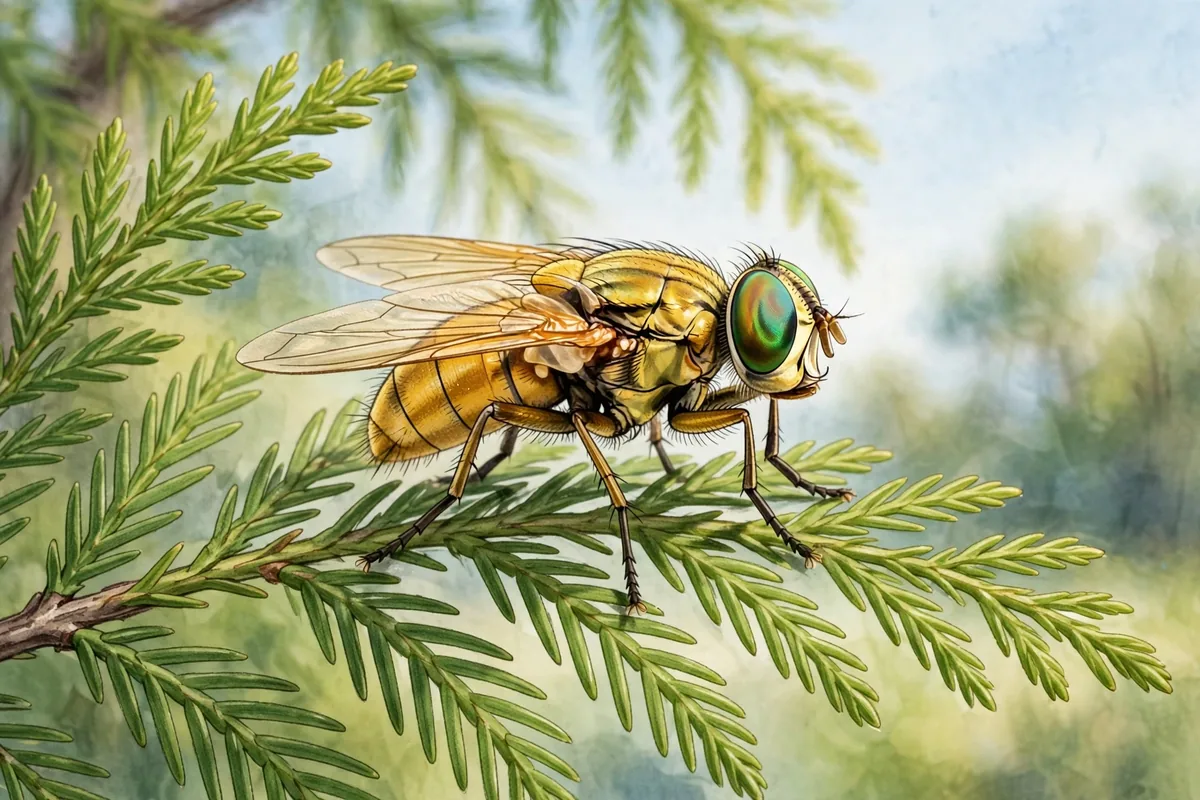
True yellow flies are unmistakable once you have seen one. The body is a striking golden-yellow to orange-brown, the eyes are a vivid iridescent green or blue-green, and the clear wings carry dark markings that help separate them from other horse flies. They are medium-sized for the family — smaller than the big greenhead horse flies of the Atlantic marshes, but sturdy. One of their most unnerving traits is how quietly they fly; UF entomologists note that people usually first notice a yellow fly by the sharp pain of its bite, not by any warning buzz.
Range and season narrow the ID further. The yellow fly occurs from New Jersey down through Florida and across the Gulf states to Texas, with Florida as its stronghold. It favors shaded, damp habitat — swamp edges, cypress stands, hammocks draped with Spanish moss — and is most active from March through November, peaking in April through June. That late-spring surge is what Floridians call “yellow fly season,” when the flies can make swimming, boating, and fishing miserable. They are daytime feeders, most aggressive in the late afternoon and on overcast days, and unusually for tabanids, they will even follow people indoors.
A taxonomic footnote worth knowing: in Florida, “yellow fly” is used loosely for about a dozen yellowish biting flies, but entomologists recognize only one species — Diachlorus ferrugatus — as the true yellow fly.
Identifying the Deer Fly: Smaller, Spotted, Everywhere
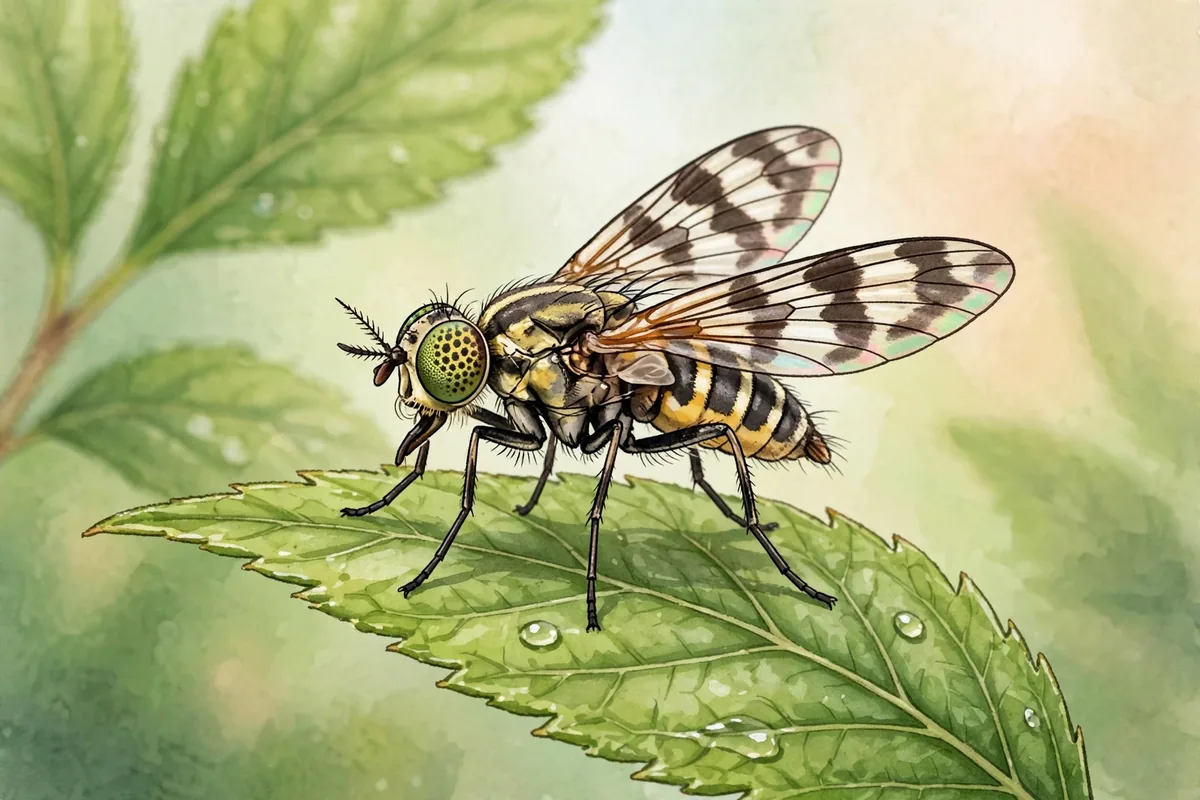
Deer flies are the yellow fly’s smaller, more cosmopolitan cousins. Most species are roughly a third to half of an inch long — noticeably smaller than a yellow fly — with grayish or yellowish-brown bodies. The signature field marks are in the details: their eyes are often brilliantly colored with spots or bands (gold, green, and purple patterns are common), and their wings carry dark spots or smoky bands, unlike the yellow fly’s mostly clear wings with limited dark markings.
Where deer flies win on range, they lose on subtlety. They occur across nearly all of North America wherever there is woodland edge, wetland, or stream habitat, and they are the classic trailhead tormentor — circling the head relentlessly, landing on the neck and scalp, and testing every exposed inch. Their season runs longer and later than the yellow fly’s: late May through August or September in most regions, peaking in the heat of midsummer. While yellow flies favor the shaded Southeast, deer flies will find you on a canoe trip in Minnesota, a hike in Oregon, or a dog walk in upstate New York.
Behaviorally, deer flies are the more persistent harassers. A yellow fly tends to land, bite, and leave. Deer flies circle and probe repeatedly, and their head-circling habit makes them exhausting even when the bites are minor. If the fly ruined your afternoon by orbiting your skull before biting, it was probably a deer fly.
The Bite: Slicing Mouthparts and What the Doctors Say
Both insects feed the same brutal way. The female’s mouthparts are blades, not needles: she slashes the skin, and blood wells up into the cut, which she laps up. Anticoagulant saliva keeps the blood flowing, which is why these bites sometimes keep oozing after the fly has gone. The immediate sensation is a sharp, hot sting — and because the wound is a laceration rather than a puncture, the aftermath can be disproportionate: large, itchy welts, significant swelling, and in sensitive individuals, reactions that linger for days.
A 2025 case report in the dermatology journal Cutis (115(4):121–124, doi:10.12788/cutis.1195) documented what serious yellow fly reactions can look like. The paper described a ranch worker in central Florida who developed rapidly progressing swelling of the hand and forearm within 90 minutes of a yellow fly bite to the wrist — and who reported that his local reactions had been worsening over years of repeated exposure. It is important not to overclaim from a single case report: this was one patient’s experience, not a population study, and most people will never react this way. But the paper is a useful reminder of two real patterns — sensitization can increase with repeated bites, and a bite that produces dramatic, fast-spreading swelling deserves prompt medical attention rather than a wait-and-see approach.
Normal reactions, by contrast, follow a familiar arc: pain at the moment of the bite, a red welt within the hour, itching that peaks over the first day or two, and gradual fading over several days to a week.
Prevention: An Honest Assessment
Here is the part most pest-control pages gloss over: repellents are only modestly effective against tabanid flies. UF’s own guidance notes that DEET is the most useful repellent option for yellow flies, but even DEET may not prevent bites when the flies are numerous. An EPA-registered repellent is still worth applying — partial protection beats none — but do not expect the force-field effect it provides against mosquitoes.
What genuinely works is physical separation and timing:
- Head nets and gloves. UF specifically identifies these as the only truly effective protection when yellow flies are thick. A fine-mesh head net over a hat protects the favorite target zone.
- Cover up. Long sleeves and long pants in light colors. Remember that tabanid mouthparts can penetrate thin, tight fabric, so looser garments protect better.
- Avoid peak hours and weather. Yellow flies are worst in the late afternoon and on cloudy days; deer flies peak in midday heat. Plan strenuous outdoor work for early morning.
- Stay out of their living room. For yellow flies, that means shaded swamp edges and Spanish-moss hammocks at peak season. For deer flies, woodland edges and still, damp trail sections.
- Traps help locally. Sticky or canopy-style biting-fly traps placed around a yard or worksite can reduce local numbers, though they will not clear a whole property.
For outings with children or during pregnancy, repellent choices deserve extra care — see our guide to insect repellent safety for children and pregnancy before applying anything to young skin. And if biting flies are part of your workday rather than your weekend, outdoor worker insect bite and sting prevention covers the occupational angle.
Treating a Yellow Fly or Deer Fly Bite
Clean first, soothe second. Wash the bite with soap and water to reduce the chance of bacteria entering the sliced skin. Apply a cold compress for ten minutes at a time to limit swelling and numb the sting. Elevate the area if the bite is on a hand, foot, or lower leg — elevation genuinely reduces the throbbing in these highly vascular bites.
For itching and swelling, over-the-counter oral antihistamines or hydrocortisone cream used as directed are the standard self-care options. Some people find a baking-soda paste or calamine lotion takes the edge off. Do not squeeze, scratch, or cut at the bite — these wounds are already cuts, and don’t scratch or squeeze a bite explains how secondary infection starts. Keep the area clean and covered if clothing will rub against it.
Watch the bite over the next 48 hours rather than assuming the story ends when the pain fades. A reaction that keeps expanding, grows hot and hard, or starts oozing after the first day is moving outside the normal range.
When to See a Doctor for a Fly Bite

Most yellow fly and deer fly bites resolve with basic care in under a week. But the size and drama of these reactions make the boundary between “impressive” and “concerning” hard to judge, so err toward caution with the following.
Call 911 for: difficulty breathing, wheezing, throat tightness, swelling of the face, lips, or tongue, widespread hives, dizziness, or faintness after a bite. Severe systemic allergy to tabanid bites is uncommon but real.
See a doctor or urgent care promptly if:
- Swelling spreads rapidly in the first hours, especially up a limb — rapid, extensive swelling like the case described in the 2025 Cutis report deserves same-day evaluation
- The bite area becomes increasingly painful, hot, or red after day one, or develops pus, red streaks, or swollen glands
- You develop a fever following the bite
- The bite is on or near the eye
- Swelling has not clearly started improving by day three to four, or itching disrupts sleep for multiple nights — why bug bites itch at night explains the mechanism, but persistent severe itch still warrants a call
- You were bitten many times at once and the combined reaction is strong, especially in a child
Frequently Asked Questions
Is a yellow fly the same as a deer fly?
No. The yellow fly (Diachlorus ferrugatus) is a distinct species — golden-bodied with green eyes, concentrated in the Southeast with a spring peak. Deer flies (Chrysops species) are smaller, darker, with spotted eyes and banded wings, and they range across most of North America through the summer. Both are horse flies, and only females bite.
What time of year are yellow flies worst?
In Florida, yellow fly season peaks from April through June, though the flies are active from March to November. They are most aggressive in the late afternoon and on overcast days, and they favor shaded, damp areas near water.
Do yellow fly bites cause allergic reactions?
Most yellow fly bites cause only local pain, swelling, and itching. However, a 2025 dermatology case report documented a patient whose localized reactions worsened over years of repeated bites, culminating in rapidly spreading swelling of the hand and forearm. Severe systemic allergic reactions are uncommon but possible with any biting insect — seek emergency care for breathing difficulty or facial swelling.
Why do deer flies keep circling my head?
Deer flies are visual hunters that key in on movement and dark shapes, and the head is a warm, exposed, hard-to-defend target. The circling is the fly repeatedly probing for a landing spot. A head net is the most effective defense — repellents alone rarely stop determined deer flies.
Can you be bitten by a male yellow fly or deer fly?
No. Only female tabanid flies bite; they need blood protein to develop their eggs. Males feed on nectar and plant sugars and cannot bite people at all.
Medically reviewed by Dr. Sarah Jones, MD.
This article is for informational purposes only and isn’t medical advice. If you’re worried about a bite or sting, talk to a healthcare professional.