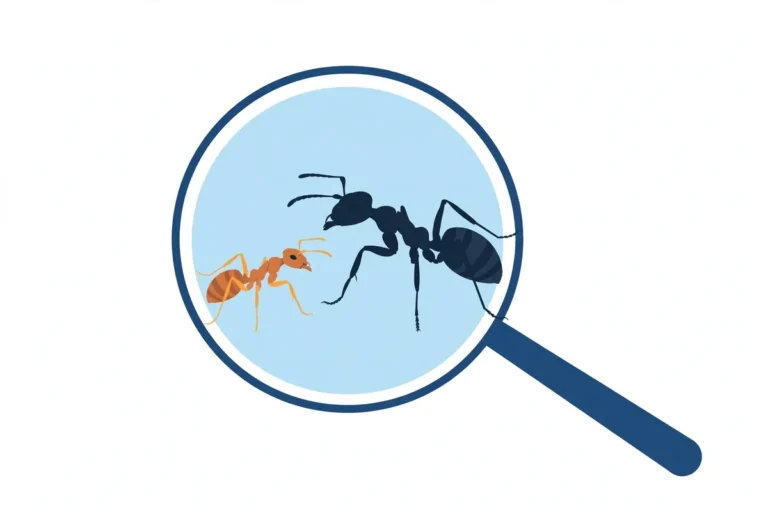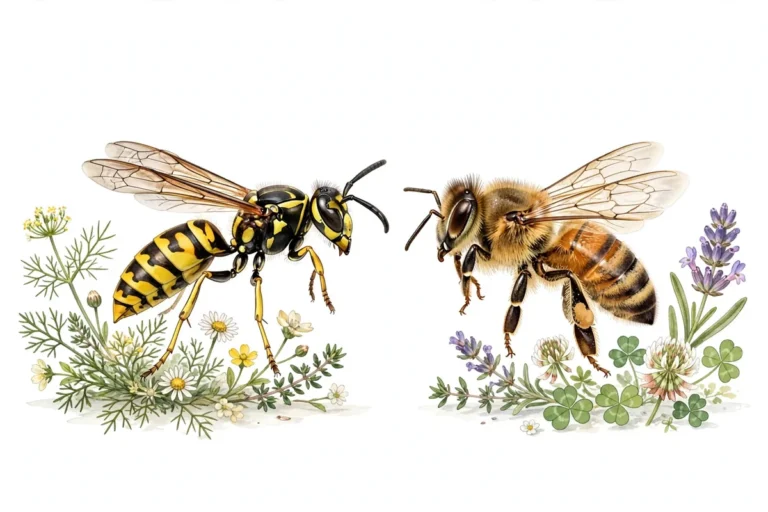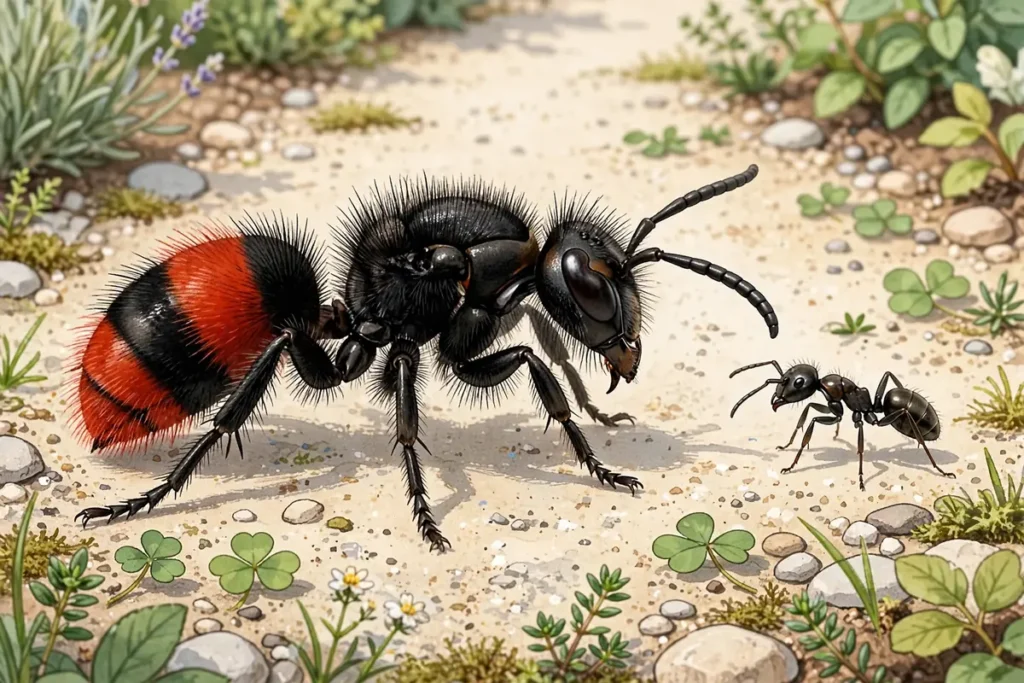
Picture this: you are gardening on a warm afternoon when something the size of a large peanut scurries across the patio — a brilliant, fuzzy creature in scarlet and black, moving fast on long legs, looking for all the world like the biggest ant you have ever seen. Your first instinct might be to pick it up or stomp it. Resist both. The velvet ant vs ant question has a twist that matters for your safety: the velvet ant is not an ant at all. It is a wingless female wasp, and it carries one of the most painful stings of any North American insect.
The direct answer: true ants are social, wingless (worker) or winged (reproductive) insects that live in colonies and mostly bite rather than sting. A velvet ant — family Mutillidae, with over 7,000 species worldwide — is a solitary wasp whose females lost their wings through evolution. The female’s dense, velvety, often bright red-orange-and-black hair is a warning signal, and her sting ranks among the most painful of any North American insect. She will not chase you, but she will defend herself fiercely if grabbed or stepped on.
This article explains how to recognize a velvet ant, what separates it from real ants, why the “cow killer” nickname is pure myth, and exactly what to do if you or a child gets stung.
Meet the Velvet Ant: A Wasp in Ant’s Clothing
The resemblance to ants is a case of convergent evolution, not kinship. Velvet ants and true ants both belong to the order Hymenoptera, but they sit in entirely different families with opposite lifestyles. True ants (family Formicidae) are social to the core: queens, workers, soldiers, and winged reproductives cooperating in colonies that can number in the millions. Velvet ants (family Mutillidae) are loners. Each female operates alone, parasitizing the nests of ground-nesting bees and wasps, laying her eggs where her larvae can feed on the host’s young.
The visual tells, once you know them:
- Size. Eastern velvet ants (Dasymutilla occidentalis) run up to about an inch long — gigantic by ant standards, though still unmistakably insect-sized. Most true ants you will meet are a fraction of that.
- Fuzz. The dense pile of hair — scarlet, orange, white, silver, or gold depending on species — is the signature. True ants are comparatively smooth and shiny, never plush.
- Wings. Female velvet ants are wingless and run everywhere; males have wings and fly but cannot sting. Ant workers are wingless too, but ant colonies always include winged forms at some point.
- Speed and solitude. Velvet ants sprint across open ground, pausing and darting, always alone. True ants travel in trails and columns.
- Sound. Threatened velvet ants produce an audible squeak by rubbing body segments together — a warning buzz you will never hear from an ant.
Their colors are aposematic: a billboard that says “do not touch.” Believe the colors.
Debunking the “Cow Killer” Myth
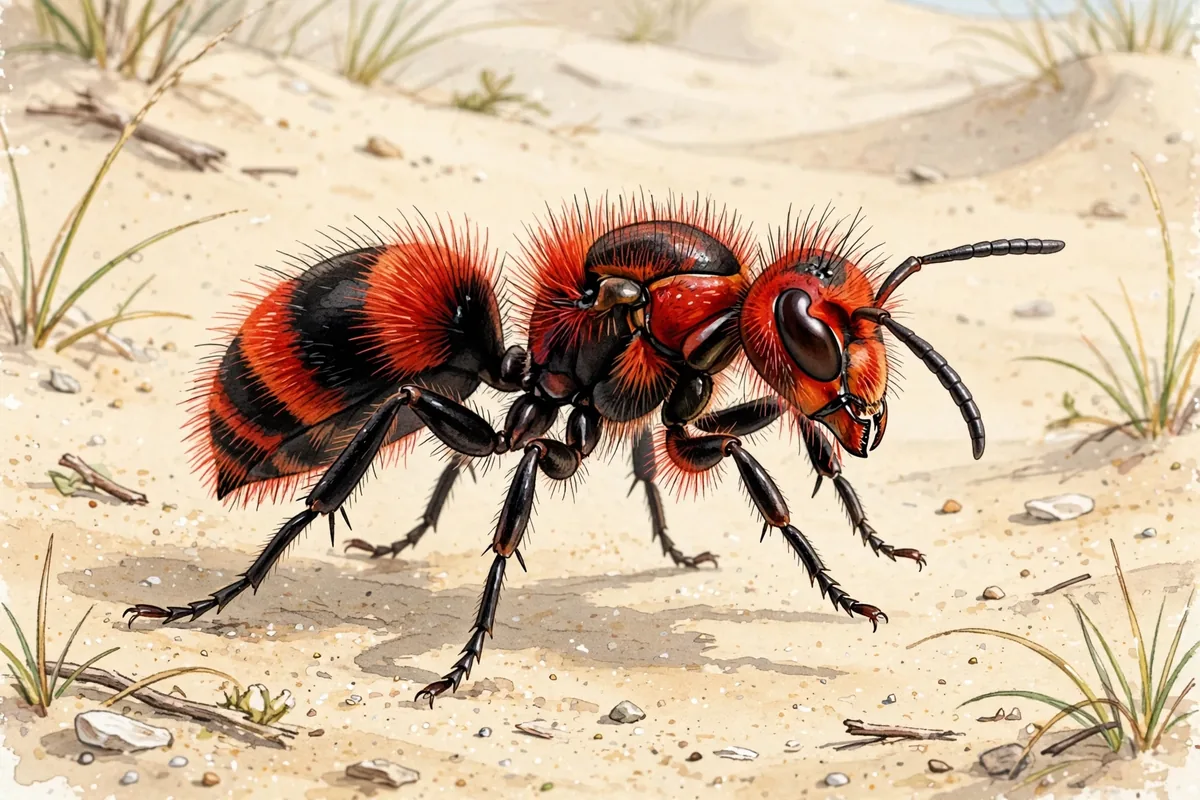
No legend in American entomology is stickier than the cow killer. The story goes that a velvet ant’s sting is so powerful it can kill a cow — hence the common name “cow ant” applied to Dasymutilla occidentalis. It is a great campfire tale and it is completely false. No credible record exists of a velvet ant killing livestock, and the venom’s actual toxicity is notably lower than that of honeybee or harvester ant venom. The nickname survives because the pain is genuinely extraordinary.
So how bad is it, really? The most cited measurement comes from entomologist Justin Schmidt, who spent his career being stung by roughly a hundred species of Hymenoptera and rating the pain from 1 to 4. Schmidt rated the eastern velvet ant around 1.5 — painful but modest — while Klug’s velvet ant, a western species, earned a full 3, with pain that can persist for up to half an hour.
The honest framing: the sting is among the most painful insect stings in North America, but pain is not the same as danger. Velvet ants are not aggressive — they sting only in self-defense, they do not defend colonies because they have none, and their venom is not considered medically dangerous to healthy adults beyond the pain and local reaction. The myth to retire is “deadly”; the fact to keep is “do not pick it up.” The “cow killer” legend sits comfortably alongside other persistent insect folklore — dramatic names that outrun the actual danger.
Why You Cannot Just Squash One
Here is the detail that gets people stung: velvet ants are famously hard to kill. Their exoskeleton is extraordinarily thick and tough — an adaptation that lets the female survive inside the defended nests she parasitizes. Stepping on one often fails; people report the insect surviving a stomp and stinging the foot that tried it. Swatting at one bare-handed is worse, because the most likely outcome is the fly — or rather, the wasp — landing in your hand and deploying a stinger that can be nearly half an inch long.
This matters because the standard human response to a scary insect is to crush it with whatever is closest, usually a bare hand or a flip-flop foot. With a velvet ant, both attempts can end in a sting. The safe responses are boring but effective: leave it alone, or nudge it into a jar with a piece of cardboard if it is indoors. Do not handle it, do not let children or pets paw at it, and do not assume it is dead after one stomp.
Gardeners and barefoot kids are the most common sting victims. Velvet ants run across patios, mulch beds, sandy soil, and lawns on hot sunny days — exactly where people walk unshod. Wearing shoes outdoors in velvet ant territory (the Southeast, South, and Southwest especially) is the simplest prevention there is. Pets mostly learn their lesson after one encounter; the sting is memorable enough that dogs rarely investigate twice.
True Ants: What the Real Thing Looks Like
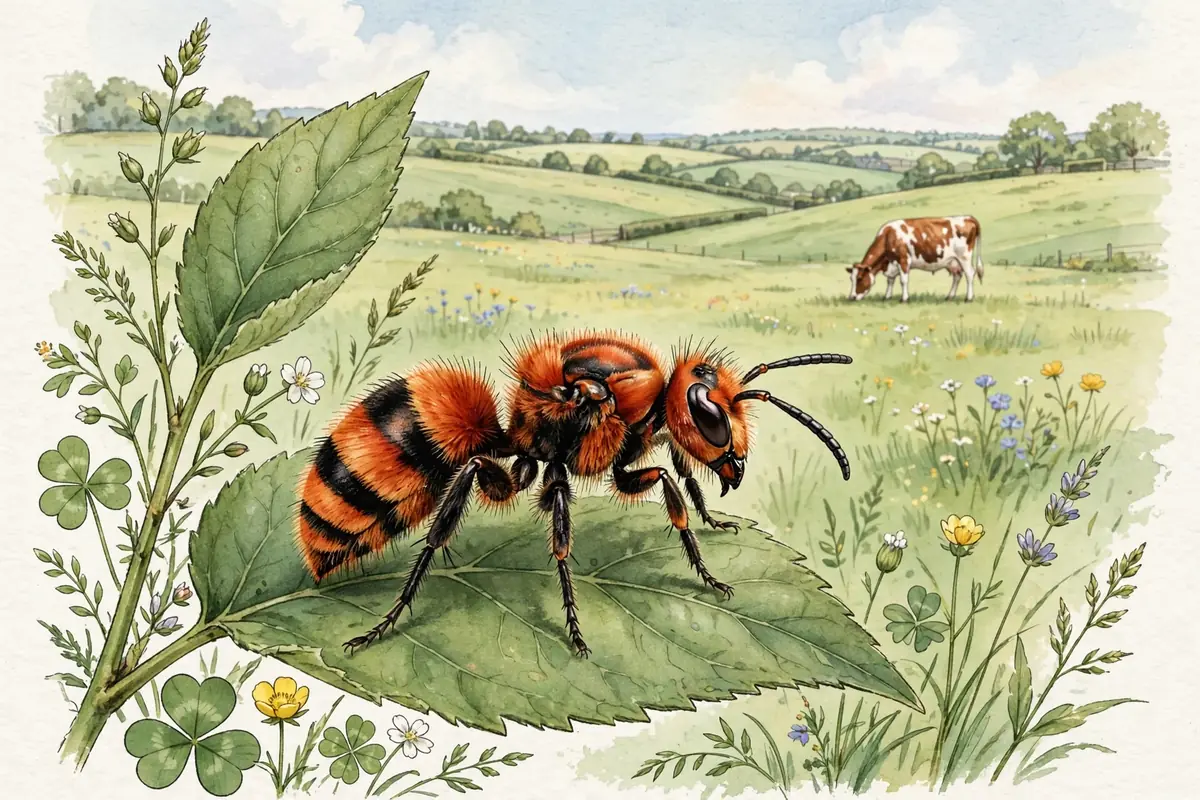
For contrast, here is the ant side of the comparison. True ants are defined by their colonies and their caste system. The workers you see — wingless females — forage, defend, and tend the young while the queen lays eggs deep in the nest. Most common US ants (pavement ants, odorous house ants, carpenter ants) are small, dark, smooth-bodied, and travel in visible trails to and from food. Their defense is the bite: powerful mandibles that pinch, sometimes combined with formic acid sprayed into the wound.
A few ants do sting meaningfully. Fire ants are the famous exception — they grip with their jaws and sting repeatedly from the abdomen, raising the characteristic pustules. But the average backyard ant is a biter, not a stinger, and no true ant carries anything like the velvet ant’s half-inch stinger.
The practical upshot of the comparison: if it is small, smooth, traveling in a line, and coming from a visible nest entrance, it is an ant — manage it as a household pest question. If it is large, fuzzy, brightly colored, sprinting alone across open ground, and squeaking when disturbed, it is a velvet ant — manage it as a do-not-touch question. Solitary means there is no colony to treat, no nest to find, and no infestation to fear; a velvet ant in the yard is a lone wanderer, not a scout for an invasion.
What to Do If a Velvet Ant Stings You
A velvet ant sting hurts immediately and intensely — there is no mistaking it. The good news is that treatment follows the same first-aid playbook as other painful stings, and the venom is not considered dangerous to most people beyond the pain and local swelling.
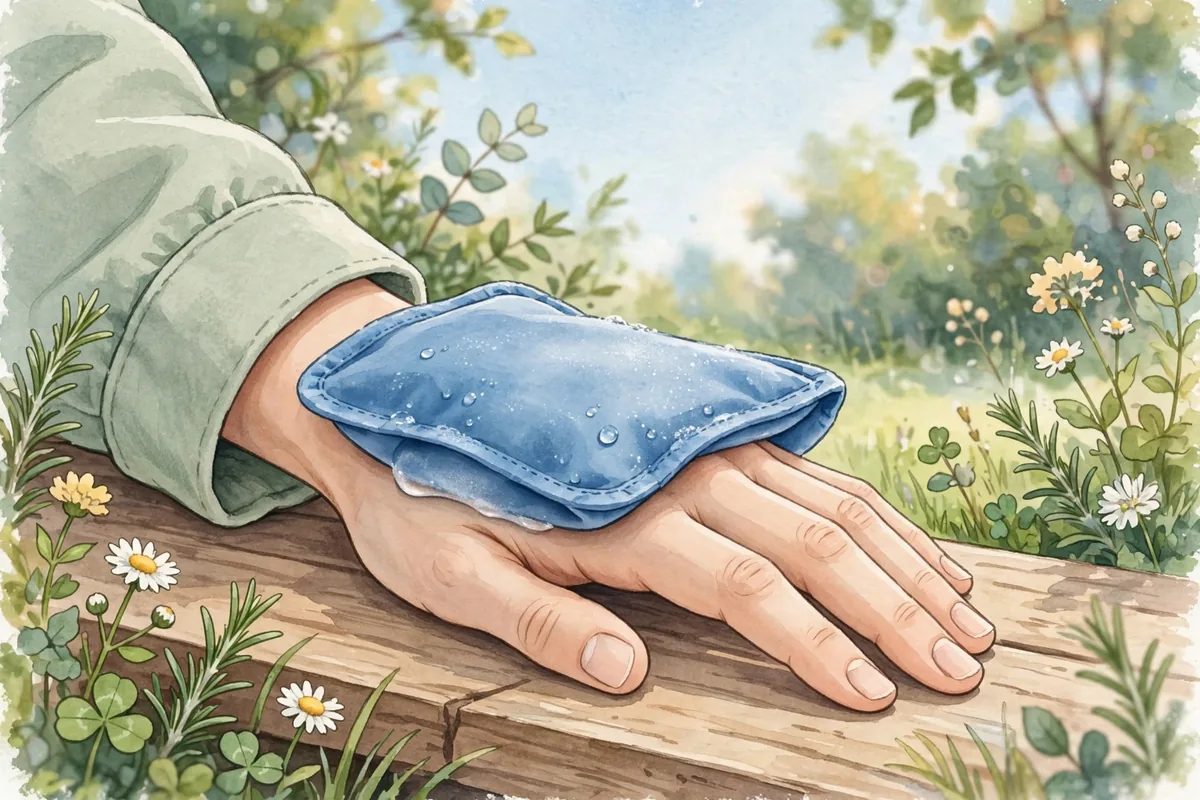
Immediate steps: move away from the insect calmly, clean the sting site with soap and water, and apply a cold compress for ten minutes at a time to blunt the pain and limit swelling — see our guide to cold compress for bites and stings. Elevate the area if the sting is on a hand or foot. Over-the-counter pain relievers or oral antihistamines, used as their labels direct, are what most people reach for; a baking-soda paste can take the edge off itching for some people, though there is no strong clinical evidence behind it.
What not to do: do not cut the wound, do not apply heat, do not squeeze or scratch the site into a raw patch. The intense initial pain typically peaks within the first hour and fades over several hours; local redness and tenderness may linger a day or two. Review what matters in the first 10 minutes after a sting if you want the full early-response sequence.
When to See a Doctor for a Sting
Velvet ant stings are intensely painful but rarely dangerous — with the standard exception that applies to every Hymenoptera sting: allergy. Anyone can develop an allergy to insect venom, and a history of strong reactions to bee or wasp stings should lower your threshold for seeking care. Read through the bee sting warning signs and anaphylaxis sting warning signs so you know what to watch for.
Call 911 immediately for: difficulty breathing or wheezing, throat tightness or a feeling of the airway closing, swelling of the face, lips, or tongue, widespread hives or itching far from the sting, dizziness, faintness, or vomiting after a sting.
See a doctor or urgent care promptly if:
- Pain is not clearly easing after several hours, or swelling keeps expanding after 24 to 48 hours
- The sting site shows infection signs days later: increasing pain, spreading redness, warmth, pus, red streaks, or fever
- The sting is on the face, in the mouth, or near the eye
- A child was stung and the reaction seems out of proportion, or you are simply unsure — pediatric stings deserve a lower threshold for a call
- You have a known venom allergy and were stung, even if you feel okay at first; carry and use your prescribed emergency medication per your allergist’s plan and seek care
Frequently Asked Questions
Is a velvet ant actually an ant?
No. Despite the name and appearance, velvet ants are wasps in the family Mutillidae. The wingless females resemble large, fuzzy ants, but they are solitary wasps — the males have wings and cannot sting. Only the females sting, and only in self-defense.
Can a velvet ant sting really kill a cow?
No — that is a myth. The “cow killer” nickname comes from the sting’s legendary pain, not from any real lethality. Velvet ant venom is actually less toxic than honeybee venom, and the insects are not aggressive. The pain is real and memorable; the danger to livestock is not.
What does a velvet ant sting feel like?
It is consistently ranked among the most painful insect stings in North America — a 3 out of 4 on the Schmidt sting pain index for the most potent species, described as explosive, burning, and long-lasting, with pain that can persist up to 30 minutes. The intense pain usually peaks within the first hour and then fades.
How do I get rid of velvet ants in my yard?
There is usually nothing to “get rid of.” Velvet ants are solitary — a single female wandering your yard is not a colony and not an infestation. Do not try to crush them (their armor usually survives, and the attempt risks a sting). Just leave them alone, wear shoes outdoors, and teach children not to pick up fuzzy red insects.
Are male velvet ants dangerous?
No. Male velvet ants have wings and look quite different from the females, but the key fact is that males cannot sting at all — only females have stingers. That said, telling the sexes apart in the moment is not worth the risk of handling one, so the rule stays the same: admire from a distance.
Medically reviewed by Dr. Sarah Jones, MD.
This article is for informational purposes only and isn’t medical advice. If you’re worried about a bite or sting, talk to a healthcare professional.