Your four-year-old comes home from forest school glowing — muddy boots, pine needles in the hair, stories about the fort they built. Then you find it: a tiny dark speck on their neck, and your stomach drops. If your child spends their days outside in the woods, ticks aren’t a hypothetical. They’re part of the landscape.
The reassuring part: ticks forest school kids is a well-understood situation. Children in all-outdoor programs do get more tick exposure than classroom kids, but good school policies, proper clothing, and a consistent evening tick check keep the risk manageable. Most tick encounters end with nothing more than tweezers and a story.
This parent’s guide covers what forest school means for tick exposure, what good school tick policies look like, dressing and protecting your child, the daily check routine, and what to do when you find a tick.
What Forest School Means for Tick Exposure
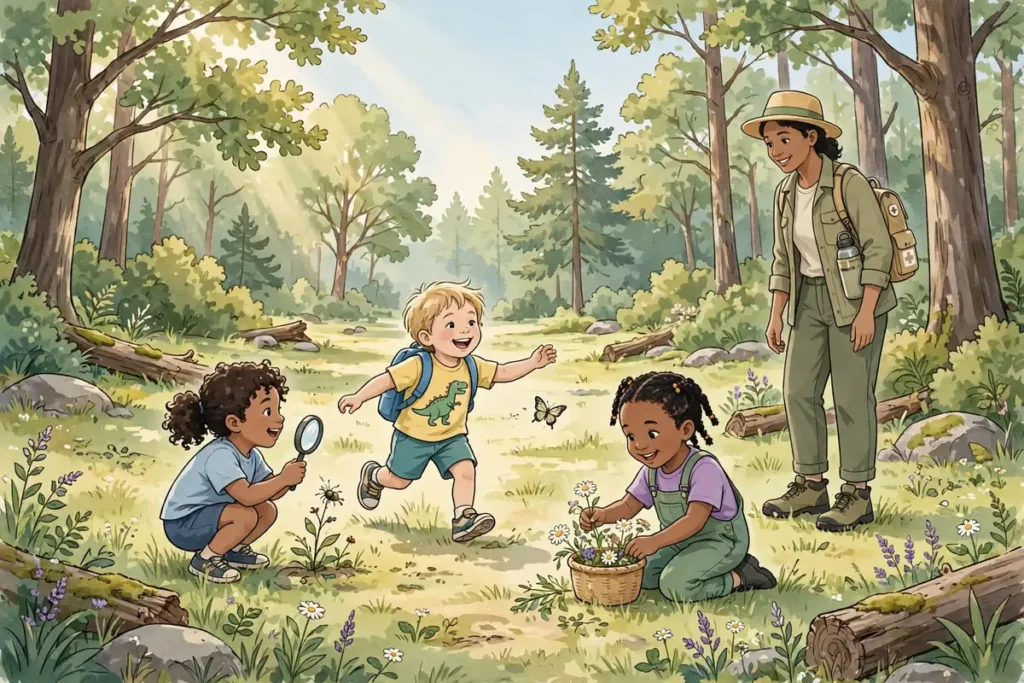
Forest schools and outdoor preschools keep children outside for most or all of the day, moving through woods, meadows, and brush — the same habitats where ticks quest. A child spending six hours a day in the woods has more contact hours with tick habitat than one who plays on a mowed playground. That doesn’t mean the outdoors is dangerous; it means tick awareness belongs in the daily routine the same way sunscreen and water bottles do.
The Ithaca Forest Preschool, run through Cornell Cooperative Extension, notes ticks are a fact of life in their area — adding that parents have gotten more ticks on playgrounds than at forest preschool. Ticks live in lawns and woodchip areas too, not only deep woods.
What changes with forest school is frequency: a classroom child needs checks after weekend hikes; a forest-school child needs them every day the program runs. Daily repetition makes it fast — most parents say five minutes once it’s habit — and kids stop finding it strange within a week. A school’s tick policy tells you a lot about its outdoor safety; the standard advice for the camp setting overlaps closely with what follows.
What a Good School Tick Policy Looks Like
Many outdoor preschools publish formal tick policies — ask to see yours. A solid policy covers four things: what staff do during the day, what they do if they find a tick, how they communicate with parents, and what they expect from families.
Good programs do visual tick scans of the children during the day. The Free To Be Forest School in New Jersey, for example, has leaders check children throughout the day and at the end of each class, carrying lint rollers for crawling ticks and tape to keep and label any attached tick found — so parents can have it identified. The tickfreenh.org template for schools recommends the same structure: prompt removal of unattached ticks, CDC-method removal of attached ones, parent notification, and the tick kept in a labeled bag sent home.
Ask how the policy handles attached ticks found during program hours — some schools remove them on the spot (with your permission), others call you first. Know which yours does before the first tick appears. Also ask whether the school logs tick encounters; a program that tracks them is paying attention.
Your part of the policy matters too. Schools will ask you to send children in appropriate clothing, apply repellent or treat clothing, and — critically — do the thorough tick check at home every evening. The school’s daytime scans catch crawling ticks; your evening check is the one that finds attached ones. Think of it as a team effort, not the school’s job alone.
Dressing Your Child for a Day in the Woods

Clothing is your child’s first and most reliable line of defense, because ticks can’t bite through fabric. The forest-school uniform that experienced parents swear by: light-colored long pants tucked into socks and boots, a long-sleeved top, and long hair tied back. Light colors aren’t a fashion choice — they make dark ticks dramatically easier to spot during the day’s scans.
Tucking pants into socks looks unfashionable and works brilliantly. Ticks typically latch onto shoes and lower legs and crawl upward looking for skin; a tucked pant leg forces them to crawl over treated or visible fabric instead of slipping underneath. Boots that cover the ankle beat sneakers for the same reason. In warm weather, lightweight long sleeves keep kids cooler than you’d expect while covering skin — the Free To Be school recommends this for summer sessions.
Consider permethrin-treated clothing for the forest-school wardrobe. Treating your child’s outdoor pants, socks, and shoes with 0.5% permethrin spray (clothing only — never on skin, applied outdoors and dried completely) gives weeks of tick-killing protection through about six washings. Many parents treat a dedicated set of “forest clothes” at the start of the season. Keep wet permethrin away from cats and follow the label exactly. For a five-day-a-week program, treated clothing is arguably the highest-value single step.
Repellents for Kids: A Parent’s Primer
On top of clothing, repellents add a second layer — but children’s skin deserves more care than adult skin. The EPA’s guidance for tick-borne illness in school-aged children is straightforward: use an EPA-registered insect repellent labeled for ticks, read the label for proper use including how much to apply and how often to reapply, and when applying to the face, spray it on your hands first and then apply carefully, avoiding the eyes and mouth.
Age matters. Repellent labels carry age guidance — follow it, and don’t apply repellent to children’s hands or under clothing. Oil of lemon eucalyptus is the CDC-recognized plant-based option, but note that it’s generally not recommended for very young children — check the label. Our insect repellent safety guide for children and pregnancy walks through the options and label-reading skills every parent needs.
If you’re uneasy about daily repellent use, talk to your pediatrician — the EPA suggests that route for concerned parents. Remember the layering principle: treated clothing plus modest skin repellent on exposed areas beats heavy repellent use alone.
The Daily Tick Check: Your Evening Routine
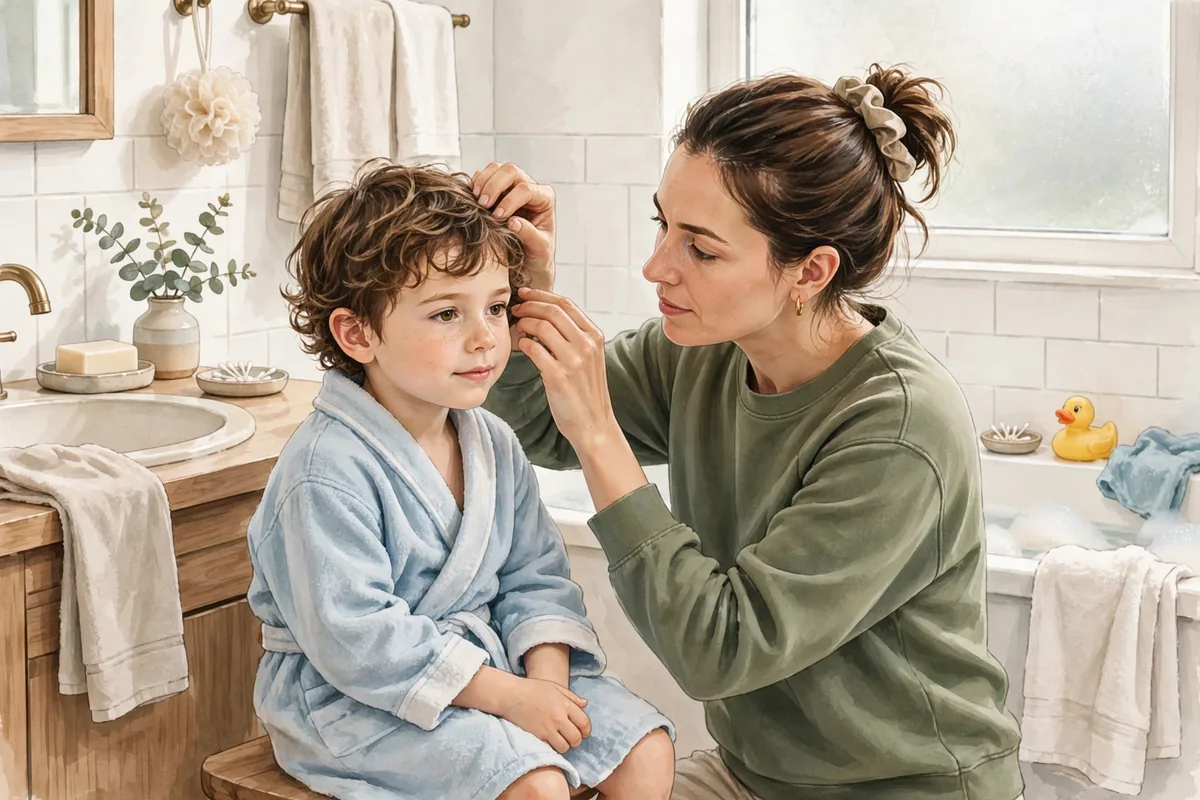
The evening tick check is the single most important thing in this entire guide. Schools catch crawling ticks during the day; attached ticks are found at home. Make every forest-school day a bath day — the EPA recommends showering within two hours of coming indoors — and do the full check before or during the bath, when the child is undressed and the lighting is good.
Work through the spots ticks prefer: in and around the ears, through the scalp and hairline, under the arms, around the waist and waistband, behind the knees, between the fingers and toes, around the belly button, and in the groin and diaper area. Ticks love warm, moist, hidden places. Nymph-stage ticks can be poppy-seed sized, so this isn’t a glance — it’s a careful look, and it takes about five minutes once you’re practiced.
Make it normal, not scary — a calm “time for our tick check!” beats anxious hovering, and some families make it a “tick detective” game. Check the day’s clothing before the hamper (a lint roller catches crawling ticks), toss worn forest clothes in the dryer on high heat, and glance over backpacks.
If You Find a Tick on Your Child
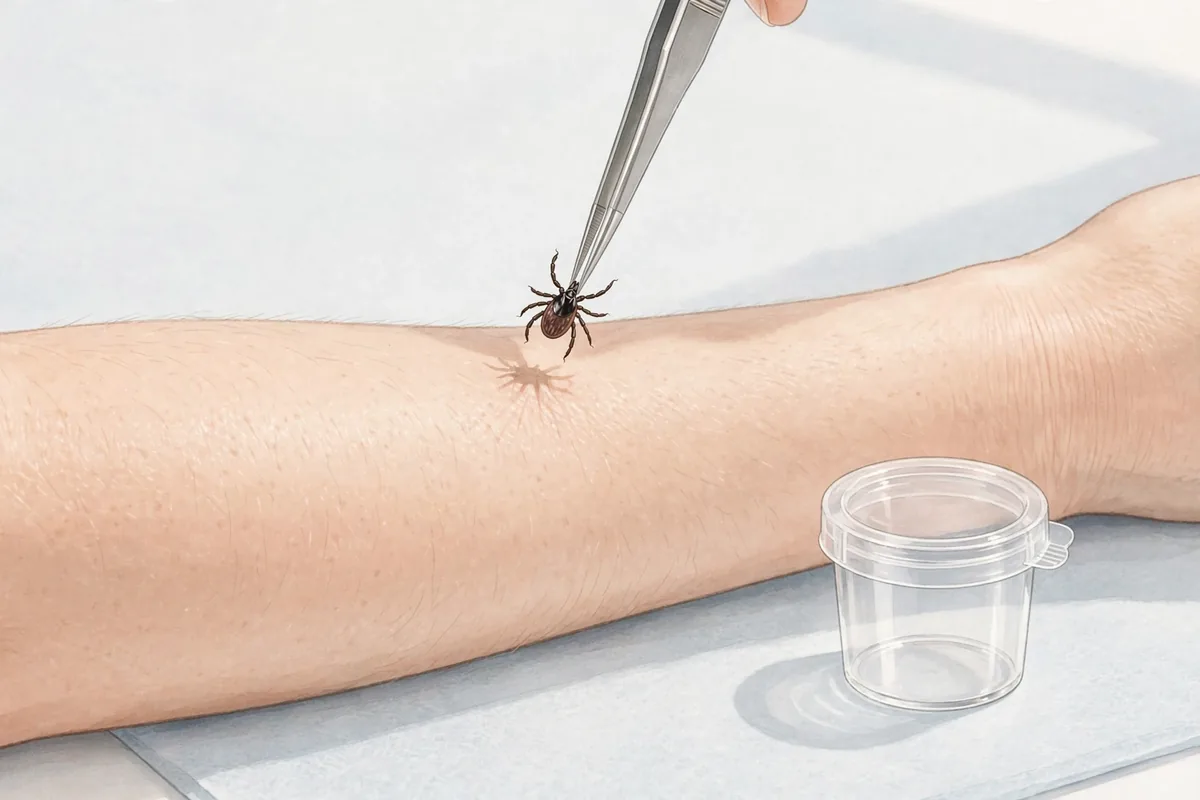
First: stay calm. Finding an attached tick is common in forest-school families, and prompt removal is what matters — don’t wait for a pediatrician appointment. Use clean, fine-tipped tweezers to grasp the tick as close to the skin’s surface as possible, then pull straight upward with steady, even pressure. Don’t twist or jerk, and don’t use nail polish, petroleum jelly, or heat — the CDC specifically warns against those methods. Clean the bite area and your hands with soap and water or rubbing alcohol afterward.
Save the tick. Drop it in a small sealed container or zip-top bag with rubbing alcohol, labeled with the date — your school may already have a system for this. A saved tick helps your pediatrician assess the situation: species, life stage, and how engorged it is all inform what, if anything, needs to happen next.
Then watch: note the date, photograph the bite site, and monitor your child for several weeks. A small bump fading in a few days is typical. An expanding rash, fever, or flu-like symptoms afterward should trigger a call to your pediatrician — tell them about the bite, when it happened, and mention the saved tick. Our bite-and-sting first-aid checklist covers the general after-bite steps if you want a refresher.
When to See a Doctor for a Bug Bite
For children, the threshold for calling is lower — when in doubt, call your pediatrician. Get advice promptly for:
- Call 911 for signs of anaphylaxis: trouble breathing, swelling of the face, lips, or throat, dizziness, or fainting after any bite or sting.
- Any tick bite on a young child — many pediatricians want to know, and some will want to see the child or the saved tick.
- An expanding rash around the bite site in the days after the bite — report when and where the bite happened.
- Fever, headache, fatigue, or joint aches developing within weeks of a tick bite, even if you never saw the tick.
- Signs of infection: increasing redness, warmth, swelling, or pus at the bite site.
- A tick you couldn’t remove cleanly, or mouthparts left in the skin — let the pediatrician advise.
- Multiple bites or a heavily engorged tick — bring the saved tick and your notes.
For severe reactions to any sting, review the anaphylaxis warning signs so you can act fast.
Frequently Asked Questions
Should I pull my child out of forest school because of ticks?
Ticks are a manageable part of outdoor childhood. Families in tick country handle daily exposure with clothing, repellents, and evening checks — the same routines that protect kids at camp and on playgrounds. With a solid school policy and consistency at home, the benefits of outdoor time far outweigh a five-minute-a-day risk.
What should I ask a forest school about their tick policy?
Ask: do staff scan children during the day? If they find an attached tick, do they remove it or call you? How do they notify parents, and do they save the tick? Do they log encounters? Clear answers to all four means they’re taking it seriously.
Can I use repellent on my toddler every day?
Follow the product label’s age guidance — that’s the authoritative answer, not the internet. Use EPA-registered products labeled for ticks, apply exactly as directed, avoid hands and the eye/mouth area, and consider leaning harder on treated clothing (permethrin, clothing only) to reduce how much goes on young skin. When in doubt, ask your pediatrician.
My child had a tick on them — how long do I watch for symptoms?
Watch the bite site and your child’s general health for several weeks. Lyme disease symptoms — an expanding rash, fever, fatigue, joint aches — can appear from a few days to about a month after a bite. Note the date of the bite and call your pediatrician promptly if anything develops; early evaluation matters.
Are tick checks really necessary every single day?
Yes — for a child in the woods daily, yes. Ticks often wander before attaching, and prompt removal sharply reduces disease risk. The check takes about five minutes once it’s habit, and pairing it with bath time makes it automatic. Skipping days is how attached ticks get missed.
Medically reviewed by Dr. Sarah Jones, MD.
This article is for informational purposes only and isn’t medical advice. If you’re worried about a bite or sting, talk to a healthcare professional.