
Do Fans Repel Mosquitoes? What Entomologists Say
It's a warm July evening, the grill is going, and within ten minutes your ankles are under attack. You've heard the backyard advice a…
DynaTrap's ads promise up to an acre of mosquito protection with no zapping, no propane, and no chemicals — just plug it in and enjoy your yard. Thousands of reviews,…
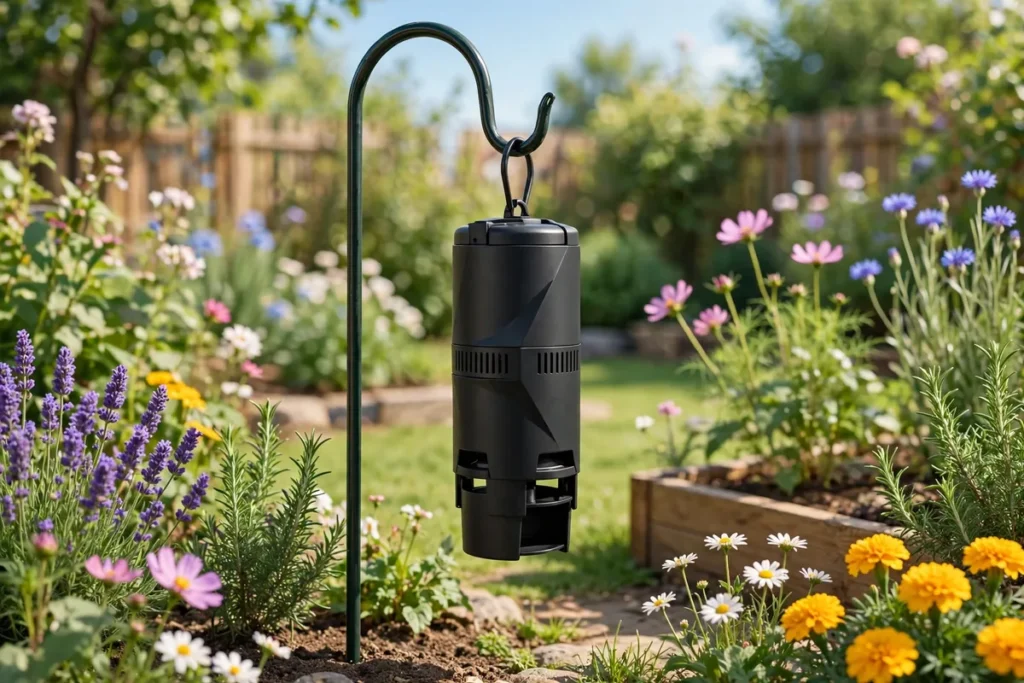
DynaTrap’s ads promise up to an acre of mosquito protection with no zapping, no propane, and no chemicals — just plug it in and enjoy your yard. Thousands of reviews, TikTok sellers pushing sale prices, and plenty of buyers who swear by theirs. So here is the direct answer to do DynaTrap mosquito traps work: the honest verdict is mixed. They genuinely trap flying insects, including some mosquitoes — but independent tests consistently show the catch dominated by moths, midges, and other non-biting insects, and the UV-light mechanism does not exploit the cues host-seeking mosquitoes actually follow. Buy one expecting a bite-free yard and you will likely be disappointed.
This review breaks down how the trap claims to work, what independent testing and real users report, why UV light is the wrong lure for mosquitoes, how to place one for best results if you already own it, and what actually reduces bites instead.
DynaTrap, made by Woodstream Corporation, sells a line of indoor and outdoor traps — from the DT150 indoor unit (rated for about 300 square feet) up through ¼-acre, ½-acre, ¾-acre, and 1-acre outdoor models like the DT2000XL and the newer LED-based DT2030SR. All of them run on the same “3-way protection” concept.
First, a UV bulb — fluorescent in older models, LED in newer ones — emits a warm glow meant to attract flying insects. Second, a titanium-dioxide-coated surface inside the unit is claimed to produce carbon dioxide, the gas mosquitoes famously track, as a secondary lure. Third, a quiet vacuum fan pulls nearby insects down into a retaining cage, where they dehydrate and die within about a day. A damper closes when the unit is off so live insects cannot escape during cleaning. No propane, no replaceable attractant lures, no zapping grid — just plug it into a standard outlet and, per the manufacturer, let it run 24/7.
The company’s own guidance sets expectations: place the trap 3 to 6 feet off the ground and 20 to 40 feet away from where people gather, allow at least 3 weeks to notice an impact, and 6 weeks to “break the breeding cycle.” One product listing cites third-party lab testing from October 2023 for an “80% mosquito catch rate” claim on its 1-acre model — a manufacturer-funded lab result, not an independent field trial, a distinction that matters.
Here is where the marketing meets reality. Long-term field evaluations of UV-suction traps — the category DynaTrap belongs to — tell a consistent story: the catch bins fill with large volumes of nocturnal insects, and mosquitoes are conspicuously scarce among them. One multi-month yard trial documented catch bins consisting almost entirely of harmless moths after weeks of continuous operation. Adding an optional scented mosquito lure produced no measurable increase in mosquito captures. The manufacturer itself, responding to customer reviews, acknowledges that trapped mosquitoes dehydrate into near-dust and are hard to identify — which cuts both ways: some “empty” traps may hold more mosquitoes than they appear to, but the visible catch is overwhelmingly non-target insects.
User reviews split along exactly these lines. Satisfied owners typically describe the trap as a general flying-insect reducer — fewer moths around the porch light, fewer gnats — and run it continuously for months. Dissatisfied owners report the same core complaint in hundreds of variations: the basket fills with moths while mosquitoes keep biting. “Mostly catches moths and other bugs; I have not seen too many mosquitoes in the trap despite several bites” is a representative review. After weeks of use, some owners report catching only a handful of mosquitoes total.
The pattern is not unique to DynaTrap. Our review of whether bug zappers work for mosquitoes covers the same underlying biology: devices built around UV light excel at killing insects attracted to UV light, and mosquitoes are mostly not among them.
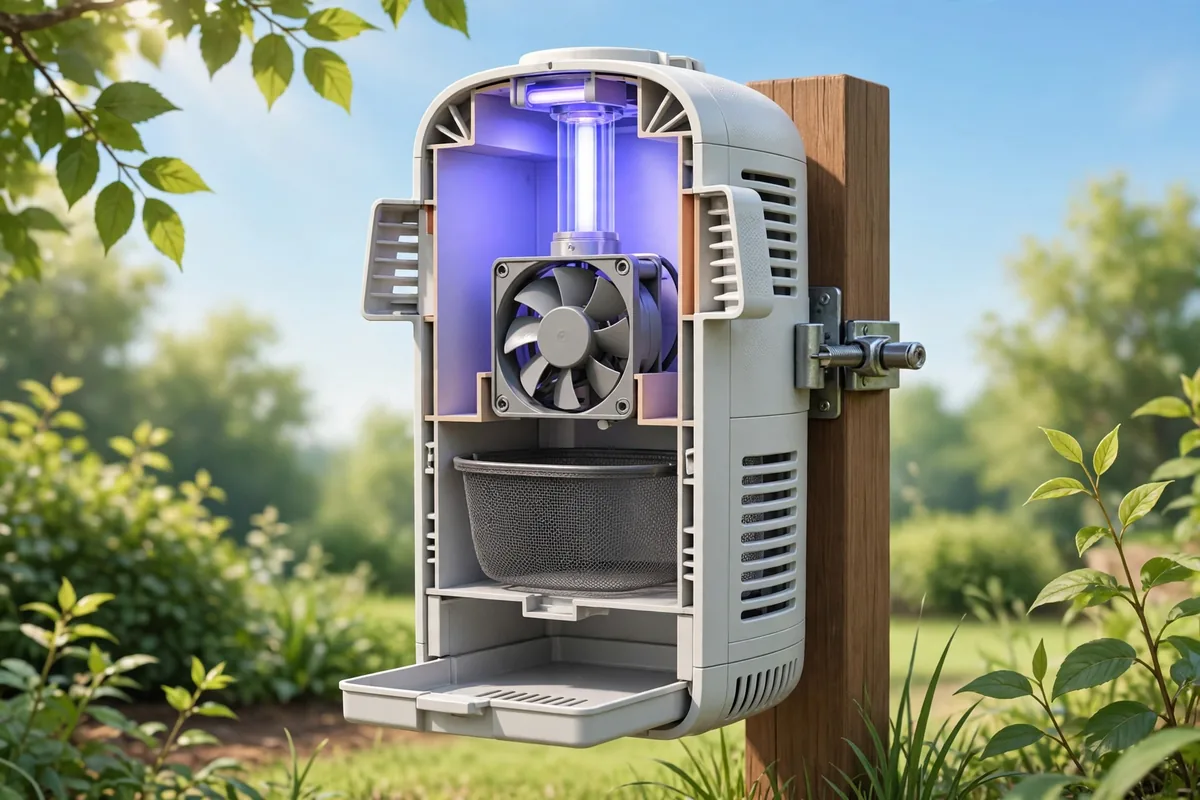
To understand the mixed results, you need to know how a female mosquito actually finds you. Host-seeking mosquitoes — only females bite — navigate by a sequence of cues: carbon dioxide from breath (detectable from dozens of yards away), body heat and thermal infrared, skin odors including lactic acid, and finally visual contrast at close range. Ultraviolet light is simply not on that list in any major way. Moths, beetles, and many flies are strongly phototactic to UV; most mosquito species are not significantly drawn to UV wavelengths.
This is the fundamental mismatch. A trap whose primary lure is UV light is fishing with the wrong bait for the target species. Research on trap types backs this up: in comparative testing, traps baited with carbon dioxide alone caught far more mosquitoes than traps baited with light or octenol alone, with or without light added. The CO₂-baited designs — typically propane-powered units costing several hundred dollars plus fuel — remain the only trap category with strong evidence for meaningfully reducing biting pressure, and even they work best as part of a broader program.
None of this means a DynaTrap catches zero mosquitoes. UV light does attract some mosquito species to some degree, and any fan trap placed in a buggy yard will incidentally capture insects blundering nearby. But “some” is doing heavy lifting in that sentence — the mechanism cannot reliably intercept mosquitoes that are actively hunting people, because those mosquitoes are following your breath and body heat, not a purple glow.
DynaTrap’s answer to the UV problem is its titanium dioxide coating, which the company says produces carbon dioxide as a secondary lure. Titanium dioxide under UV light can indeed drive photocatalytic reactions that release CO₂ — the chemistry is real. The question is quantity.
A resting human exhales roughly a liter of CO₂-rich breath every minute, creating a rich, pulsing plume that mosquitoes evolved to track across long distances. For a trap’s coating to compete with — or even meaningfully supplement — that signal, it would need to generate a comparable plume. The company does not publish CO₂ output figures for the coating, and independent measurements of how much CO₂ these units actually emit are essentially nonexistent in the public literature. Without that data, the CO₂ claim is best treated as unproven rather than false: plausible chemistry, unverified output, and field results that do not show the mosquito catches you would expect if the lure were working at human-breath scale.
This is worth stating plainly because it is the crux of the honest review. If the titanium dioxide coating produced a truly competitive CO₂ plume, independent field tests would show mosquito-dominated catches. They show the opposite. Whatever the coating contributes, it does not appear sufficient to overcome the UV-first design.

If a DynaTrap is already hanging in your yard, you can still squeeze the most from it with correct placement — and the manufacturer’s own guidance is actually sound here:
Distance from people. Place it 20 to 40 feet away from patios, decks, and play areas. This is the most commonly ignored instruction, and it matters: a light-based trap near your seating area can draw insects toward you rather than away. The trap should intercept insects before they reach you, not compete with you at close range.
Height and location. Hang it 3 to 6 feet off the ground in a shaded, sheltered spot with high insect activity — near vegetation, not in the middle of an open lawn baking in sun. Shade also extends bulb life.
Run it continuously. The manufacturer recommends 24/7 operation during mosquito season: intermittent use resets any population-level effect the trap might achieve.
Manage expectations. Even optimally placed, treat it as a background insect reducer, not bite protection. Keep using repellent and the other measures below on evenings you actually want to be outside bite-free.
Maintain it. Empty the catch basket regularly — the company suggests turning the unit off up to 24 hours before emptying so trapped insects die rather than escape — and replace bulbs on schedule; a dim bulb attracts even less than a fresh one.
If your goal is fewer bites rather than a fuller catch basket, spend the money and effort where the evidence is:
Eliminate breeding sites. The single highest-impact yard measure. Dump standing water weekly from saucers, buckets, toys, tarps, and clogged gutters — most backyard mosquitoes breed within a few hundred feet of where they bite. Our guide on keeping mosquitoes out of your yard walks through the full routine.
Use EPA-registered repellents. DEET, picaridin, and oil of lemon eucalyptus remain the best-supported personal protection. Apply per the label, and check our notes on repellent safety for children and pregnancy if little ones are in the picture.
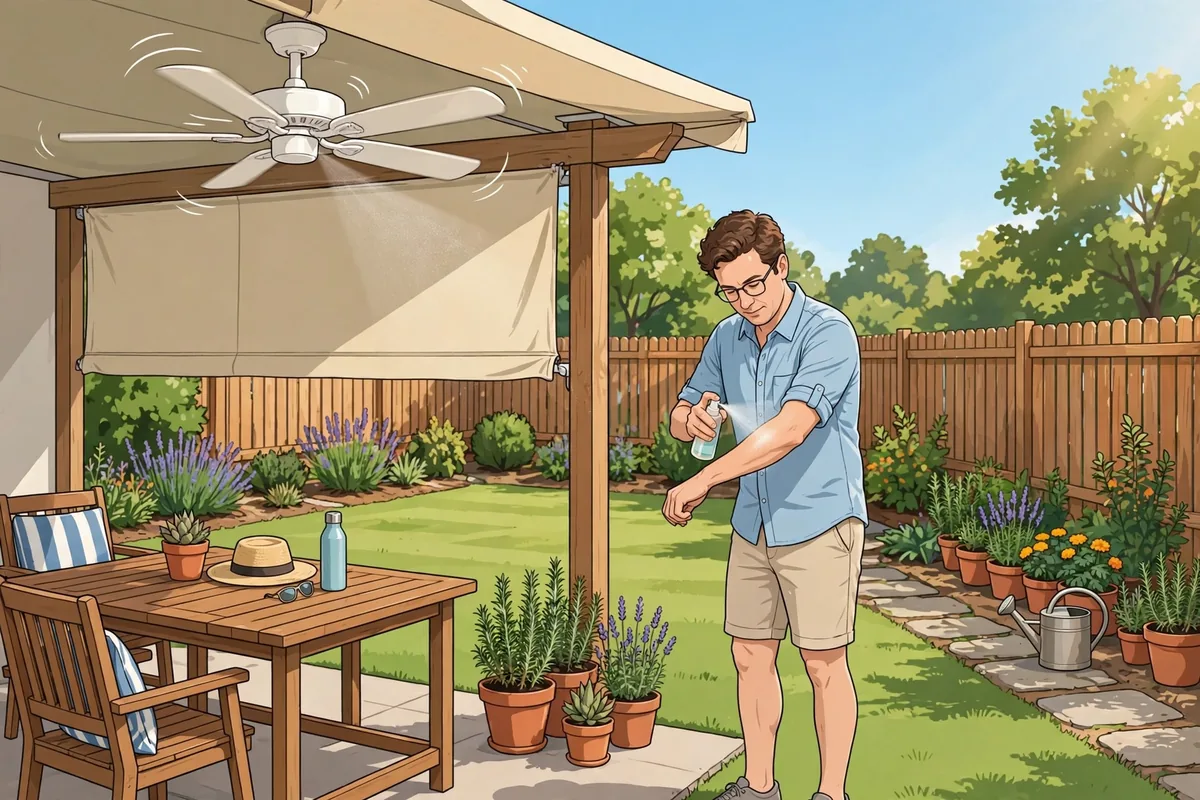
Add a fan. Mosquitoes are weak fliers, and a patio fan disrupts their flight while dispersing the CO₂ plume they follow — cheap, chemical-free, and better supported than any trap for a seating area.
Consider CO₂-baited traps for serious problems. Propane-powered traps emitting real, measured plumes of carbon dioxide have the strongest trap evidence — but they cost several hundred dollars plus ongoing fuel, need regular maintenance, and still work best alongside source reduction.
Skip the citronella-only strategy. Candles and torches smell nice and may slightly reduce bites in their immediate vicinity, but the evidence for meaningful area protection is weak — see our review of whether citronella candles work.
The bottom line: a DynaTrap is a real insect trap that catches real insects, just mostly not the ones biting you. Buy it for general flying-insect reduction with modest expectations, not as mosquito control.
Trap or no trap, bites happen. Seek care when:
Will a DynaTrap eliminate mosquitoes in my yard?
No — and no UV-light trap will. Independent tests show these traps catch mostly moths, midges, and other non-biting insects, because UV light does not exploit the carbon dioxide, heat, and odor cues host-seeking mosquitoes follow. Expect general flying-insect reduction, not a bite-free yard.
Where should I place my DynaTrap?
The manufacturer’s guidance is sound: 3 to 6 feet off the ground, 20 to 40 feet away from where people gather, in a shaded spot with insect activity, running 24/7 during mosquito season. Placing it right next to your patio is the most common mistake — it can draw insects toward you.
How long does it take to see results?
The company says at least 3 weeks to trap enough mosquitoes to notice an impact and 6 weeks to affect the breeding cycle. In practice, many users report full catch baskets of moths within days and no noticeable change in biting — which tells you the trap is working as an insect trap, just not as mosquito control.
Is the titanium dioxide CO₂ claim legitimate?
The chemistry is real — titanium dioxide under UV can release CO₂ — but the company publishes no output figures, and independent measurements are essentially nonexistent. Field tests show mosquito-poor catches, not what you would expect from a competitive CO₂ plume. Treat the claim as unproven.
What is better than a DynaTrap for mosquitoes?
Source reduction (dumping standing water) has the most evidence per dollar, followed by EPA-registered repellents and patio fans for personal protection. Propane-powered CO₂ traps have the strongest trap-specific evidence but cost several hundred dollars plus fuel. Most experts recommend combining several measures rather than relying on any single device.
Medically reviewed by Dr. Sarah Jones, MD.
This article is for informational purposes only and isn’t medical advice. If you’re worried about a bite or sting, talk to a healthcare professional.
Dr. Jones oversees StingHelp’s clinical verification process. Every guide is systematically evaluated against active Centers for Disease Control and Prevention (CDC), Environmental Protection Agency (EPA), and American Academy of Allergy, Asthma & Immunology (AAAAI) medical consensus standards to ensure symptom distinctions and care recommendations are clinically sound.
Explore physician-reviewed first-aid procedures, identification clues, and symptom comparisons for other common outdoor bites and stings.

It's a warm July evening, the grill is going, and within ten minutes your ankles are under attack. You've heard the backyard advice a…

Every summer, a new "hack" makes the rounds: skip the bug spray, just slick on baby oil. This year's version blew up on TikTok,…

It is the most common summer layering question in America: sunscreen or bug spray first? Get the order wrong and you either dilute your…