
After heavy rain or flooding, fire ants become a bigger threat than usual — and not just because their mounds wash out. Colonies survive floods by linking their bodies into living, floating rafts, and displaced ants set up new mounds in unexpected places. Fire ants after rain demand extra caution: never touch floodwater debris with bare hands, and watch every step once the water recedes.
Why rain makes fire ants more dangerous #
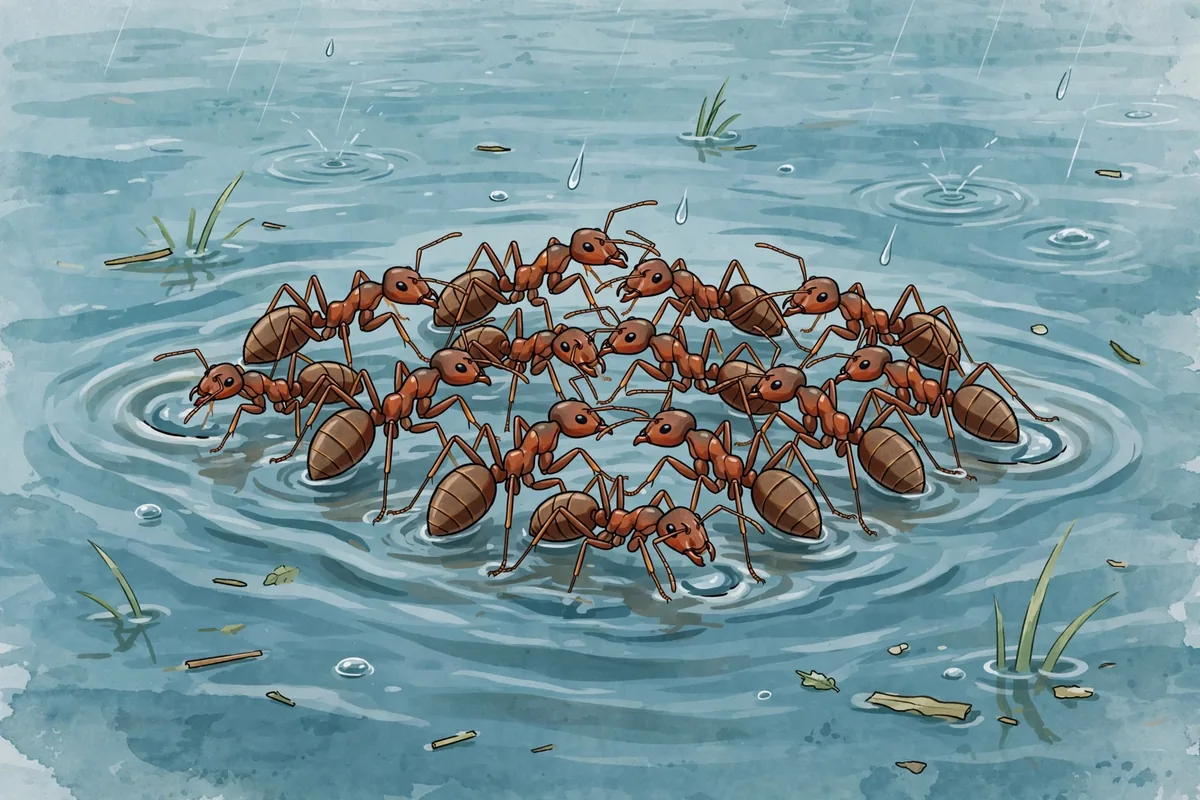
When floodwater rises, a fire ant colony does something remarkable: workers link legs and jaws together into a floating raft that can carry the queen, brood, and thousands of workers for days or even weeks. These rafts look like shifting reddish-brown mats or clumps drifting on the water, and they are one of nature’s most unsettling sights. The danger is that a raft can break apart on contact — brushing one with a hand, a boot, or a paddle sends hundreds of angry ants swarming up whatever touched it.
Even without flooding, heavy rain drives ants out of saturated mounds. Displaced colonies relocate quickly, building fresh mounds in new spots: along fence lines, in mulch beds, around foundations, and in debris piles. After a storm, mounds you have known for years may be gone while brand-new ones appear where children and pets play. Ants are also more aggressive when disturbed during relocation, so a mound that seemed sleepy last week can be fiercely defensive today. Learn to tell a fire ant mound from a regular ant hill before you start stomping anything.
Protecting your family after storms #
Treat all floodwater and storm debris as potentially ant-covered. Wear rubber boots, long pants tucked into the boots, and gloves when clearing branches, trash, or furniture that sat in water. Do not let children or pets wade through floodwater, and keep them off debris piles entirely — rafts and relocated colonies hide in exactly the places curious kids explore.
Walk the yard once water recedes and flag every new mound with a stake or bright marker before anyone plays outside. Teach children the new-mound rule: if you see fresh loose soil piled in a mound shape, stay away and tell an adult. Keep shoes on outdoors for at least a week after major rain, and shake out shoes left outside before wearing them. Inside the house, check entry points, since flooding can drive ants indoors through gaps around pipes and doors; a line of ants along a baseboard after a storm is worth investigating rather than ignoring.
What to do if you are stung #
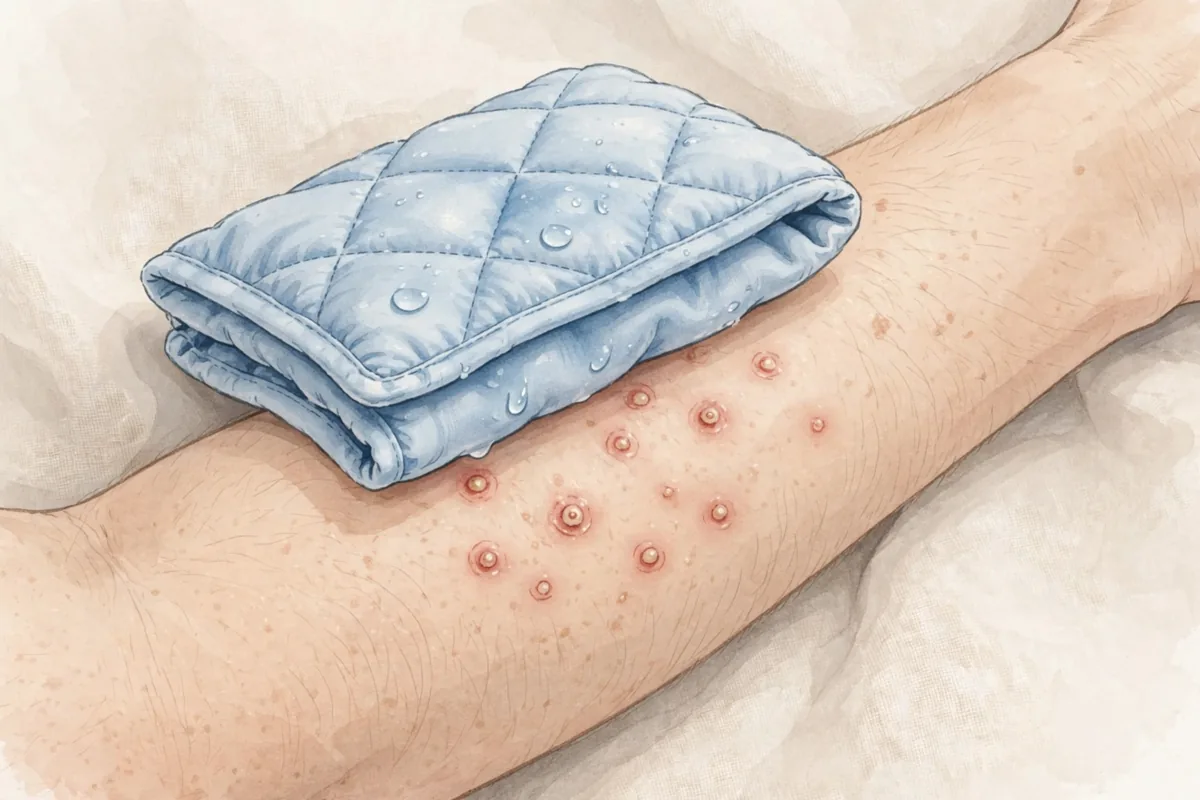
Fire ant stings burn immediately and typically raise itchy white pustules within a day. If you step on a mound or contact a raft, move away fast — brush ants off with a cloth or your hand in quick sweeping motions rather than slapping, which makes them sting more. Once clear, wash the skin with soap and water and apply a cold compress to ease the burning.
The pustules are the tricky part: they look like they should be popped, but breaking them open invites infection and scarring. Leave them alone, keep the area clean, and let them resolve on their own over a week or so. An oral antihistamine taken per label directions can help with itching, and a thin layer of antibiotic ointment is reasonable only if the skin breaks. Review what not to do with fire ant sting pustules so a common mistake does not turn a routine sting into a skin infection. If stings number in the dozens — easy to rack up from a raft encounter — seek medical advice even if you feel okay at first, since large venom loads can cause systemic symptoms.
Rebuilding your yard defenses #

Once things dry out, walk the property and treat active mounds with a bait product labeled for fire ants, following the label exactly — baits work best when ants are actively foraging, typically in mild weather. For mounds near play areas, patios, or pet zones, consider having a professional treat the yard, especially after flooding has scattered colonies across the property.
Long-term, reduce what attracts colonies to settle near the house: clear brush and debris piles, fix drainage so water does not pool, and seal gaps where ants enter the home. After future storms, repeat the mound survey — post-rain vigilance is a habit, not a one-time chore. If anyone in the household has reacted badly to fire ant stings before, talk to an allergist about whether venom allergy testing makes sense; post-storm season is when exposures spike.
Warning signs: when to seek care #
Call 911 immediately if stings cause trouble breathing or swallowing, swelling of the face, lips, tongue, or throat, widespread hives, dizziness or fainting, or a racing heartbeat. If the person carries an epinephrine auto-injector, use it first and then call 911. Dozens of stings at once — common in raft encounters — also merit emergency evaluation.
Seek urgent care or call your doctor if pustules become increasingly painful, hot, and swollen with spreading redness or red streaks, if pus increases rather than resolving, or if fever develops — these suggest infection. Children who were swarmed, anyone with a known fire ant allergy, and stings inside the mouth or on the face deserve prompt medical evaluation rather than watchful waiting.
Frequently asked questions #
How long can a fire ant raft survive on floodwater? #
A well-formed raft can keep a colony alive on the water for days and in some cases weeks, with workers cycling so no individual stays submerged too long. Do not assume a floating clump you see today will be gone tomorrow. Give any suspicious floating debris a wide berth and warn neighbors, since rafts drift with currents into new areas.
Can fire ants sting in water? #
Yes. Fire ants cling to skin and sting readily whether you are on land or wading. In fact, water encounters are worse because the ants cannot be brushed off as easily and victims often panic. This is a core reason floodwater after storms in fire ant country is genuinely dangerous, not just unpleasant.
Why did new mounds appear where there were none before the rain? #
Flooding destroys old mounds and forces colonies to relocate, while even ordinary heavy rain can split or move colonies. Fresh mounds after rain are often built fast and look like loose, fluffy soil piles without a visible entrance hole. Treat every new mound as active until proven otherwise.
Is it safe to mow the lawn after heavy rain in fire ant country? #
Wait until the ground firms up and you have walked the yard to flag new mounds. Mower vibration is one of the classic ways people get swarmed — the machine passes over a fresh mound and hundreds of defenders pour out onto the operator’s legs. Flag mounds first, treat or avoid them, and wear boots and long pants when you mow.
Medical and editorial note #
This guide is general information about fire ant safety after rain and flooding, not medical advice. Fire ant stings can cause severe allergic reactions and secondary infections. If you experience signs of a serious reaction or infection after stings, seek medical care promptly, and consult a healthcare professional about allergy evaluation if stings are a recurring risk.


