
Wasp Nest in Your Grill: Safe Removal & Sting First Aid
A wasp nest in a grill is one of the most awkward pest situations a homeowner can face: the usual fix (wasp spray) is…
The mower passes over a bare patch of lawn, and suddenly the air fills with angry yellow-and-black insects. Your legs burn with stings before you understand what happened. A yellowjacket…
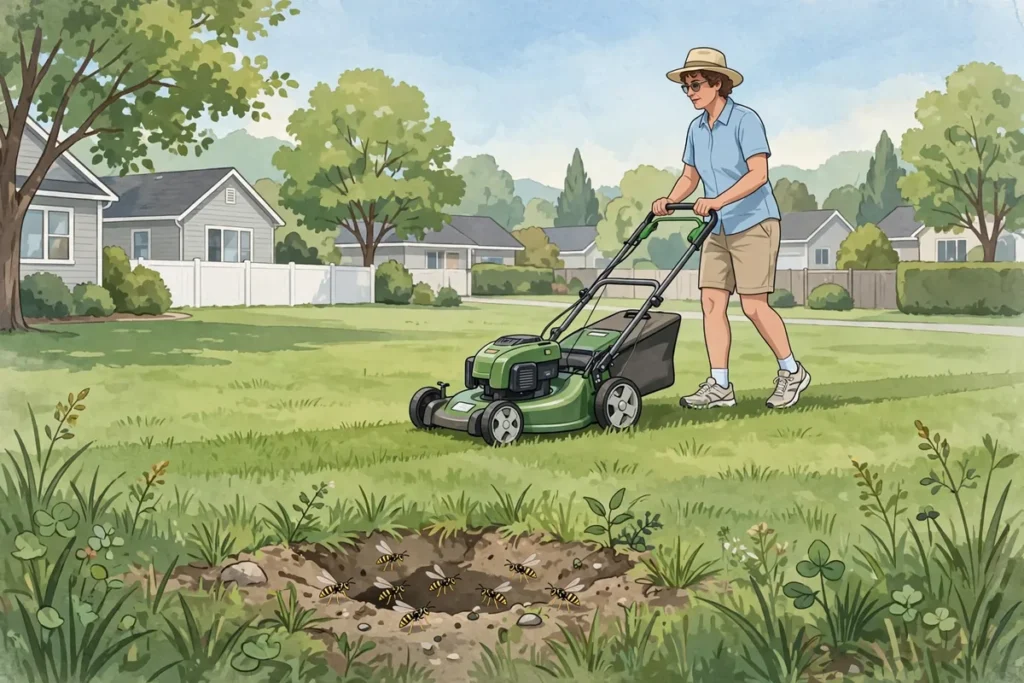
The mower passes over a bare patch of lawn, and suddenly the air fills with angry yellow-and-black insects. Your legs burn with stings before you understand what happened. A yellowjacket ground nest mowing lawn sting attack is a classic late-summer emergency — and your actions in the first thirty seconds determine whether you walk away with a few stings or dozens.
This guide covers why mowers trigger attacks, what to do mid-attack, first aid for multiple stings, and how to deal with the nest afterward — safely.
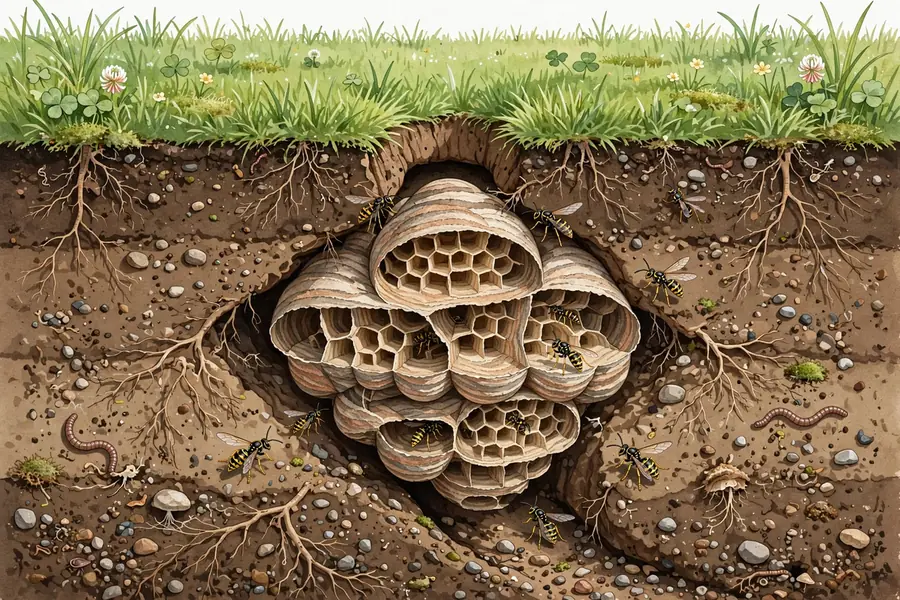
Many of the most aggressive yellowjackets — including common eastern and German species across the US — nest underground, usually in abandoned rodent burrows or cavities under sheds and landscape timbers. From the surface, the whole colony is betrayed by a single unremarkable hole about an inch wide, with wasps streaming in and out on warm days. If you’re not looking for it, you’ll never see it.
By late summer, a single underground nest can house several thousand workers, all programmed to defend the queen and brood. Unlike honeybees, yellowjackets don’t lose their stingers — each wasp can sting repeatedly, and disturbed wasps release alarm pheromones that summon nestmates. One wasp investigating a vibration can escalate into hundreds of defenders in under a minute.
Mowers deliver exactly the “predator attack” profile: ground vibration, noise, exhaust, and a large object passing over the entrance. One pass over the hidden hole, then a boiling cloud converges on the operator — wasps are faster than any mower.
Fall is peak danger season for two reasons: colonies are at maximum population just as food gets scarce, making workers more aggressive — and this is exactly when homeowners do heavy end-of-season mowing. If you live in yellowjacket territory, treat every late-summer mow as a potential encounter and know your exit plan before starting the engine.
When the attack starts, your instincts will scream at you to swat — override them. Swatting crushes the wasp against your skin (guaranteeing a sting) and releases more alarm pheromone, calling reinforcements. Flailing also keeps you in the danger zone longer. The correct response is boring and effective: leave, fast, in a straight line.
Run. Get off the mower and run directly away from the nest toward the nearest enclosed shelter — house, garage, or car with closable doors and windows. Don’t stop for the mower, your hat, or anything else. Yellowjackets pursue for surprising distances, sometimes a hundred yards or more, so keep running until well clear, then get inside and stay there 30 to 60 minutes until the wasps disperse.
Protect your face and airway as you run. Pull your shirt up over your nose and mouth if you can without stopping. Stings to the face, neck, and especially inside the mouth or throat are most dangerous because swelling can obstruct breathing. If a wasp gets inside clothing, brush it out or strip the garment once you’re clear — don’t panic-swat.
Don’t jump into water. Persistent folk advice, and wrong: yellowjackets hover above the surface and wait, easily outlasting your breath-hold. You’ll surface into an angrier cloud.
Don’t go back for the mower yet. Wasps stay agitated around the entrance long after a disturbance. Give the colony at least 30 to 60 minutes to settle before retrieving equipment, approach from upwind and a different direction, and stay ready to run again.
Once safe inside, take stock: estimate sting count, check for stings in the mouth or throat, and watch everyone for allergic reaction signs. Trouble breathing, throat tightness, dizziness, or widespread hives means emergency — more below.
A single yellowjacket sting brings sharp burning pain, then redness and swelling peaking over a day or two. Multiple stings multiply the misery and, past a point, the medical risk.
For every sting site: wash with soap and water, then apply a cold compress or ice pack wrapped in a thin cloth for ten minutes at a time. Cold is your best tool against swelling and throbbing. Yellowjacket stingers don’t stay in the skin (unlike honeybees), so there’s nothing to scrape out — but check anyway for debris. Raise the stung limb if practical, and resist scratching, which invites infection.
An over-the-counter oral antihistamine can help itching and local swelling; follow package directions. Hydrocortisone cream or calamine lotion eases the itch over following days. Our first-ten-minutes guide walks through this sequence step by step.
Now the important part: multiple stings deserve extra respect even without known allergy. Venom dose matters. As a practical rule, a dozen or more stings warrants a call to a clinician or urgent care even if you feel okay — large venom loads can cause delayed systemic symptoms including nausea and headache, and rarely affect kidneys or muscles. Any sting inside the mouth or throat should be evaluated promptly.
Watch for anaphylaxis for several hours, not just minutes. Difficulty breathing, throat tightness, dizziness, fainting, rapid pulse, or widespread hives and flushing can develop on delay. If they appear, call 911 immediately — and use an epinephrine auto-injector without hesitation if one is available. Review the full anaphylaxis warning signs so your household recognizes them.
Over the following week, watch each site for infection: expanding redness after day one, increasing pain, warmth, pus, or red streaks mean possible cellulitis. Fatigue for a day or two afterward is common — rest and hydrate.
Once everyone is treated and calm, locate the nest entrance — from a safe distance, without provoking a second attack. Wait until the colony has fully settled, then observe from at least 15 to 20 feet away. On a warm sunny day, watch for a steady “highway” of yellowjackets flying in and out of a single hole — often in a bare patch, at a landscape timber’s base, near a rock wall, or along a fence line where an old burrow opens to the surface.
Mark the spot without approaching it: toss a bright flag or cone near (not on) the entrance from throwing distance, or note a landmark. The goal is finding the hole again at dusk without wandering around kicking the ground. Keep children, pets, and yard equipment away from the marked zone until the nest is dealt with.
If the nest sits far from human activity — the back of a large property — simply leaving it alone is legitimate. Colonies die off naturally in late fall and never reuse the same nest, so avoidance plus patience works for remote nests.
Don’t poke the hole, pour water down it “to check,” or peer into it. Every disturbance re-arms the colony’s defenses. Observation from distance is the entire technique.

With the entrance marked, you have three responsible options: treat it yourself at night, hire a professional, or wait out the season. What you must not do is improvise with gasoline, kerosene, or fire — despite how often forums recommend it. Pouring fuel into the ground is a fire and explosion hazard that contaminates soil and groundwater. Pest professionals and extension services are unanimous: skip it entirely.
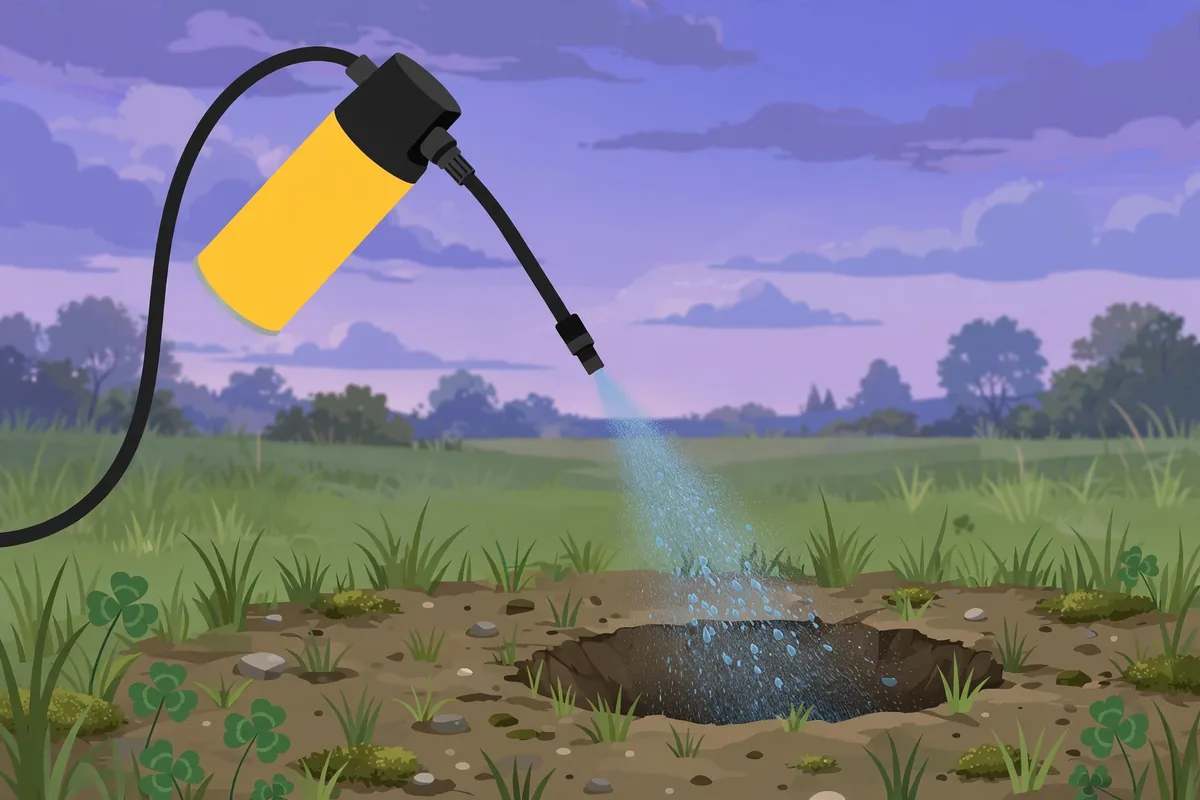
DIY treatment — only if you’re not allergic and the nest is accessible: Work after dark, when foragers have returned and the colony is calm. Wear full coverage — long pants tucked into socks, long sleeves, gloves, eye protection — and plan your escape route first. Use a wasp and hornet spray labeled for ground nests, preferably a foaming formulation with a long-distance nozzle. Approach quietly without bright light, aim foam directly into the entrance to seal it, then leave immediately. Check from a distance the next day; a second application is sometimes needed. Keep everyone, including pets, away per the product label.
Call a professional when: anyone in the household has a venom allergy, the nest is large or has multiple entrances, it’s under a structure or in a wall void, or you’re simply not comfortable. Pest operators have protective suits and commercial products; the fee is trivial next to an ER visit. If someone nearby is allergic, professional removal isn’t optional — it’s the plan.
Wait it out when: the nest is remote, the season is nearly over, and avoidance is practical. Mark it, mow a wide berth around it, and let winter finish the job. Watch the area next spring, though — new queens found new nests yearly, and last year’s hole sometimes attracts a new colony.
You can’t make a property yellowjacket-proof, but you can make it less inviting. In early spring, fill abandoned rodent burrows and groundhog holes with tamped soil — queens seeking nest sites in April and May prefer ready-made cavities. Seal gaps under sheds and porches. Keep tight lids on outdoor trash and clean up fallen fruit promptly; late-summer yellowjackets are scavengers, and a yard full of food waste teaches scouts your property is worth colonizing.
During mowing season, scan for wasp traffic before starting the mower, especially late summer. Steady in-and-out traffic at a ground hole means mark it and mow a wide berth until you can treat it at dusk.
Finally, rehearse the drill with your family: if wasps swarm, everyone runs straight to the house — no stopping, no swatting. Kids especially need this practiced, because a child’s instinct is to freeze or flail. A thirty-second conversation in August can prevent a terrifying afternoon in September.
Yellowjacket attacks can involve dozens of stings — take the care threshold seriously.
Can yellowjackets sting more than once?
Yes. Their smooth stingers don’t tear out like honeybees’, so one wasp can sting repeatedly. Combined with colony defense behavior — alarm pheromones recruiting nestmates — this is why disturbing a ground nest produces so many stings so fast.
How long will yellowjackets chase you?
They can pursue a hundred yards or more and stay agitated around the nest for 30 minutes to over an hour. Run in a straight line to enclosed shelter, get inside, and don’t go back out until they’ve dispersed.
Should I pour gasoline on a yellowjacket nest?
No. It’s a fire and explosion risk, contaminates soil and groundwater, and pest professionals strongly advise against it. Use a labeled foaming wasp spray applied at night, or hire a professional — especially if anyone nearby has a venom allergy.
When are yellowjackets most aggressive?
Late summer into fall, when colonies are largest and natural food gets scarce. This coincides with heavy mowing season, which is why mower-triggered attacks spike August through October in most of the US.
Do yellowjacket nests get reused the next year?
No. The colony dies in late fall; only mated queens overwinter, each founding a new nest elsewhere in spring. An old nest is never reoccupied, though a new queen may pick a similar nearby spot.
Medically reviewed by Dr. Sarah Jones, MD.
This article is for informational purposes only and isn’t medical advice. If you’re worried about a bite or sting, talk to a healthcare professional.
Dr. Jones oversees StingHelp’s clinical verification process. Every guide is systematically evaluated against active Centers for Disease Control and Prevention (CDC), Environmental Protection Agency (EPA), and American Academy of Allergy, Asthma & Immunology (AAAAI) medical consensus standards to ensure symptom distinctions and care recommendations are clinically sound.
Explore physician-reviewed first-aid procedures, identification clues, and symptom comparisons for other common outdoor bites and stings.
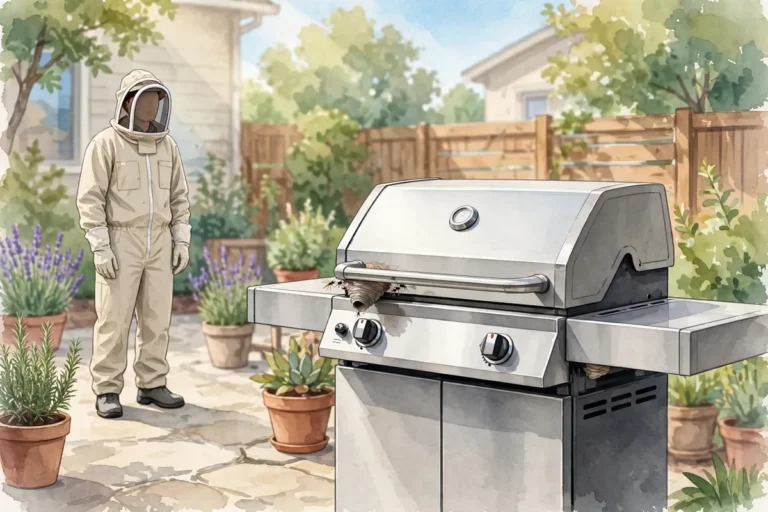
A wasp nest in a grill is one of the most awkward pest situations a homeowner can face: the usual fix (wasp spray) is…
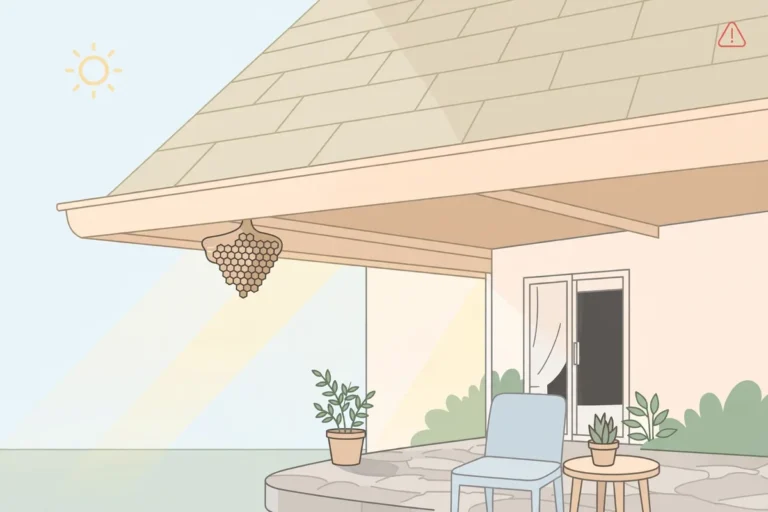
The Answer Is No, and That Is Only Half the Story Homeowners hang mothballs from eaves, scatter them around patios, and tuck them into…
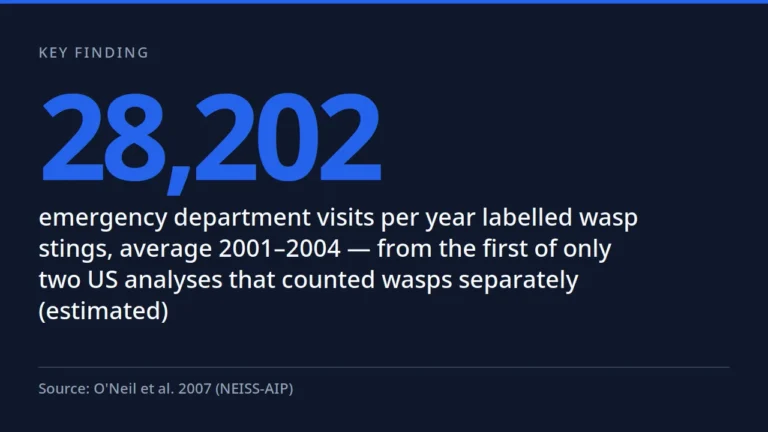
The only sourced US counts of wasp and yellow jacket stings — 28,202 and 11,797 emergency department visits a year in 2001–2004 — with every newer combined bee/wasp/hornet figure labelled and dated.