
Burning bumps after a walk through the grass? The fire ant sting vs chigger bite question trips up a lot of people because both love warm weather and both strike around the feet and legs. The single best separator: fire ant stings turn into small white pustules within about a day — chigger bites never do, but they itch far more intensely, especially at waistbands and sock lines. Here is how to run both tests and treat each correctly.
Fire Ant Sting vs Chigger Bite: Side-by-Side #
| Clue | Fire ant sting | Chigger bite | |—|—|—| | First sensation | Sharp burning pain or sting, often immediate | Usually nothing — bites are painless at first | | Signature mark | White or yellowish pustule (pimple-like bump) within ~24 hours | Red, intensely itchy welts — no pustules | | Pattern | Scattered stings where ants attacked, often many at once | Clusters where clothing was tight: waistband, sock lines, underarms | | Itch level | Moderate itch after the burn fades | Extreme itch, peaking 24-48 hours later | | Location | Feet, ankles, legs — wherever ants swarmed | Ankles, waist, groin, armpits, behind knees | | The moment | You felt it happen — burning, brushing ants off | You felt nothing — itching started hours later | | Source | Disturbed a mound or stood in foraging ants | Sat, walked, or lay in grass, brush, or leaf litter |
If you remember a sudden burning attack and now see white-headed bumps, that is fire ants. If the itch ambushed you hours after a hike and the bumps cluster at your sock line, those are chiggers.
The Pustule Test: Fire Ants Signature Clue #
A fire ant does not just bite — it grips the skin with its jaws and stings repeatedly while pivoting, injecting venom each time. The result is a burning pain that usually fades within minutes, followed by redness and itching. Then comes the hallmark: within about 24 hours, each sting site develops a small white or yellowish pustule that looks like a pimple.
That pustule is a normal, sterile reaction to the venom — not a sign of infection. Left alone, it typically dries up within a few days. The critical rule: do not pop or pick at fire ant pustules. Breaking them open lets bacteria in and turns a harmless venom reaction into a genuine skin infection. Keep the area clean, avoid scratching, and let the bumps run their course.
If a pustule breaks accidentally, wash gently with soap and water and cover with a clean bandage. Watch for the infection signs described in the warning section below — spreading redness or increasing pain after 48 hours means the situation has changed.
The Itch Test: Chiggers Signature Clue #
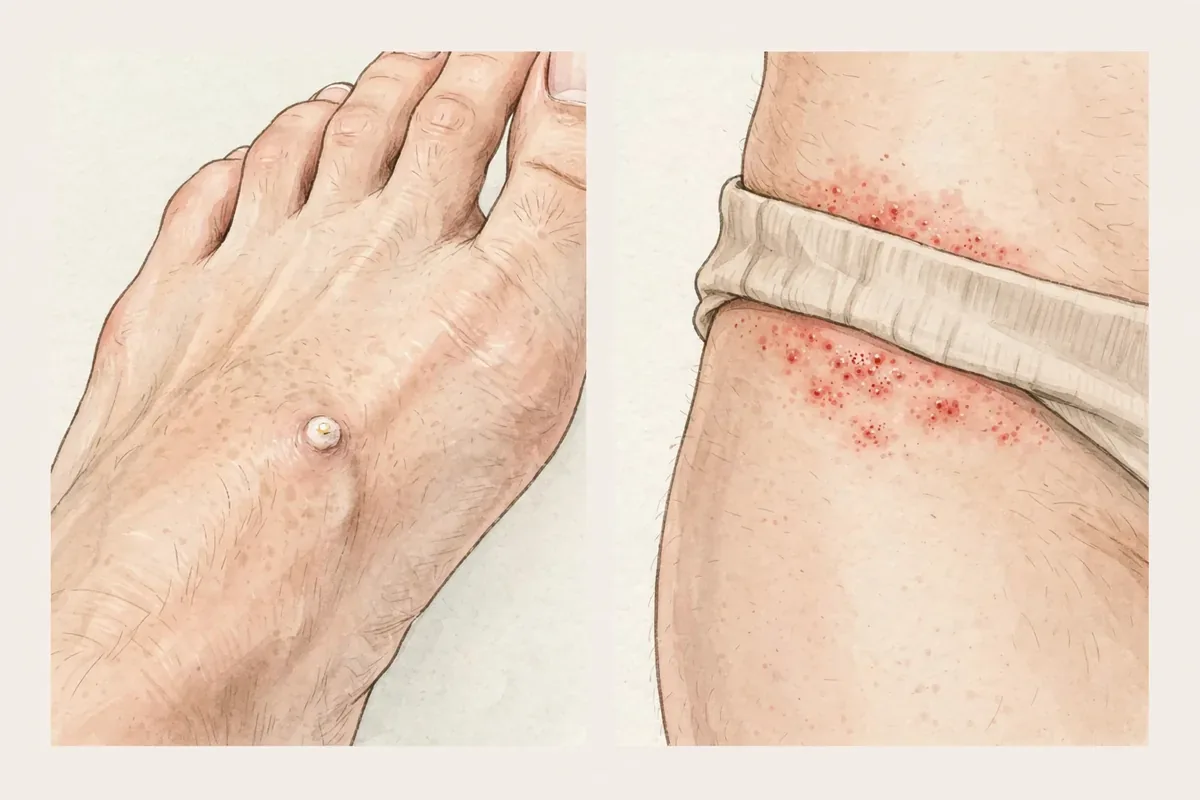
Chiggers are the nearly invisible larvae of harvest mites. They do not burrow into skin or suck blood — they inject digestive enzymes that dissolve skin cells, and the body’s reaction to those enzymes is what itches so ferociously. The bite itself is painless, which is why chigger attacks are always discovered after the fact.
The itch typically starts a few hours after exposure and peaks around 24 to 48 hours. Bites concentrate wherever clothing pressed the tiny larvae against the skin: waistbands, sock lines, underwear edges, armpits, and behind the knees. The welts are red and angry-looking but never develop the white pustules of fire ant stings — that absence is diagnostic.
Scratching chigger bites does not spread them (they are not contagious and there is nothing to spread), but it does break the skin and invite infection. If you are worried that an itchy bite might be infected, our guide to chigger bite infection warning signs lays out exactly what to watch for.
First Aid for Each #
Fire ant stings:
- Brush ants off and move away from the mound immediately, then wash the skin with soap and water.
- Apply a cold compress in 10 to 15 minute intervals to calm burning and swelling.
- Ease itching with calamine lotion or 1% hydrocortisone cream; an oral antihistamine per label directions can help when there are many stings.
- Leave pustules completely alone. Do not pop, squeeze, or cover them with tight bandages.
Chigger bites:
- Take a warm shower and wash thoroughly with soap as soon as possible — this removes any larvae still on the skin.
- Wash clothing and bedding in hot water.
- Treat the itch aggressively: cold compresses, calamine or hydrocortisone cream, and an oral antihistamine per label directions, since chigger itch is notoriously stubborn.
- Trim fingernails and consider covering the worst spots loosely at night to prevent sleep-scratching.
Both types benefit from the same wound hygiene principles — see how to clean a bite or sting safely for the full routine.
Prevention Where They Live #
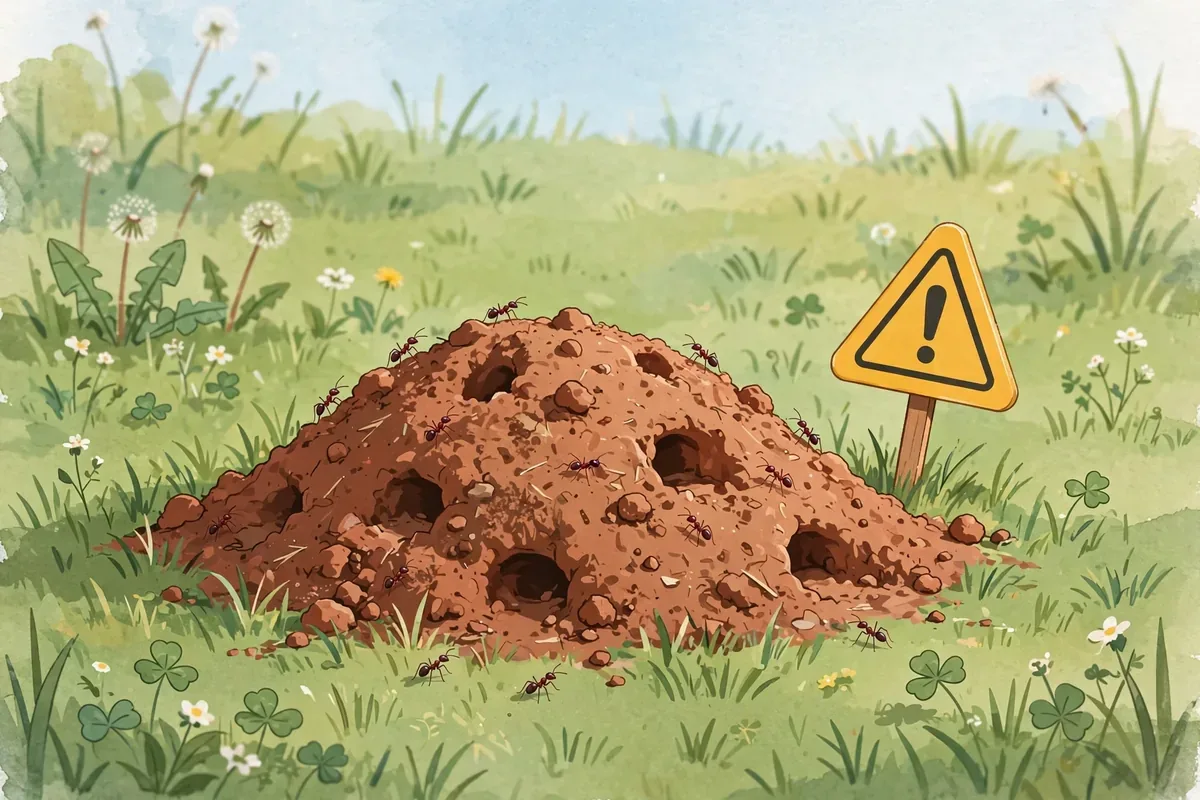
- Fire ants: Learn what a mound looks like — a soft, irregular dome of loose soil, often after rain — and teach kids not to stand on or poke them. Wear closed shoes in the yard in fire ant country. If you garden near mounds, treat or avoid the area rather than working around it.
- Chiggers: Wear long sleeves and pants tucked into socks when walking through tall grass, brush, or woodland edges. Use an EPA-registered repellent on skin and clothing. Afterward, shower promptly and wash clothes in hot water — chiggers are fragile and a hot wash kills them.
- Both: Keep lawns mowed short and clear brush piles near play areas. For severe or recurring fire ant problems, a pest professional can treat mounds without you having to approach them.
Warning signs: when to seek care #
Call 911 immediately if you develop trouble breathing or swallowing, swelling of the face, lips, tongue, or throat, widespread hives, dizziness or fainting, or a racing heartbeat after any insect exposure. Fire ant venom can trigger anaphylaxis in sensitive people. If you have an epinephrine auto-injector, use it at the first sign of a severe reaction.
For urgent care or a doctor visit: many stings at once (especially in a child), stings near the eyes or mouth, pustules that are spreading, redness that keeps expanding after 48 hours, pus, fever, or itching so severe it is not responding to treatment. Chigger bites that become warm, swollen, and painful may be infected and need a clinician’s assessment.
Frequently asked questions #

Are chigger bites contagious? #
No. Chiggers do not live on people, do not reproduce on skin, and cannot spread from person to person. The rash is your own immune reaction, not something you can pass on.
Do fire ant pustules mean infection? #
No — a white pustule within a day of a fire ant sting is the expected, sterile venom reaction. Infection looks different: expanding redness, increasing pain after 48 hours, warmth, pus, or fever.
How long does chigger itch last? #
The worst itching usually peaks within the first two days and fades over one to two weeks. Consistent itch control and no scratching are the fastest way through it.
Can chiggers get under my skin? #
No — that is a myth. Chiggers stay on the surface, feeding on dissolved skin cells, and are usually dislodged or washed off within a day or two.
Medical and editorial note #
This guide is general information about identifying and treating fire ant stings and chigger bites, not medical advice. Reactions vary between people, and other conditions can mimic both. If you are unsure of the cause, if symptoms are severe, or if anything worries you, see a healthcare professional for an in-person evaluation.


