
Chigger bites themselves almost never become infected — but chigger bite infection warning signs appear when relentless scratching breaks the skin and bacteria get in. If your intensely itchy red bumps start spreading, develop red streaks, ooze pus, or come with fever, you are no longer dealing with a simple bite reaction. This guide shows you exactly how to tell normal chigger healing from infection, day by day.
Normal chigger bite healing: what to expect #
Chiggers (harvest mite larvae) do not burrow into skin or stay on your body — they feed for a few hours, inject digestive enzymes, and drop off. What remains is an intensely itchy immune reaction. Normal healing looks like this:
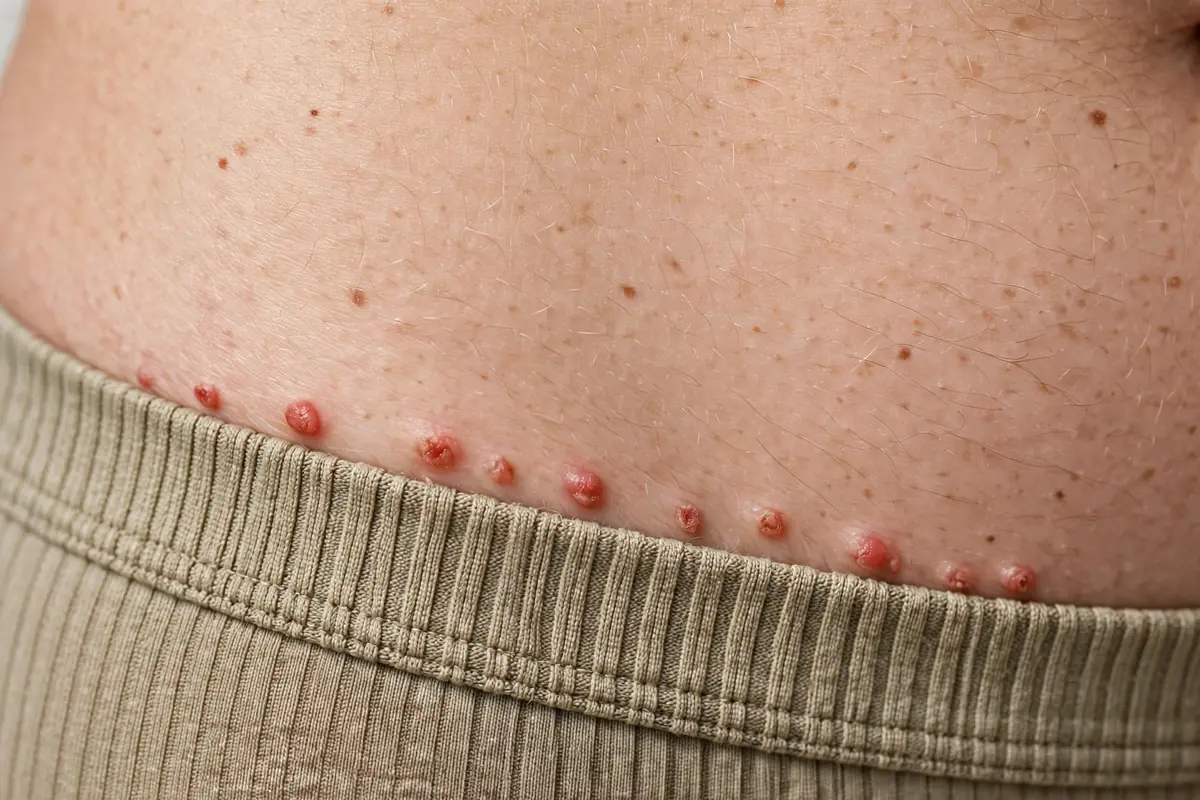
- Hours 0–24: small red bumps or welts appear, often in clusters where clothing was tight — waistband, sock lines, underwear elastic, armpits. Itching starts within hours and intensifies.
- Days 1–3: peak itch. Bumps may develop a tiny blister-like cap. This is the worst phase and it is completely normal.
- Days 4–7: itching gradually fades. Bumps flatten and dry.
- Days 7–14: most bites resolve, sometimes leaving faint dark marks that fade over weeks.
The defining trait of a normal chigger reaction is that the redness stays confined to each bite bump and the overall trend — despite the miserable itch — is slow improvement after day 3 or 4. Mild warmth right at the bump is fine. To compare against other look-alikes, see our guide on why a bite gets redder after 24 hours.
Warning signs of infection: the checklist #
Infection (most commonly cellulitis or impetigo from Staphylococcus or Streptococcus bacteria) enters through skin broken by scratching. Run through this checklist daily while bites are healing:
Red flags — contact your doctor promptly:
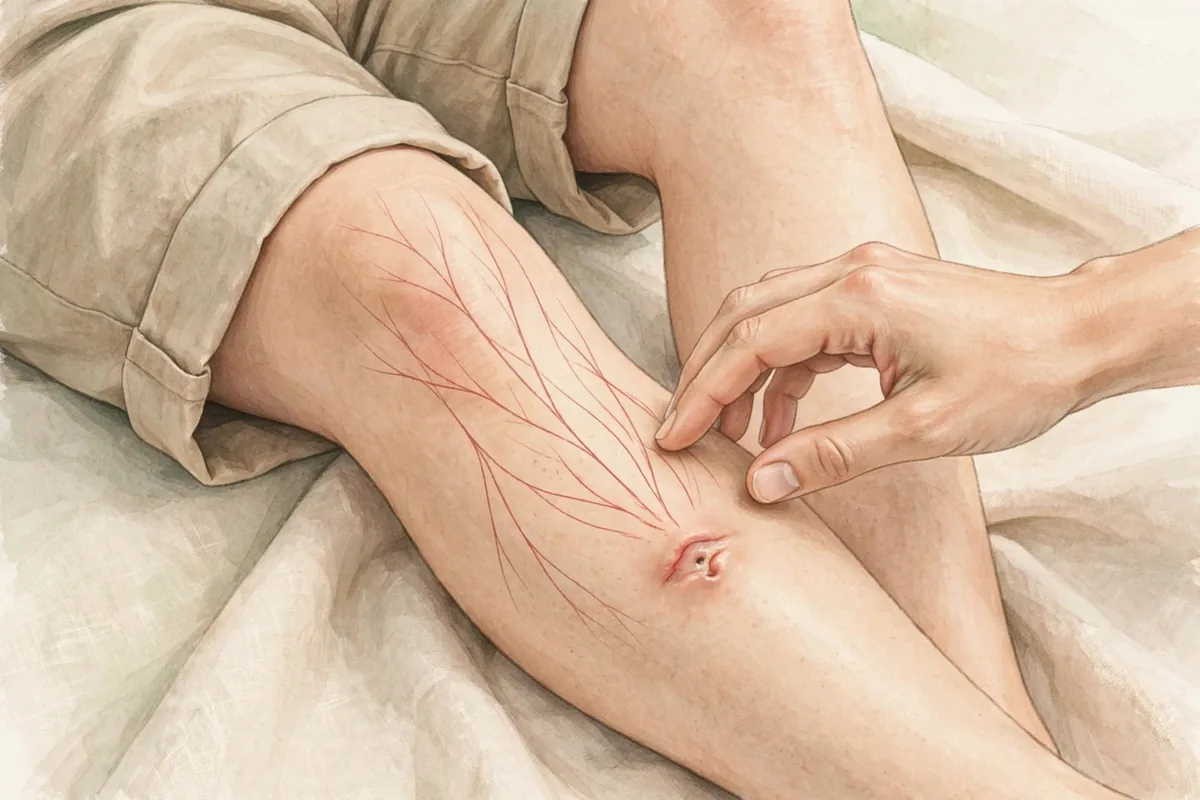
- Red streaks radiating outward from a bite (lymphangitis) — this is the classic “see a doctor today” sign.
- Spreading redness that grows larger day after day instead of shrinking — mark the edge with a pen and check in 12–24 hours.
- Increasing warmth and swelling around the bite, well beyond the bump itself.
- Pus or cloudy/yellow drainage, or honey-colored crusts forming over the bites.
- Fever, chills, or feeling generally ill alongside worsening bites.
- Swollen, tender lymph nodes near the area (groin nodes for leg bites, armpit nodes for torso bites).
- Worsening pain — normal chigger bites itch; they should not become deeply painful or throb.
Timeline rule: if things are clearly worse on day 4–5 than on day 2 — more red, more swollen, more painful — that is not normal healing. Our normal healing vs infection guide walks through the same comparison in more detail.
What increases the infection risk #
Some people and habits raise the odds of a secondary infection:
- Scratching aggressively, especially with unwashed hands or long nails — the number-one cause.
- Squeezing or picking at blisters or scabs, which opens deeper pathways for bacteria.
- Diabetes, poor circulation, or a weakened immune system — slower healing and higher infection risk.
- Tight, sweaty clothing over the bites, which keeps the area warm and moist.
- Hot tubs, lakes, or pools while bites are raw — contaminated water plus broken skin is a bad combination.
- Delayed cleaning — bites left dirty for days after outdoor exposure.
None of these mean infection is certain. They mean you should watch more carefully and be quicker to call your doctor.
Prevention: scratching less, healing faster #
The best infection prevention is itch control, because controlled itch means intact skin:
- Wash the area with soap and lukewarm water as soon as you notice bites — this removes any remaining chiggers and reduces bacterial load.
- Cold compress for 10–15 minutes at a time to numb the itch.
- Oral antihistamine per label directions for itching, especially at night when scratching happens unconsciously.
- Calamine lotion or a gentle anti-itch cream — avoid scratching through it.
- Keep nails short and clean. Consider wearing light cotton gloves or socks on your hands at night if you scratch in your sleep.
- Do not pick scabs. Let them fall off naturally.
- Cover weepy bites with a clean bandage, changed daily.
Resist home “remedies” like bleach, nail polish, or alcohol soaks — they damage skin without helping and can worsen the situation.
What your doctor may do #
If you see a doctor for suspected infection, expect:
- A visual exam — clinicians diagnose bite infections by appearance and history, not usually by lab tests.
- A topical or oral antibiotic if bacterial infection is confirmed. Take the full course even if you feel better quickly.
- A tetanus check — if your vaccination is not current and skin is broken, a booster may be recommended.
- Rarely, drainage of an abscess if one has formed.
Seek care sooner, not later. Early cellulitis responds well to treatment; infections left for days can spread and occasionally require stronger intervention. There is no benefit to waiting to see if red streaks “go away on their own.”
Warning signs: when to seek care #
Call 911 immediately for: trouble breathing or swallowing; swelling of the face, lips, tongue, or throat; widespread hives; dizziness, faintness, or collapse; or a racing heartbeat — these suggest a severe allergic reaction, which is rare with chiggers but always an emergency.
Contact your doctor promptly (same day or next) for: red streaks spreading from any bite; redness that keeps expanding after marking the edge; pus, increasing warmth, or swelling; fever or chills; swollen tender lymph nodes; or bites that are clearly worse on day 5 than day 2.
Frequently asked questions #
Can chigger bites get infected on their own, without scratching? #
Essentially no. Chiggers do not transmit bacteria that infect the bite — they do not spread disease to humans at all. Infection is always secondary, meaning bacteria from your skin or environment enter through breaks caused by scratching. Intact skin over a chigger bite heals without infection.
How do I know if it’s infected or just a bad reaction? #
Trend and territory. A bad but normal reaction stays confined to the bite bumps and slowly improves after day 3–4. Infection spreads — redness expanding beyond the bumps, red streaks, warmth, pus, fever, or worsening pain after the initial days. When the trend is wrong, call your doctor.
Do chiggers spread disease? #
In the United States, no. Chiggers in parts of Asia can transmit scrub typhus, but US chiggers are a nuisance, not a disease vector. If you develop fever with a rash after travel in Asia, mention the exposure to your doctor — but domestic chigger bites need no disease workup.
Why do my chigger bites itch more at night? #
Itch perception intensifies at night for most skin conditions — fewer distractions, warmer skin under covers, and the body’s natural evening rise in itch-related signaling. It does not mean the bites are getting worse. Nighttime antihistamine per label directions and cool bedding help.
Medical and editorial note #
This guide is general information for educational purposes and is not medical advice. If you suspect a bite infection — especially red streaks, fever, or spreading redness — contact a healthcare professional promptly rather than waiting it out.


