
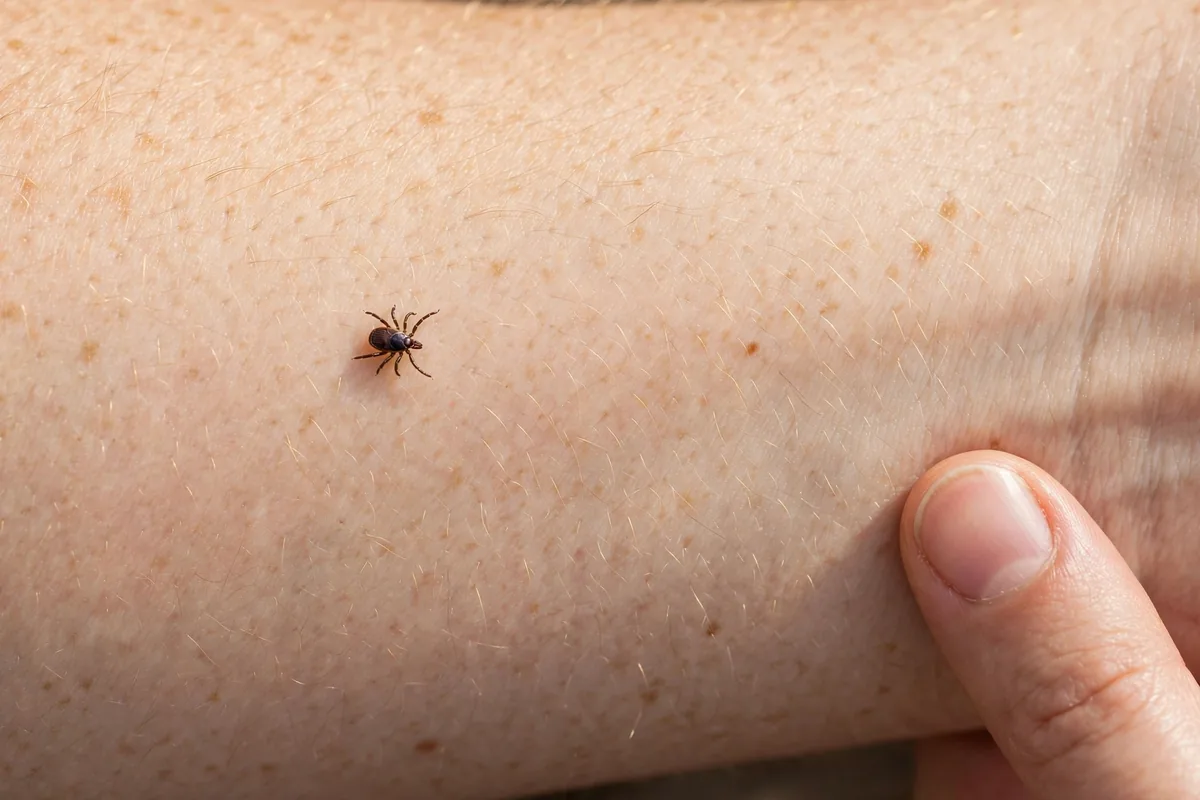
Relax — if you found a tick crawling on you, here is the fact that matters most: a tick that is crawling has not bitten you, and it cannot give you any disease just by walking on your skin. Tick-borne illnesses only spread when a tick attaches and feeds. So take a breath, remove it calmly, and then do a proper check for any ticks that may have attached elsewhere.
A Crawling Tick Has Not Bitten You #
No attachment means no transmission. Ticks transmit bacteria and viruses through their saliva while feeding, which requires the mouthparts to be embedded in your skin for many hours. A tick merely wandering across your arm or leg has broken no skin and exchanged no fluids with you. There is no disease risk from the crawling itself.
Do not confuse crawling with biting. A feeding tick does not crawl — it locks on, buries its mouthparts, and stays put, often for a day or more. If the tick you found was moving, it had not started feeding. That distinction is the whole story.
Still take it seriously. One crawling tick means you were in tick habitat, and where there is one, there may be others — including tiny nymphs you have not noticed. Treat the crawler as an early warning, not an emergency.
Watch for symptoms only if you find an attached tick. Without an actual bite, there is nothing to monitor. No rash watch, no fever watch, no doctor visit is needed for a tick that never attached. Save your attention for the full-body check below, which is the step that actually protects you.
What to Do Right Now #
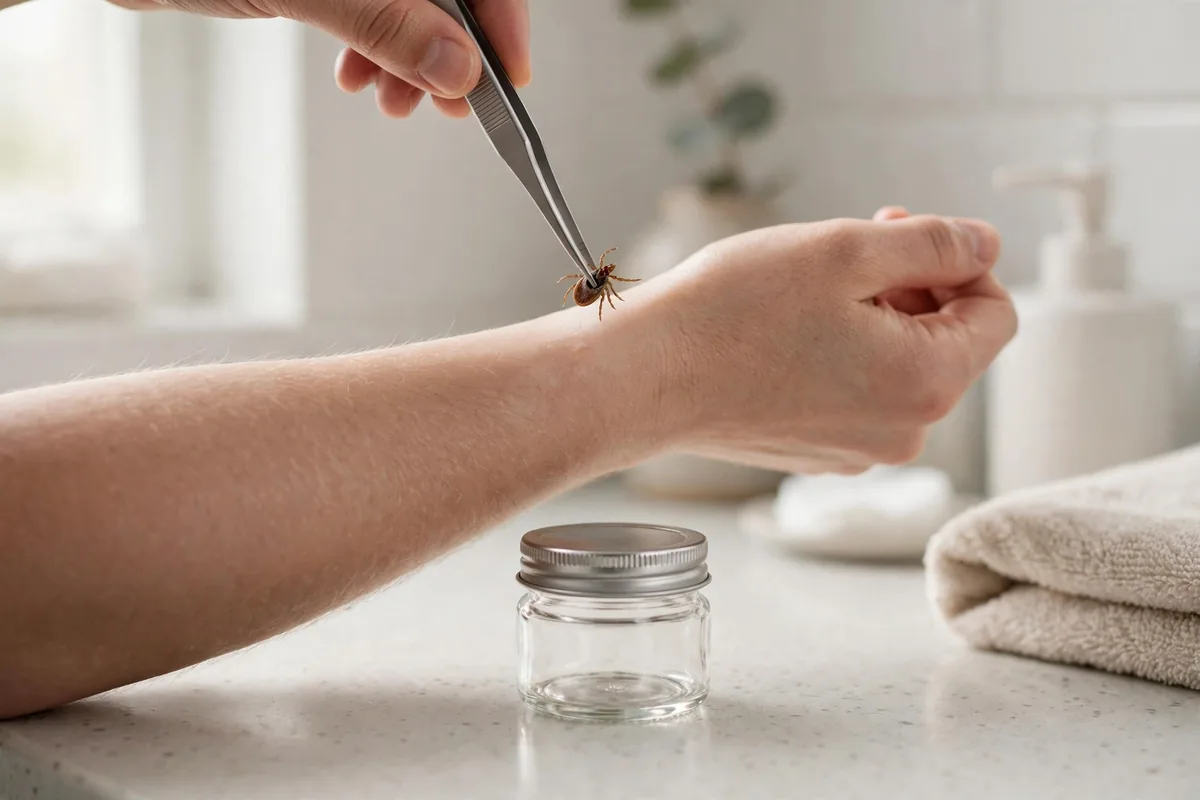
Pick it up with tissue or tweezers. Fold a tissue or paper towel and grasp the tick, or use fine-tipped tweezers. Do not crush it with your bare fingers — tick body fluids could enter through tiny cuts in your skin.
Contain it. Drop the tick into a sealed container, a zip-top bag, or a jar with a little rubbing alcohol. If you prefer not to keep it, flush it down the toilet. Do not just flick it onto the floor, where it can crawl back.
Decide whether to save it. Keeping the tick with the date and location noted can help with identification if you later discover a bite and develop symptoms. Guidance on whether to save a tick after a bite explains when identification actually helps a clinician and when it does not.
Wash up. Wash the skin where the tick was crawling and wash your hands with soap and water. This is simple hygiene, not decontamination — but it is worth doing.
Check your clothes and gear. Ticks ride in on pant legs, socks, jackets, and backpacks. Shake clothes out outside, then run them through the dryer on high heat for about 10 minutes, which kills ticks that washing alone may miss.
Check Yourself for Attached Ticks #
Do a full-body check now. Finding one crawler is your cue to look everywhere. Strip down in good light and check the scalp, behind the ears, neck, armpits, waistline, groin, behind the knees, and between the toes. Use your fingertips as well as your eyes — attached ticks can feel like a small new mole.
Use a mirror or a partner. The scalp, back, and backs of the legs are hard to check alone. A hand mirror, a full-length mirror, or a second pair of eyes covers the blind spots.
Pay special attention to nymphs. Young ticks can be the size of a poppy seed and are easy to mistake for a freckle or speck of dirt. If you spend time outdoors in tick country regularly, a magnifying glass is a cheap upgrade to your routine.
Shower within two hours. A shower washes off any remaining unattached ticks and gives you another chance to spot attached ones. Public health guidance supports showering soon after outdoor activity as a simple, effective step.
Recheck tomorrow. A quick second look the next day catches ticks that were too small or too well hidden on the first pass.
Keep It From Happening Again #
Know where ticks wait. Ticks do not jump or fly, and contrary to popular belief, they do not drop from trees onto people — they climb grass and brush and grab on as you pass, a behavior called questing. For the full explanation, see whether ticks fall from trees. Walk in the center of trails and avoid brushing against tall grass and leaf litter.
Dress to block them. Long pants tucked into socks, long sleeves, and light-colored clothing make ticks easier to spot and harder to reach your skin. Ticks often crawl upward, so sealing the ankle gap matters more than most people realize.
Use repellent correctly. Apply an EPA-registered repellent to exposed skin per the label directions, and consider treating clothing and gear with permethrin, which kills ticks on contact and lasts through several washes. Reapply as the label directs.
Make your yard less inviting. Keep grass short, clear leaf litter, and create a barrier of wood chips or gravel between lawns and wooded areas. Ticks thrive in damp, shady spots, so trimming back overgrown edges reduces the population near your home.
Check pets too. Dogs and cats can carry ticks indoors on their fur. Ask your veterinarian about tick prevention for your animals and check them after outdoor time, especially around the ears, neck, and between the toes.
Warning signs: when to seek care #
Call 911 immediately if you have trouble breathing or swallowing, swelling of the face, lips, tongue, or throat, widespread hives, dizziness or fainting, or a racing heartbeat. These are signs of a severe allergic reaction. If you have been prescribed an epinephrine auto-injector, use it first, then call 911 — do not wait to see if symptoms improve.
A crawling tick alone needs no medical care. But if your check turns up an attached tick, watch the bite site and your health over the next few weeks. Call your doctor or visit urgent care if you develop an expanding red rash around the bite, fever, headache, unusual fatigue, muscle or joint aches, or flu-like symptoms within a month. Seek care sooner if the bite area shows spreading redness, red streaks, pus, or increasing pain, or if the tick was deeply engorged and you are unsure how long it was attached. Bites near the eyes or in sensitive areas also deserve a clinician’s look.
Frequently asked questions #

Can a crawling tick give me Lyme disease? #
No. Lyme disease and other tick-borne infections spread through an attached, feeding tick — typically one that has been attached for a day or more. A tick that is still crawling has not fed and cannot transmit anything.
Should I crush the tick I found crawling on me? #
No. Do not crush a tick with your bare fingers, since its body fluids could enter through small cuts or scrapes on your skin. Pick it up with a tissue or tweezers and seal it in a container, drop it in rubbing alcohol, or flush it down the toilet.
I found one crawling — does that mean more are on me? #
Possibly. A single crawling tick means you picked it up from vegetation, and ticks often come in groups from the same patch of grass or brush. Do a thorough full-body check, inspect your clothes and gear, and shower within a couple of hours.
Do ticks fall from trees onto people? #
No — this is a persistent myth. Ticks climb up grass, weeds, and low brush and grab onto people and animals that brush past. They do not jump, fly, or drop from branches. Staying in the center of trails and avoiding tall grass is more protective than worrying about the tree canopy.
Medical and editorial note #
This guide is general information about finding a crawling tick and is not medical advice. A tick that never attached poses no disease risk, but if you find an attached tick or develop a rash, fever, or flu-like symptoms in the weeks after outdoor activity, contact a healthcare professional promptly.


