
Found a tick on your scalp after a walk in the woods and assumed it dropped from above? You’re not alone — but “do ticks fall from trees myth” has a clear answer: it’s a myth. Ticks can’t fly, can’t jump, and don’t drop from trees like paratroopers. They wait low, grab on as you brush past, and climb up. Understanding where they really lurk changes everything about how you protect yourself.
The Myth: Ticks Rain Down From Trees #
The image is vivid: you’re walking under oak branches, and ticks plummet onto your head and shoulders. Entomologists are unanimous — it doesn’t happen. Here’s why:
- Ticks can’t fly or jump. They have no wings and no jumping legs. Their legs are built for one thing: walking and grabbing. As one entomologist puts it, they’re “not physically geared to be dropping out of trees like some kind of paratrooper.”
- They live low. Ticks generally stay below about three feet off the ground — on grass blades, leaf litter, low shrubs, and brush. They don’t climb high into trees; there’s nothing up there for them. Their hosts (mice, deer, dogs, people) all pass by at ground level.
- They can’t even see you up there. The ticks that transmit Lyme disease have no image-forming eyes at all — they navigate by heat, carbon dioxide, and vibration sensed through specialized organs (Haller’s organs) on their front legs. A tick has no way to target a person from a branch overhead.
So where did the myth come from? Mostly from the next section: ticks DO end up on people’s heads — just not from above.
Where Ticks Actually Wait: Questing Explained #
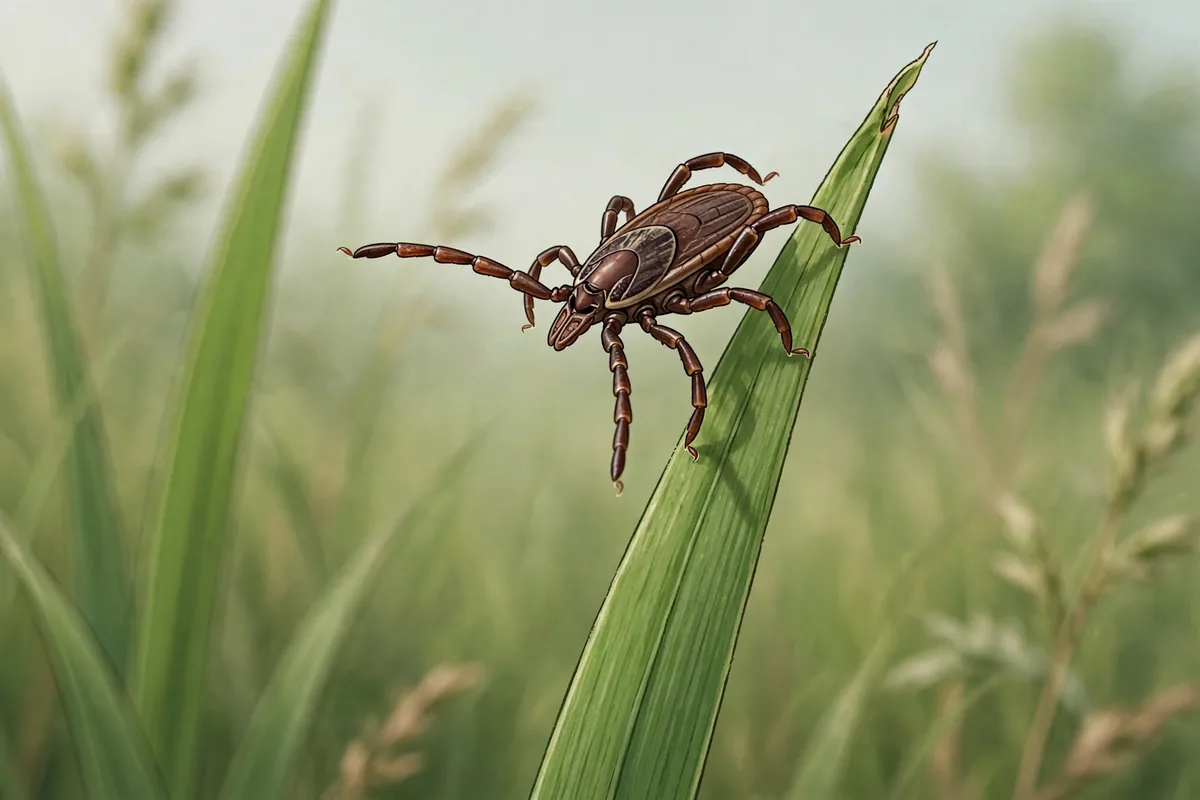
Ticks find hosts through a behavior called questing — a patient ambush strategy:
- Climb. The tick crawls up a blade of grass, a weed stem, or a low shrub — typically to a height matching its preferred host (ankle-height for mice and chipmunks, knee-to-waist height for deer and people).
- Anchor. It grips the plant with its hind legs.
- Reach. It extends its front legs into the air, waving them to detect passing hosts via heat, breath (carbon dioxide), and vibration.
- Grab. When you brush against the vegetation, the tick latches onto your clothing or skin with hooked front legs. The whole transfer takes a second — step off a trail into tall grass and you can pick up multiple ticks instantly.
Prime questing habitat — where you should be most alert:
- Tall, unmown grass and meadows (the #1 spot)
- Leaf litter and brush at the edges where lawn meets woods
- Woodpiles, stone walls, and garden beds with dense ground cover
- Trails with vegetation crowding the path edges
- Shady, humid areas — ticks dry out easily and avoid hot, sunny, open ground
Walking the middle of a clear trail is dramatically safer than brushing through the grass at its edge.
How Ticks Really End Up on Your Head #
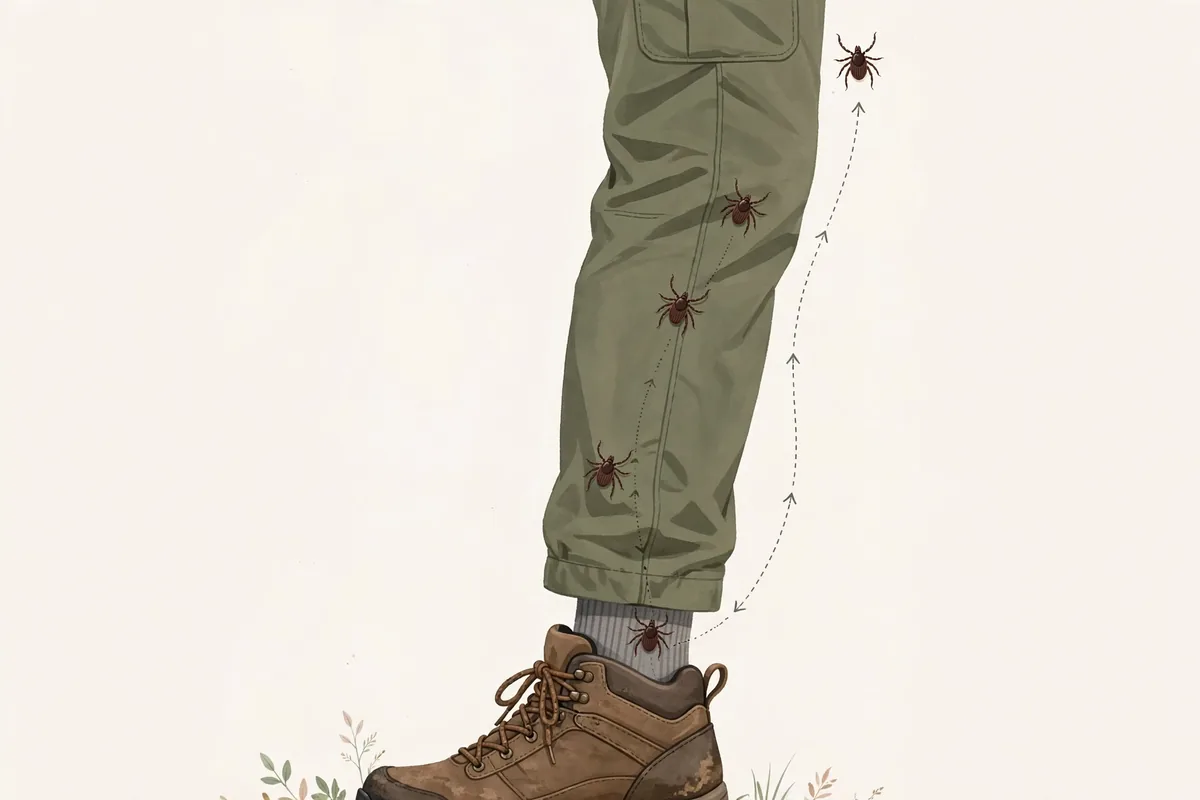
If ticks don’t fall from trees, why do people keep finding them on scalps, behind ears, and on necks? Because ticks are excellent climbers with a strong upward instinct:
- They grab low and climb high. A tick typically latches onto your shoe, sock, or lower pant leg first. Then it climbs — steadily upward, seeking warm, thin-skinned, hard-to-reach spots: behind the knees, the groin, armpits, waistline, behind the ears, the hairline, and the scalp.
- You can’t feel it happening. Tick saliva contains anesthetic compounds, so the bite itself is painless and usually goes unnoticed. By the time you find the tick on your neck, it may have been climbing for an hour.
- Long hair and hats don’t stop them — but they do make ticks harder to spot, which is why thorough checks matter more than any single barrier.
This upward migration is the entire explanation for “ticks on my head after the woods.” No tree required — just a tick that boarded at ankle level and took the elevator up.
What this means for prevention: protecting your lower body (tucked pants, treated socks and shoes) does more to keep ticks off your head than any hat ever will.
Protecting Yourself Where Ticks Actually Are #
Forget scanning the branches — defend the zone below your waist, where every tick encounter begins:
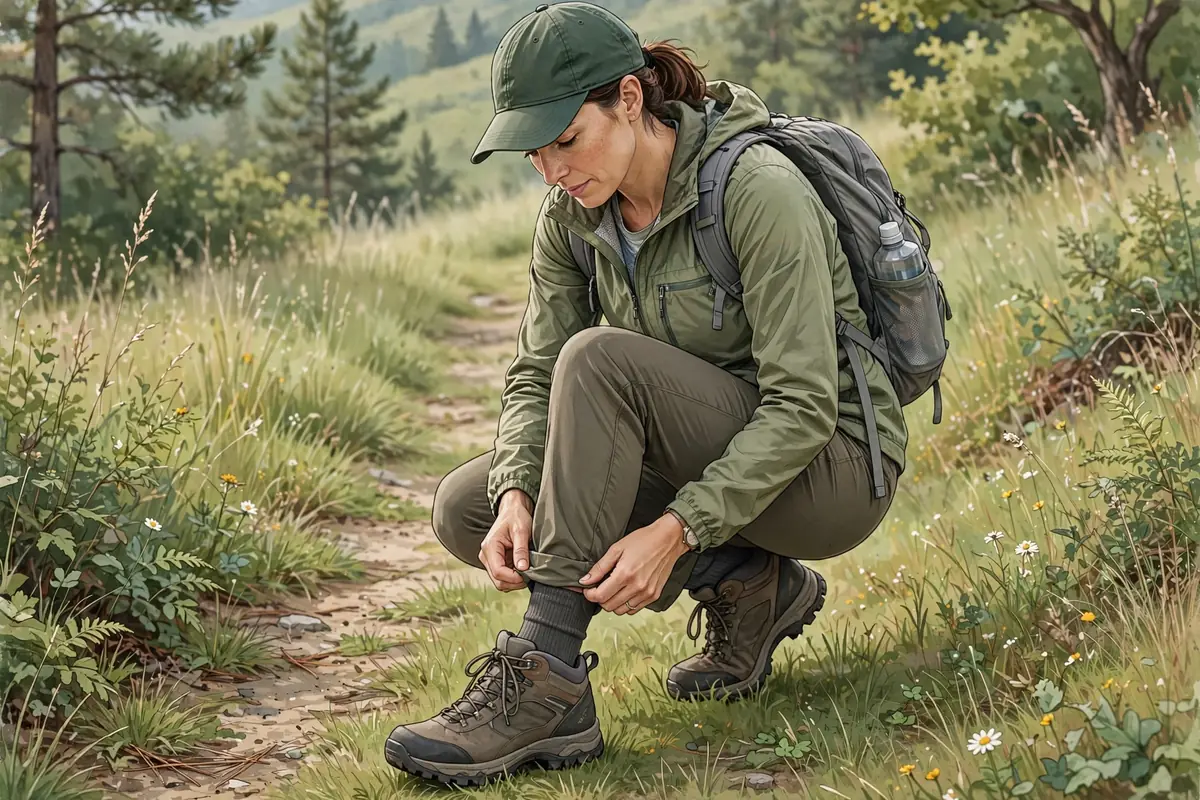
- Dress like ticks don’t exist above your knees. Long pants tucked into socks, long sleeves, closed shoes. Light-colored clothing makes crawling ticks easier to spot. Tuck your shirt into your pants to keep ticks on the outside of clothing.
- Use repellent correctly. Apply an EPA-registered tick repellent to exposed skin per label directions, and consider a permethrin-based clothing treatment for socks, shoes, and pants (fabric only, never skin). Treated clothing kills ticks on contact.
- Stay in the middle of the trail. Avoid brushing against tall grass and overhanging vegetation at trail edges. When you must go through it, do your tick check immediately after.
- Make your yard hostile to ticks. Keep grass mowed short, rake up leaf litter, clear brush at lawn edges, and create a 3-foot wood-chip or gravel barrier between lawn and woods. Move woodpiles and bird feeders (which attract tick-carrying rodents) away from play areas.
- Shower after outdoor time. Showering within two hours of coming inside has been shown to reduce tick-borne disease risk — it washes off unattached ticks and gives you a natural moment for a full-body check.
For the check itself: run through the warm, hidden spots systematically — behind knees, groin, armpits, waistline, belly button, behind ears, hairline, and scalp. Our bite and sting first-aid checklist covers what to do if you find one attached.
What to Do After a Hike #
Make this your post-outdoors routine — it takes five minutes and prevents the vast majority of tick-borne infections:
- Check your body — full scan, warm spots first (see above). Use a mirror or a partner for your back and scalp.
- Check your clothes. Ticks can ride home on fabric and attach hours later. Tumble dry clothes on high heat for 10 minutes to kill any hitchhikers — washing alone may not kill them, but the dryer’s heat does.
- Check your gear and pets. Backpacks, jackets, and dogs all ferry ticks indoors. Dogs can’t tell you about a tick, so run your hands against their fur, focusing on ears, between toes, armpits, and around the collar.
- Shower. Within two hours if possible.
- If you find an attached tick, remove it properly: grasp with fine-tipped tweezers as close to the skin as possible and pull straight out with steady pressure — no twisting, no folk remedies. Our guide to removing an attached tick safely has the full technique.
- Save the tick and note the date. A labeled container in the freezer preserves it for identification if symptoms develop later.
- Watch the bite site for 30 days. Most tick bites heal uneventfully, but know the difference between a tick bite rash and simple local irritation — an expanding bull’s-eye rash, fever, or flu-like symptoms in the weeks after a bite warrant a prompt call to your doctor.
Remember the transmission timeline: most tick-borne bacteria need 24–48 hours of attachment to transmit. A tick found and removed the same day is overwhelmingly likely to be harmless — which is exactly why the post-hike check is the single highest-value habit.
Warning signs: when to seek care #
Call 911 immediately if you develop trouble breathing or swallowing, swelling of the face, lips, tongue, or throat, widespread hives, dizziness or fainting, or a racing heartbeat after any bite or sting — these are signs of a severe allergic reaction (anaphylaxis). If you carry an epinephrine auto-injector, use it first, then call 911.
For tick-specific concerns, call your doctor promptly if you develop an expanding circular rash (especially a bull’s-eye pattern), fever, chills, headache, joint pain, or flu-like symptoms in the weeks after a tick bite — these can signal Lyme disease or other tick-borne illnesses, and early treatment is highly effective. Also call if a tick was attached for more than 24–36 hours, if you couldn’t remove the whole tick, or if the bite site shows spreading redness, warmth, or pus after the first day or two.
Frequently asked questions #
Can ticks jump from grass onto me? #
No — ticks can’t jump at all. They don’t leap onto hosts; you have to physically brush against the grass blade or shrub they’re questing on. That’s why staying on clear paths and out of tall vegetation is so protective: no contact, no transfer.
Do ticks live in trees at all? #
Not meaningfully. Ticks quest below about three feet, where their hosts travel. You won’t find them colonizing tree canopies. The “ticks in trees” idea likely comes from ticks found on low branches after dropping off host animals — a dead end for the tick, not a hunting strategy.
I found a tick on my child’s scalp. Did it fall from a tree? #
Almost certainly not — it climbed. Ticks board at shoe or ankle level and migrate upward to the warm, protected skin of the scalp and hairline. Check the child’s whole body (ticks often leave siblings lower down), remove it properly, save it, and watch the site for 30 days.
Medical and editorial note #
This guide is general information about tick behavior and bite prevention, not medical advice. Ticks don’t fall from trees — they quest low and climb — and prompt removal plus a consistent post-outdoors checking routine prevents the large majority of tick-borne infections. If you develop a rash, fever, or flu-like symptoms after a tick bite, see a healthcare professional promptly.


