Every hurricane season, the photos resurface: reddish-brown clumps riding the floodwaters, looking like spilled debris until you look closer and realize the whole mass is alive. They show up in driveways, drainage ditches, and backyards across the Gulf Coast and Southeast after major storms, and every year they spark the same worried question: what do you do when a floating colony of fire ants is headed your way?
Fire ant rafts in floodwater safety comes down to three things: give every raft a wide berth and never touch it, wear sealed protective clothing if you must work in flooded areas, and know exactly what to do if ants end up on your skin. Floodwaters will not drown fire ants — entire colonies link their bodies together and float — so avoidance and preparation are your only real tools. This guide draws on guidance from Texas A&M AgriLife Extension and university research to cover raft behavior, boat and home scenarios, sting first aid after a raft encounter, and cleanup-crew protection.
How Fire Ants Build Living Rafts
When floodwater rises into a red imported fire ant colony (Solenopsis invicta), the workers evacuate and assemble one of nature’s most remarkable survival structures. Thousands of workers link legs and mandibles together, weaving a living mat that can take shape in under two minutes. Their waxy, water-repellent exoskeletons and fine body hairs trap pockets of air, giving the mass buoyancy that floodwater alone cannot break. The queen, eggs, larvae, and pupae ride toward the driest part of the raft while the workers form its floating shell. Texas A&M AgriLife Extension notes these masses can look like ribbons, streamers, mats, or an actual ball of ants — and they actively drift toward anything that could serve as dry ground, including a boat or a person.
How long can a raft survive? Lab research has shown rafts persisting in fresh water for up to two weeks, and field observations cited by National Geographic suggest they can drift for several weeks, traveling miles until they find dry land to re-establish the colony. Once they land, the colony spreads out and starts rebuilding its mound wherever the water left it — a yard, a debris pile, even inside a flooded structure.
What to Do If a Raft Drifts Toward You
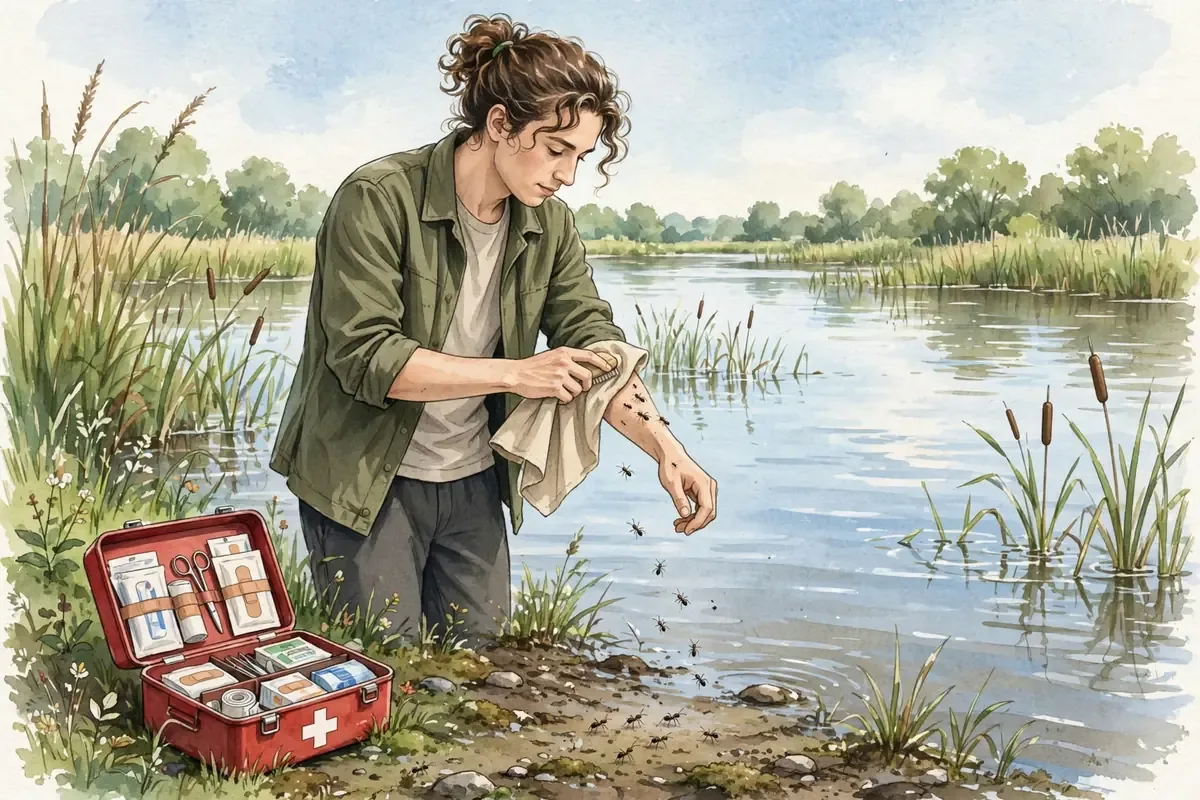
The expert advice is blunt. Paul Nester, a fire ant specialist with Texas A&M AgriLife Extension Service, advises flood victims to give every raft a wide berth and never attempt to move or break one up, whether you meet it wading through shallow water or spot it from a porch.
- Do not poke, kick, or push a raft. Nester warns this backfires: the ants immediately stream onto whatever touched them, treating it like a log or a bank, because they are actively looking for high ground. A disrupted raft can disperse and crawl up a person in seconds.
- Do not try to drown it. Floodwater will not kill these ants, and pushing a raft underwater just splashes it apart, increasing your risk of contact.
- Do not touch a raft with an oar, paddle, or stick. Texas A&M specifically warns boaters that ants can “climb aboard” via oars.
- Move calmly away. Scan ahead while wading and steer a clear path around any floating mass.
Texas A&M’s fact sheet also mentions a technique used by emergency personnel — spraying rafts with diluted biodegradable dishwashing liquid to break the raft’s surface tension. That is a tool for trained responders in flood operations, not something to attempt yourself.
If a Raft Reaches Your Boat, Home, or Yard
Rafts do not only stay in open water. Texas A&M notes floating ant masses are even encountered indoors in flooded structures, and they seek anything that might shelter them until a mound can be re-established.
On a boat or in a kayak: If a raft drifts against your hull, do not splash at it or push it off with your hands or paddle — that can send ants streaming aboard. Back away with the motor if you have one, or wait for the current to separate you. If ants get into the boat, keep calm, move away from the raft, and remove ants from clothing and skin by brushing them off with a cloth or a gloved hand.
At your home: Rafts ride floodwater right up to foundations, porches, and roofs. Do not hose a raft or knock it away — hosing breaks it into multiple smaller rafts, and knocked-off ants become your problem. Contact local pest-control or emergency-management resources instead, and stay out of the water around the area until professionals handle it.
In your yard after the water drops: Colonies re-establish wherever floodwater deposits them, including places that never had mounds before. Extension guidance notes that debris piles from flooding are extremely inviting to fire ants. Inspect brush piles, lumber stacks, and displaced sod — in rubber boots — before children or pets explore, and treat new mounds with labeled products only once conditions are dry.
Pets and livestock: Keep dogs leashed and out of floodwater entirely; afterward, check paws, bellies, and faces for ants. If a pet is stung, brush the ants off with a cloth and watch for vomiting, labored breathing, or collapse — signs that warrant an emergency veterinarian visit. Livestock owners should move feed and bedding off the ground and inspect shelters before bringing animals back in.
Sting First Aid After a Raft Encounter

Fire ant stings burn — the sensation is usually described as a fiery, stinging prick followed by intense itching and a raised welt. Because rafts contain an entire colony, contact can mean dozens of simultaneous stings, so act quickly and stay calm.
Remove the ants first. Extension experts recommend brushing ants off with a cloth or a gloved hand rather than jumping into water. Water makes fire ants cling harder to the skin, and even a strong spray may not dislodge them. Brush firmly in one direction until every ant is off, and check socks, cuffs, collars, and waistbands — ants crawl upward under clothing and often sting in a ring around an ankle or waistband.
Then treat the stings. Wash the skin gently with soap and water, then apply a cold compress wrapped in a cloth to reduce pain and swelling. Over-the-counter oral antihistamines and hydrocortisone cream are commonly used for itching — ask your pharmacist which product suits your situation. Resist the urge to scratch; broken skin invites infection. For a step-by-step routine you can save on your phone, see the bite and sting first aid checklist.
Know what normal looks like. Within about a day, fire ant stings typically develop into small white pustules — the body’s reaction to the venom, not a sign of infection. Do not pop or squeeze them, which risks infection and scarring. Our guide on fire ant sting pustules and what not to do covers the healing timeline.
Protecting Cleanup Crews and Volunteers
Cleanup is when most raft-related stings happen. After the dramatic photos fade, the colonies come ashore and settle into the debris that volunteers and contractors spend weeks handling. Texas A&M’s flooding fact sheet treats flood cleanup as a serious exposure window and recommends specific protective gear.
Dress to keep ants off your skin. Wear rubber boots (not fabric boots or sneakers), cuffed gloves that overlap your sleeves, long pants tucked into the boots, and rain gear covering arms and legs. Leave no exposed entry points: fire ants climb and sting wherever they find skin. Change and launder clothing after each shift.
Work smart around debris. Disturbing a debris pile that harbors a resettled colony can release thousands of defensive workers at once. Probe piles with a long tool before lifting, and work in pairs so someone can help brush off ants if one of you is swarmed. Supervisors should brief every volunteer — including newcomers who may never have seen a fire ant — on what rafts look like and what to do if ants get on them.
When to See a Doctor for a Sting

Most fire ant stings heal at home, but raft encounters can involve many simultaneous stings, which raises the stakes. Get emergency help — call 911 — if you notice signs of a severe allergic reaction: difficulty breathing, wheezing, swelling of the face, lips, tongue, or throat, dizziness or fainting, a rapid or weak pulse, or widespread hives spreading far beyond the sting sites. Use an epinephrine auto-injector immediately if one has been prescribed, then still go to the emergency department. Our guide to anaphylaxis warning signs after a sting explains what to watch for in the minutes and hours after exposure.
Call Poison Control (1-800-222-1222 in the US) or seek urgent care if someone receives a large number of stings and develops nausea, vomiting, sweating, shortness of breath, or confusion — mass envenomation can cause systemic effects even without a known allergy. See a clinician within a day or two if a sting site shows spreading redness, increasing warmth or swelling after day two or three, red streaks, fever, or draining pus. Young children, older adults, and anyone with a known insect-venom allergy deserve a lower threshold for seeking care.
Frequently Asked Questions
Can fire ant rafts survive for weeks in floodwater?
Yes. Laboratory research and field observations indicate that fire ant rafts can persist for up to about two weeks in fresh water, and possibly several weeks under favorable conditions. Workers interlock their bodies, trapped air pockets keep the mass buoyant, and the queen and brood ride toward the driest part until the colony reaches dry land and rebuilds its mound.
Should I try to break up or sink a raft I see in floodwater?
No — leave it alone. Extension experts advise against poking, pushing, or trying to drown a raft: a disturbed raft can disperse and its ants will immediately stream onto the nearest solid object, including a person. Give rafts a wide berth, and if one threatens your home or a public area, contact local emergency-management or pest-control resources instead of handling it yourself.
What should I wear when working in floodwater where fire ant rafts may be present?
Texas A&M AgriLife Extension recommends rubber boots, cuffed gloves that overlap your sleeves, long pants tucked into the boots, and rain gear that covers your arms and legs. The idea is to leave no exposed entry points for ants to reach your skin. Change and wash clothing after each shift, and inspect boots and gloves before each use.
What do I do if fire ants get on my skin during a flood?
Brush them off immediately with a cloth or a gloved hand — do not jump into water or hose yourself, because water makes the ants cling harder. Then wash the skin with soap and water, apply a cold compress to ease pain and swelling, and use an over-the-counter antihistamine or hydrocortisone cream for itching (ask your pharmacist if you are unsure). Do not pop the white pustules that form within about a day; they usually dry up on their own.
Are fire ant stings during floods more dangerous than normal stings?
Each individual sting is the same, but flood encounters tend to involve many stings at once, because a raft is an entire colony. Mass stings raise the risk of a severe reaction and can cause systemic symptoms such as nausea, sweating, or dizziness. Anyone with a known venom allergy should treat a floodwater sting as high-risk: use an epinephrine auto-injector if prescribed and call 911.
Medically reviewed by Dr. Sarah Jones, MD.
This article is for informational purposes only and isn’t medical advice. If you’re worried about a bite or sting, talk to a healthcare professional.