An Asian longhorned tick bite is a tick bite from a particular species, not a recognizable skin pattern. The bite mark cannot confirm the tick’s identity or whether infection occurred. Remove attached ticks promptly, document the exposure, and seek medical advice if fever, rash, or other concerning symptoms develop.
The name “Asian longhorned tick” can sound alarming, particularly when a report describes large infestations on farm animals. Those reports raise important questions, but they do not tell you what happened during your own exposure. The practical comparison is between a bite from an unidentified tick and one from a specimen confirmed as Haemaphysalis longicornis.
This guide separates identification, human health concerns, and animal-control questions. It focuses on U.S. exposures. If you were bitten overseas, give a clinician the travel location rather than assuming information about American populations applies everywhere. Different settings can involve different pathogens, hosts, and surveillance evidence.
1. What is different about this tick?
Asian longhorned ticks are an invasive species in the United States. USDA describes their establishment outside a port-of-entry inspection setting in New Jersey in 2017 and their subsequent detection across numerous eastern states. U.S. populations can reproduce without mating, which helps explain why large numbers can develop. Read the current USDA APHIS Asian longhorned tick information for the animal-health and surveillance context.
That biology is useful for understanding a pasture or pet infestation. It does not mean a tick reproduces inside a person or that one bite inevitably causes illness. A person with a suspected bite needs a human medical assessment when symptoms warrant it; a livestock owner with a heavily affected animal needs veterinary help. Those are related but separate decisions.
| Issue | Tick species unknown | Asian longhorned tick confirmed |
|---|---|---|
| Immediate action | Remove an attached tick promptly. | The same removal principle applies. |
| Meaning of a red bump | Records local irritation, not a species. | Still cannot diagnose a pathogen or prove transmission. |
| Public-health information | Local species and exposure history remain important. | Species-specific U.S. evidence and reporting may become relevant. |
| Animal exposure | Pets or livestock may have carried ticks. | Heavy infestations deserve particular veterinary attention. |
| What remains uncertain? | Species, infection status, and personal transmission. | Personal transmission and cause of any symptoms remain clinical questions. |
A confirmed identification can therefore improve the questions you ask without supplying every answer. Keep the original identification report or message and note who identified the specimen. A social-media suggestion and an examination by a qualified identification service should not be presented to a clinician as equally certain evidence.
2. Can a photograph identify an Asian longhorned tick bite?
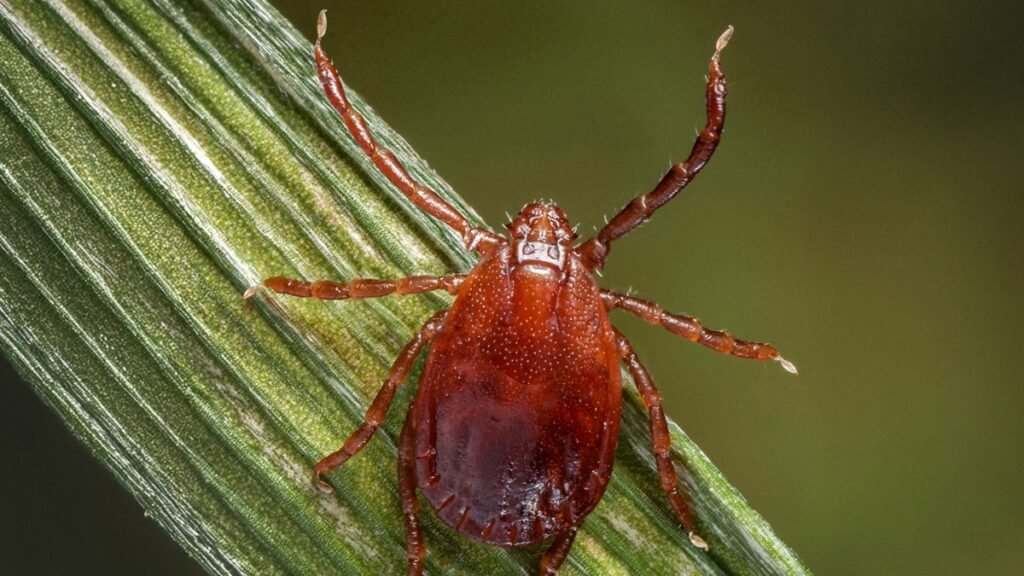
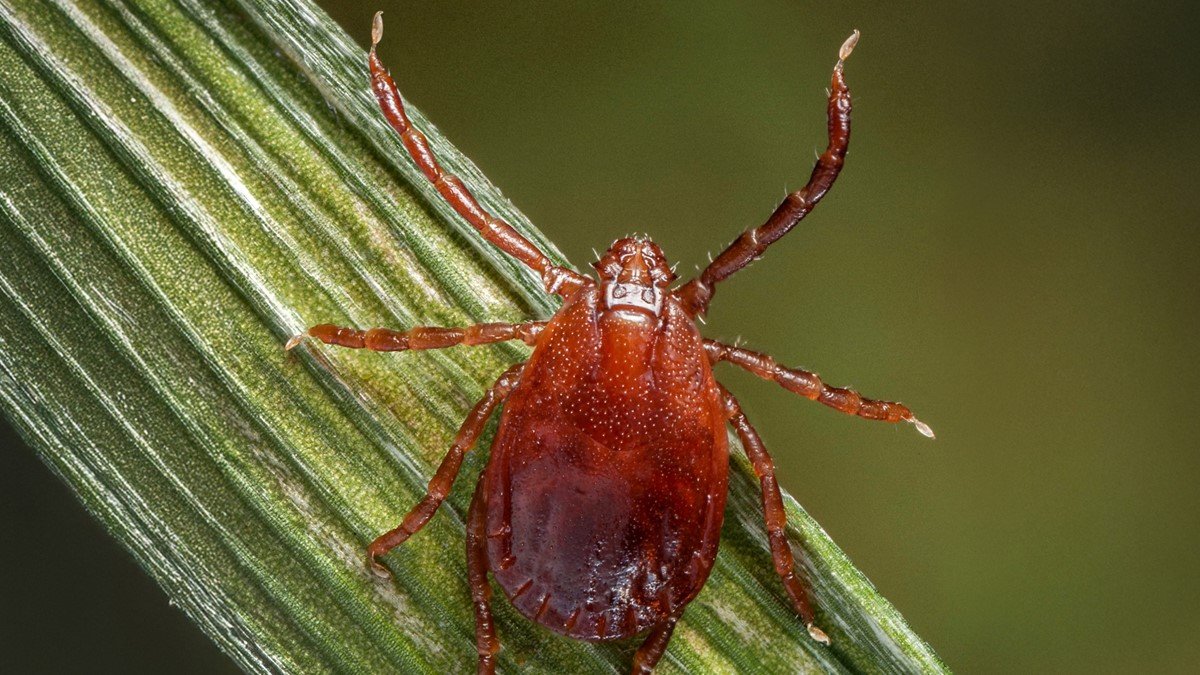
A skin photograph cannot establish this species. Many irritated bite sites share redness, a small bump, or a central mark. Instead, photograph the tick itself if you can do so safely after removal. Keep both a close view and an uncropped view with a scale reference. Avoid crushing the specimen just to make it stay still for a picture.
Why size and color can mislead
USDA notes that unfed ticks can be very small and reddish to brown, while fed adult females become much larger and change appearance. A photograph showing a swollen tick may therefore look unlike a picture of the unfed stage. Lighting, magnification, life stage, and feeding status all complicate casual matching. The common name is not a reason to look for obvious insect-like horns.
Ask an extension office, health department, or other qualified local service about specimen identification. If an animal is involved, your veterinarian may help route the sample. Keep human medical questions with a clinician. Identification can proceed alongside care; it should not postpone care when you are unwell.
How to document the skin separately
Take a baseline photograph of the site with a ruler nearby and record the date. Later pictures should use similar lighting and distance. Describe what changed rather than writing a diagnosis into the filename. “Area larger than yesterday” is an observation; “infected longhorned tick bite” is a conclusion that may not be established.
3. What is known about human disease risk?
CDC explains that Asian longhorned ticks appear less attracted to humans than several well-known native U.S. ticks, although they have been found on people. CDC also distinguishes diseases transmitted overseas, pathogens detected in ticks, and transmission demonstrated under laboratory conditions. These categories should not be combined into a claim that every suspected U.S. bite poses all the risks described worldwide. See CDC’s species-specific discussion.
USDA’s current information states that these ticks are not competent vectors of the organisms responsible for Lyme disease and human granulocytic anaplasmosis in the context described. CDC also discusses experimental work concerning other pathogens and continuing research. Read those statements as evidence about the tick, not as personal clearance after a bite. A lay identification can be wrong, multiple bites can occur, and a new illness may require evaluation for another reason.
The distinction between “a pathogen was detected” and “a person became infected from this tick” is especially important. Detection is one piece of evidence. It does not, by itself, establish the full chain of acquisition, survival, transmission, and illness. For a reader, the useful response is neither panic nor dismissal: preserve the exposure details and act on symptoms.
If your main uncertainty is whether the specimen could be a different common species, our American dog tick versus Asian longhorned tick guide covers that comparison. An unidentified tiny tick should not be assigned a harmless label simply because an online photograph looks similar.
4. What should you do after finding one attached?
Use clean fine-tipped tweezers to grasp the tick close to the skin, then pull steadily. Do not burn it or coat it with substances to make it detach. Clean the site and your hands after removal. Check for additional ticks, including hidden areas of the body. CDC provides the complete after-bite and removal instructions.
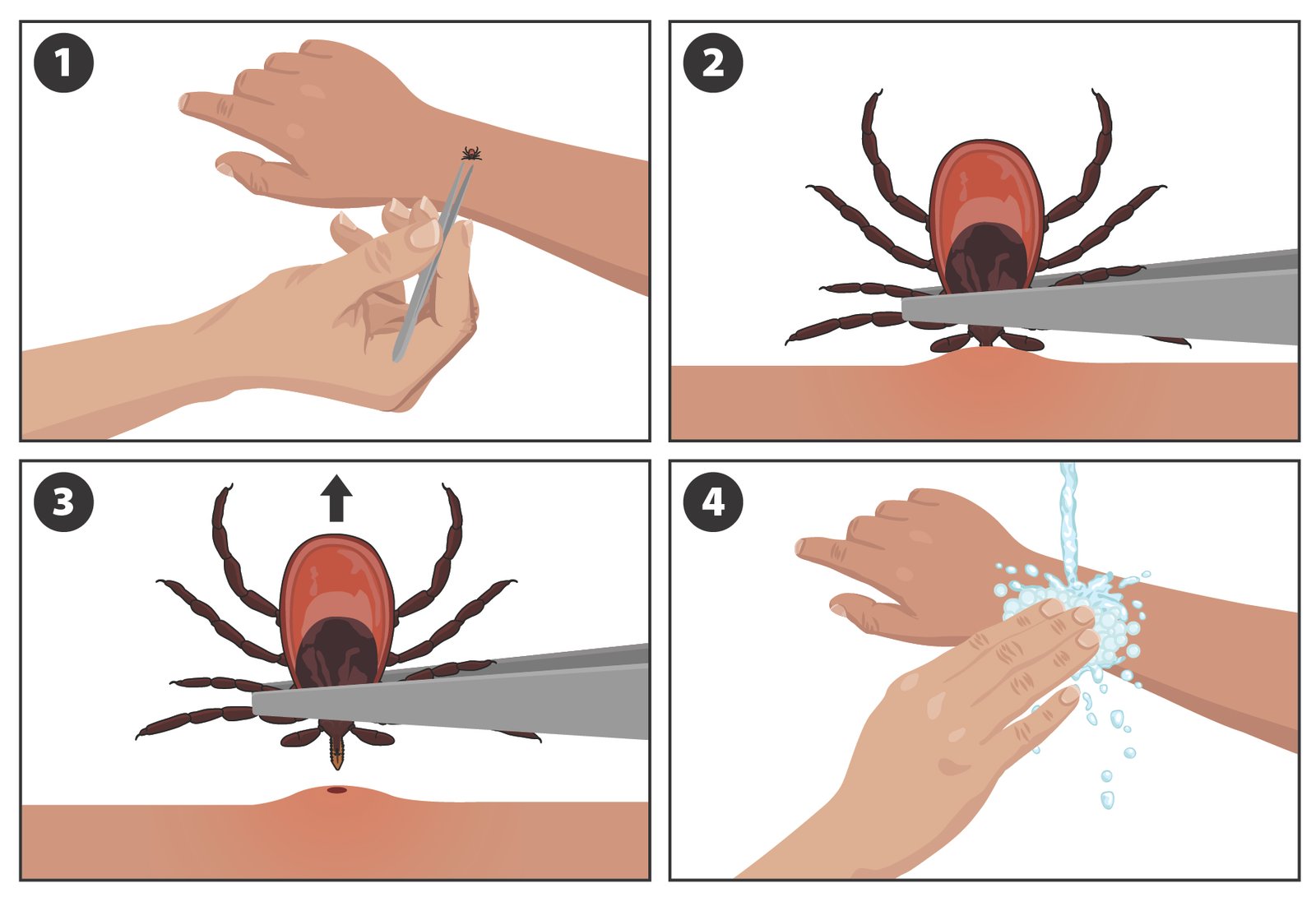
If you suspect several ticks are attached, good lighting and a careful check are more useful than rushing through only the first visible spot. Get help checking difficult-to-see areas. Seek medical assistance if you cannot manage the removal safely. Do not use household insecticide, animal dips, or livestock products on human skin.
A short exposure note should include where you were, the date found, the body site, how it was removed, and whether there was animal contact. If the tick could have attached on more than one day, record the range rather than inventing a precise duration. Mention travel and whether other family members or animals had ticks.
Keep a specimen securely contained if a local service wants to examine it. Ask for handling instructions before sending anything. Do not mail loose live ticks or take an unsealed specimen into a clinic. A clear photograph can accompany your initial inquiry without creating another exposure.
5. When should you call a clinician?
Call promptly for fever, a new or enlarging rash, significant headache, or feeling increasingly unwell after tick exposure. Increasing pain, spreading warmth, or drainage at the skin site also deserves assessment. Do not wait for the laboratory or identification office to return a species name. Our tick warning signs guide explains the difference between watching a mild local reaction and seeking care for concerning changes.
| What you noticed | Who can help | Useful information |
|---|---|---|
| A tick attached to a person | Remove promptly; contact a clinician for symptoms or individual advice. | Exposure location, timing, and photograph. |
| Uncertain specimen identity | Local public health or university extension identification service. | Intact specimen or clear images, collected safely. |
| Many ticks on a pet or livestock animal | Veterinarian and appropriate agricultural service. | Animal species, infestation location, and changes in behavior. |
| Severe breathing trouble, collapse, or rapid deterioration | Emergency services; call 911 in the United States. | Current symptoms first; do not postpone care for identification. |
When you contact a clinic, a concise opening can help: “I removed a tick on this date, I was in this location, and these symptoms started today.” Then explain that the species is suspected rather than confirmed. This separates the urgent medical issue from the identification question. If you have no symptoms, say that plainly and ask what changes should trigger another call.
Keep any instructions in the same note as the exposure record. If a different clinician evaluates you later, the note can show what was already discussed, whether the specimen was identified, and which new symptoms prompted the second contact. It also prevents a changing internet search from replacing the plan you were actually given.
There is no single self-selected antibiotic plan for every tick bite. Clinicians consider the actual exposure and illness, and some preventive decisions are specific to other tick species and infections. If the tick is uncertain and Lyme exposure is possible, contact a clinician promptly so a time-sensitive prevention decision is not missed. Do not self-treat from leftover prescriptions.
A commercial tick pathogen test is not a medical test of the person. It should not become permission to ignore symptoms, or a reason to take medicine without assessment. Tell the clinician about any result you already have, but also provide the exposure timeline and symptoms that make it clinically relevant.
6. How should households and animal owners respond?
Finding many ticks on an animal deserves a different response from finding a single tick on a sleeve. USDA emphasizes veterinary involvement for suspected animal disease and appropriate control practices. Avoid borrowing a product intended for another animal species or applying a higher concentration because the infestation looks severe. The safest plan depends on the animal and the product label.
For pets, keep regular veterinary prevention and checking routines. CDC’s pet tick prevention guidance notes that animals can bring ticks indoors and that cats are particularly sensitive to some chemicals. A dog product should never be assumed suitable for a cat.
For a small farm, separate the observations you can supply: which pasture the animals used, when ticks were first noticed, which animals are affected, and whether appetite or behavior changed. That record gives a veterinarian or agricultural adviser a starting point. It is more actionable than an estimate such as “there must be millions everywhere.”
Do not turn a household infestation concern into a claim that every itchy family member has this species. Environmental identification and personal medical assessment answer different questions. Someone can have irritated skin for an unrelated reason while ticks are also present on the property.
7. How can you prevent the next encounter?
Choose a prevention routine that covers people, clothing, pets, and the places where you spend time. Use an appropriate EPA-registered repellent as labeled, avoid brushing through dense vegetation when possible, and check your body after outdoor activity. Read CDC’s prevention guidance for product and clothing precautions. Clothing-treatment instructions are not instructions to apply the same product directly to skin.
Keep a simple return-home sequence: set outdoor gear aside, check clothing, inspect exposed and hidden body areas, and check pets. Store tweezers where everyone can find them. A consistent routine is easier to follow than a complicated checklist introduced only after someone discovers a tick.
Property decisions should match the setting. A livestock pasture, suburban yard, and public hiking trail do not require identical control measures. Ask local professionals about management rather than broadly spraying an unidentified problem. Our home and yard prevention guide can help structure household questions.
If you initially thought the exposure involved a mosquito, see the Asian tiger mosquito versus Asian longhorned tick comparison. The presence of an attached specimen is a stronger clue than the intensity of itching.
8. Frequently asked questions
Can I identify the tick by the bite mark?
No. A skin mark does not reliably establish Asian longhorned tick identity. Photograph or preserve the removed specimen safely and request qualified identification. Use skin photographs to document change, not to declare a species or infection.
Does the tick’s name mean it has obvious horns?
No. Do not use the common name as a simple visual checklist. These small ticks can be difficult to distinguish without expertise, and feeding changes their appearance. A reference photograph is an aid, not a substitute for identification.
Does a suspected bite mean I have Lyme disease?
No. A suspected species name is not a diagnosis. Current U.S. evidence does not identify this tick as a competent Lyme vector, but uncertainty about the specimen and other exposures still matters. Discuss symptoms and the whole exposure history with a clinician.
Should I report finding a large number on an animal?
Contact a veterinarian or local agricultural service for advice, particularly if the animal seems unwell. Share the location and photographs. Identification and management should be coordinated rather than based on applying an unverified pesticide recipe.
Can I use livestock tick treatment on myself?
No. Products intended for livestock or other animals are not human bite treatments. Follow human-use product labels and seek advice for skin care. A control product’s effectiveness on an animal does not make it suitable for people.
What if identification takes several days?
Continue documenting the exposure and seek medical advice for concerning symptoms without waiting. If you are well, follow the identification service’s instructions. Keep the result for your records, but do not let it override a changing clinical picture.
An Asian longhorned tick identification is useful information, not a complete health assessment. Remove the tick, record the exposure accurately, and keep human symptoms separate from animal-infestation questions. Seek timely care when symptoms develop, and involve veterinary or agricultural professionals for affected animals. The best practical outcome is a verified record, a clear plan for whom to contact, and prevention steps suited to your actual environment. Avoid both sensational claims about every bite and unsupported assurances that an unfamiliar tick cannot matter.
General educational information; not an individual diagnosis. Sources checked September 22, 2026. CDC images are available free through CDC and the Public Health Image Library. Use of these materials does not imply endorsement by CDC, HHS, or the U.S. Government.