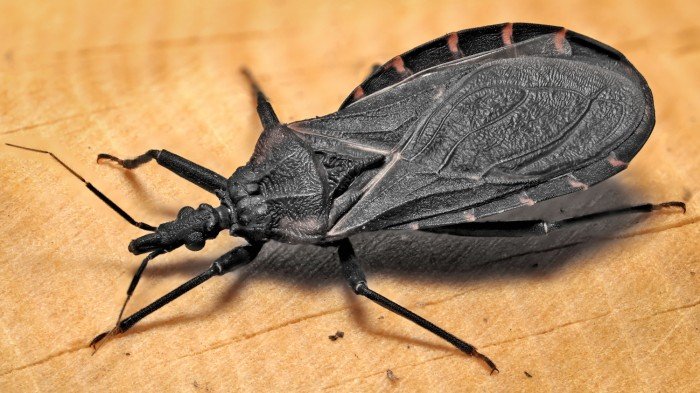
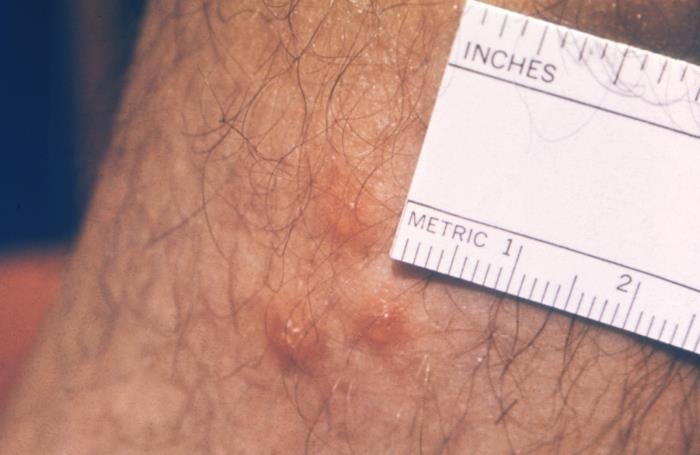
Short answer: A blacklegged tick bite and chigger bites come from very different exposures. A blacklegged tick may stay attached to the skin for hours or longer and can be easy to miss. Chiggers are microscopic mite larvae that usually cause clusters of intensely itchy bumps after contact with grassy, brushy, or humid vegetation. The skin appearance can overlap, so the most useful clues are whether a tick was actually attached, where the spots are located, how quickly itching started, and whether symptoms developed later.
Key distinction: A single attached tick or one localized bite favors a tick exposure. Multiple very itchy bumps around sock lines, waistbands, ankles, groin, or other tight-clothing areas after time in grass or brush fit chigger exposure better.
Blacklegged tick bite vs chigger bite: fast comparison
| Feature | Blacklegged tick bite | Chigger bites |
|---|---|---|
| Arthropod | Blacklegged tick (Ixodes species) | Larval mites, commonly called chiggers |
| Attachment | Tick can remain attached and feed | Larvae attach briefly at the skin surface; they do not burrow into skin |
| Typical number of lesions | Often one or a few | Frequently many clustered bumps |
| Itch | Can be mild or absent initially | Often intense and delayed by several hours |
| Common body areas | Any accessible skin, including scalp, groin, armpits, waistline | Often ankles, sock lines, waistbands, behind knees, groin, armpits |
| Main medical concern | Possible tick-borne infection | Severe itch, skin damage from scratching, secondary infection |
The exposure history usually tells more than the photo
Both conditions can create small red bumps. That is why close-up photos alone are unreliable. The question to ask first is what happened before the rash appeared.
Blacklegged ticks are acquired outdoors in areas where ticks can reach clothing or skin, including wooded edges, tall grass, brush, leaf litter, yards, trails, and areas used by deer or small mammals. A tick crawls onto the body and attaches. You may discover it later during a shower or body check.
Chiggers are associated with vegetation too, but the pattern is different. Exposure often happens after sitting, kneeling, hiking, gardening, hunting, camping, or walking through grass and brush. The larvae are extremely small. Many people never see them. The resulting itch may begin hours later rather than at the exact moment of contact.
What an attached blacklegged tick looks like
An attached tick is a strong clue because the arthropod itself is still present. It may look like a tiny dark speck anchored to the skin. As it feeds, the body may enlarge. Ticks can attach in hidden areas such as the scalp, behind the ears, armpits, groin, waistline, behind the knees, or between the toes.
If you find an attached tick, remove it promptly. CDC guidance recommends using clean fine-tipped tweezers, grasping the tick close to the skin, and pulling upward with steady pressure. Avoid twisting, crushing, burning, or coating it with substances intended to make it detach slowly.
What chigger bites usually look like
Chigger reactions often appear as numerous small red papules rather than one isolated bite. The pattern frequently follows clothing pressure points because larvae may become trapped where socks, underwear, elastic bands, belts, or tight seams contact the skin.
University extension guidance emphasizes that chiggers do not burrow under the skin. The prolonged itch is caused by the skin’s inflammatory reaction, not by mites living deep inside the bumps. This is why “suffocating” the bite with nail polish or other coatings does not solve the problem.
Timing: one of the best clues
A blacklegged tick bite may be painless and go unnoticed until the tick is found. A small local red area can appear after removal. If tick-borne illness develops, symptoms may occur later rather than immediately.
Chigger bites often become noticeable because of itching several hours after exposure. The delay can make people think they were bitten in bed or indoors even when the actual exposure happened earlier in the day outside.
Why itching intensity matters
Intense itch is a classic complaint with chigger bites. Blacklegged tick bites can itch, but severe widespread itch from many grouped lesions is less typical of a single tick attachment.
That does not mean itch proves chiggers. Fleas, mosquitoes, allergic contact dermatitis, poison ivy, bed bugs, and many skin conditions can also itch strongly. Use itch as one clue alongside location, timing, and exposure.
Body distribution can help narrow the possibilities
Blacklegged ticks can attach almost anywhere, especially warm protected areas. One tick may be found on the scalp, behind an ear, in an armpit, at the waist, or in the groin.
Chigger bumps are often more numerous and concentrated where clothing presses against the body. A band of small itchy bumps around both sock lines after walking through tall grass is a much more chigger-like story than a single attached tick on the thigh.
Could a chigger stay attached for days?
No. Chiggers do not establish a long-term attachment like a feeding tick. The skin can continue itching after the larva is gone because the inflammatory reaction persists.
If you keep finding a visible arthropod fixed to the skin, consider a tick rather than a chigger. Do not try to “dig out” a chigger from an itchy bump.
Lyme disease risk is specific to the tick side of this comparison
Blacklegged ticks can transmit the bacteria that cause Lyme disease in parts of the United States. Chiggers are not the vector for Lyme disease.
CDC advises watching for symptoms after a relevant tick bite. A later expanding rash, fever, chills, headache, unusual fatigue, muscle aches, joint symptoms, swollen lymph nodes, facial weakness, or other concerning illness should be discussed with a healthcare professional.
Not every blacklegged tick carries disease, and not every tick bite causes infection. The purpose of monitoring is to recognize a change in health after a real exposure, not to assume disease from a small red bump alone.
What an early local tick reaction can look like
A small area of redness shortly after a tick is removed can be a simple local skin reaction. It may fade rather than expand. That is different from using the presence of any red mark as proof of Lyme disease.
An erythema migrans rash associated with Lyme disease typically enlarges over time. It does not always form a classic bull’s-eye. If the rash is expanding over days after a confirmed or likely tick exposure, seek medical evaluation.
What to do after finding an attached tick
- Remove it promptly with fine-tipped tweezers.
- Clean the bite area and your hands.
- Record the date and location of the exposure.
- Take a clear photo of the tick if possible.
- Watch for new illness or an expanding rash.
- Contact a clinician if concerning symptoms develop or if you have questions about a high-risk exposure.
Do not use someone else’s antibiotics or leftover medication. Decisions about preventive treatment require individual clinical assessment.
What to do after likely chigger exposure
Shower after leaving the exposure area and change clothing. Washing can remove larvae that have not yet attached. Launder outdoor clothing when practical.
For the rash itself, cool compresses can reduce itch. Avoid scratching because broken skin can become infected. Over-the-counter anti-itch products may help some people when used according to the label. Ask a pharmacist or clinician if you are unsure what is appropriate for a child, pregnancy, chronic illness, or other medications.
Myths that can make chigger bites worse
“The mite is buried inside the bump.”
Chiggers do not burrow under human skin. The persistent itch reflects the inflammatory reaction.
“Nail polish will suffocate it.”
Coating the bump does not remove a buried parasite because there is no buried chigger to suffocate. Nail polish and solvents can irritate already inflamed skin.
“Every itchy rash after a hike is chiggers.”
No. Plants, fleas, mosquitoes, other mites, dermatitis, and skin infections can all create itchy lesions. Exposure pattern matters.
When scratching becomes a medical problem
Repeated scratching can damage the skin barrier. Signs that suggest secondary infection include increasing pain, warmth, tenderness, pus, drainage, fever, or redness that continues spreading while the person feels worse.
Simple chigger dermatitis is mainly itchy. If pain becomes the dominant symptom, or the lesions are becoming more inflamed rather than improving, seek medical advice.
What if you did not see a tick or chigger?
When no arthropod was identified, think in probabilities rather than certainty. Ask whether the spots are clustered or isolated, whether they line up with tight clothing, whether there was a recent grass or brush exposure, whether an attached tick was later found on the body or pet, and whether itching began within hours or much later.
A clinician may also consider unrelated skin conditions if the pattern does not fit either exposure.
U.S. location and season context
Blacklegged ticks are important in regions where Lyme disease and other tick-borne infections occur, especially parts of the Northeast, mid-Atlantic, and upper Midwest. Western blacklegged ticks are relevant on the Pacific Coast.
Chiggers are common in warm, humid vegetated environments and can occur in lawns, parks, forest edges, brush, and fields. Geography changes probability, but it does not identify a rash on its own.
Prevention: one outdoor trip can expose you to both
Tick and chigger habitats can overlap, so prevention measures can help with both even though the arthropods behave differently.
- Use an EPA-registered repellent according to the label.
- Wear long pants and socks in dense vegetation.
- Avoid sitting directly in brush or tall grass when possible.
- Check the body for ticks after outdoor activity.
- Shower after returning indoors.
- Wash outdoor clothing after heavy vegetation exposure.
- Check children and pets after hikes or yard work.
When to contact a healthcare professional
Seek medical advice for fever, an expanding rash, neurologic symptoms, facial weakness, new joint swelling, severe headache, or other significant illness after a blacklegged tick exposure.
For suspected chigger bites, seek care if itching is severe and not improving, the diagnosis is uncertain, there are signs of infection, or lesions keep appearing without new outdoor exposure.
Call emergency services for breathing difficulty, throat swelling, fainting, collapse, or other severe systemic symptoms after any suspected bite or sting.
Simple decision guide
- Visible tick attached? Treat it as a tick bite and remove it promptly.
- Many intensely itchy bumps around clothing lines after grass or brush exposure? Chiggers are more likely.
- Expanding rash or fever days after a tick exposure? Seek medical evaluation.
- New bumps keep appearing indoors without outdoor exposure? Consider another cause such as fleas, bed bugs, dermatitis, or another skin condition.
Why pets can complicate the exposure story
Dogs and cats can bring ticks into close contact with people after outdoor activity. Finding a tick on a pet does not prove that every itchy spot on a person is a tick bite, but it confirms that tick habitat was present. Check both pets and household members after shared outdoor exposure and follow veterinary tick-prevention advice for animals.
Chiggers can also be encountered in the same grassy environment, so one confirmed tick does not automatically explain a cluster of intensely itchy clothing-line bumps.
Related StingHelp guides
- Tick bites: removal, symptoms, and warning signs
- Chigger bite treatment
- What Bit Me? identification guide
- Bite and sting prevention
Frequently asked questions
Can chiggers transmit Lyme disease?
No. Lyme disease is associated with infected blacklegged ticks, not chiggers.
Do chiggers live under the skin?
No. They attach at the skin surface and do not burrow into human skin.
Can one blacklegged tick cause several bumps?
A tick generally produces a localized bite site. Several unrelated bumps can have another explanation, although multiple ticks are possible after heavy exposure.
Why do chigger bites itch after the mites are gone?
The skin’s inflammatory response can continue after the larvae are no longer present.
Should I diagnose either exposure from a skin photo?
No. The exposure history and identification of the arthropod are usually more informative than the appearance of a red bump alone.
Authoritative references
- CDC: What to Do After a Tick Bite
- CDC: Lyme Disease Signs and Symptoms
- University of Maryland Extension: Chiggers
- U.S. EPA: Insect Repellents
Educational information only. StingHelp does not diagnose a bite or rash from a photograph. Seek professional care for severe, persistent, infected, or otherwise concerning symptoms.