Direct answer: Chigger bites are usually treated by washing after exposure, cooling the skin, controlling itch, and avoiding scratching. The most important fact is that chiggers do not burrow into human skin. They are tiny mite larvae that attach at the skin surface and feed on skin tissue. In the United States, chiggers are not known to transmit infectious diseases, but intense scratching can damage the skin and lead to secondary infection.
Most useful clue: Chigger reactions often appear after outdoor exposure in grass, brush, forest edges, lawns, or damp vegetation and tend to cluster around areas where clothing fits tightly—such as sock lines, ankles, waistbands, groin, or armpits.
What chigger bites actually are
Chiggers are the larval stage of certain mites. University of Maryland Extension describes them as extremely small and notes that only the larval stage bites people. Contrary to a common myth, chiggers do not tunnel under the skin and they do not feed on blood. They attach to the surface, inject digestive enzymes, and feed on broken-down skin cells.
This matters because many home remedies are based on the false idea that a live mite is trapped beneath the skin. Covering a bite with nail polish, bleach, gasoline, strong solvents, or other irritating substances does not “suffocate” a buried chigger and can cause additional skin injury.
How chigger bites usually develop
The bite may not be obvious at the moment of exposure. Itching can be delayed for several hours. University of Maryland Extension reports that itching is often first noticed about three to six hours after attachment and can persist for days, sometimes longer.
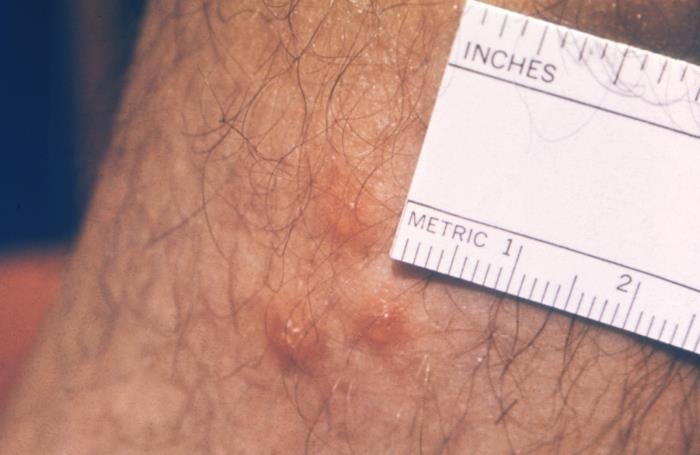
The reaction often consists of small red, intensely itchy bumps. Because larvae tend to stop where clothing presses against the body, bites may cluster around the ankles, sock line, belt line, waistband, behind the knees, groin, or other warm covered areas.
Chigger bite treatment: first steps after outdoor exposure
- Wash the skin. Showering and washing exposed areas can remove larvae that have not finished attaching.
- Change clothing. Put outdoor clothing directly into the wash when practical.
- Cool the skin. A cool damp cloth can reduce itching and inflammation.
- Avoid scratching. Scratching creates small breaks in the skin and raises the risk of bacterial infection.
- Use appropriate itch relief. Follow product labels and ask a pharmacist or clinician if you are unsure what is safe for your age, pregnancy status, medications, or health conditions.
Why showering helps but “digging out” the mite does not
Early washing is useful because some larvae may still be on the skin or clothing. Once the itchy inflammatory reaction is established, however, the problem is mainly your immune response to the feeding process—not a mite living deep in the skin.
Do not cut, scrape, squeeze, or repeatedly pick at the bumps. This does not remove a buried parasite and can turn a temporary dermatitis into a longer-lasting irritated or infected lesion.
What can help the itch?
For mild reactions, cool compresses and avoiding heat can help. Over-the-counter anti-itch products may be useful when appropriate. MedlinePlus notes that antihistamines and corticosteroid creams or lotions may help some people. Medication decisions still depend on age, allergies, pregnancy, other medicines, and medical history.
For a child, older adult, pregnant person, or anyone with chronic medical conditions, ask a pharmacist or healthcare professional before using a medicine you are uncertain about. StingHelp does not provide individualized drug dosing.
How long can chigger bites itch?
The itching can outlast the actual mite exposure. University of Maryland Extension notes that itching may persist for up to about two weeks in some cases. That does not mean the chigger is still alive under the skin.
A useful way to judge recovery is to watch the overall trend. Bumps should become less inflamed and less itchy with time. If pain, warmth, drainage, fever, or spreading redness is increasing rather than improving, the problem may no longer be a simple chigger reaction.
Chigger bites versus mosquito bites
Mosquito bites are often noticed on exposed skin and may appear soon after a mosquito encounter. Chigger bites are more closely tied to vegetation exposure and clothing pressure points. A line of intensely itchy bumps around socks or a waistband after walking through brush is a classic history for chiggers, although no pattern is diagnostic by itself.
Chigger bites versus flea bites
Flea bites are often concentrated on the lower legs and ankles and may be associated with pets, carpets, animal bedding, or an indoor infestation. Chigger exposure is more often linked to outdoor vegetation. If symptoms keep appearing indoors without new outdoor exposure, consider other causes rather than assuming chiggers are remaining in the home.
Chigger bites versus bed bug bites
Bed bug exposure is associated with sleeping areas, mattresses, furniture, luggage, and repeated nighttime contact. Chiggers do not usually establish the type of indoor infestation associated with bed bugs. The setting and timing are more useful than counting bumps or trying to identify a perfect “bite pattern.”
Chigger bites versus poison ivy
Poison ivy can cause an intensely itchy allergic rash after plant exposure and may form streaks or fluid-filled blisters. Chigger bites are typically small papules clustered in areas where mites had access to the skin, often where clothing is tight. Both can follow hiking or yard work, so the exact exposure history matters.
When scratching becomes the bigger problem
Repeated scratching can break the skin, cause bleeding and scabbing, and introduce bacteria. Once that happens, the original chigger reaction can be difficult to distinguish from secondary irritation or infection.
Keep fingernails short, cool the affected skin, and use appropriate itch-control measures. For children, covering heavily scratched areas with clean clothing can sometimes reduce unconscious scratching.
Signs that may suggest secondary skin infection
- Increasing pain rather than mainly itch
- Progressive warmth and tenderness
- Pus or cloudy drainage
- Redness that continues to spread with worsening symptoms
- Fever or feeling generally unwell
These findings are not typical features of an uncomplicated chigger reaction and justify medical evaluation.
Do chiggers spread disease in the United States?
University of Maryland Extension states that chiggers are not known to transmit infectious diseases in the United States. This is an important distinction from some mites and related vectors elsewhere in the world. If you became ill after travel outside the United States, tell the clinician where you traveled and what exposures occurred rather than assuming the illness is a routine U.S. chigger reaction.
Where chigger exposure is most likely
Chiggers favor humid vegetated environments. Exposure can happen along forest-grass borders, brush thickets, overgrown yards, swamp margins, parks, golf courses, trails, and lawns. You do not need to be deep in a forest to encounter them.
A practical clue is that several people who used the same patch of vegetation may develop itching, while others who stayed on a dry path may have no symptoms.
What to do with clothing after suspected chigger exposure
Change out of outdoor clothing and wash it. A normal laundry cycle appropriate for the fabric is generally reasonable. The goal is to remove larvae that may be on clothing before they find another area of skin.
Do not spray concentrated pesticides directly onto skin or clothing unless the product is specifically labeled for that use. Follow EPA label directions for repellents and treated clothing products.
How to prevent chigger bites
- Wear long pants and socks in dense vegetation.
- Tuck pant legs or otherwise reduce gaps when exposure is heavy.
- Use an EPA-registered insect repellent according to the label.
- Avoid sitting directly in dense grass or brush.
- Shower after outdoor activity when practical.
- Wash outdoor clothing after suspected exposure.
- Keep heavily used yard areas trimmed and reduce dense vegetation where possible.
Should you treat the whole yard?
Broad pesticide treatment is not always the best first response. University of Maryland Extension emphasizes habitat management such as keeping lawns mowed and shrubs trimmed to make areas less favorable to chiggers. If pest control is needed, use products only as labeled and consider professional guidance for persistent infestations.
What a useful photo can and cannot tell you
A photo can document how the rash changes, but it rarely proves chigger exposure on its own. The larvae are extremely small and may no longer be present by the time itching becomes intense.
Take photos in similar lighting and record where the bumps are concentrated. The pattern around tight clothing plus recent vegetation exposure can strengthen the history, but other itchy rashes can look similar.
When should you see a healthcare professional?
Seek medical advice when the itch is severe enough to disrupt sleep despite reasonable home care, when the diagnosis is uncertain, when the rash keeps worsening, when there are signs of infection, or when symptoms do not follow an improving course.
Seek urgent care for breathing difficulty, throat swelling, fainting, or other severe systemic symptoms after any suspected bite or sting. Those symptoms are not typical of a simple chigger dermatitis and should not be managed as a routine itchy rash.
Special situations
Children
Children can scratch aggressively and may create open sores quickly. Focus on cooling, protecting the skin, and age-appropriate itch relief. Ask a pediatric clinician or pharmacist if you are unsure about a medication.
Pregnancy
Pregnancy changes which medications may be appropriate. Use non-drug measures such as washing and cool compresses while checking any medication with a qualified healthcare professional.
Immunocompromised people
Seek earlier advice for broken skin, drainage, fever, or a rapidly worsening rash because infection risk may be more consequential.
Common myths about chiggers
“Chiggers burrow under the skin.”
False. They attach to the skin surface and feed on digested skin cells.
“Nail polish kills the chigger inside the bump.”
False. The persistent itch is an inflammatory reaction; sealing the bump does not remove a buried mite.
“Every itchy bump after hiking is a chigger bite.”
False. Mosquitoes, fleas, contact dermatitis, plant reactions, other mites, and skin conditions can produce similar symptoms.
How to tell whether the exposure is over
Chigger exposure usually ends when you leave the infested vegetation, shower, and change clothes. If new itchy bumps keep appearing day after day without any new outdoor exposure, reconsider the diagnosis. Fleas, bed bugs, scabies, contact dermatitis, or another skin condition may be responsible.
A useful self-check is to map the timing. Bumps that become obvious several hours after one outdoor event and then gradually stop appearing fit chigger exposure better than lesions that continue appearing every morning in the bedroom.
Why hot weather can make the itch feel worse
Heat, sweating, friction, and tight clothing can intensify an already inflamed rash. During the most uncomfortable phase, lightweight clothing, cool showers, and cool compresses may feel better than hot baths or heavy exercise. If a product burns when applied, wash it off and avoid reapplying it until you know whether the skin is simply irritated or reacting to the product.
When a clinician may need to look for another diagnosis
Chigger dermatitis is usually diagnosed from the exposure history and skin pattern rather than a laboratory test. If the rash is unusually painful, forms large blisters, continues spreading, involves the eyes or mouth, lasts much longer than expected, or is accompanied by fever, a clinician may consider other causes. Bring a timeline of outdoor activity, travel, new soaps or plants, pets, and any household members with similar symptoms.
Related StingHelp guides
- What Bit Me? identification guide
- First aid for bites and stings
- Bite and sting prevention
- Emergency and warning signs
Frequently asked questions
Can chiggers live inside my skin?
No. Chiggers do not burrow into the skin.
Why do the bites itch so badly?
The itching comes from the skin’s inflammatory response to the feeding process and salivary enzymes.
Do chiggers drink blood?
No. They feed on digested skin tissue rather than blood.
Can chiggers spread disease in the United States?
They are not known to transmit infectious diseases in the United States.
How long can the itch last?
It can persist for days and sometimes up to about two weeks even after the mites are gone.
Authoritative references
Educational information only. StingHelp does not diagnose a rash or provide individualized medication dosing. Seek professional medical care for severe, unusual, infected, or worsening symptoms.