
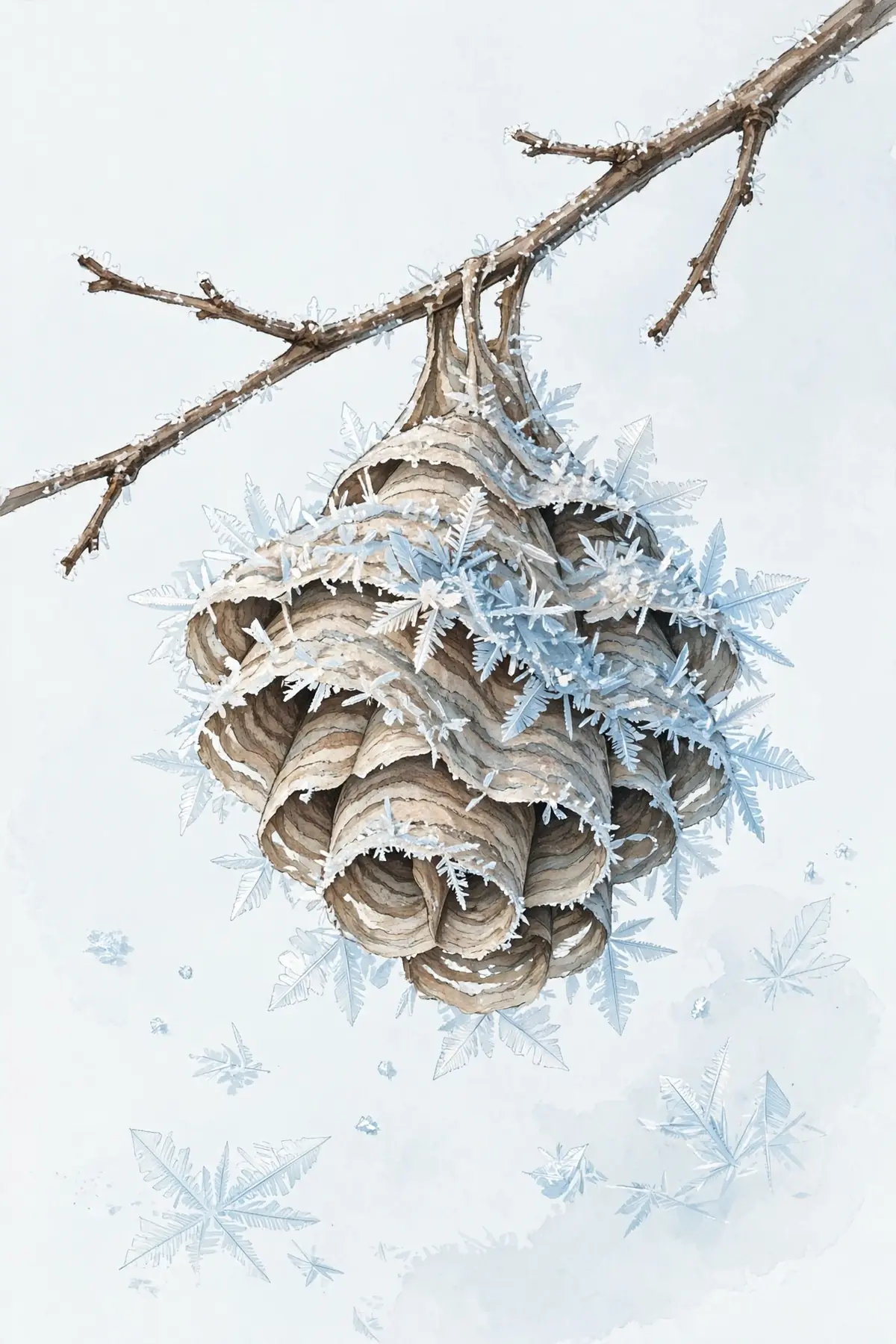
It’s October, the wasps are dive-bombing your trash cans, and you’re counting the days until they vanish. The good news about when do wasps die off: the colony collapses after the first hard frosts of fall, and by deep winter the nest is an empty paper shell. Only the mated queens survive — everything else, workers and drones alike, dies with the cold.
The short answer: the first hard frosts end it #
Social wasps — yellowjackets, paper wasps, hornets — run on an annual cycle. The entire colony except the next generation of queens dies when sustained cold arrives. Entomologists note that colonies die during the first real cold spell of fall, with only the fertilized females surviving to overwinter.
What “hard frost” means in practice: a light frost may only slow wasps down, but several nights of genuinely freezing temperatures finish the colony. In most of the US, that lands somewhere between October and December depending on your region — earlier in the north, later in the deep south, where some colonies can linger into winter.
The queens leave before the end. In late summer and fall, the colony produces new queens and males. They mate, and the mated queens abandon the nest to find sheltered hiding spots — under bark, in rotting logs, inside wall voids, attics, or sheds. They don’t stay in the old nest, and they don’t defend it.
The old nest is never reused. Come spring, each surviving queen starts a brand-new colony from scratch, usually in a new location. Last year’s papery nest just weathers and falls apart. So if you’re staring at a nest in November wondering whether to deal with it — time is already doing the work for you.
A wasp colony’s year, season by season #
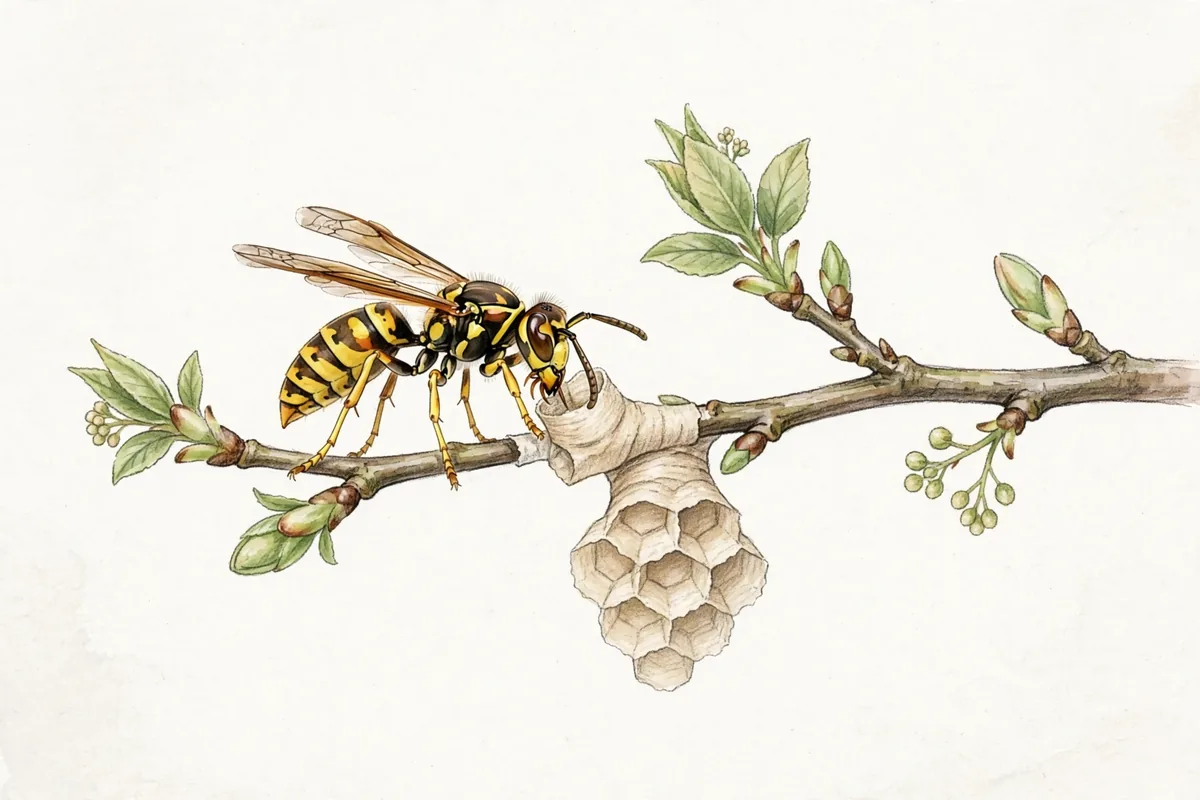
| Season | What’s happening | |—|—| | Spring | A single mated queen emerges from hibernation and builds a small starter nest, raising the first workers alone. | | Early summer | Workers take over foraging and nest expansion while the queen focuses on laying eggs. The colony grows quietly. | | Late summer | The colony peaks — hundreds or thousands of wasps. Workers switch from hunting insects to scavenging sweets and proteins. | | Fall | New queens and males are produced, mate, and leave. The old queen fades, workers become desperate scavengers, and the first hard frosts kill the remaining colony. | | Winter | Only mated queens survive, dormant in sheltered spots. The abandoned nest sits empty. |
Why spring queens seem sluggish: the large wasp you see bumping against windows in April is likely a just-awakened queen — slow, groggy, and focused on finding a nest site, not on stinging you.
Why summer is quiet: a well-fed colony with plenty of larvae to tend is actually at its least troublesome. Workers are busy hunting caterpillars and flies to feed the young, not crashing your barbecue.
Why fall feels like an invasion: as the colony’s brood declines, workers lose their “job” and turn to robbing trash cans, soda cans, and picnic tables. They’re also the ones most likely to wander indoors seeking warmth as nights cool.
Why wasps seem worse right before they die #
If wasps are at their most aggressive just before they disappear, that’s not your imagination — it’s the colony’s endgame.
Desperate hunger. With few larvae left to feed, workers switch to pure scavenging. Fermenting fruit, garbage, sugary drinks, and meat scraps become targets, which puts them in constant conflict with people. A wasp that would have ignored you in July will fight you for a sandwich in October.
A dying queen and no future. The founding queen is old or dead by fall, the colony’s social order is breaking down, and the workers have, biologically speaking, nothing left to lose. Defensive behavior around the nest stays sharp even as the colony declines.
Cold makes them sluggish but not harmless. A chilly wasp on a windowsill in November looks half-dead, but it can still sting if grabbed or pressed against skin. Don’t handle “dead-looking” wasps with bare hands — and don’t assume every wasp you see in late fall belongs to a dying colony; a mated queen seeking a winter hideout is very much alive.
This is also why wasps can sting more than once without losing their stinger — unlike honeybees, they keep their weapon and can use it repeatedly, which matters most during exactly this aggressive late-season phase.
Late-season nests: what to do and when it’s safe #
If the nest is active in fall: leave it alone if it’s out of the way. The colony is weeks from natural collapse, and disturbing it now provokes the most defensive stinging of the year. Keep trash sealed, cover sweet drinks outdoors, and give the nest a wide berth.
If the nest threatens a doorway or play area: this is a job for a professional, especially for large yellowjacket nests. Late-season colonies are populous and irritable — the worst possible DIY target. A pest professional has the protective gear and the right treatment to handle it safely.
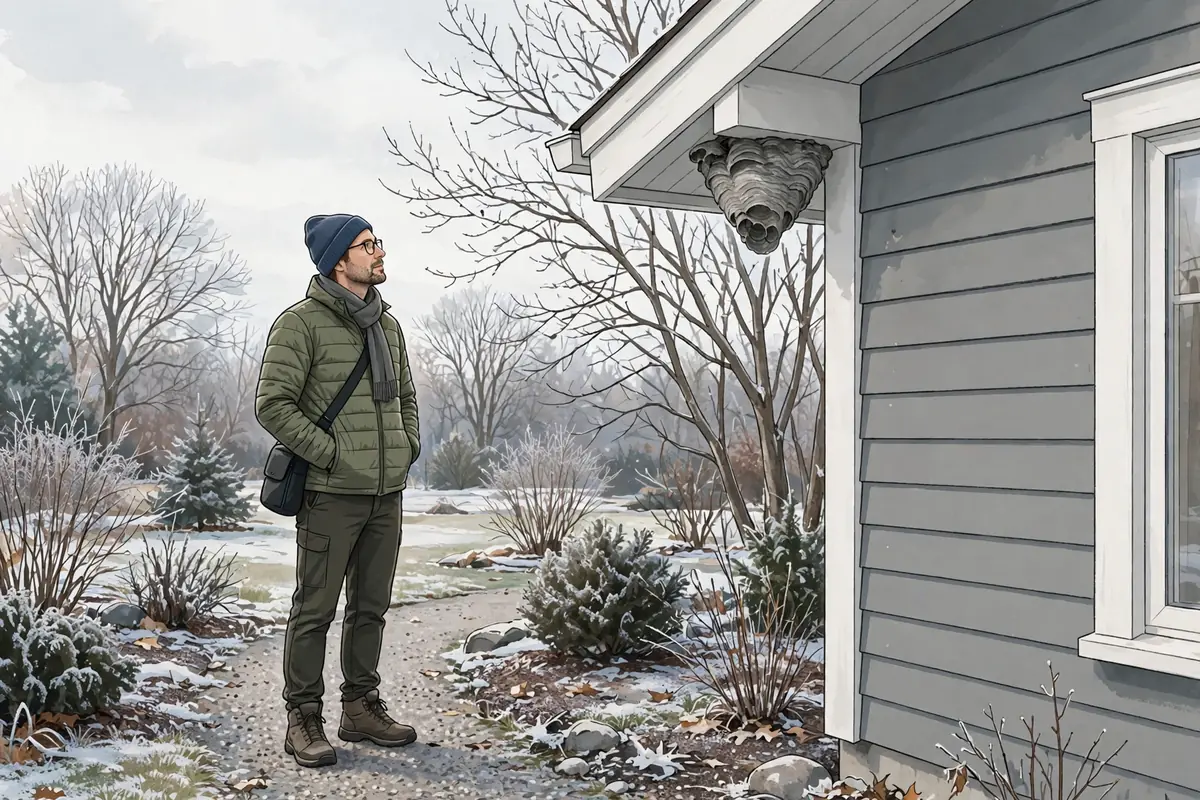
If it’s winter and the nest is quiet: after several hard frosts with zero wasp traffic for a week or more, the nest is empty. You can safely knock it down and dispose of it. Wear gloves anyway — old nests can harbor other insects — and seal any entry gaps you find, since next spring’s queens scout the same sheltered spots.
Finding nests before they become problems: the real win is catching nests in spring when they’re golf-ball sized and the queen is working alone. Learning how to find a wasp nest early in the season lets you deal with a dozen wasps instead of a thousand.
Indoors in winter: a sluggish wasp inside in December is almost certainly a sheltering queen, not a colony invasion. Catch it under a cup, slide paper underneath, and release it outside — or vacuum it up if you prefer. She won’t build a nest in your living room.
Warning signs: when to seek care #
Call 911 immediately if a sting causes trouble breathing or swallowing, swelling of the face, lips, tongue, or throat, widespread hives, dizziness or fainting, or a racing heartbeat. These signal a severe allergic reaction. If you carry an epinephrine auto-injector, use it right away — but still call 911, because epinephrine buys time and does not replace emergency care.
Get urgent medical care for multiple simultaneous stings (especially in children, older adults, or anyone with a known insect allergy), stings inside the mouth or throat, or a sting near the eye. Also seek care if local swelling keeps expanding after 24–48 hours, red streaks spread from the sting, or you develop fever — those suggest infection or an unusually strong local reaction rather than a normal sting.
Frequently asked questions #
Will a wasp nest be reused next year? #
No. Each spring, surviving queens build entirely new nests, usually in different locations. An old nest is an empty paper structure that gradually disintegrates. Removing it in winter is safe and won’t provoke anything — there’s nobody home.
Do wasps die in winter or hibernate? #
Both, depending on caste. Workers, drones, and the old queen die when hard frosts arrive. Only the newly mated queens survive, and they spend winter in a dormant, hibernation-like state hidden in sheltered spots until spring warmth wakes them.
Is it safe to remove a nest in winter? #
Yes, once activity has fully stopped. Wait until after several hard frosts and confirm no wasps are coming or going for at least a week. Then you can knock the empty nest down with basic gloves as protection. If there’s any doubt whether it’s truly inactive, wait or call a professional.
Why do I still see wasps inside in November? #
You’re likely seeing mated queens looking for winter shelter, not foraging workers. They’re sluggish, non-aggressive, and not defending a nest — they just want a crack to hide in. Seal gaps around windows and doors, and calmly remove the occasional visitor rather than panicking about an indoor colony.
Medical and editorial note #
This guide is general information about wasp seasonal behavior, not medical advice. Wasp activity timing varies by region and weather — a mild winter can extend the season in southern states. If stings cause anything beyond normal local pain and swelling, or if you’re dealing with a nest in a dangerous spot, contact a healthcare professional or pest professional rather than handling it alone.


