
It’s midnight, the bite is throbbing, and you’re digging through the medicine cabinet for anything that might help. Before you grab that bottle, know what not to put on bug bites — many of the most common things people reach for can burn your skin, trigger contact rashes, or turn a harmless bump into an infection.
Harsh chemicals that damage healing skin #
Your skin around a bite is already inflamed and its barrier is weakened. Strong chemicals add injury on top of injury.
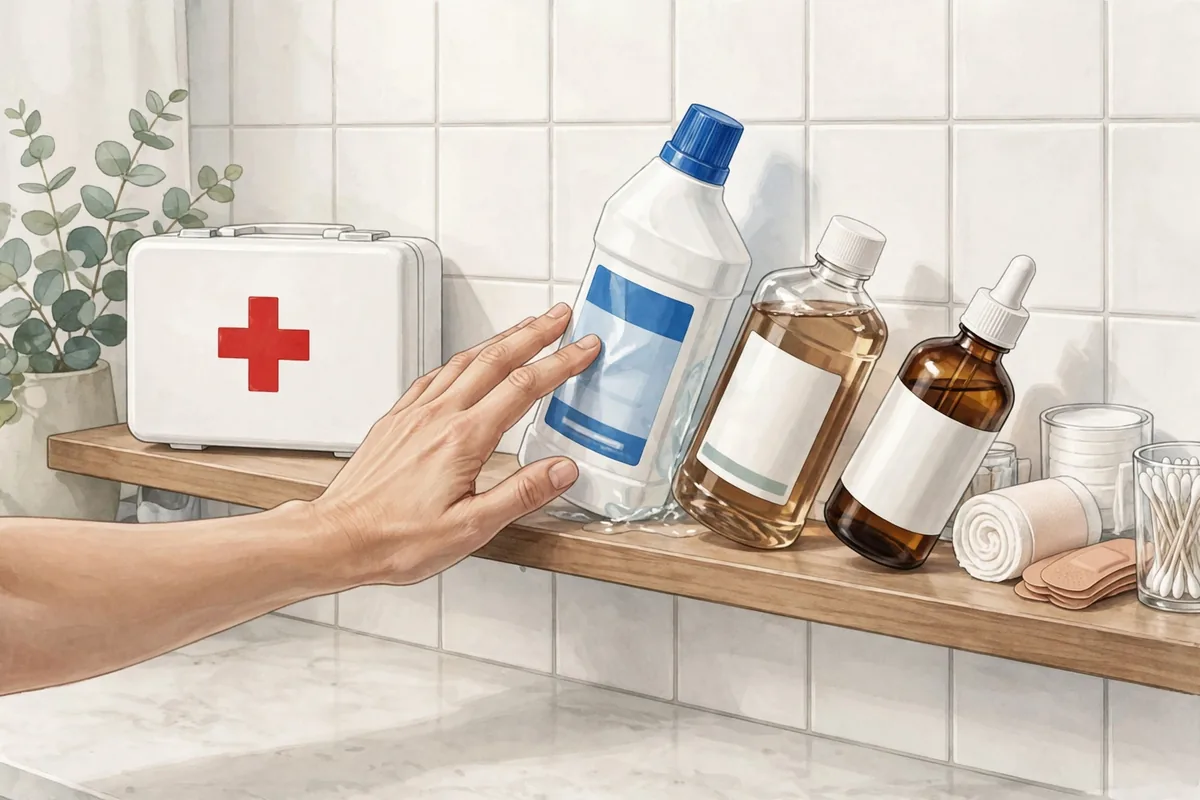
Bleach or ammonia. These are not skin disinfectants. Household bleach can cause chemical burns, especially on broken or scratched skin, and it destroys healthy tissue trying to heal. Never apply bleach to a bite, no matter what a forum post told you.
Rubbing alcohol. It stings, dries the skin, and irritates an already angry bump. For routine bite cleaning, mild soap and cool water do the job without the damage. Save the alcohol for cleaning tweezers, not your skin.
Hydrogen peroxide. The fizz feels like it’s doing something, but peroxide damages the new cells your body sends to repair the area. Dermatologists and wound-care guidance have moved away from it for everyday skin care — bites included.
Expired or shared creams and ointments. That tube of steroid cream from three summers ago may be contaminated or degraded, and borrowing someone else’s prescription cream risks the wrong drug and germs on the tube tip. If itching is severe, buy a fresh over-the-counter product and use it per label directions, or ask your pharmacist.
Rule of thumb: if a substance would hurt on a paper cut, it will hurt on a bite — and delay healing. Keep your routine gentle while the skin is irritated. For the right way to clean a bite without causing more damage, see the walkthrough on how to clean a bite or sting safely.
Folk remedies that backfire #
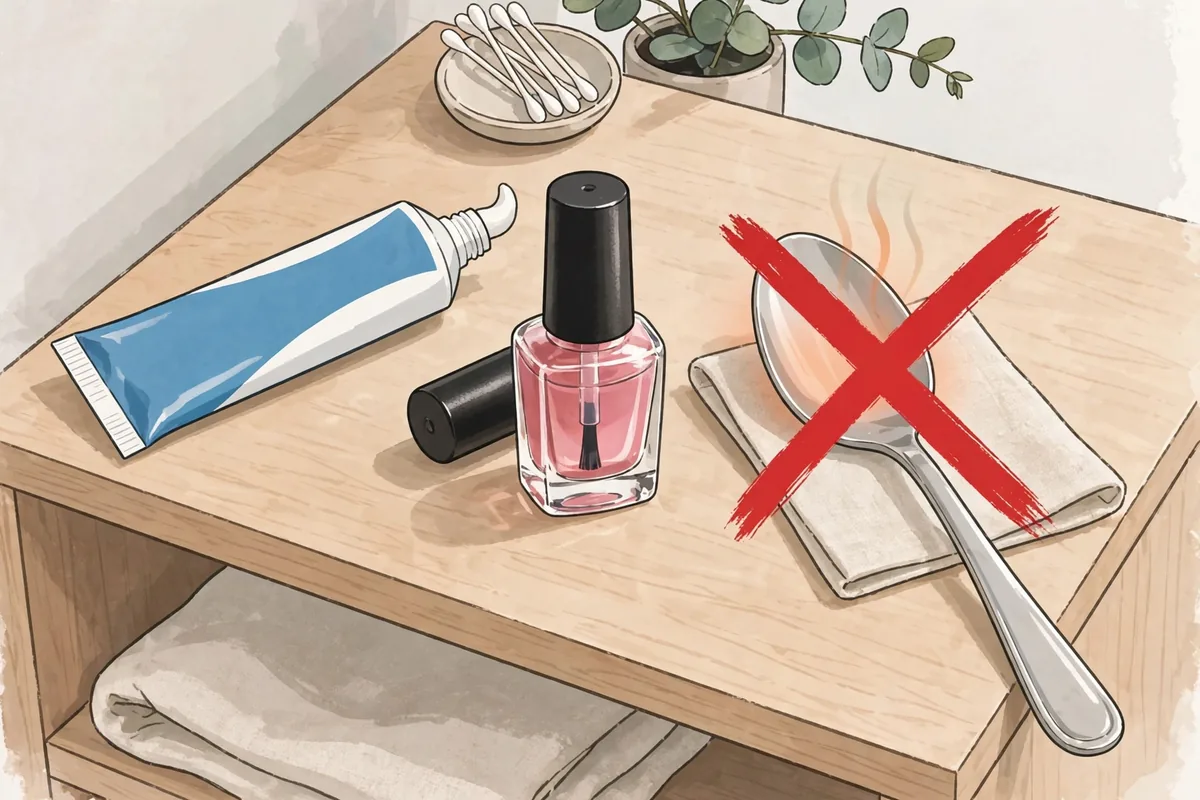
Toothpaste. The mint feels cooling for a few minutes, but toothpaste contains detergents, flavorings, and whitening agents that can irritate inflamed skin. There is no good evidence it helps bites heal faster, and it can trigger a contact rash that looks worse than the original bump.
Clear nail polish. This old chigger-bite trick assumed mites were burrowed under your skin and needed smothering. They aren’t — chiggers feed from the surface and are usually long gone by the time you itch. Polish just traps moisture, can irritate the skin, and makes it harder to keep the area clean.
Meat tenderizer. The theory was that papain “digests” venom, but evidence is limited, and the product is designed for food, not skin. Sprinkling seasoned tenderizer into a sting invites irritation without proven benefit.
Hot water or a heated spoon. “Cooking” the itch away is one of the fastest ways to add a burn to a bite. The itch may briefly fade because the heat overwhelms the nerves, but the line between “hot enough to help” and “hot enough to burn” is thin, and burned skin heals worse than a bite does. A cool compress gives relief without the risk.
Homemade pastes with baking soda, vinegar, or lemon juice. These are usually harmless in tiny amounts, but on scratched skin they sting and can inflame the area. Lemon or lime juice followed by sun exposure can even cause a light-activated skin reaction. None of them outperform basic gentle care.
If a remedy promises instant results and comes from a kitchen or toolbox, treat it with suspicion. Biting insects are annoying, but the cure shouldn’t be worse than the bite.
What to do instead: the safe 4-step routine #
You don’t need a exotic remedy — the boring basics work because they support healing instead of fighting it.
1. Wash gently. Rinse with mild soap and cool water, then pat dry. This is the single most useful thing you can do in the first minutes.
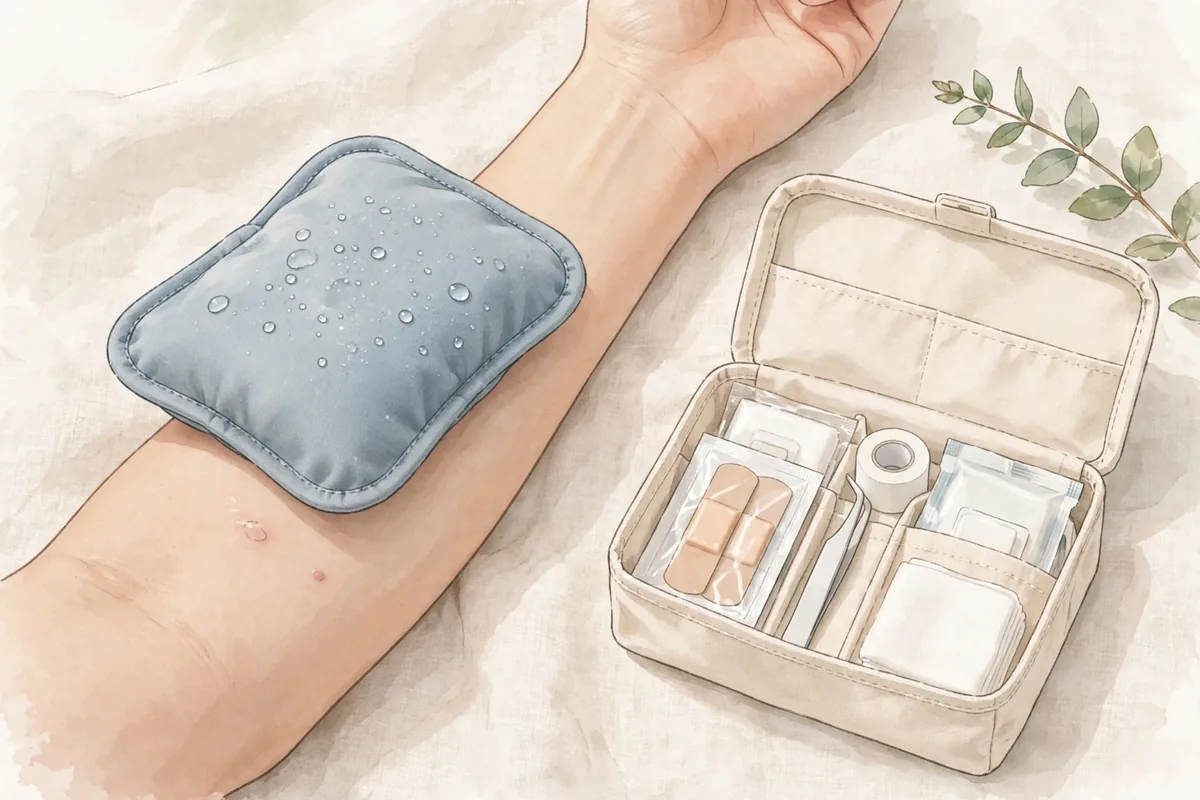
2. Cool it down. Apply a cool compress or a cloth-wrapped ice pack for about 10–15 minutes at a time. Cold eases itching and swelling without any chemical risk.
3. Protect the skin. Cover larger or frequently-bumped bites with a light bandage. This stops you from absent-mindedly scratching and keeps dirt out.
4. Ease itching the simple way. An oral antihistamine per label directions or an over-the-counter hydrocortisone cream used as directed can take the edge off itching. Calamine lotion is another gentle option. Stop any product that causes new redness or burning.
Repeat as needed for a few days. Most uncomplicated bites improve noticeably within 48–72 hours. If you’re not sure you’re doing the right things in order, run through a bite and sting first-aid checklist so nothing gets missed.
The fire ant pustule rule: don’t pop, don’t pick #
Fire ant stings deserve their own warning because they develop into pus-filled blisters within about a day — and those blisters are the ones people most want to “fix.” Don’t. The pustules are part of the body’s normal response to fire ant venom, not proof of infection, and poison control guidance describes typical ones as usually sterile.
Popping or picking breaks the skin barrier and gives bacteria a doorway in. Opened blisters become infected far more often than untouched ones, and infection is the real complication you’re trying to avoid.
Scratching has the same effect. Trim your nails short, keep the area covered if you catch yourself picking at night, and let the pustules dry on their own — they usually crust over within a few days.
If one breaks accidentally, wash gently with soap and water and keep it covered until it scabs. Watch for spreading redness, increasing pain, warmth, or pus that returns — those are infection signals, not normal healing. And resist the related urge to scratch or squeeze any bite — squeezing pushes inflammation deeper instead of drawing anything out.
Warning signs: when to seek care #
Call 911 immediately if you or someone near you has trouble breathing or swallowing, swelling of the face, lips, tongue, or throat, widespread hives, dizziness or fainting, or a racing heartbeat after a bite or sting. These are signs of a severe allergic reaction. If you carry an epinephrine auto-injector, use it right away — but still call 911, because epinephrine buys time and does not replace emergency care.
Get urgent care or call your doctor if redness spreads outward over hours to days, you see red streaks radiating from the bite, the area becomes increasingly painful, hot, or swollen after the first day, pus drains from the bump, or you develop fever or chills. Bites on the face near the eye, inside the mouth, or on the genitals deserve a lower threshold for calling — swelling in those spots can cause problems faster. Also seek care if a bite isn’t clearly improving after several days, or if anything about it worries you.
Frequently asked questions #
Can I use rubbing alcohol to clean a bug bite? #
Soap and water is the better choice. Rubbing alcohol stings, dries out irritated skin, and doesn’t improve healing. Save it for disinfecting tools like tweezers, and clean the bite itself with mild soap and cool water.
Is toothpaste on a bug bite safe? #
Not really — and not helpful. The cooling sensation fades quickly, while the detergents, mint flavorings, and whitening agents in toothpaste can irritate inflamed skin and cause a contact rash. Skip it and use a cool compress instead.
Should I pop a fire ant blister? #
No. Fire ant pustules are usually a normal, sterile reaction to the venom, not an infection. Popping them opens the skin to bacteria and is the most common way a simple sting turns into a real skin infection. Let them dry and crust over on their own.
I already put something harsh on my bite — what now? #
Rinse the area thoroughly with cool water to remove the residue, then stop using that product. Watch for chemical-burn signs: spreading redness, blistering beyond the bite, or persistent burning. If those appear, or if you swallowed or inhaled something, contact Poison Control or your doctor promptly.
Medical and editorial note #
This guide is general information about common bug-bite care mistakes, not medical advice. Skin reactions vary, and what works for one person may irritate another. If a bite looks unusual, isn’t healing, or worries you in any way, see a healthcare professional or pharmacist for guidance tailored to your situation.


