
Wasp nest vs hornet nest identification is straightforward once you know the pattern: paper wasp nests are small, open umbrella-shaped combs with visible hexagonal cells, while hornet nests are large, fully enclosed gray paper envelopes shaped like teardrops or footballs. Size, enclosure, and location together identify the builder — and tell you how seriously to take it.
Wasp nests: open combs and paper umbrellas #
Paper wasp nests are the classic “umbrella” nests:
- Shape: an open, inverted-umbrella comb — a flat or slightly domed disk of hexagonal cells hanging from a single stalk.
- Enclosure: none. The cells are exposed and visible from below; you can see the larvae and the wasps tending them.
- Size: modest — typically 3–8 inches across, roughly tennis-ball to softball scale at peak season.
- Material: gray or brown papery pulp, chewed wood fiber.
- Location: under eaves, porch ceilings, deck railings, window frames, door frames, tree branches, and fence rails — anywhere sheltered but open.
- Colony size: dozens of wasps, not hundreds.
Mud dauber nests look completely different — tubes or blobs of dried mud on walls and ceilings. Mud daubers rarely sting people and are not aggressive, so a mud nest is good news.
What you will see: paper wasps coming and going in modest numbers, often with those long legs dangling in flight. Traffic is steady but not overwhelming.
Hornet nests: large paper envelopes #
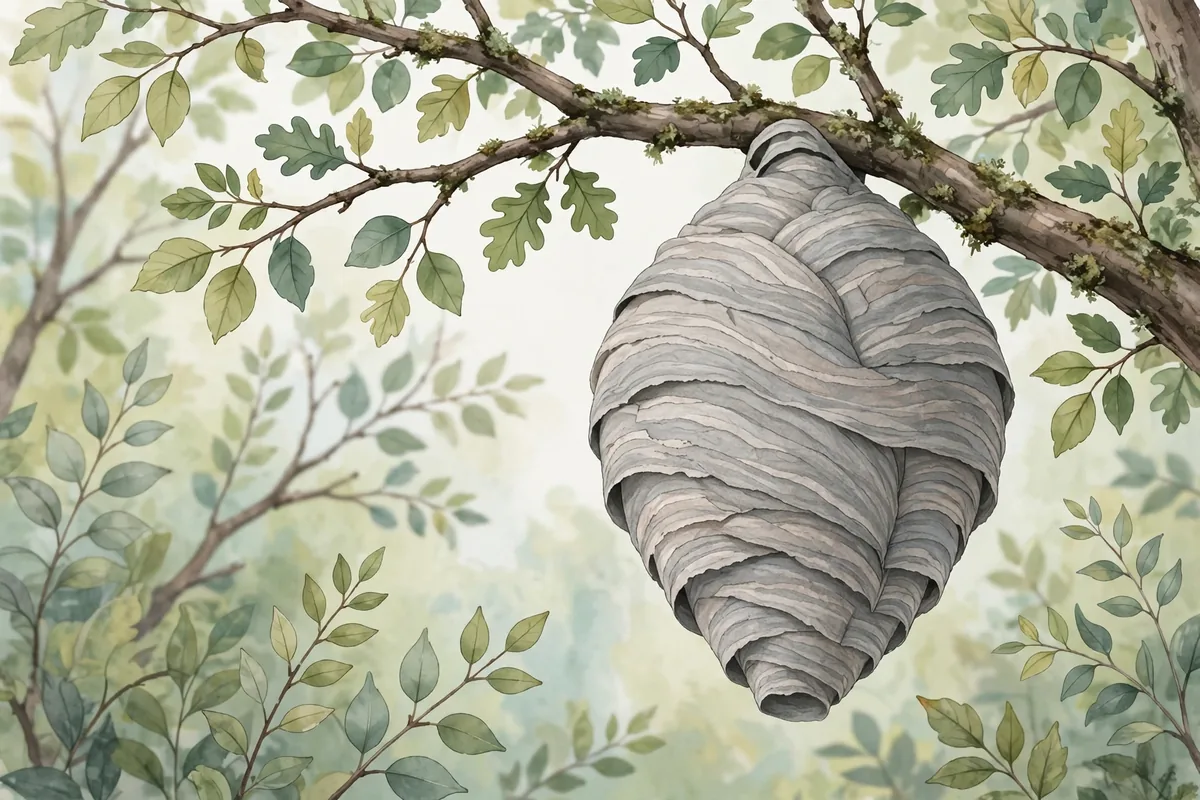
Hornet nests (bald-faced hornets and European hornets in the US) are built for bigger colonies:
- Shape: a large enclosed teardrop, football, or oval envelope of layered gray-brown paper.
- Enclosure: complete. The comb is hidden inside; you see only the outer shell with a single small entrance hole, usually at the bottom.
- Size: impressive — 12 inches to 2 feet tall at peak season, roughly basketball scale. A hornet nest is unmistakably bigger than any paper wasp nest.
- Material: layered papery pulp, often with a marbled gray appearance.
- Location: bald-faced hornets hang theirs in trees, large shrubs, and under eaves in open air. European hornets build inside cavities — hollow trees, wall voids, attics, and sheds — so you may only see the traffic, not the nest.
- Colony size: hundreds of workers by late summer.
What you will see: heavier traffic than a paper wasp nest, larger insects, and a well-defended perimeter. Bald-faced hornets are famously aggressive defenders — give their nests the widest berth of any common US stinging insect.
The comparison at a glance #
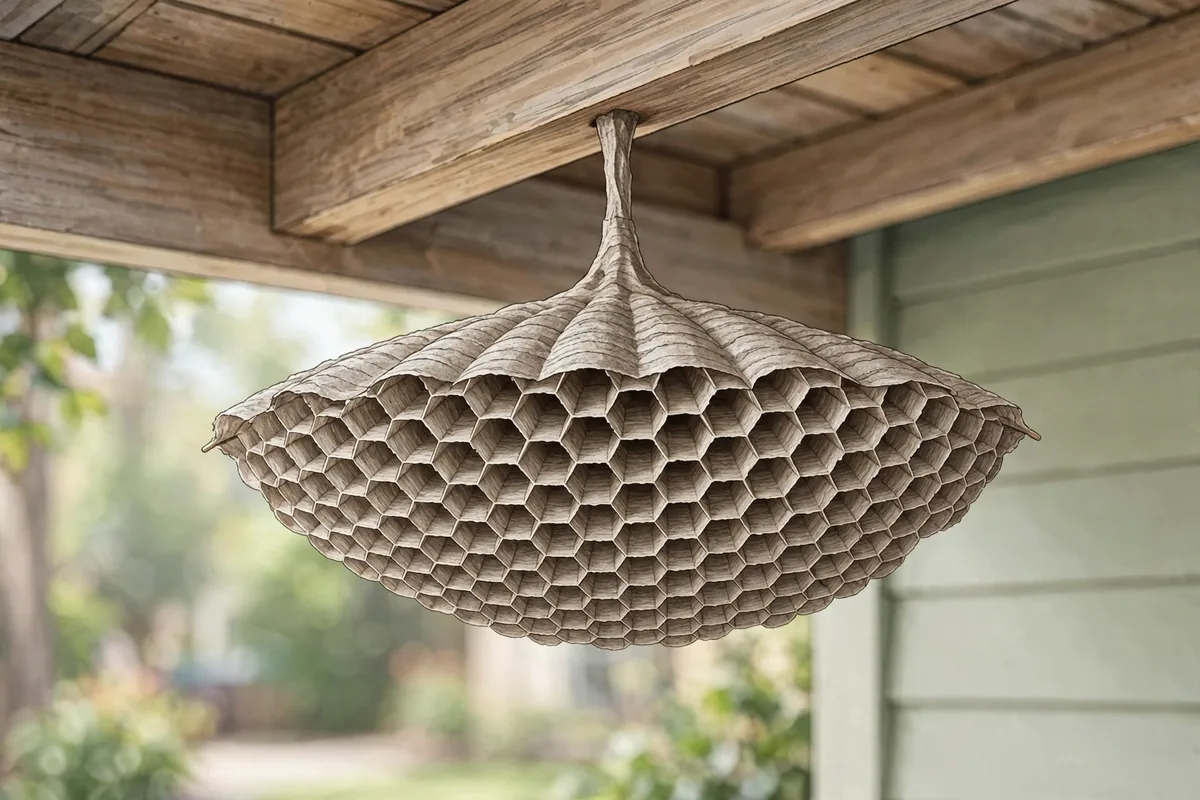
| Feature | Paper wasp nest | Hornet nest | |—|—|—| | Shape | Open umbrella comb | Enclosed teardrop/football | | Cells visible? | Yes — exposed hexagons | No — hidden inside shell | | Size | 3–8 inches | 12–24+ inches | | Entrance | Open all around | Single small hole | | Location | Under eaves, railings, frames | Trees, shrubs, cavities, walls | | Colony | Dozens | Hundreds | | Danger level | Moderate near nest | High — aggressive defense |
The tricky middle: yellow jackets and other look-alikes #
Yellow jacket nests complicate identification because they are technically wasps with hornet-like colony sizes:
- Usually underground (abandoned burrows, soil cavities) or inside wall voids and attics.
- You rarely see the nest — just a stream of wasps entering one hole in the ground.
- Colonies can reach thousands of workers, making them the most dangerous nest to disturb accidentally (the classic lawnmower incident).
European hornet vs bald-faced hornet: if the nest is a visible gray envelope in a tree, it is bald-faced hornets. If large hornets are streaming into a tree cavity or wall gap and you cannot see the nest, think European hornets. Either way, know the symptoms to watch for after a sting — see our guide on hornet sting symptoms.
Old nests: wasps and hornets do not reuse nests year to year — colonies die in winter except the queen. An empty nest found in winter is safe to remove, and removing it may discourage new queens from settling in the same spot.
You found a nest: safe next steps #
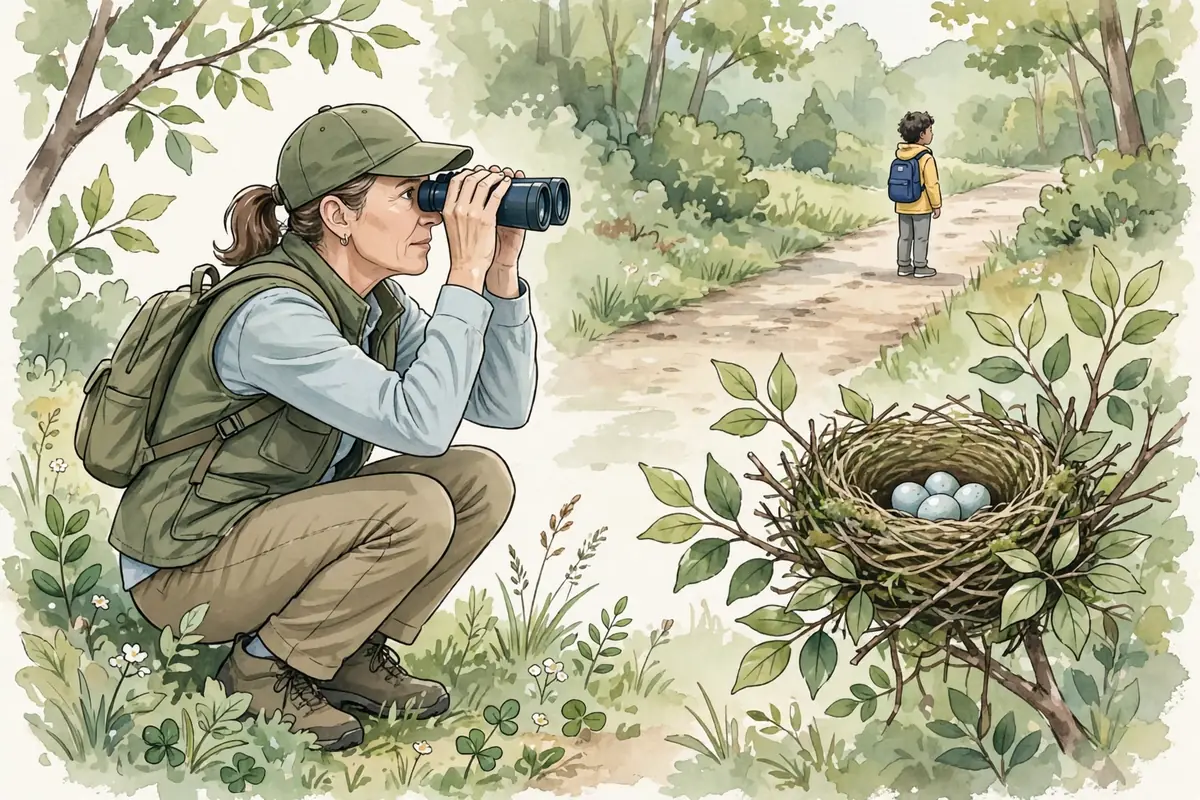
Step 1 — identify from a distance. Use the table above. Binoculars help. Do not poke, tap, or shake anything to check.
Step 2 — assess the risk level:
- Low (monitor): small paper wasp nest in a low-traffic area, no allergy in the household. You may choose to leave it — paper wasps are beneficial predators.
- Moderate (plan removal): paper wasp nest near a door, play area, or seating. Early-season small nests can sometimes be handled at dusk by the homeowner, but only with no sting allergy in the home.
- High (call a professional): any hornet nest, any underground yellow jacket nest, any nest inside a wall or chimney, large colonies with heavy traffic, or any sting allergy in the household.
Step 3 — while you wait: mark the area, keep children and pets away, avoid lawn equipment near it, and reduce attractants (sealed trash, fallen fruit). If someone does get stung, our wasp sting first aid guide gives the exact steps.
Never: spray a wall-void nest’s entrance yourself (wasps may chew through drywall into the house), attempt to remove a hornet nest in daylight, or use fire, water hoses, or sticks on any active nest.
Warning signs: when to seek care #
Call 911 immediately for: trouble breathing or swallowing; swelling of the face, lips, tongue, or throat; widespread hives; dizziness, faintness, or collapse; or a racing heartbeat. Use prescribed epinephrine if available, then call 911.
See urgent care or your doctor the same day for: multiple stings at once; swelling that keeps spreading after 48 hours; red streaks, pus, or fever; or stings near the eyes or inside the mouth.
Frequently asked questions #
How can I tell if a nest is active or abandoned? #
Watch on a warm day for 10–15 minutes from a safe distance. Active nests have steady two-way traffic; abandoned nests have none. Nests found in winter are almost always empty. When in doubt, assume it is active and call a professional.
Do wasps and hornets reuse the same nest? #
No. Each year’s colony builds fresh, and only the fertilized queen survives winter to start a new nest elsewhere. However, new queens often choose the same sheltered spots, so a location that hosted a nest once deserves a spring check next year.
What is the gray papery ball in my tree? #
Almost certainly a bald-faced hornet nest — the classic large gray envelope hanging in a tree or large shrub. Treat it with maximum respect: these are among the most defensive stinging insects in North America. Do not attempt removal yourself.
Can I knock down a nest at night when the wasps are sleeping? #
Nighttime removal of a small paper wasp nest is sometimes done by experienced homeowners, but it is risky: wasps are drawn to flashlights, and a disturbed colony defends even at night. For anything larger than a tennis ball, anything enclosed, or any household allergy — hire a professional.
Medical and editorial note #
This guide is general information for educational purposes and is not medical advice. Sting allergies can be life-threatening; anyone with a known allergy should carry prescribed epinephrine and have an emergency plan reviewed with their healthcare provider.


