
Opening the mailbox to find a papery umbrella of wasps clinging to the lid is one of summer’s nastiest surprises. A wasp nest in mailbox setups is usually the work of paper wasps, which love the sheltered underside of the box. A small, early-season nest can be dealt with safely at night — but a large nest, a ground nest, or any sting allergy in the household means calling a professional instead.
How to tell it is a wasp nest #
Paper wasps build open-comb nests that look like a small gray umbrella or honeycomb without a papery outer envelope. In mailboxes, they almost always attach the nest to the inside top or the underside of the door flap, where it stays dry and hidden. Early in the season a nest may be no bigger than a walnut, with just a queen and a handful of workers. Later in summer, the same nest can grow to several inches across with dozens of defenders — a very different risk level.
Before doing anything, watch the mailbox from at least ten feet away for a minute or two during daylight. Note how many wasps come and go, and whether the nest entrance faces the opening you use every day. A nest with steady traffic and loud buzzing when you tap the post (gently, once, from the side) is active and should be treated with respect. If the nest is inside a wall void or another enclosed space near the mailbox rather than the box itself, do not try to seal it in — trapped wasps will chew their way out, often into the house. Learn how to find a wasp nest if you suspect the colony extends beyond the mailbox.
Should you remove it yourself or call a pro #
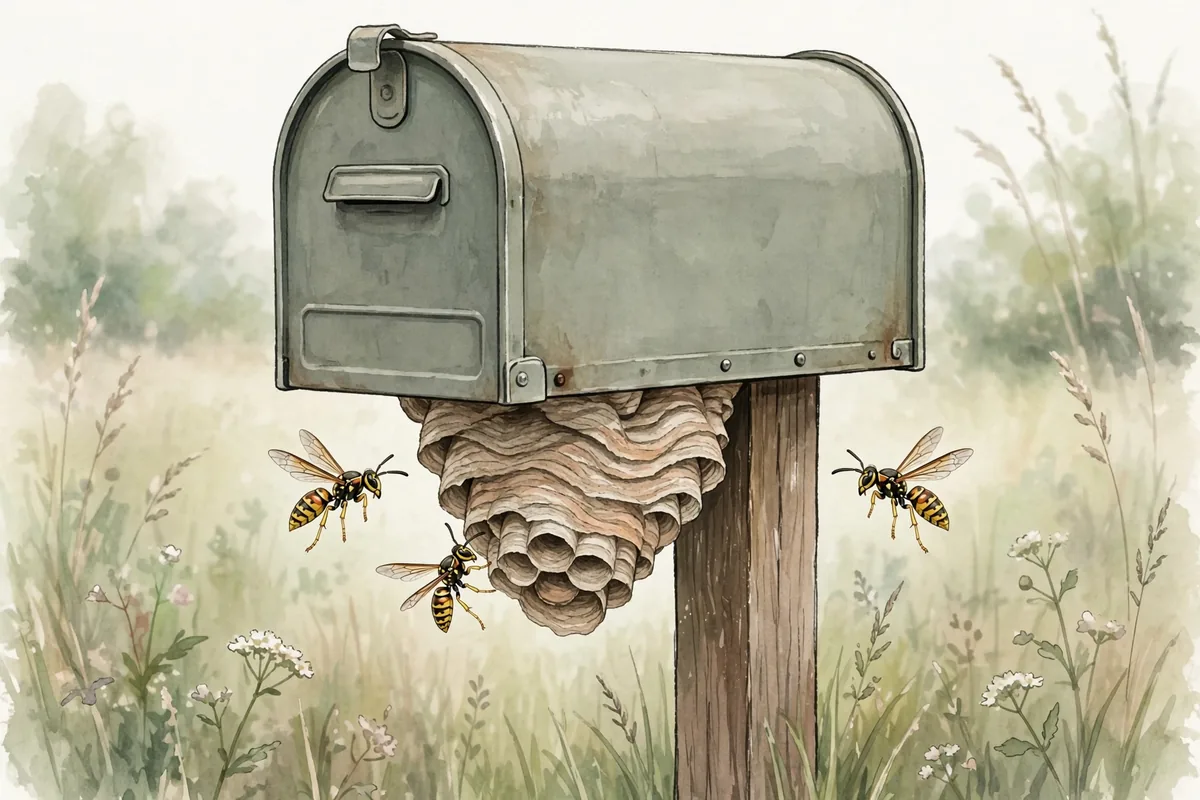
You can reasonably handle the job yourself only when all of these are true: the nest is small (roughly golf-ball size or smaller), it hangs in an exposed spot like the mailbox lid rather than inside a wall, no one in the household has a sting allergy, and you can work at night when the wasps are calm and home. If any one of those fails, the smart move is a pest-control professional.
Call a pro without hesitation for large nests, nests inside walls or underground nearby, nests you have already disturbed once, or if anyone who uses the mailbox has a known allergy to stings. Professionals have the protective gear and the right products to remove a colony in one visit, and the fee is small compared with an emergency-room trip. If you are unsure which species you are dealing with, compare photos before acting — a wasp sting first aid refresher is also worth reading in case someone gets stung during the process.
Removing a small nest safely at night #
Wait until well after dark, when nearly all the workers have returned and are sluggish. Wear long sleeves, long pants tucked into socks, closed shoes, and gloves; a hat with a veil or even a hood helps. Bring a flashlight with a red filter or a dim setting if possible, since bright white light excites wasps less than you might fear but still draws their attention.
Stand to the side of the mailbox, not directly in front of the opening, and keep your escape path clear. For a small exposed nest, you have two reasonable options. The simplest is a wasp spray labeled for the job, applied from the distance stated on the label, aimed at the nest for a few seconds, then stepping back. Alternatively, a very small early-season nest can be knocked down with a long-handled tool and crushed or bagged — but only if you are confident the nest holds just a few wasps. Never attempt the knockdown method on a large or loud nest.
After treatment, wait until the next night and check for returning wasps before reaching into the box normally. Scrape off any remaining nest material, and consider wiping the inside top of the mailbox or hanging a fake nest decoy nearby, since wasps tend to avoid spots that look occupied. Wear gloves during cleanup, because even dead wasps can sting.
What not to do #
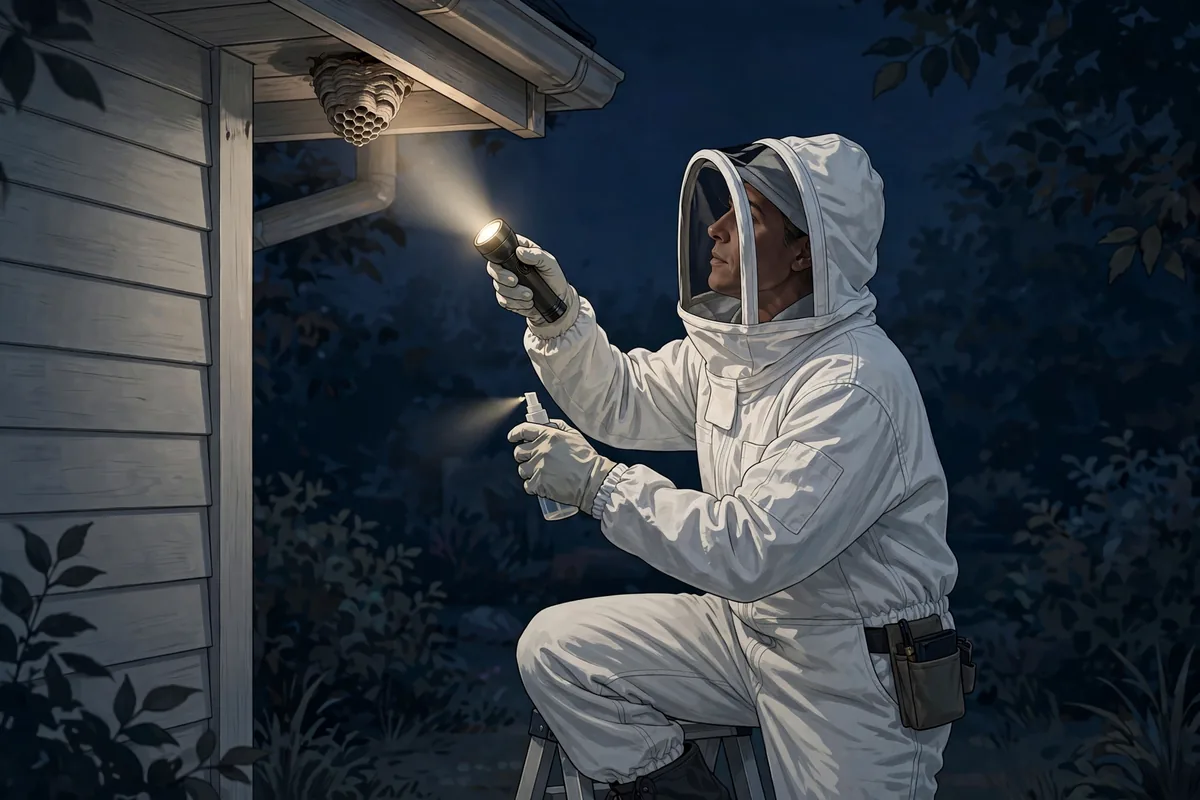
Do not reach into the mailbox to grab the mail normally once you know a nest is active — use tongs or have someone else collect the mail until the nest is gone. Do not spray water into the box, which only angers the colony without removing it. Do not try to relocate an active wasp nest yourself; unlike honeybees, wasps do not take kindly to being moved and there is no beekeeper to call for them.
Do not seal the nest inside the mailbox or plug the opening with the nest still in place. Trapped wasps will find another exit, and a colony sealed into a wall void near the mailbox can chew through drywall and end up inside the house. Do not work on the nest during the day when foragers are coming and going, and never stand directly in front of the opening while treating it. Finally, do not ignore a nest that keeps coming back in the same mailbox — repeated nests in one spot suggest an ideal shelter, and a professional can treat the area with a residual product you cannot buy over the counter.
Warning signs: when to seek care #
Call 911 immediately if a sting causes trouble breathing or swallowing, swelling of the face, lips, tongue, or throat, widespread hives, dizziness or fainting, or a racing heartbeat. If the person carries an epinephrine auto-injector, use it first and then call 911. Multiple stings at once also warrant emergency evaluation, since venom load rises with each sting.
For stings that stay local, urgent care or a doctor visit is wise if redness and swelling keep spreading after 24 to 48 hours, red streaks appear, the area becomes warm and painful with pus, or fever develops. Stings on the face, in the mouth or throat, or near the eye deserve same-day evaluation even when they look mild at first. People with a known sting allergy should have an action plan from their allergist and should never try to remove a nest themselves.
Frequently asked questions #
Why do wasps keep building nests in my mailbox? #
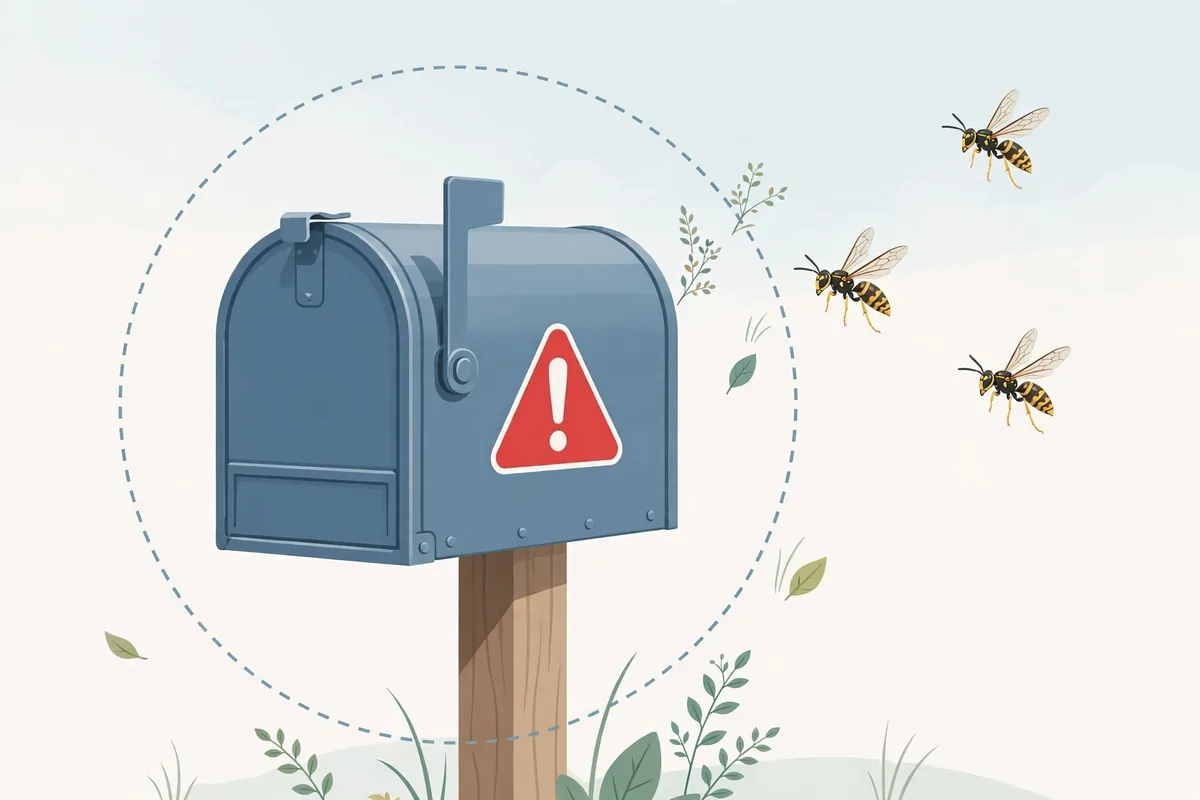
Mailboxes are nearly perfect wasp real estate: dark, sheltered, dry, and rarely disturbed. Paper wasp queens scout for exactly this kind of protected overhang in spring. Once one queen succeeds, her pheromones and the sheltered spot make the same mailbox attractive to future queens, which is why the problem repeats in the same box year after year.
Can I just stop using the mailbox until winter? #
You could, but it rarely solves the problem cleanly. The colony grows all summer and stays aggressive through fall, and an unclaimed nest may still be active when you finally need the box. A small nest removed early in the season is far easier and safer than a large one tackled in August, so deal with it promptly rather than waiting.
Will wasp spray damage my mailbox or mail? #
Wasp sprays are designed for outdoor use and generally do not harm a metal or plastic mailbox, though they can stain. Do not spray mail itself, and let the box air out before putting mail back in. If you are concerned about residue, wear gloves when handling the box for a day or two after treatment.
How do I keep wasps from coming back to the same mailbox? #
After removal, keep the box clean of old nest material, and consider a fake wasp nest decoy hung nearby, since paper wasps avoid spots that appear claimed. Some people wipe the inside lid with a diluted vinegar solution, though evidence for this is limited. The most reliable prevention is checking the mailbox in early spring and removing any starter nest the size of a walnut before it grows.
Medical and editorial note #
This guide is general information about dealing with wasp nests and stings, not medical advice. Wasp stings can cause serious allergic reactions in some people, and pest-control decisions involve real risk. If anyone is stung and shows signs of a severe reaction, seek emergency care immediately, and talk to a healthcare professional about any sting-related concerns.


