
Two weeks in and the “spider bite” still looks angry — or keeps scabbing, reopening, and starting over. A spider bite that won’t heal is frustrating, but it is also informative: most straightforward bites resolve within one to two weeks, so a stalled one is telling you something. Sometimes the wound needs different care; often, the original diagnosis was wrong and it was never a spider bite at all. Either way, here are the next steps that move things forward.
What Will Not Heal Actually Means #
First, calibrate expectations. A normal bite — spider or otherwise — typically follows this arc: redness and swelling peak within a day or two, then steadily fade over 7 to 14 days. A faint mark or slight firmness can linger a bit longer, especially on the legs. That is healing, just slow.
“Won’t heal” usually means one of these patterns:
- Stuck in place. The bite looks the same on day 14 as on day 5 — same redness, same tenderness, no gradual improvement.
- Cycling. It scabs, the scab comes off, it weeps or bleeds, and the cycle repeats without ever closing.
- Getting worse. The area is enlarging, developing new blisters, turning darker, or becoming more painful over time.
- Healed, then returned. It closed up and then broke open again in the same spot.
The cycling and worsening patterns deserve the most attention — they suggest either an ongoing process (like infection) or a misidentified condition that bite care was never going to fix. The timeline matters too: anything not clearly improving after two weeks warrants a professional look, and anything worsening at any point warrants a prompt one.
Why Spider Bites Can Stall: Common Reasons #
Assuming the diagnosis is correct, these are the usual suspects behind a stalled bite:
- Repeated trauma. The number one cause. Picking at scabs, scratching the itch, tight clothing rubbing the spot, or shaving over it restarts the wound clock every time. Each “fresh start” is really a new injury.
- Secondary infection. Bacteria entering through broken skin create a low-grade infection that simmers instead of resolving — persistent redness, mild swelling, occasional oozing, and a wound that never quite closes. This is the most common medical reason bites stall.
- Moisture imbalance. A wound that is constantly wet (from ointments layered too thick, or from weeping under an airtight bandage) or constantly dried out and cracking will both heal slowly.
- Location. Bites on the lower legs and feet heal more slowly than bites on the face or arms — circulation is poorer and the area takes more daily abuse. A shin “bite” taking three weeks is often just geography.
- Underlying conditions. Diabetes, poor circulation, immune suppression, and certain medications all slow wound healing. If you heal slowly from every cut and scrape, a bite will follow the same pattern.
- Allergic or inflammatory persistence. Some bites trigger a prolonged local immune reaction — a firm, itchy nodule that lingers for weeks. Uncomfortable but usually benign, and distinct from infection by the absence of worsening pain, spreading redness, or pus.
Before assuming the worst, audit the simple factors: have you truly left it alone for two full weeks? Be honest — most stalled bites have a picking habit behind them.
Reassessing the Diagnosis: Often Not a Spider #
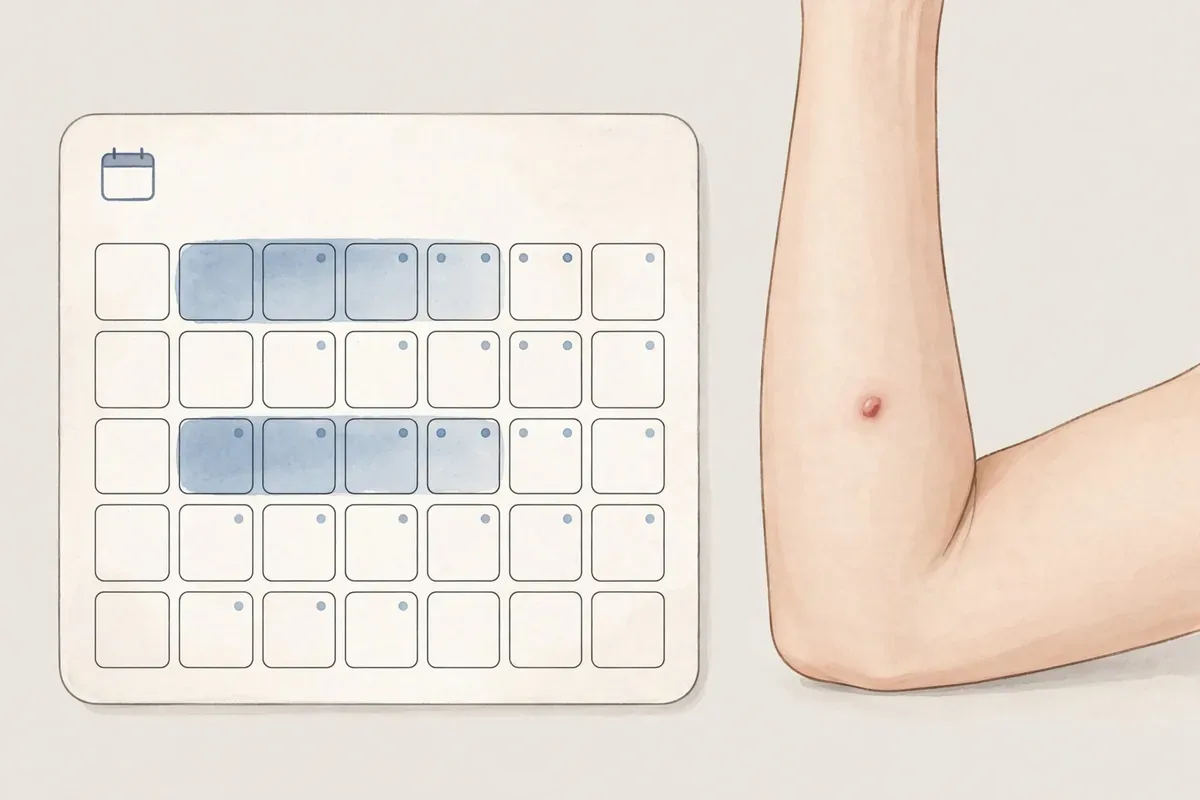
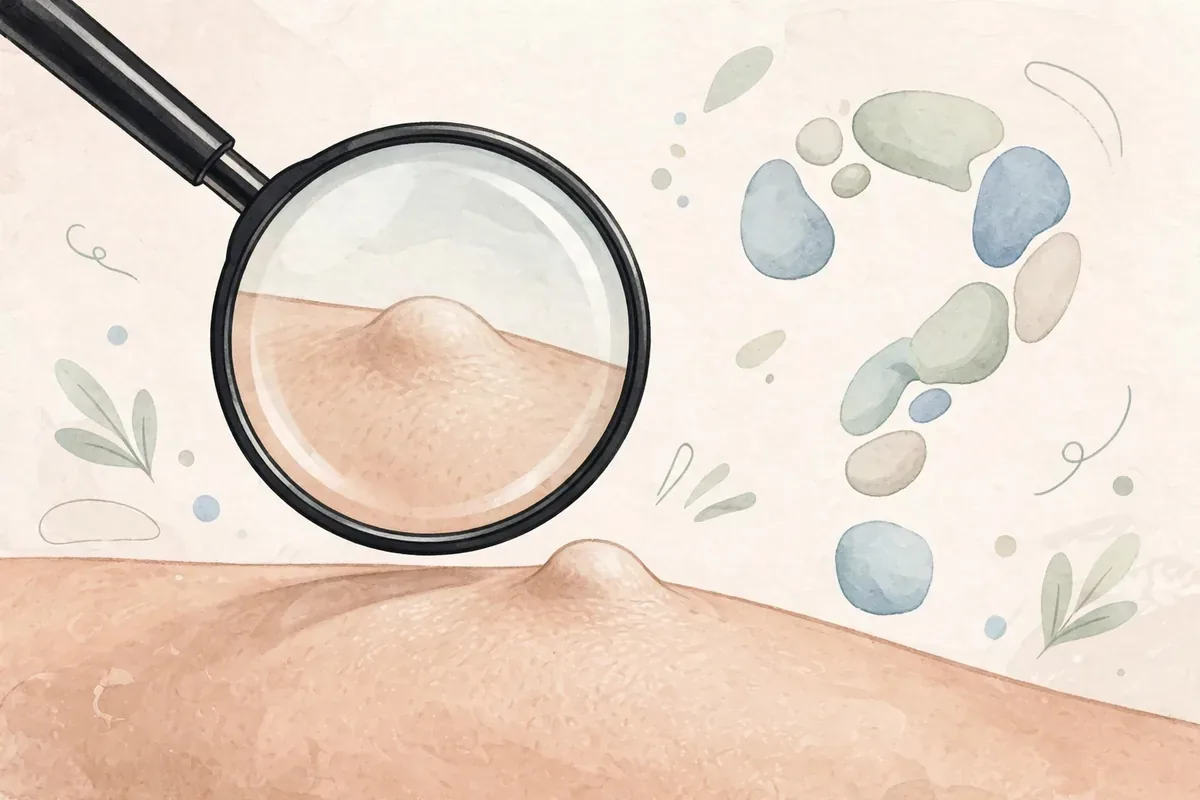
Here is the uncomfortable truth behind many non-healing “spider bites”: a large share were never spider bites. Clinicians regularly find that persistent lesions blamed on spiders turn out to be something else entirely — something that was never going to respond to bite care. Common mimics include:
- Bacterial skin infections (impetigo, cellulitis, or an infected hair follicle) that need proper medical treatment, not time.
- Cysts or abscesses — a tender lump that grows, becomes painful, and sometimes drains is more likely a cyst or abscess than any bite.
- Contact dermatitis or eczema patches that itch, weep, and scab in a cycle identical to a “non-healing bite.”
- Shingles or other rashes in their early stages, before the characteristic pattern declares itself.
- In rare cases, skin conditions or lesions that need dermatological evaluation — any spot that grows, changes color, bleeds easily, or looks unusual deserves a professional look regardless of the bite story.
The practical test: if it is not behaving like a bite — not following the peak-then-fade arc, not responding to two weeks of proper wound care — stop treating it as a bite and get it evaluated as an undiagnosed skin lesion. Bring the full history: when it appeared, what it looked like at the start, everything you have applied to it, and photos if you have them.
For perspective on how long brown recluse bites specifically can take, see our guide on how long a brown recluse bite takes to heal.
Next Steps: Care and Follow-Up #
Whether the diagnosis holds or not, proper wound care gives any lesion its best chance — and gives your clinician a clean baseline to assess.
- Stop all trauma. No picking, no scratching, no squeezing, no shaving over it. Cover the spot with a clean bandage if you cannot keep your hands off it.
- Keep it clean and simply covered. Wash gently with soap and water once daily, pat dry, and cover with a fresh bandage. Change the bandage daily or when wet. Avoid layering on multiple creams and home remedies — simplicity heals.
- Photograph the progression. Take a photo every two to three days from the same angle and distance. A photo series reveals slow improvement (or slow worsening) that daily glances miss.
- Mark and measure. Note the size of the red or affected area. Expansion over days is meaningful information.
- Set a decision date. If there is no clear improvement after one more week of proper care — or sooner if anything worsens — book the appointment. Do not let “maybe tomorrow it will turn the corner” stretch into a month.
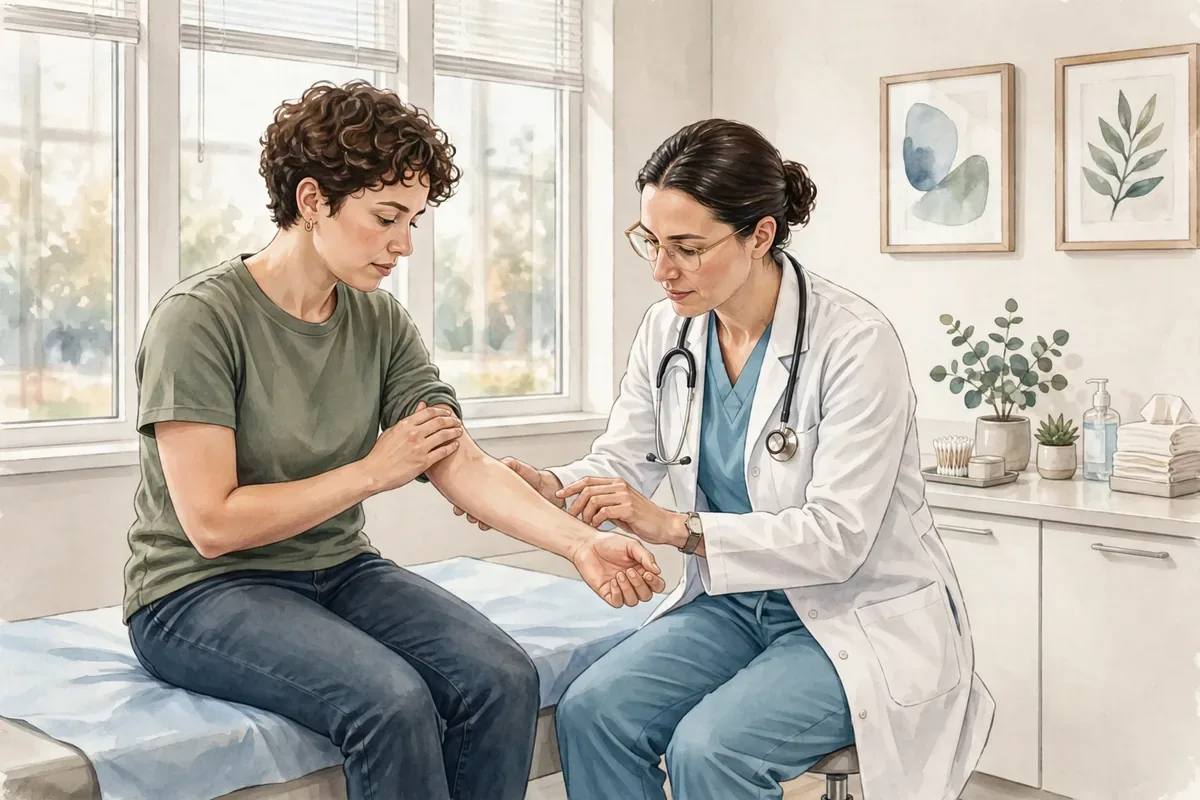
- At the visit, expect questions about the timeline, what you have applied, your medical history, and possibly a closer examination, culture, or referral. An honest account of any picking or home treatments helps more than a tidy story.
For wound-care fundamentals that apply to any problematic bite, see our bite first aid checklist.
What Healing Should Look Like #
To recognize progress, know the target. A healing bite or minor skin wound typically shows:
- Redness that gradually fades inward toward the center rather than expanding outward.
- Swelling and tenderness that decrease week over week.
- A scab that forms, stays put, and eventually falls off on its own revealing pink new skin.
- Itching that slowly eases rather than intensifying.
Pink new skin is more delicate than the surrounding skin — protect it from sun while it matures, since fresh healing skin burns and darkens easily. A faint mark that fades over weeks to months is a normal souvenir, not a failed healing. If instead you see expanding redness, new blisters, increasing pain, pus, or fever, the trajectory is wrong — seek care promptly rather than waiting for your decision date.
Warning signs: when to seek care #
Call 911 immediately if you develop trouble breathing or swallowing, swelling of the face, lips, tongue, or throat, widespread hives, dizziness or fainting, or a racing heartbeat after any insect exposure. If you have an epinephrine auto-injector, use it at the first sign of a severe reaction.
Seek prompt medical care if the bite is enlarging, developing a dark or black center, blistering, oozing pus, showing red streaks, or becoming increasingly painful — or if it shows no clear improvement after two weeks of proper care. Any lesion that grows, bleeds easily, or looks unusual deserves dermatological evaluation even if you are confident it started as a bite.
Frequently asked questions #
How long is too long for a spider bite to heal? #
Most uncomplicated bites resolve within one to two weeks. Anything not clearly improving after two weeks of proper, hands-off care deserves a clinician’s evaluation. Worsening at any point deserves a prompt one.
Could it be a brown recluse bite? #
Brown recluse bites are uncommon and geographically limited, but they are known for slow healing with tissue injury. Do not self-diagnose this — a non-healing lesion with a dark center or open sore needs in-person evaluation, whatever caused it.
Should I try to drain it myself? #
No. Squeezing or lancing a persistent lesion at home risks driving infection deeper and makes professional assessment harder. If drainage is needed, a clinician can do it safely and sterilely.
Will it scar? #
Any wound that takes weeks to close may leave a mark. Proper care — no picking, sun protection on new skin, and prompt treatment of infection — minimizes scarring. Discuss scar concerns with your clinician once the lesion has healed.
Medical and editorial note #
This guide is general information about non-healing bite-like lesions, not medical advice. Persistent skin lesions can have many causes, some of which need specific medical treatment. If a bite or bump is not healing normally, see a healthcare professional for an in-person evaluation.


