
Most wasp stings heal quietly: pain fades within hours, swelling peaks and falls within a couple of days. But sometimes bacteria slip in through the puncture — usually after scratching — and the sting turns into an infection. Signs a wasp sting is infected follow a clear pattern: things get worse instead of better after the first day or two. Here is how to read them.
The 7 Infection Signs, Ranked #
Check the sting against this list, roughly in order of how concerning each sign is:
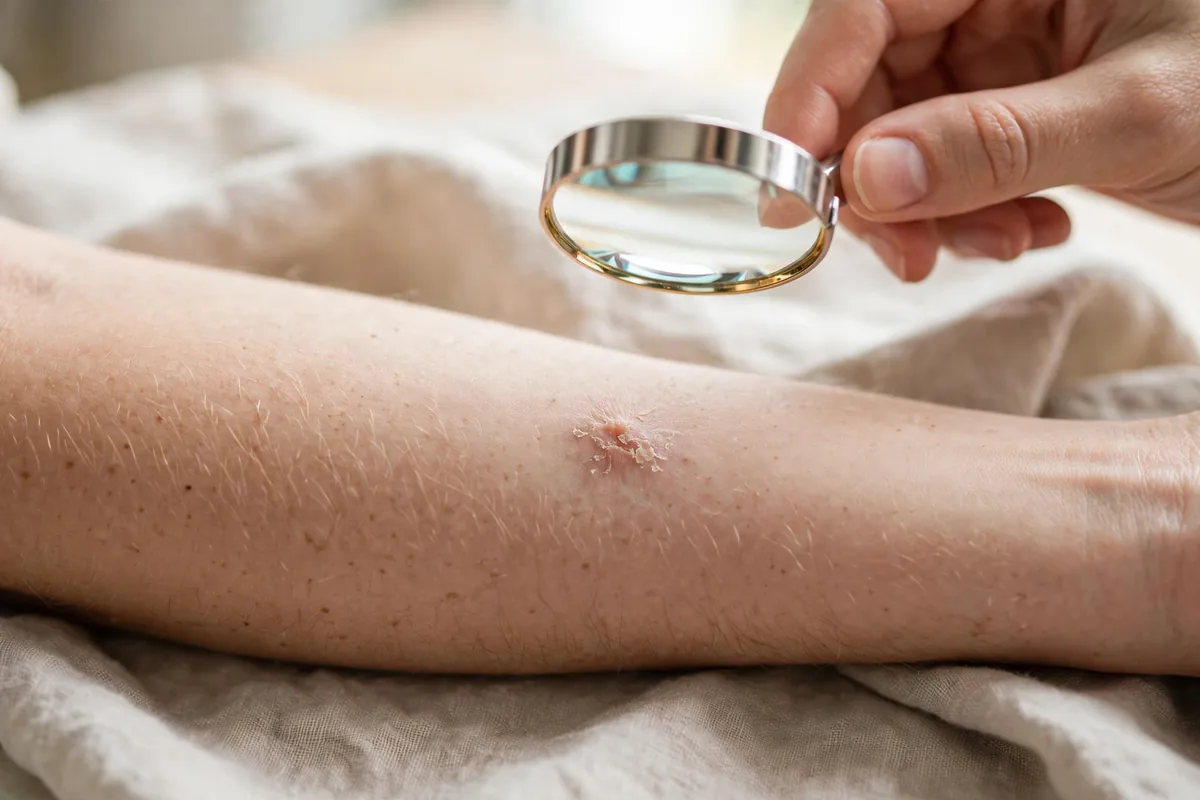
- Redness that keeps spreading. Normal sting redness stays put or shrinks after day one. Expanding redness — especially with blurry, undefined edges — is the classic early sign of cellulitis, a bacterial skin infection.
- Increasing pain after 24 to 48 hours. Sting pain should steadily decrease. Pain that ramps up on day two or three, or turns from itch to throb, points toward infection.
- Heat. Skin around the sting feeling noticeably warmer than surrounding skin suggests active inflammation or infection.
- Swelling that grows instead of shrinking. Some swelling is normal, but a lump that enlarges after the second day is not.
- Pus or cloudy drainage. Yellow, green, or cloudy fluid — or a sting that keeps weeping — means bacteria are at work. Clear, thin fluid in the first hours can be normal; pus is not.
- Red streaks. Thin red or dark lines tracking away from the sting toward nearby lymph nodes (armpit, groin, neck) suggest the infection is traveling along lymph vessels. This deserves prompt medical attention.
- Fever, chills, or swollen glands. Systemic symptoms mean the infection is no longer just skin-deep. Do not wait these out.
One mild sign alone (a little extra redness on day one) is usually just inflammation. Two or more of these together — or any single sign that is clearly worsening — is your cue to call a doctor.
The Circle Test: Track It Yourself #
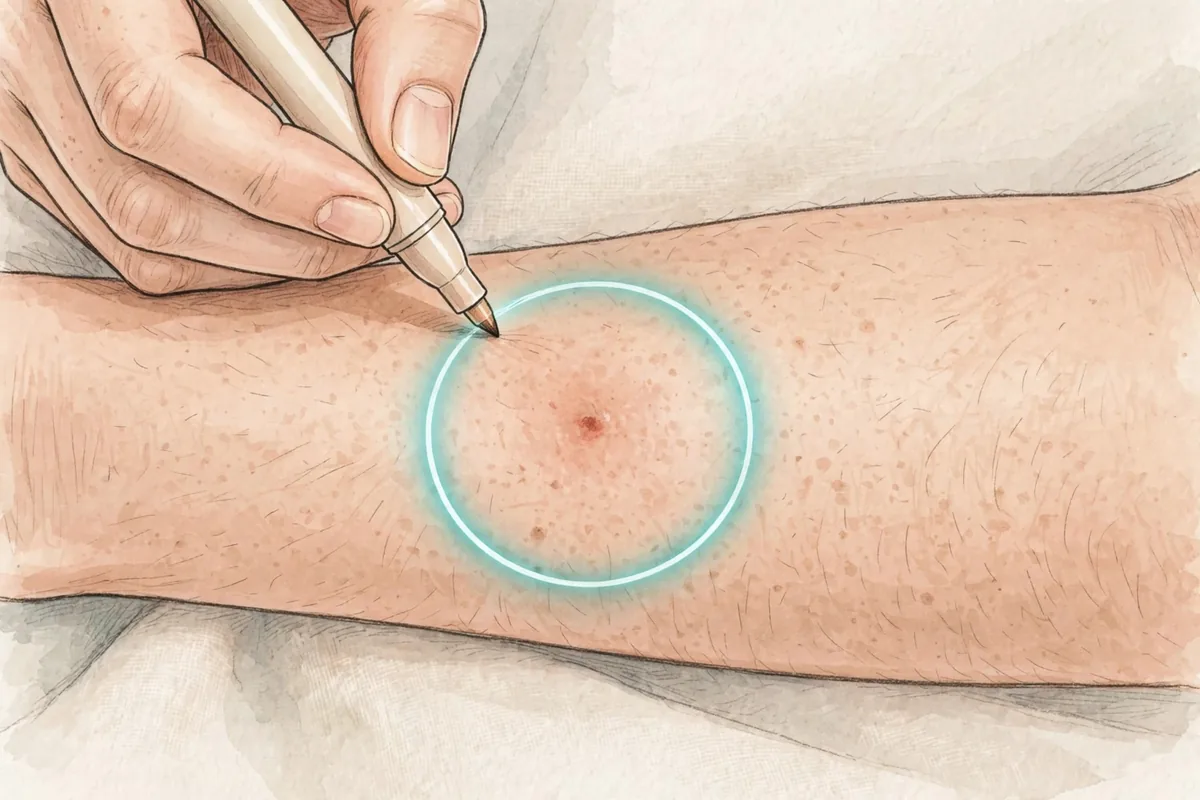
When you are unsure whether redness is spreading, make it measurable:
- Draw a light circle around the outer edge of the redness with a pen or marker. Note the time.
- Recheck in a few hours and again the next morning.
- If redness has moved past the line, the inflammation is expanding — call your doctor, and mention the timeline.
- Take a dated photo each time you check. Photos show progression more reliably than memory, and they are genuinely useful to show a clinician.
- Also note pain and heat at each check — write a one-line log (“Day 2 evening: redder, hotter, throbs”).
This simple test is widely recommended by clinicians because it turns a vague worry into a concrete answer: growing or not growing.
Normal Healing vs Infection: The Timeline #
| Time | Normal healing | Possible infection | |—|—|—| | First hours | Sharp pain, redness, swelling at the site | Same — cannot tell yet | | Day 1 | Pain fading, itch starting, swelling stable | Same — cannot tell yet | | Day 2 | Noticeably better: less pain, swelling receding | Pain increasing, redness spreading, warmth building | | Day 3+ | Steadily improving, maybe mild itch | Worse: pus, red streaks, fever, or swelling still growing |
The rule of thumb: a sting that is worse on day three than on day one needs medical eyes. Normal stings improve daily; infections escalate.
What to Do While You Decide #
- Keep it clean. Wash gently with soap and water; pat dry. See our guide to clean a bite or sting safely.
- Do not scratch, squeeze, or pop. This is how most sting infections start — fingernails drive bacteria into the puncture.
- Cold compress for 10 to 15 minutes at a time can ease pain and swelling while you monitor.
- Keep it loosely covered if clothing will rub the area.
- Do not apply home “drawing” remedies like toothpaste, raw onion, or meat tenderizer to a possibly infected sting — they do not treat infection and can irritate broken skin.
- Call your doctor if the circle test shows spread, if pus appears, or if you develop fever. Cellulitis is typically treated with antibiotics, which only a clinician can prescribe — and earlier treatment means a simpler course.
For context on how sting redness normally behaves in the first day, our doc on why a bite gets redder after 24 hours explains the benign version of this story. If infection is confirmed, the article on cellulitis from a bug bite covers what treatment usually involves.
Warning signs: when to seek care #
Call 911 immediately if you develop trouble breathing or swallowing, swelling of the face, lips, tongue, or throat, widespread hives, dizziness or fainting, or a racing heartbeat after any bite or sting. If you carry prescribed epinephrine, use it first, then call for help.
Seek urgent or same-day care if: redness is spreading past your marked circle; red streaks extend from the sting; pus or cloudy drainage appears; pain is increasing after 48 hours; or you develop fever, chills, or swollen lymph nodes. Rapidly expanding redness with fever warrants emergency evaluation — untreated skin infections can progress to deeper tissue infection or sepsis.
Frequently asked questions #
How soon after a wasp sting can infection start? #
Usually not in the first 24 hours. Infection signs typically appear on day two or three, often after the sting has been scratched. A sting that looks worse on day one alone is usually just a strong inflammatory reaction.
Is it infected or just a large local reaction? #
A large local reaction swells impressively but improves daily and has no pus, streaks, or fever. Infection worsens daily and adds heat, expanding redness, pus, or systemic symptoms. The timeline table above is the fastest way to tell them apart.
Can I treat an infected sting at home? #
You can keep it clean and monitor it, but a true skin infection needs medical treatment — typically antibiotics prescribed by a clinician. Home care alone is not enough once pus, streaks, or fever appear.
Why do wasp stings get infected more than bee stings? #
They do not, particularly — any break in the skin can become infected. Wasp stings may get scratched more because the itch phase can be intense, and scratching with unwashed hands is the main route bacteria take in.
Medical and editorial note #
This guide is general information, not medical advice. Only a healthcare professional can diagnose a skin infection, and cellulitis requires prescription treatment. If a sting is worsening instead of healing, shows pus or red streaks, or you develop fever, seek medical care promptly rather than waiting it out.


