
Seed ticks are larval ticks — newly hatched, six-legged, and about the size of a poppy seed or smaller. You rarely meet one at a time: they hatch in clusters of hundreds or thousands, so a walk through the wrong patch of brush can leave you with dozens of tiny ticks crawling on skin and clothing. They are real ticks and can transmit tick-borne illness, but they are manageable: lift unattached ones off with tape or a lint roller, remove attached ones with fine-tipped tweezers, shower and hot-launder everything, and watch your health for the next few weeks.
What seed ticks are #
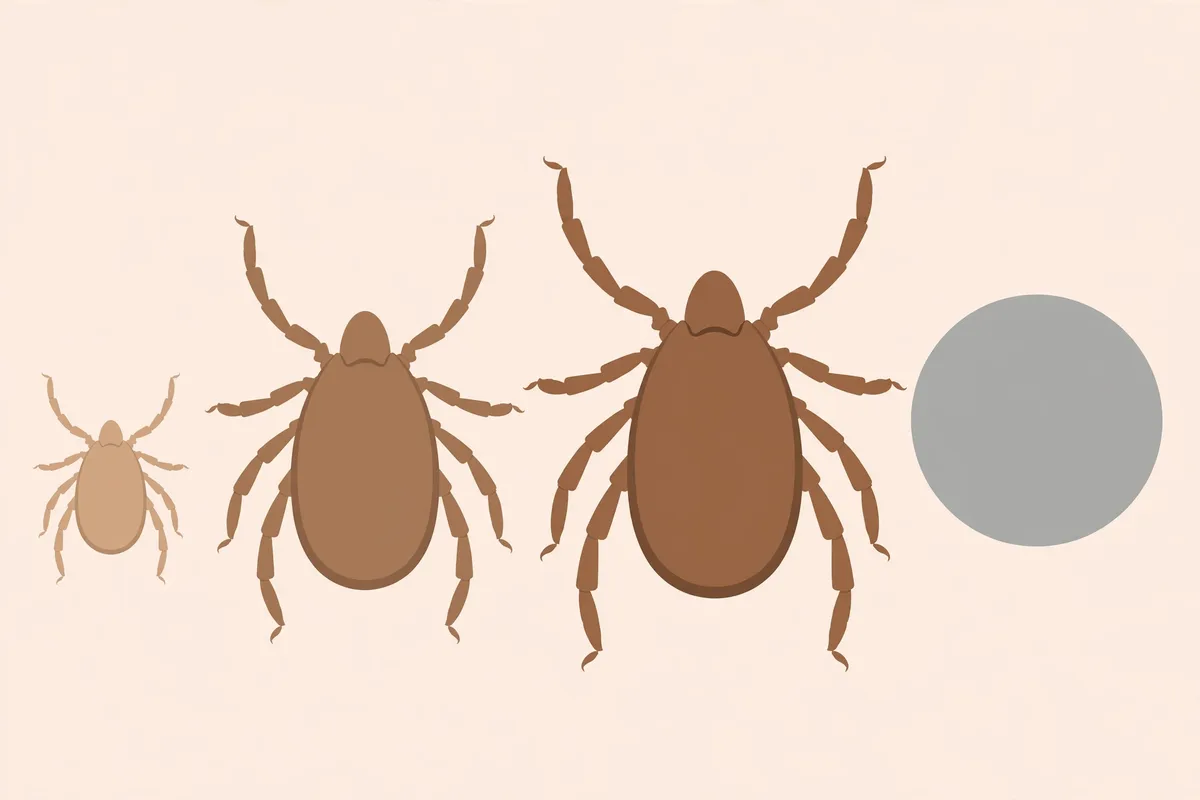
A seed tick is not a separate species — it is the larval stage of a hard tick such as the lone star tick or blacklegged (deer) tick. After hatching, the larvae wait in vegetation in large groups, a behavior sometimes called “questing.” Brush against their perch and dozens transfer to you at once. At under a millimeter across, they look like moving specks of pepper or dust, often reddish-brown. Most people do not notice them until the itching starts or someone spots the specks.
Seed tick bites itch — often intensely. The saliva of feeding larvae triggers an inflammatory reaction, and with dozens of bites the itching can be widespread across the ankles, waistline, armpits, groin, and anywhere clothing pressed them against skin. Small red bumps appear at bite sites, sometimes with a tiny dark center where the tick fed.
The disease question matters. Larval ticks can carry pathogens, though transmission risk from any single larva is lower than from a nymph or adult that has fed before. The honest position: dozens of bites raise your overall exposure, so take removal seriously and monitor your health afterward rather than dismissing seed ticks as harmless. Bites from lone star tick larvae are also the stage most associated with developing alpha-gal (red meat) allergy in some regions — another reason to remove them promptly and note the exposure.
Remove dozens of tiny ticks without tweezers #
Tweezers are the right tool for one attached tick. They are the wrong tool for eighty crawling specks. For unattached seed ticks, use methods that capture many at once:
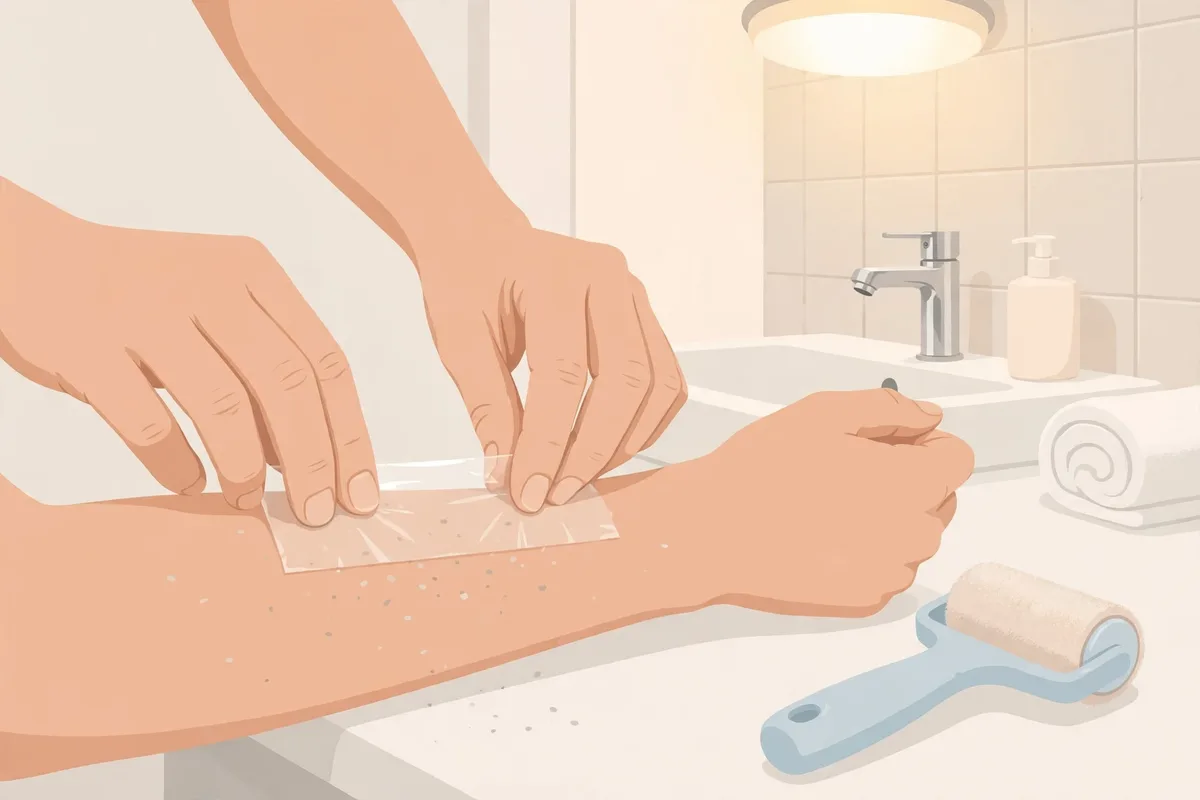
- Packing tape or duct tape. Press a strip of tape firmly onto the skin, lift, and fold it over to trap the ticks. Repeat with fresh tape until no more specks come up. This is the fastest method for arms, legs, and torso.
- A lint roller. Roll it over skin and clothing repeatedly. Keep a roller in your car or pack during tick season — it also catches ticks on clothing before they reach skin.
- A soapy washcloth. In the shower, lather a washcloth with soap and scrub the skin firmly. The soap and friction dislodge crawling ticks that tape missed.
- A hot shower. Shower within two hours of coming indoors — public health guidance notes this reduces tick-borne disease risk, and it washes off unattached ticks while giving you a full-body inspection opportunity.
Work systematically: strip, tape-roll the skin, then shower with the soapy washcloth. Check the classic hiding spots with a mirror or a helper: behind the ears, along the hairline, under the arms, around the waist, behind the knees, and between the legs. Seed ticks favor warm, thin-skinned areas.
Never use folk remedies to remove ticks: no burning with matches, no nail polish, no petroleum jelly, no alcohol dabbed to “back them out.” These methods agitate attached ticks and can cause them to release more saliva — or detach the body while leaving the mouthparts embedded.
Attached seed ticks: tweezers done right #
Some seed ticks will have attached and started feeding. Their mouthparts are tiny, but the technique is the same as for adult ticks: use fine-tipped tweezers, grasp the tick as close to the skin’s surface as possible, and pull straight upward with steady, even pressure. Do not twist or jerk — twisting can break off the mouthparts. If the mouthparts do break off, try once more with the tweezers; if you cannot get them, leave the spot alone and let the skin heal, treating it like a small splinter.
After removing each attached tick, clean the bite area and your hands with soap and water or rubbing alcohol. Save one or two of the ticks in a sealed bag with a date note — if illness symptoms develop later, identification helps your clinician assess risk. For the complete technique with illustrations of what to avoid, see how to remove an attached tick safely.
Count your attached bites roughly and note the date. This record matters because tick-borne illnesses declare themselves days to weeks later, and “about forty seed tick bites on June 3rd” is exactly the history a clinician needs.
After removal: laundry, shower, and tick checks #
Ticks ride indoors on clothing and then find people later, so the job is not done when your skin is clear:
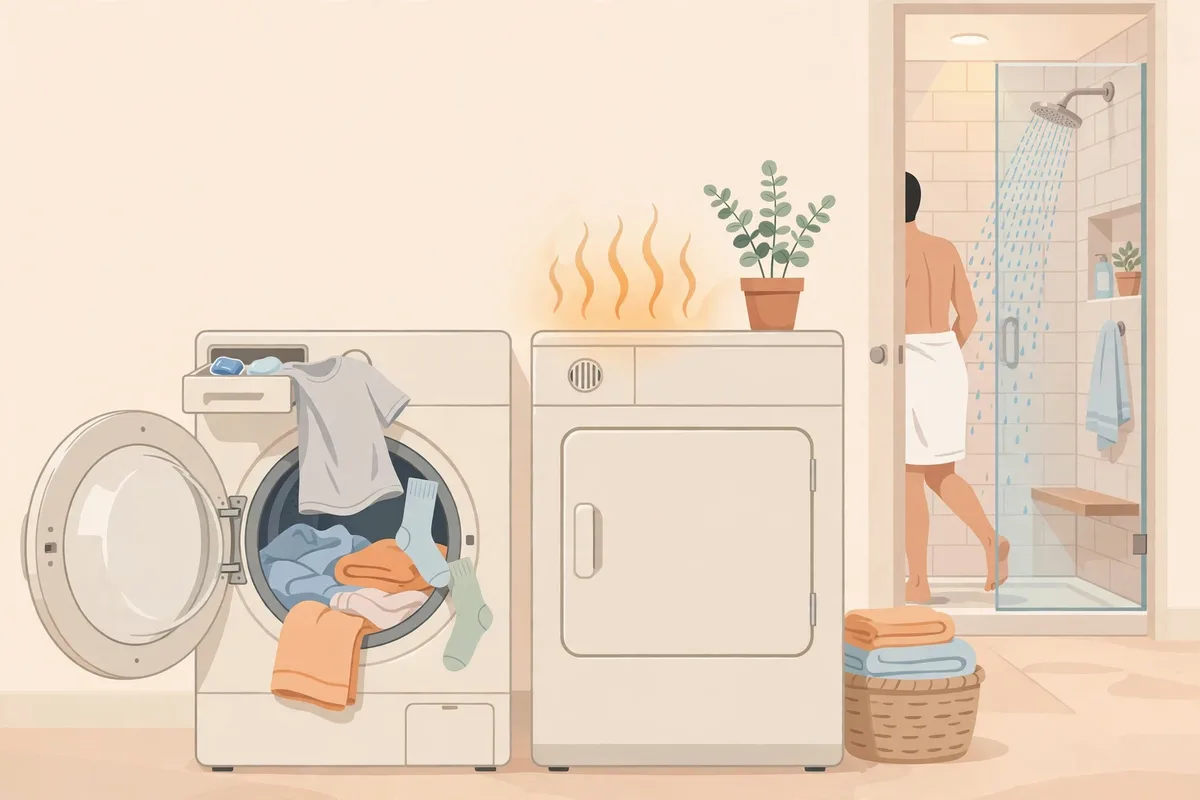
- Clothes go straight into the dryer. Tumble dry on high heat for 10 minutes to kill ticks on dry clothing — heat and dryness kill them quickly. If clothes are damp or need washing first, wash in hot water (cold and medium water temperatures do not kill ticks) and then dry on high heat.
- Shower within two hours of coming indoors. This is the single most effective post-exposure habit: it washes off unattached ticks and is the natural moment for a full-body tick check.
- Check gear and pets. Examine daypacks, jackets, and dogs that were outdoors with you. Ticks transfer from pets to people readily.
- Recheck yourself the next morning. A second look catches ticks missed in the first pass, especially along the hairline and waistline.
For the coming weeks, make tick checks routine after any outdoor time. One seed tick encounter often means the area is heavily infested — consider treating clothing with permethrin (applied to fabric, never skin) and using an EPA-registered repellent on exposed skin before your next outing. Review the tick bite aftercare guide for the next few weeks to set up your monitoring routine.
Watch for tick-borne illness over the next weeks #
After dozens of seed tick bites, monitor your health for at least 30 days. The symptoms worth knowing:
- Fever, chills, or flu-like body aches within days to weeks of the bites.
- An expanding rash — sometimes, but not always, in a bull’s-eye pattern — at a bite site or elsewhere.
- Unusual fatigue, headache, or joint pain that does not resolve.
- A red meat allergy reaction (hives, stomach upset, or swelling hours after eating beef, pork, or lamb) — associated in some regions with lone star tick bites.
If any of these appear, see a clinician promptly and mention the seed tick exposure with the date. Early treatment of tick-borne illness is highly effective, and the exposure history changes the diagnostic picture completely. Do not wait for a rash — many tick-borne illnesses never produce one.
Warning signs: when to seek care #
Seek medical care if: you develop fever, chills, rash, or flu-like symptoms within 30 days of seed tick bites; an expanding red rash appears anywhere on the body; a bite site becomes increasingly painful, swollen, or pus-filled (possible secondary infection); you cannot remove an attached tick or mouthparts remain embedded with growing inflammation; or you develop hives or digestive symptoms hours after eating red meat following lone star tick exposure. Bring your notes: the date of exposure, the approximate number of bites, and any saved ticks.
Frequently asked questions #
How small are seed ticks really? #
About the size of a poppy seed or a grain of sand — under one millimeter. They are visible to the naked eye as tiny moving specks, especially against light skin or a white washcloth, but easy to miss in body hair or on dark clothing.
Can seed ticks get in my house and infest it? #
They can hitchhike indoors on clothing and pets, but they do not infest homes the way fleas do — they need outdoor vegetation and hosts to complete their life cycle. The risk is ticks transferring from clothes or pets to people, which is why hot drying clothes and checking pets matters.
Do I need antibiotics after seed tick bites? #
Not automatically. Preventive antibiotics after tick bites are a clinician’s decision based on the tick species, local disease rates, and timing — not something to start on your own. What you should do is monitor for symptoms and seek care promptly if they appear.
How do I keep this from happening again? #
Avoid brushing through tall grass and dense brush in tick season; tuck pants into socks; treat shoes, socks, and pants cuffs with permethrin; use EPA-registered repellent on exposed skin; keep a lint roller handy; and shower and hot-dry clothes within two hours of coming inside. If your yard is the source, clearing leaf litter and keeping grass short reduces tick habitat.
Medical and editorial note #
This article is a general information reference and is not medical advice. Tick-borne disease risk varies by region, season, and tick species. It does not replace professional diagnosis or treatment. If you develop any symptoms after tick exposure, see a clinician promptly and report the exposure — early evaluation leads to the best outcomes.


