
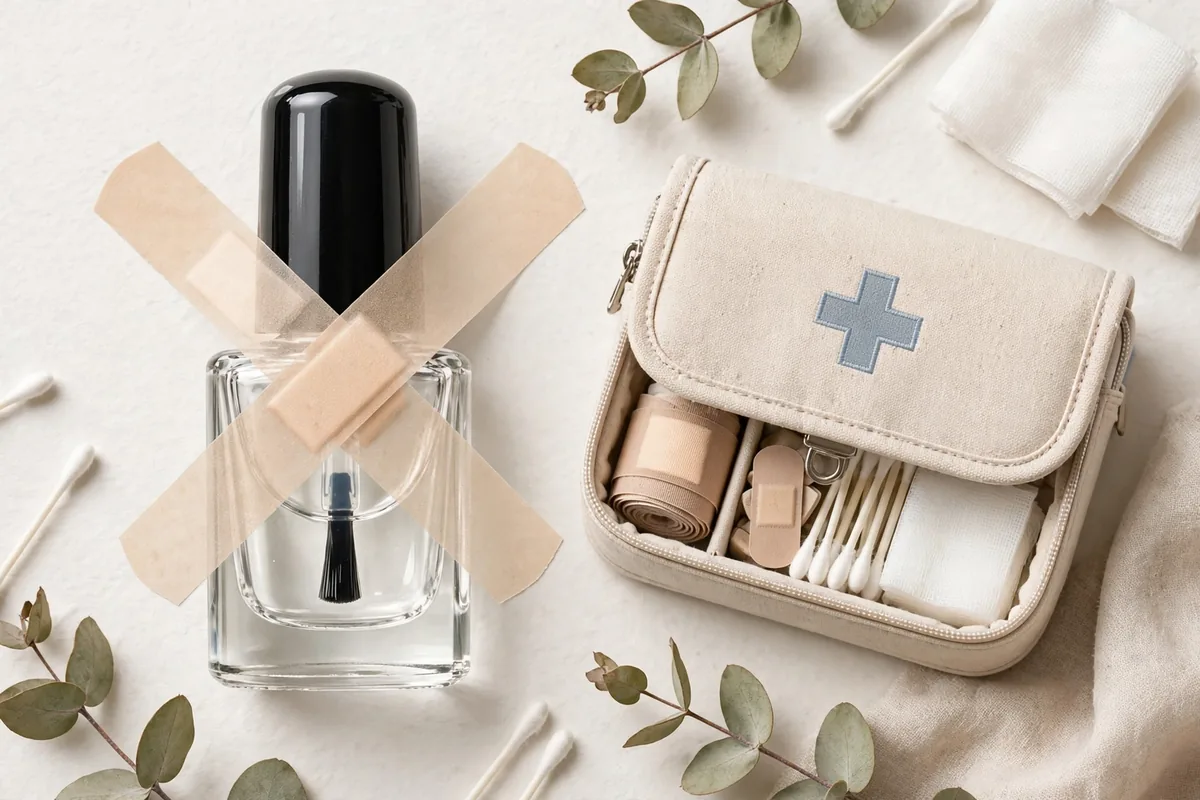
Paint clear nail polish over a chigger bite to “suffocate the bug trapped underneath” — it is one of the most repeated home remedies in outdoor lore. The nail polish on chigger bites myth sounds logical until you learn the key fact: there is no bug under the skin to suffocate. Chiggers do not burrow, and the mite is long gone before you ever reach for the polish. This guide debunks the myth completely and shows what actually relieves chigger-bite itch.
The myth: suffocating a chigger with nail polish #
The remedy follows a simple, wrong logic chain.
The story goes like this. Chiggers burrow under your skin and live there, causing the itch. Painting the bite with clear nail polish — or sometimes petroleum jelly, or even wax — seals off their air supply and suffocates them. The itching stops, the mite dies, problem solved.
It is an old remedy. Versions of this advice appear in mid-20th-century camping guides, military field lore, and family tradition. Clear polish was favored because it was less visible than colored polish, letting people treat bites discreetly. The remedy’s age gives it an air of authority it has not earned.
Why people believe it works. The itch from chigger bites peaks within a day or two and then gradually fades over one to two weeks — with or without any treatment. Someone paints their bites on day two, feels better by day five, and credits the polish. The natural healing timeline does the work; the remedy takes the bow. This is the same illusion that sustains many folk cures.
The logic collapses at the first premise. Everything about the remedy depends on a chigger living under the skin. That premise is false — which makes the entire treatment a solution to a problem that does not exist.
Why it cannot work: the mite is already gone #
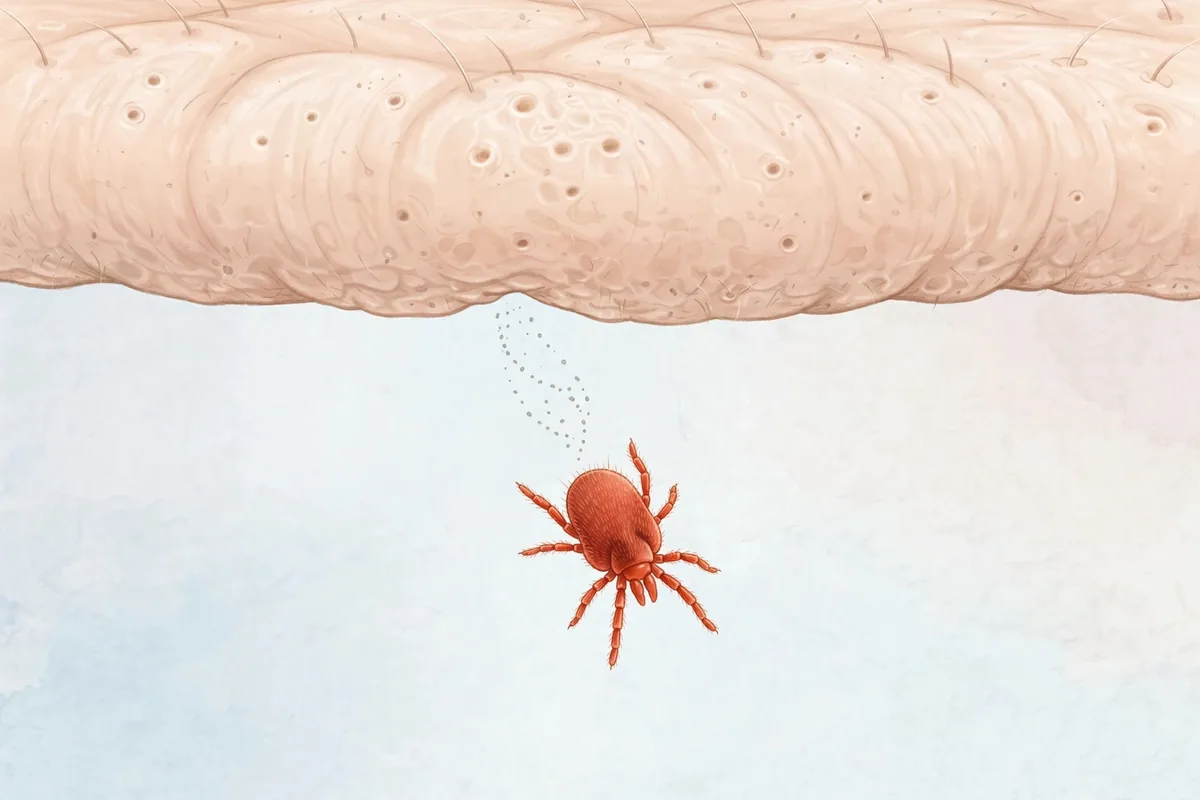
Here is what actually happens when a chigger bites you.
Chiggers feed from the surface. A chigger — the larval stage of a harvest mite — attaches to the skin’s surface, pierces it with tiny mouthparts, and injects saliva with digestive enzymes. It feeds through a hardened tube called a stylostome that extends downward into the skin. The mite itself never goes inside.
Feeding ends, and the mite leaves. After a few hours to a couple of days of feeding, the chigger detaches and drops off to continue its life cycle in the soil. By the time the itching starts — typically hours after the bite — the chigger is usually gone. There is nothing under the skin to suffocate, seal in, or kill.
The welt is an immune reaction. The red, intensely itchy bump is your body’s inflammatory response to the injected saliva and the stylostome — not a mite chewing inside you. Sealing the surface with polish addresses neither the inflammation nor the itch mechanism. It is like putting a lid on an empty pot.
Scabies confusion fuels the myth. Scabies mites genuinely burrow into skin, and their bites itch fiercely. The true burrowing of scabies gets wrongly attributed to chiggers, and remedies designed for a burrowed mite get misapplied to a surface feeder. Different mites, different biology, different treatment.
Why nail polish may make things worse #
The remedy is not just useless — it has genuine downsides.
Chemical irritation. Nail polish contains solvents such as acetone, toluene, and formaldehyde resins. On intact skin these are mostly a cosmetic concern; on inflamed, scratched, or broken bite skin they can sting, irritate, and trigger contact reactions. Chigger bites are frequently scratched raw — exactly the wrong surface for harsh chemicals.
Trapped moisture and heat. Sealing inflamed skin under an airtight layer traps sweat and heat against the welt, which can intensify itching rather than relieve it. The skin needs to breathe and cool, not to be shrink-wrapped.
Delayed real treatment. Every hour spent painting bites is an hour not spent on measures that actually help: cooling the inflammation, calming the itch, and protecting broken skin from infection. The remedy’s biggest harm is opportunity cost.
It can mask infection signs. A glossy sealed layer makes it harder to monitor the bite for the spreading redness, warmth, or pus that signal a secondary bacterial infection — the one genuinely dangerous complication of chigger bites. Clear visibility of the healing skin matters.
What to do instead for chigger bites #
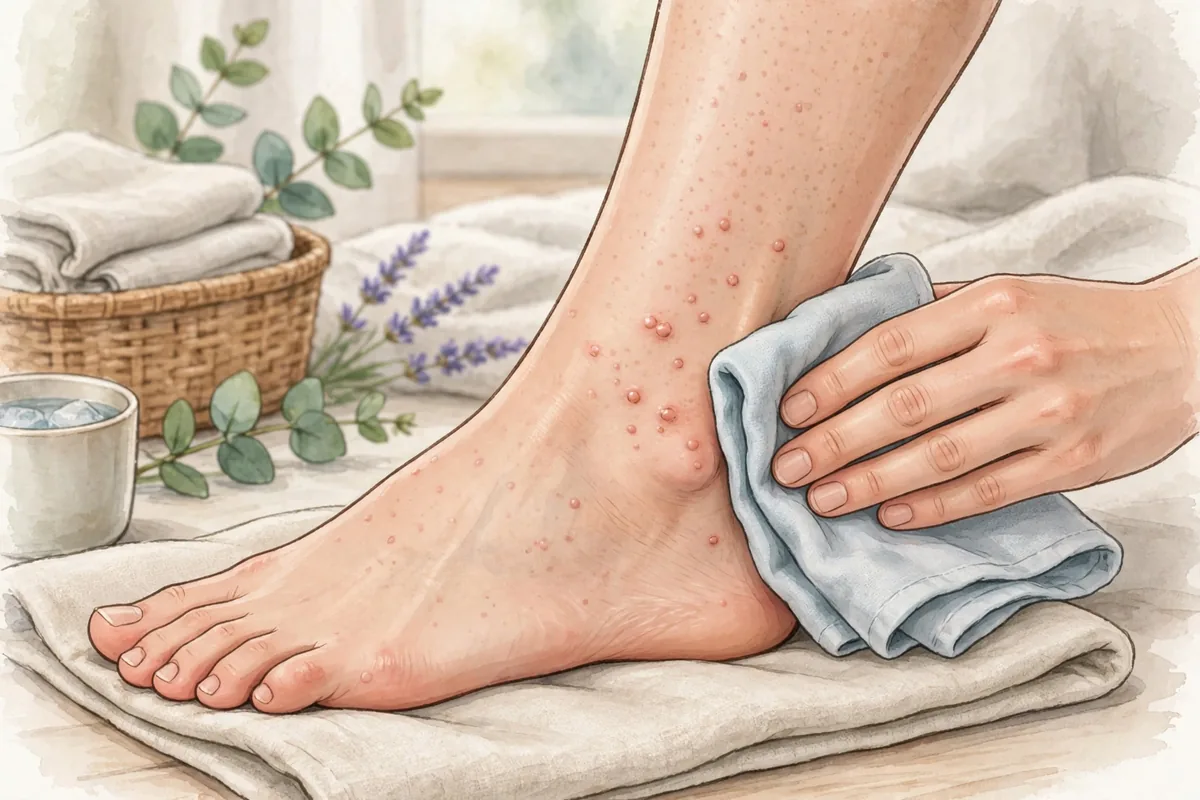
Treat the inflammation and the itch — the actual problems — instead of a phantom mite.
Cool and soothe.
- Cool compresses or a cool bath calm inflammation directly. A colloidal oatmeal bath helps when bites are widespread.
- Calamine lotion dries and soothes individual welts.
- A baking soda and water paste on the skin is a traditional itch soother.
Calm the immune reaction.
- Hydrocortisone cream per label directions reduces the local inflammation driving the itch.
- An oral antihistamine per label directions helps when itching is widespread or disrupts sleep.
Protect the skin.
- Do not scratch. Scratching breaks the skin and invites bacterial infection — the most common real complication. Keep nails short and cover the worst spots at night if needed. The guide on why you should not scratch or squeeze a bite explains the infection risk in detail.
- Keep bites clean with gentle soap and water, and watch them heal over the coming days. General itch-relief options are collected in the guide to reduce bite itching.
Know the timeline. Intense itching for 2–3 days, steady improvement over a week, resolution within two weeks. That schedule needs no polish, no suffocation, and no theatrics — just patience and proper itch care.
Warning signs: when to seek care #
Call 911 immediately if you develop trouble breathing or swallowing, swelling of the face, lips, tongue, or throat, widespread hives, dizziness or fainting, or a racing heartbeat after any insect encounter. If you have been prescribed an epinephrine auto-injector, use it first, then call 911 — epinephrine buys time but does not replace emergency care.
Chigger bites do not cause anaphylaxis. Seek urgent care or call your doctor if bites develop spreading redness, red streaks, pus, or increasing pain after the first day; if you develop fever; if swelling worsens after 48 hours instead of improving; or if broken, scratched skin shows signs of infection. Secondary bacterial infection from scratching is the real risk to watch for.
Frequently asked questions #
Does nail polish kill chiggers? #
No — because there are no chiggers in the skin to kill. Chiggers feed from the skin’s surface and drop off before the itching even begins. The polish seals an empty site and does nothing to the itch.
What about petroleum jelly or wax on chigger bites? #
Same verdict. Any “suffocation” remedy assumes a burrowed mite, which does not exist. These sealants do not help the itch and can irritate inflamed skin or trap heat against it.
Will the polish at least stop the itching? #
There is no mechanism by which it would. The itch comes from your immune system’s reaction to the mite’s saliva, deep in the inflammatory response — a surface sealant cannot interrupt it. Cooling, anti-itch lotions, and antihistamines address the actual cause.
How do I know the chigger is really gone? #
You do not need to wonder: chiggers detach on their own within hours to a couple of days and cannot survive long on the skin surface once detached. Washing with soap and water removes any lingering mites. The remaining bump is inflammation, not infestation.
Medical and editorial note #
This guide is general information about chigger bites and a common folk remedy, and is not medical advice. Nail polish does not help chigger bites because chiggers do not burrow under the skin; the itch is an immune reaction best treated with cooling, anti-itch measures, and patience. If you are unsure about a skin reaction, notice signs of infection, or feel unwell, contact a healthcare professional promptly rather than relying on this reference alone.


