
You wake up and one eye will barely open — the eyelid is puffy, red, and itchy. A mosquito bite on eyelid skin looks alarming, but the dramatic swelling is usually a normal reaction to an unusually thin patch of skin, not a sign of something dangerous. Here is how to treat it safely, what to keep away from the eye, and which symptoms mean you need urgent care.
Why Eyelid Bites Swell So Dramatically #
Eyelid skin is the thinnest on the body — less than a millimeter in places — and the tissue underneath is loose. When mosquito saliva triggers the immune response, fluid collects freely in that loose tissue, so a bite that would be a small bump on your arm becomes a swollen-shut eye.
What is happening:
- Histamine release. Your immune system reacts to proteins in the mosquito’s saliva, releasing histamine that dilates blood vessels and lets fluid leak into the tissue.
- Gravity helps. If you were bitten overnight, fluid pools in the eyelid while you lie flat — which is why the swelling often looks worst first thing in the morning.
- Peak at 24-48 hours. Swelling from a mosquito bite typically peaks a day or two after the bite, then gradually fades over 3-5 days.
This is different from: an eye infection (which usually involves discharge, crusting, or pain when moving the eye), a stye (a tender lump on the lid margin itself), or an allergic reaction spreading beyond the bite. If the whole face is swelling, that is a different and more urgent situation — see the warning signs below.
Safe First Aid for an Eyelid Bite #
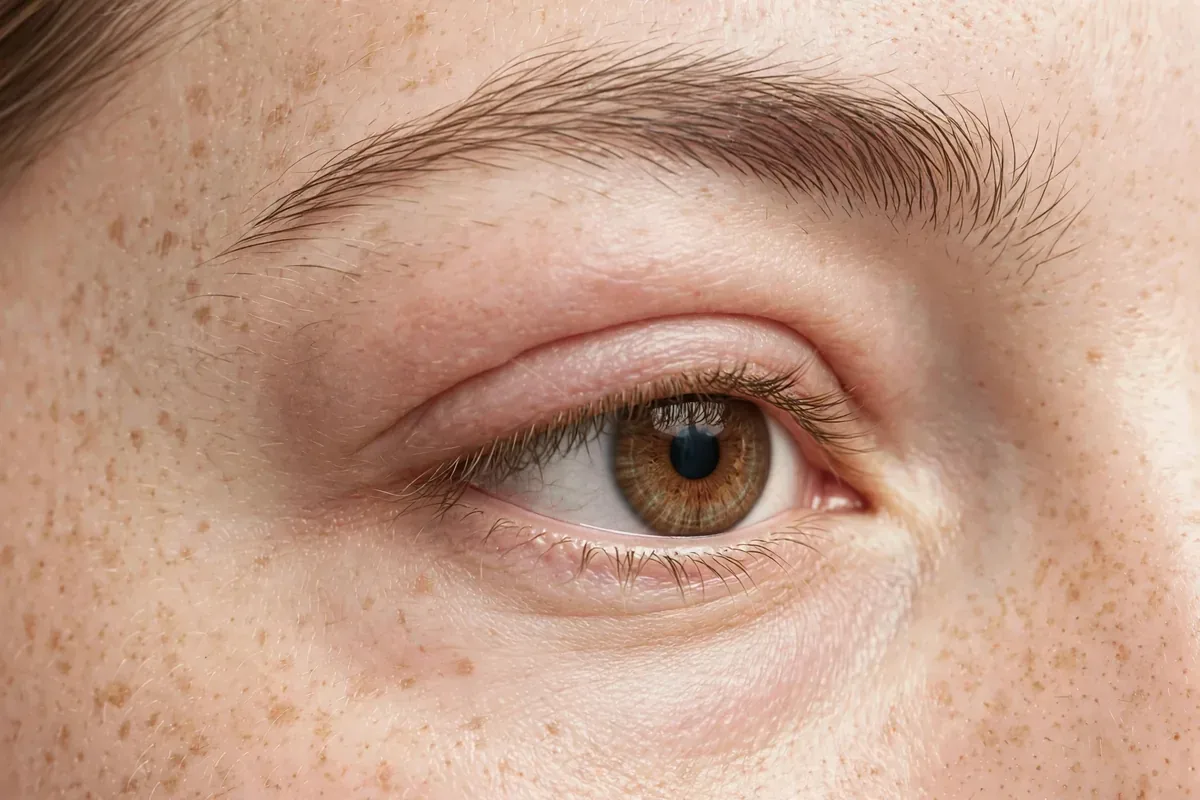
Treat the eyelid gently. The goal is to calm the swelling without irritating the eye itself.
Do this:
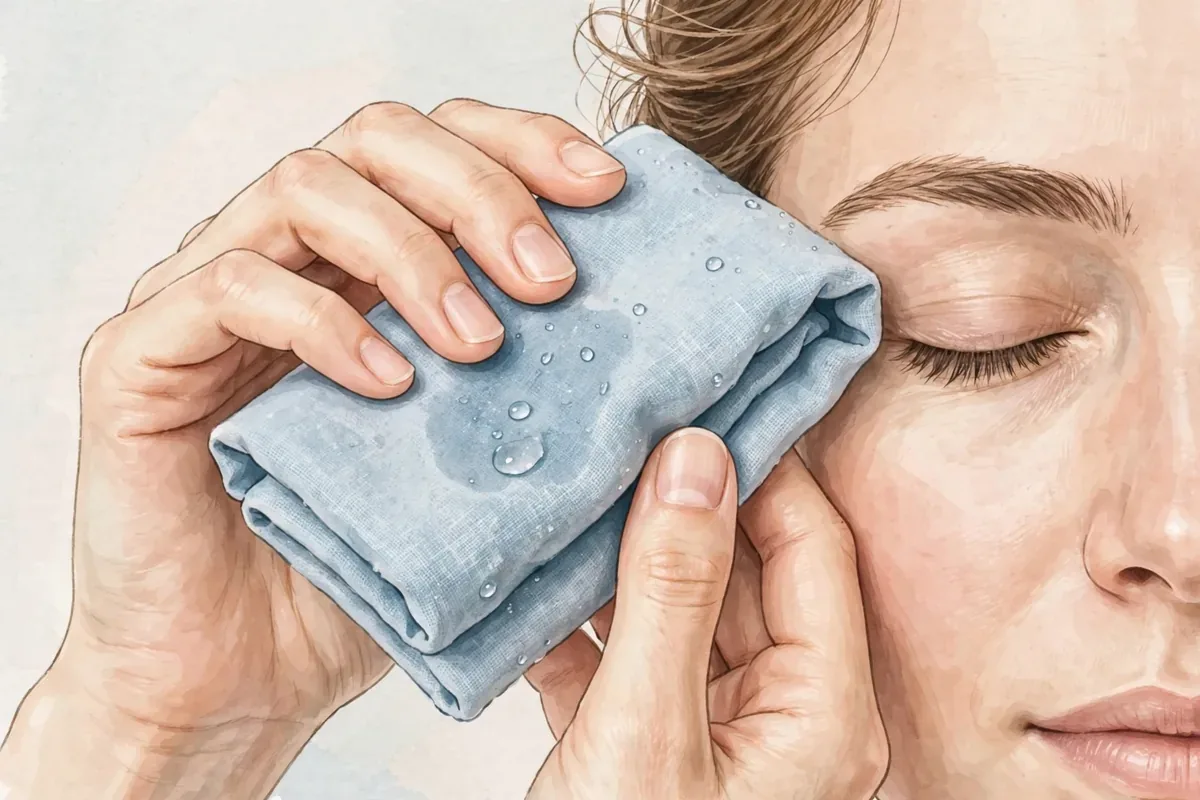
- Apply a cool compress. Wrap ice or a bag of frozen peas in a clean, thin cloth and hold it gently against the closed eyelid for 10-15 minutes at a time, several times a day. Never press ice directly against the skin. Our guide to using a cold compress for bites and stings covers technique in more detail.
- Keep the eye closed during treatment. This protects the cornea and keeps any moisture out of the eye.
- Take an oral antihistamine per label directions. For adults, a non-drowsy daytime antihistamine can reduce itching and swelling; talk to your pharmacist about the right choice. For children, use only products labeled for their age and follow the dosing exactly — or ask the pediatrician. (See also: mosquito bite swelling in children.)
- Sleep slightly elevated. An extra pillow for a night or two helps fluid drain instead of pooling in the eyelid.
- Keep the area clean. Wash your hands before touching the eyelid, and do not share towels or pillowcases while the bite is healing.
For itching: resist rubbing the eye — rubbing drives more fluid into the tissue and can scratch the cornea. If the itch is intense, a cool compress usually helps more than any cream. A thin layer of plain petroleum jelly on the surrounding skin (not in the eye) can protect irritated skin from further rubbing.
Timeline expectations: the first morning is usually the worst. Swelling should start improving by day 2-3 and resolve within a week. Mild bruising-like discoloration as it fades is common and harmless.
What Never to Do Near the Eye #
The eye is unforgiving of the wrong product. Rules that are fine for a bite on your arm do not apply here.
Keep away from the eye:
- No steroid or anti-itch creams in or on the eyelid margin. Hydrocortisone and similar creams are not meant for use near the eyes — they can raise eye pressure and irritate the cornea. Do not apply them to the eyelid itself.
- No essential oils, toothpaste, or home remedies. Tea tree oil, peppermint oil, and similar products can cause chemical irritation or even corneal injury. The eyelid is not the place to experiment.
- No scratching or rubbing. Beyond worsening the swelling, vigorous rubbing risks a corneal abrasion, which is painful and needs medical care on its own.
- No old eye drops “to reduce redness.” Decongestant eye drops do nothing for eyelid swelling and can irritate the eye.
- Do not try to pop or squeeze any bump on the lid — a stye or blocked gland needs different care, and squeezing spreads inflammation.
Contact lens wearers: switch to glasses until the swelling resolves. A swollen lid changes how the lens sits, traps debris, and raises infection risk. If you wear contacts and develop eye pain, light sensitivity, or discharge, remove the lenses and seek care promptly.
When It Is More Than a Simple Bite #
Most eyelid bites are straightforward. Watch for the exceptions.
Call your doctor or urgent care if:
- Vision changes. Blurred vision, double vision, or any loss of vision in the affected eye is urgent — do not wait to see if it improves.
- Eye pain or pain with eye movement. A surface bite should not make the eyeball itself hurt.
- Discharge or crusting. Yellow or green discharge, lids stuck shut with crust, or increasing redness of the white of the eye suggest infection rather than a simple bite reaction.
- Swelling keeps spreading. Redness and swelling expanding across the cheek, forehead, or to the other eye — or red streaks — can signal cellulitis, a skin infection that needs prompt treatment.
- Fever. A fever alongside a bite site that is getting worse (not better) points toward infection.
- No improvement by day 4-5. A bite that is still worsening after several days, rather than plateauing and fading, deserves evaluation.
Children need a lower threshold for care. Kids rub their eyes constantly, their swelling can look even more dramatic, and they cannot always describe vision changes. If a child cannot open the eye, complains the eye hurts (not just the lid), or you cannot tell whether vision is affected, get them seen the same day.
Warning signs: when to seek care #
Call 911 immediately if swelling spreads rapidly across the face, lips, or tongue, or if there is trouble breathing or swallowing, widespread hives, dizziness or fainting, or a racing heartbeat. These indicate a severe allergic reaction — use an epinephrine auto-injector first if one is prescribed, then call 911.
Seek urgent or same-day care for any vision change (blurry, double, or lost vision), eye pain, pain when moving the eye, discharge from the eye, fever with a worsening bite, or swelling that spreads beyond the eyelid to the cheek or forehead. A bite that shows no improvement after 4-5 days, or that keeps getting worse instead of plateauing, also needs medical evaluation.
Frequently asked questions #
How long does a mosquito bite on the eyelid stay swollen? #
Most eyelid bites peak at 24-48 hours and fade over 3-7 days. Morning swelling is usually worst because fluid pools overnight. If swelling is still increasing after day 3, or has not started improving by day 5, have it checked — that pattern is outside the normal range for a simple bite.
Why does only one eye swell shut from a single bite? #
The loose tissue of the eyelid collects fluid very efficiently, so even one bite’s worth of histamine response produces dramatic puffiness. It looks like a boxing injury but behaves like an ordinary mosquito bite. The single-sided nature is actually reassuring — it points to a local bite rather than a systemic allergic reaction.
Can I use antihistamine eye drops for an eyelid bite? #
Antihistamine eye drops treat itching of the eye surface (allergic conjunctivitis), not swelling of the eyelid skin — they will not help much here and are unnecessary. An oral antihistamine per label directions addresses the eyelid swelling better. If the eye itself is red and itchy, that is a different issue worth discussing with a pharmacist or doctor.
My child woke up with a swollen-shut eye — ER or wait? #
If the child is otherwise well, the eye itself does not hurt, vision seems fine, and there is a visible bite bump on the lid, same-day pediatrician or urgent-care evaluation is reasonable rather than the ER. Go to the ER promptly for vision complaints, severe pain, spreading facial swelling, breathing difficulty, or a fever with a rapidly worsening lid.
Medical and editorial note #
This guide is general information about mosquito bites on the eyelid and is not medical advice. The eye is a delicate area — when in doubt about vision, pain, or spreading swelling, err on the side of getting professional care the same day rather than waiting.


